







Improving AI accuracy from, say, 92% to 95% does not automatically make clinicians more likely to use it. At the point of care, they still need to quickly understand what the system is showing them, how much they can rely on it, and what to do next.


This guide covers six interface decisions that shape whether trust in healthcare AI is won (clinicians act on AI output) or lost (clinicians quietly work around it).
An AI model can perform exceptionally well in validation and still go unused in a hospital. The real test comes when a clinician has a patient in front of them: will they trust the AI’s output enough to act on it when every second counts?
Accuracy is only part of that decision. Clinicians also need to understand where a recommendation comes from, how reliable it is, and what to do when it conflicts with their own judgment. They are the ones responsible for the clinical decision, so an AI system that produces an answer without enough context is hard to rely on. That’s why trust has to be designed into the product from the start, and why it’s worth checking for before a tool reaches the ward. We explore how design governance shapes that in designing for clinical trust.
An accurate model no one acts on is just an expensive second opinion nobody asked for.
An AI tool that clinicians ignore still has a cost. The hospital pays for it in duplicated work, in alerts dismissed on reflex, and in lost confidence: once clinicians learn that one AI tool doesn’t help, they approach the next rollout with the same skepticism. This is part of a broader healthcare UX problem: technically sound products can still fail when they add friction to already complex clinical workflows, a pattern we also cover in our digital healthcare UX trends for 2026.
Lastly, a good interface can’t compensate for an AI system that hasn’t been properly validated or cleared for clinical use. But once those requirements are met, UX must help clinicians understand and act on the output. We look at why so many tools stall at that stage in why healthcare AI fails after the prototype.
So what makes clinicians act on AI output rather than work around it? In our experience designing clinical products, it comes down to six interface decisions. They aren’t sequential steps; each addresses a different reason a clinician might hesitate. Whether you’re building a clinical AI tool or evaluating one for your hospital, you can use them as a review checklist.
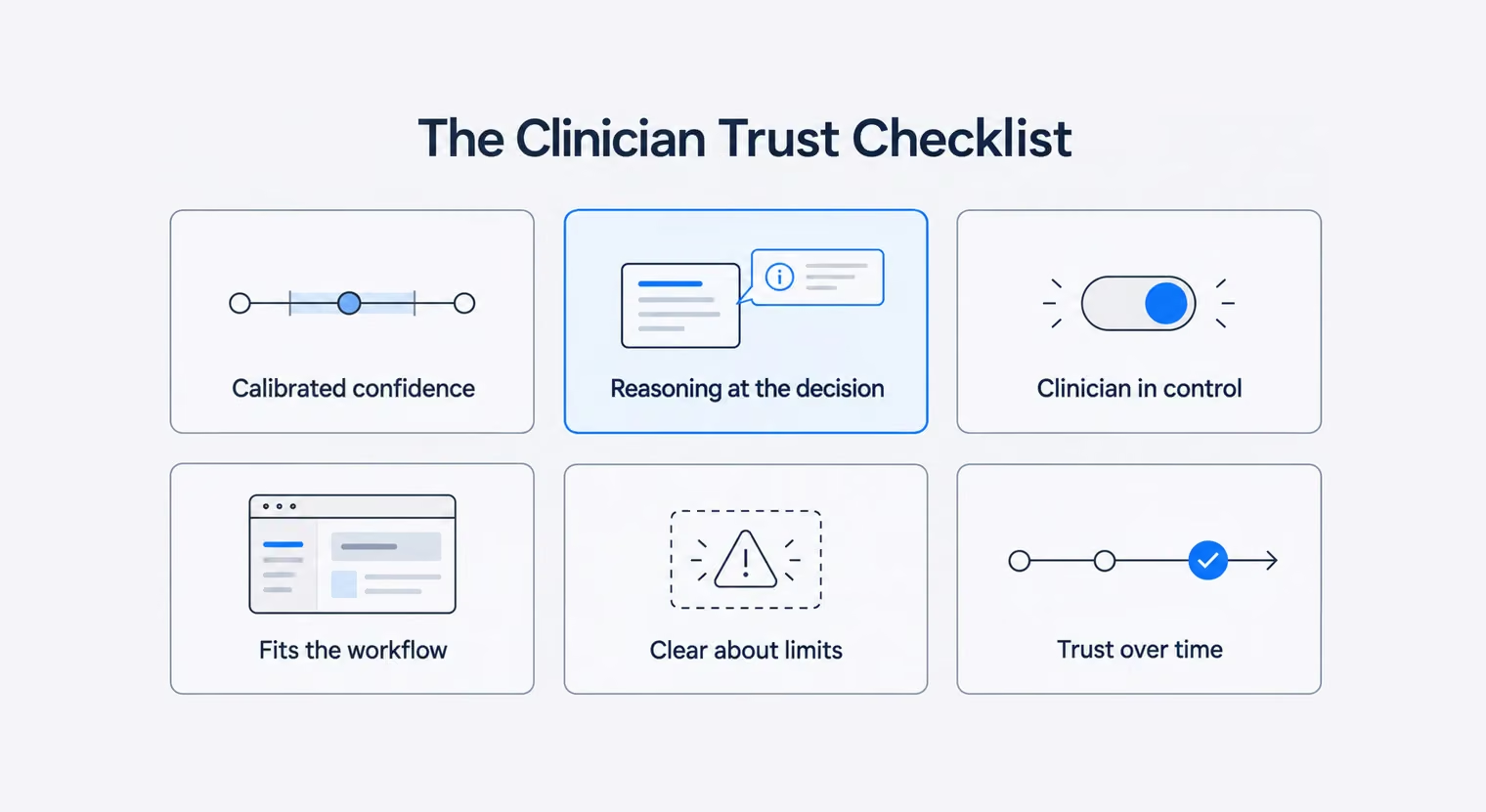
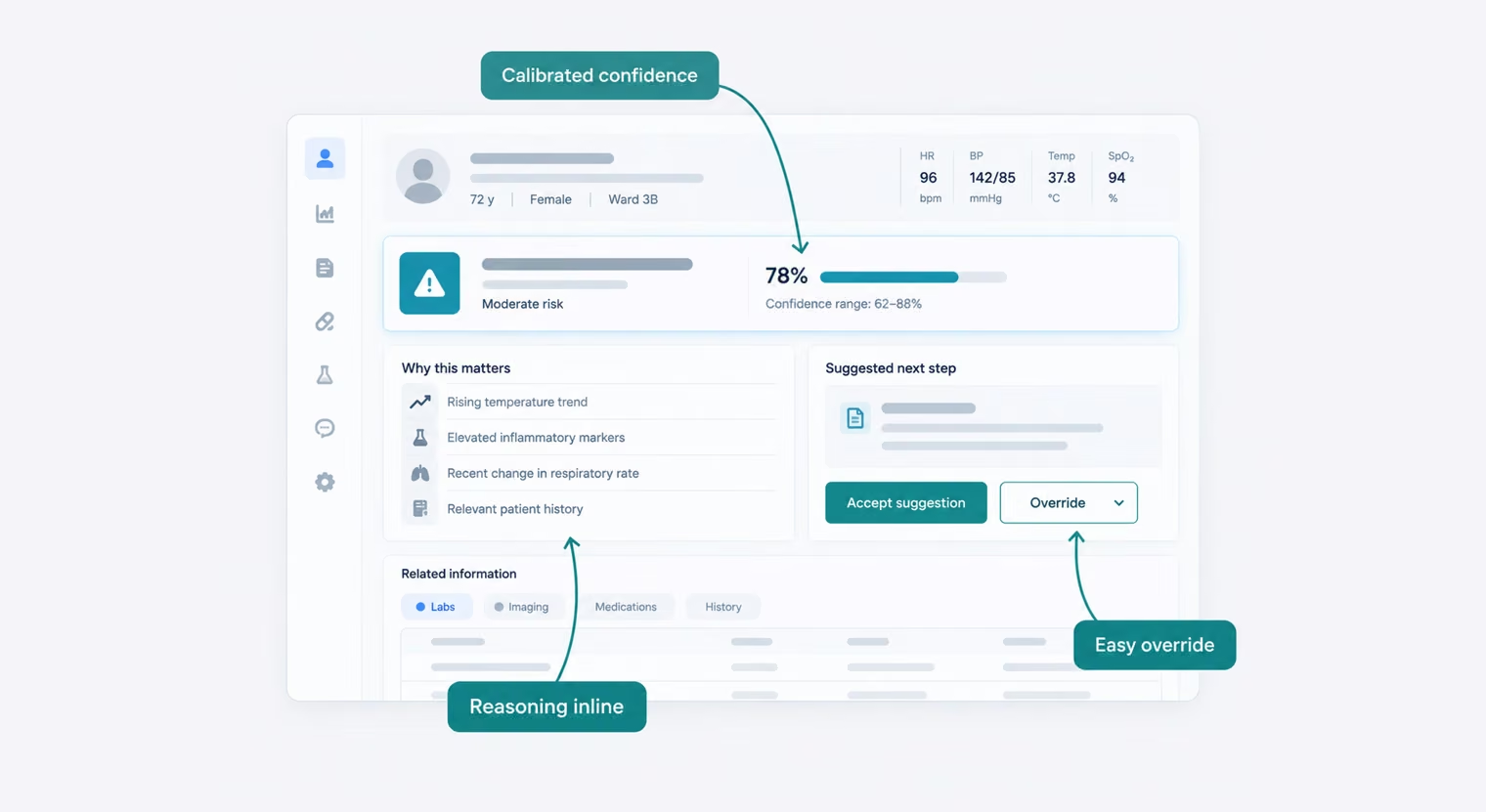
A confidence score, a number that shows how certain an AI is about a prediction or an output, is useful if clinicians can understand what it means and how it should affect their decision. 92% looks precise, but it raises obvious questions: 92% of what? Based on which patients? And would the recommended action change at 88%?
The interface should calibrate that confidence. For a quick triage decision, a simple high-risk flag may work better than a precise-looking decimal. When it comes to a borderline case, a range can communicate uncertainty with precision no single number ever could. Adding relevant context about the basis for the prediction can also make the output easier to assess.
Actionable advice: check how the interface behaves when the model is unsure. When low-confidence results look as certain as high-confidence ones, clinicians get no clear signal to double-check them.
When AI presents a recommendation, clinicians need enough context to understand why it appeared without leaving the current workflow. That context might include:
The challenge is deciding how much of that explanation to show at once. Too little leaves the clinician guessing; too much can slow the decision down.
On an AI-assisted oncology platform we designed, clinicians had to work through large amounts of patient and model data when making cancer treatment decisions. Showing all of that information in one view made the interface harder to scan, so we surfaced the most decision-relevant factors first and kept the supporting detail one tap away.
Actionable advice: check if the clinician can understand why the AI shows the recommendation without leaving the current view.
{{banner}}
Human-in-the-loop is a common phrase and is often implemented poorly in AI interface design. In practice, it means the clinician remains the decision-maker, and that disagreeing with the AI is no harder than accepting it.
In a study published in Radiology, radiologists who reviewed mammograms alongside deliberately wrong AI suggestions often followed them. Accuracy among very experienced radiologists fell from 82% to 46%. The conclusion is quite simple: interfaces don’t just present AI judgments; they shape how hard clinicians push back on them.
Two design choices can undermine the “human-in-the-loop” approach:
Actionable advice: count the steps needed to override the AI and compare them with the steps required to accept it. If overriding is much harder, check whether there’s a good reason for the extra steps.
If acting on the AI requires a clinician to step out of what they are already doing, they are likely to stop using it, regardless of how good the model is. The AI needs to appear inside the tool the clinician is already using, at the point of decision. Depending on the situation, that might be the record, a device display, a mobile alert during rounds, or the handoff summary at shift change. It also needs to work within existing alert systems rather than add to the alert fatigue already common in critical care. The broader point is that workflow fit goes beyond EHR integration and includes the clinician’s whole working environment. Our guide to EHR implementation challenges covers where that integration usually breaks down.
Actionable advice: check where the AI output appears in the workflow and whether accessing it forces clinicians to leave the task they are already completing.
Being clear about a model’s limitations tends to increase trust, even though that can seem counterintuitive. A system that shows its edge cases and the situations where it has little data comes across as more reliable than one that appears equally confident in every case. The state where the model is unsure deserves as much design attention as the confident one. When the model is working outside what it handles well, it should say so and return the decision to the clinician.
Actionable advice: ask to see what happens when the AI is uncertain or outside its scope and check what the clinician sees and what they can do in each situation.
Uncertainty should be visible enough for clinicians to decide how much weight to give the output.
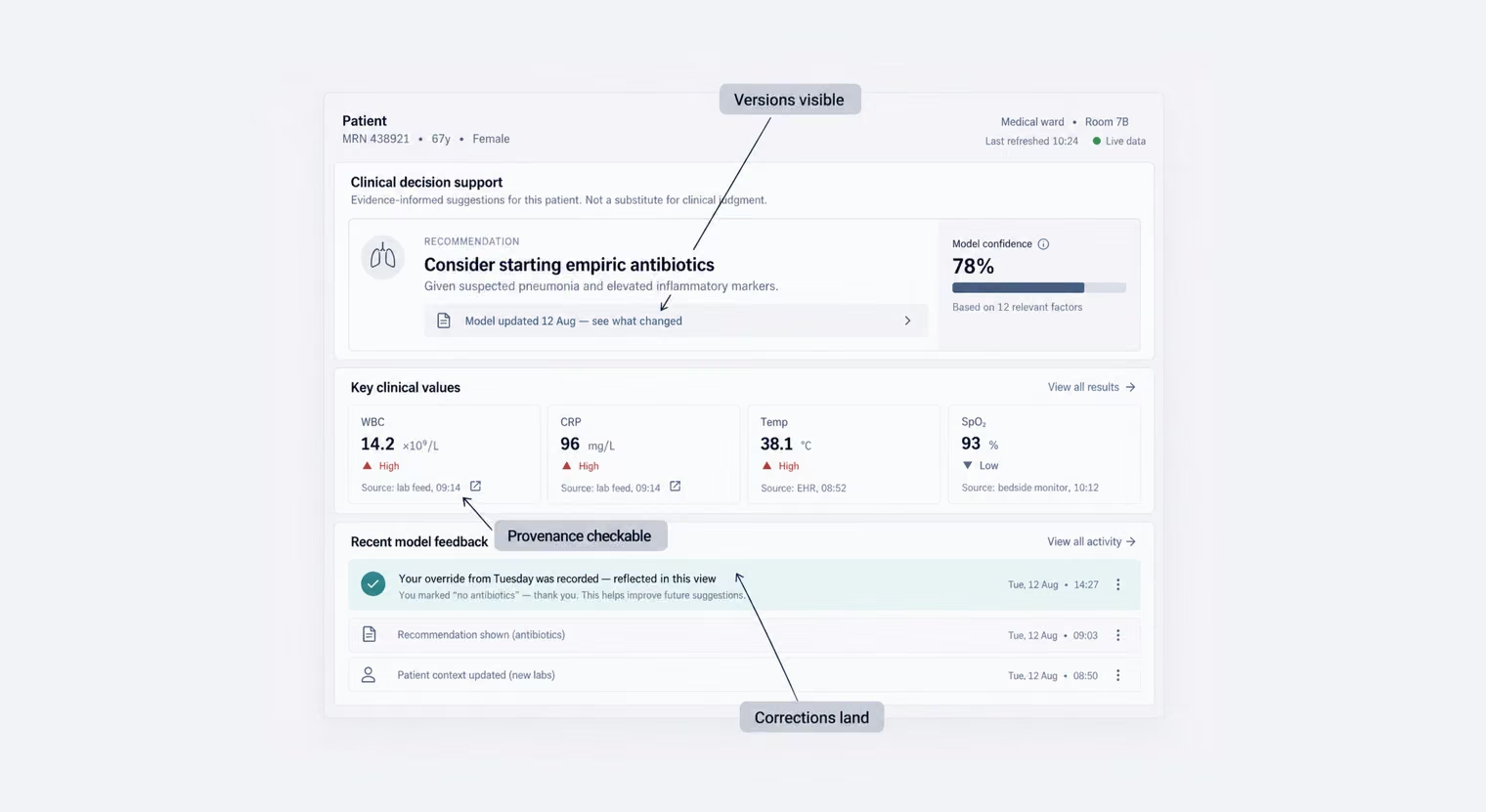
A good first impression is only a foundation for trust. Genuine long-lasting trust develops through repeated use, as clinicians see how the system behaves over time. A few things matter here:
This matters especially when a clinician overrides the AI. The system should make it clear that the action was captured rather than simply letting it disappear into the workflow. Clinicians may not expect every correction to change the model, but they should understand what happens to that feedback and whether it is reviewed, stored, or used elsewhere in the product process.
Over time, that consistency makes the system more predictable. Clinicians know where the output comes from, when the model has changed, and what happens when they disagree with it.
Actionable advice: override a recommendation and see what happens next. The clinician should be able to tell whether the correction was recorded and what, if anything, happens to it afterward.
More transparency doesn’t always mean more trust. In clinical AI, explanation layers tend to pile up: data science adds a confidence score, compliance adds a disclaimer, legal adds a caveat. Each addition may be reasonable on its own, but together they can bury the information a clinician needs to make the next decision. The same principle drives reducing cognitive load in ICU interfaces, where every extra element competes for attention.
The right amount of detail depends on the clinical situation. A time-critical alert needs a clear, focused hierarchy, while a case review or tumor board view can give clinicians more space to explore the evidence, uncertainty, and limitations. The default view should reflect that difference, surfacing what matters for the decision at hand while keeping deeper evidence within reach when the clinician needs it.

The six decisions in this checklist are easy to review separately, but clinicians experience them together. Confidence, explanation, control, workflow fit, limitations, and feedback all meet when someone has to decide what to do with the AI output.
That is why trust is difficult to assess by looking at individual screens in isolation. A clear confidence state means little if the recommendation arrives at the wrong point in the workflow. A good explanation does not help if overriding the AI is cumbersome. Visible limitations lose value if clinicians only discover them after leaving the task they were trying to complete.
For teams building or implementing clinical AI, the more useful question is how the whole interaction holds together around the clinical decision, including the points of hesitation, extra interpretation, and workarounds or duplicate checks.
Those are the places worth reviewing first, because they show whether the AI has actually been integrated into clinical work or simply added on top of it. If you would like an outside review of where trust is being lost in an AI interface you’re building or implementing, contact us — we’ll help you pinpoint what’s getting in the way.
Because accuracy alone doesn’t tell a clinician whether they can rely on the output in practice. They still need to understand where it came from, know when the model may be wrong, and be able to override it without fighting the interface. Even a model that performs well in testing may go unused if it gets in the way of their workflow or leaves too many questions unanswered.
Make the confidence meaningful for the decision at hand. That may mean a simple flag when clinicians need to make a quick call, a range when uncertainty matters, or added context about what the result is based on. If the model is unsure, the interface should make that clear.
This approach keeps the clinician as the decision-maker and supports their clinical judgment. The interface should avoid making it unnecessarily harder to override the AI than to accept it, and it should not steer clinicians toward the model’s recommendation by default.
Trust builds through consistency and traceability: clinicians should be able to see where the data came from, know when the model has changed, and understand what happens when they correct or override its output.
No. Too much detail can make an AI tool harder to use, especially when a clinician needs to make a quick decision. The interface should show the information that matters most for the decision and keep the rest available when the clinician wants to look more closely.


.avif)