







The future of healthcare is redefined by user experience. In the upcoming year, we anticipate a significant shift toward improved forecasting, empathy, and seamless connectivity in patient interactions. Discover the top 12 pivotal UX designs for healthcare, from AI-powered personalization to blockchain data management. Together, they will transform healing, accessibility, and the way care is delivered and experienced.

Moving beyond fragmented portals, digital healthcare is rapidly evolving into fully integrated ecosystems. As patients and service providers become increasingly connected, the demand for accessible, intuitive, and frictionless interactions continues to grow. This evolution makes thoughtful UX design for healthcare the most critical factor for meeting rising expectations.
Today's post will examine the top trends predicted to shape healthcare user experience next year. Imagine patients are consumers who actively demand a simple, human-centered journey to wellness, and providers can deliver care more smoothly by anticipating needs and creating better connections. No longer a distant vision — it's the ultimate direction of health UX for 2026.
Let's be real: most of us find managing our health online a strain — juggle multiple platforms and feel lost in the shuffle. However, smarter tools and patient-first thinking have the potential to significantly elevate the user experience in healthcare. The 12 innovations below represent the fundamental shift in tomorrow's digital health.
Artificial intelligence will become the centerpiece of digital healthcare by empowering deeply personalized care experiences. Think of tailored treatment recommendations and timely alerts for potential health risks — they ensure patients receive insights that feel relevant rather than robotic reminders or universal advice.
Predictive analytics also plays a critical role in shaping AI-driven interactions. By processing patient data in real-time, AI can reveal health patterns invisible to the human eye. This shifts the focus from treatment to prevention — for example, by prompting early signs of a migraine from sleep data and suggesting a preemptive adjustment. Ultimately, the UX goal is to enhance conversation with a profound personal context, helping patients stay engaged and feel supported.
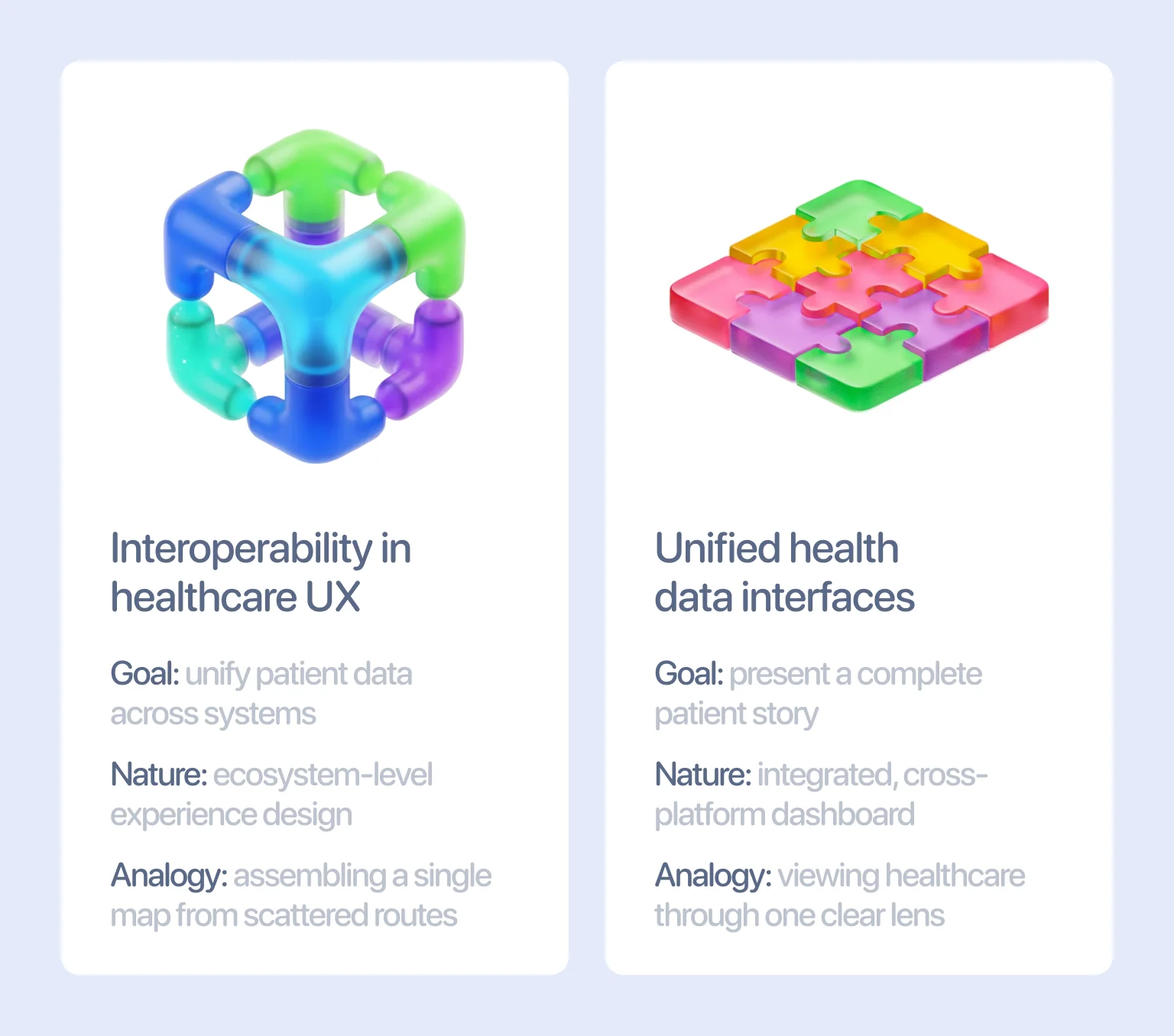
Disparate systems have been a pain point in effective care. The next wave of healthcare user experience design is about interoperability — creating unified health ecosystems where a coherent patient story is recorded from myriad data streams. This means users gain access to an integrated dashboard that shows electronic health records, lab results, and prescribed medications drawn from providers, insurers, pharmacies, and even personal wearable devices.
The challenge here lies in presenting this data clearly and responsibly. In regulated healthcare environments, thoughtful healthcare software development is essential for making complex, interconnected information understandable without overwhelming users. When executed well, interoperable systems strengthen transparency and trust across the entire care journey.
Beyond step counters and fitness trackers, wearables are becoming sophisticated health companions. Next-gen tools track everything from heart rates to blood pressures, feeding data into platforms for remote patient monitoring. Instead of waiting for episodic check-ins, clinicians can intervene early to maintain closer relationships with patients.
From a UX perspective, a great interface will translate complex data into a user-friendly monitoring experience. Want to see how vision comes to life for intelligent wearables? Delve into our case study of Rytmo.
Health UX design in 2026 continues to emphasize telehealth services, blurring the line between virtual and in-person care. This trend contributes to a continuous patient journey, making the hybrid workflow feel frictionless. A patient might begin with a symptom checker chatbot, escalate to a video consultation, and finally schedule an in-clinic visit — all within a single, cohesive environment.
A user-first platform must integrate scheduling, provide clear navigation, and maintain secure messaging channels. Explore our expertise in healthcare UX/UI design, which blends digital and physical touchpoints. Share your objectives with us, and together we can craft hybrid care experiences that feel effortless.
At-home diagnostic kits will become increasingly practical for everyday care, enabling patients to conduct non-invasive tests for illnesses like infections, cardiovascular diseases, diabetes, and other conditions without the need to visit a clinic. Think of receiving results within minutes of swabbing your nose, all from the comfort of your bedroom.
For patients, at-home diagnostics relieve the anxiety of painful procedures by addressing convenience and accuracy. Additionally, results will automatically sync with healthcare providers, facilitating timely and informed treatment decisions.
Digital therapeutics (DTx) transform from merely mindfulness apps into evidence-based interventions for diabetes, depression, substance abuse, and more. A balance of clinical rigor and behavioral design is essential to reinforcing easy adoption and meaningful engagement.
While it won't replace traditional medications anytime soon, DTx interfaces may deliver treatments for chronic illnesses more effectively by keeping patients motivated over the long term.
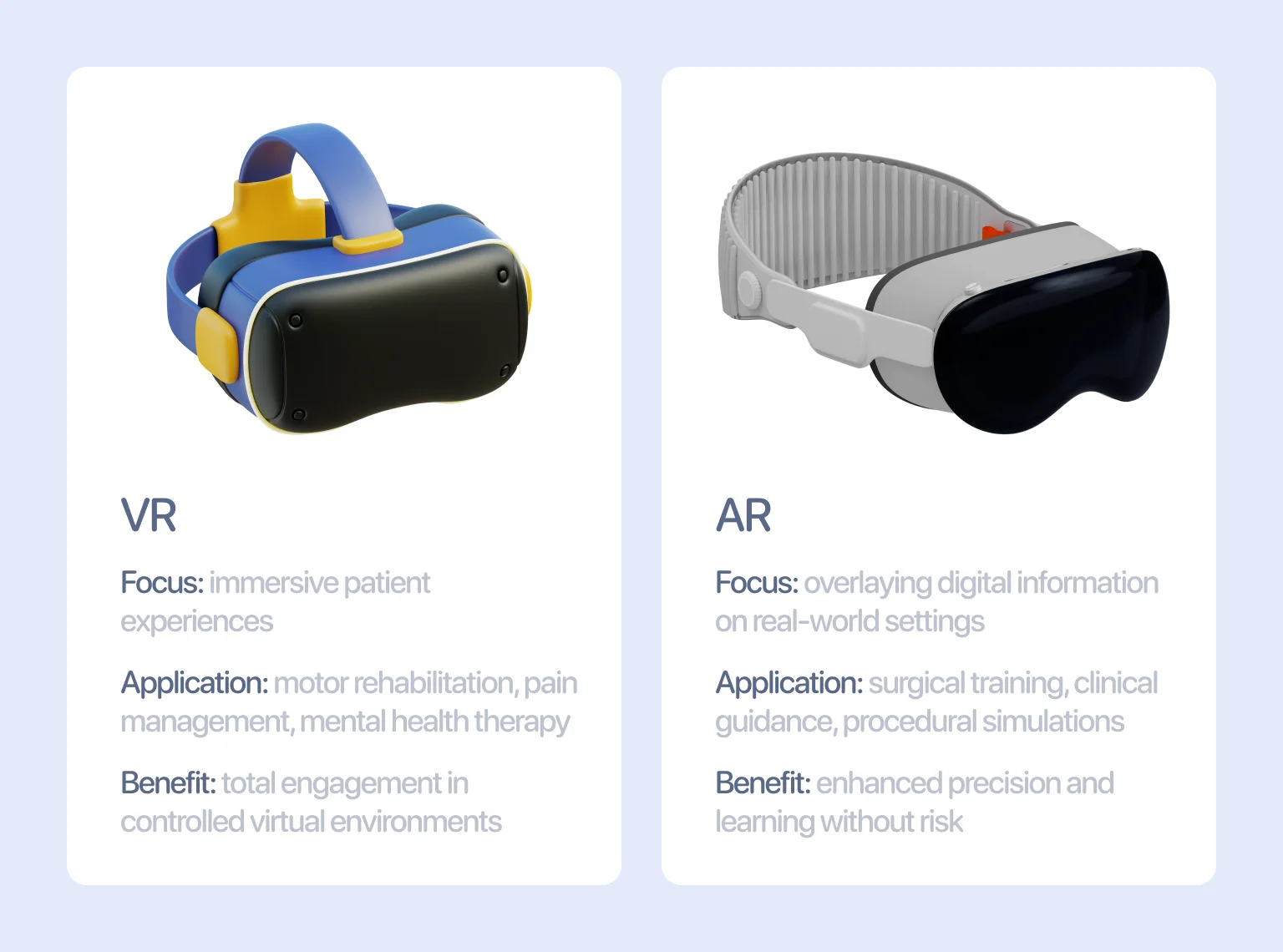
Extended reality (XR) is about to create new dimensions for the healthcare industry. Technologies like virtual reality (VR) and augmented reality (AR) are revolutionizing both patient care and medical training. Patients utilize immersive environments for motor rehabilitation, pain management, and mental health therapy, while physicians rely on AR overlays for surgical training simulations.
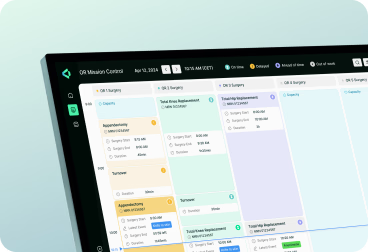
The challenges of medical UX design lie in creating intuitive interfaces, using spatial audio, and ensuring the environment feels emotionally supportive. Take a look at our case study, Vitvio, and learn how we designed an AI-powered computer vision platform that tracks real-time surgical processes in hospital operating rooms.
In 2026, mental health remains a central focus, and platforms will continue to leverage behavioral insights, such as analyzing sleep patterns and physical activity, to adapt interventions at the right moment. Patients receive recommendations that match their current state — a breathing exercise or a prompt to reach out to a friend.
UX elements must prioritize compassion and inclusivity for diverse users. Features often include mood tracking, feedback loops, and supportive microcopy that help patients feel understood rather than a sense of surveillance.
Privacy is imperative in UX design for healthcare, and blockchain technology is emerging as a powerful tool for security and transparency. It provides tamper-resistant audit trails for sensitive information — think of clinical trial participation, decentralized health record storage, and organ donor registries.
Interfaces could incorporate a user-friendly visual timeline of access logs, demonstrating “who has accessed what and when.” This gives patients unprecedented confidence that their data is protected and used only with consent, constructing a new level of trust without overwhelming them.
Voice technology is expected to reshape care delivery, breaking barriers and streamlining workflows both at home and in clinical settings. Voice user interfaces (VUIs) enable patients to manage medication schedules, call health assistance, and report symptoms using voice commands.
During procedures, physicians can document notes and access patient records hands-free. Thoughtful UX design concentrates on creating voice systems that are accurate, context-aware, and robust in recognizing medical jargon.
Digital twins, or virtual replicas of individual patients built based on their physiology, will mark a breakthrough in personalized medicine. Providers could use genetic, biomarker, and lifestyle data to simulate how a person might respond to a specific treatment plan, medication, or surgical procedure. This offers a powerful predictive tool for decision-makers before action is taken.
Common UX factors may include intuitive visualizations that show probabilistic outcomes, compare different intervention paths, and foster empathetic explanations that connect advanced, dynamic models with everyday health decisions.
Ethics and trust will be the determining factors in 2026 as AI becomes deeply embedded in healthcare diagnoses and recommendations. Users may expect more transparency in how algorithms make decisions and how data is used.
A trust-first approach in UX helps users understand the “why” behind AI insights with visual aids that turn complex data into clear, supportive explanations. Designs must also address consent and inclusivity across diverse populations, making AI a reliable partner rather than a mysterious mechanism in the pursuit of health. For a practical framework on how to achieve this at the interface level, see our guide on designing for clinical trust and UI/UX governance for AI adoption.
“Together, the trends signal a shift toward healthcare experiences that are predictive, interconnected, and designed around trust, accessibility, and human context.”
As the digital age grows more complex, the healthcare user experience is what differentiates a life-improving platform from a one-time downloaded, forgotten app. UX is the essential bridge between advanced technology and human needs, ensuring powerful features translate into tangible benefits for patients. Here's why UX investment isn't optional but foundational to healthcare efficiency.
User experience is strongly tied to patient motivation in digital healthcare. Hard-to-navigate interfaces are primary drivers that confuse and frustrate users, leading to dropouts. Conversely, strategically designed platforms encourage them to stay consistent with treatments by creating progress visualizations, celebrating milestones, and offering personalized feedback. A user-first design incorporating intuitive dashboards, empathetic messaging, and gameful elements helps foster long-term engagement and successful outcomes.
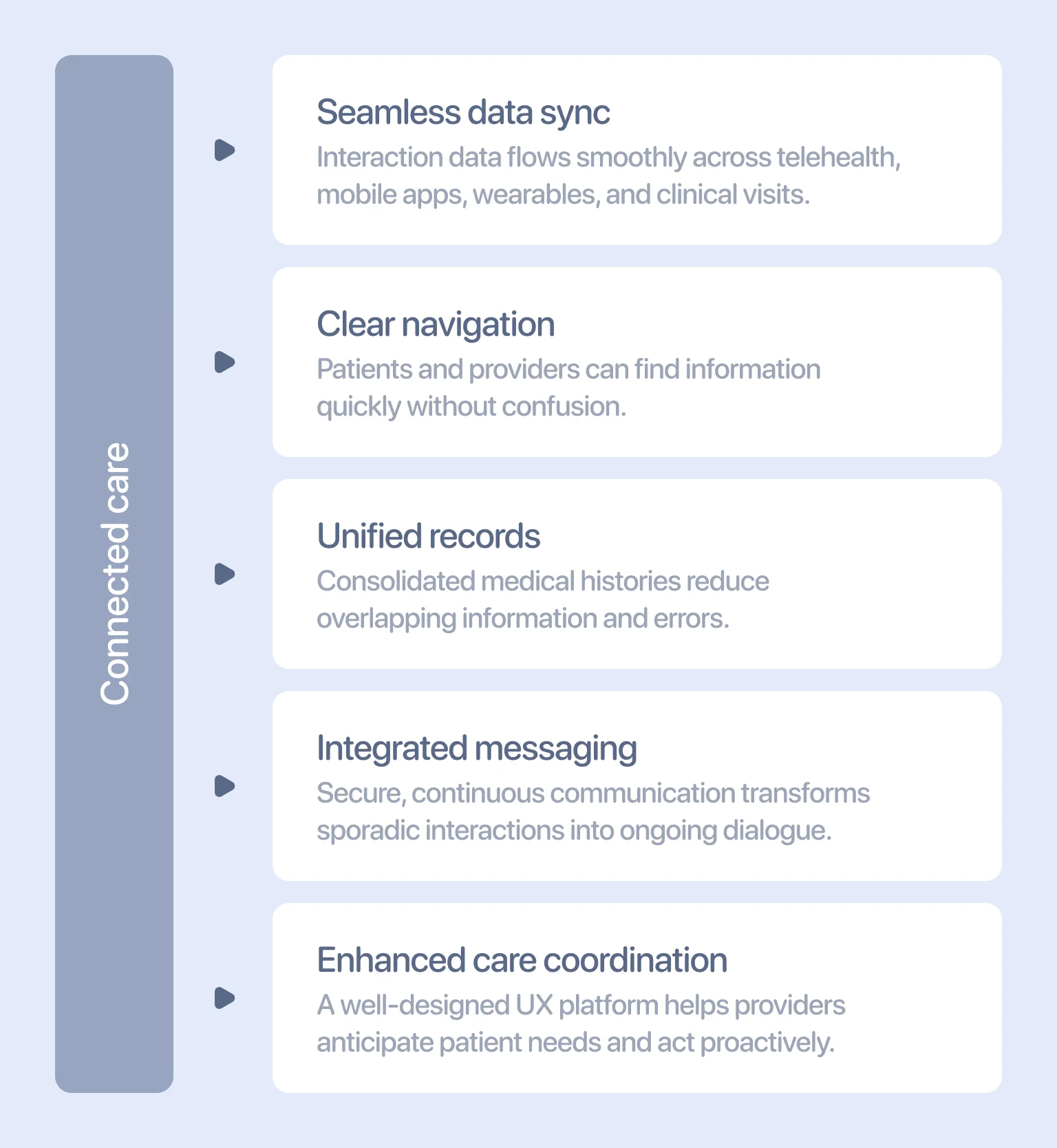
Effective communication makes a huge impact on modern care journeys. A well-designed UX platform allows provider-patient interaction data to sync across a hybrid mix of telehealth, mobile apps, wearable devices, and clinical visits. Clear navigation, unified records, and integrated messaging history reduce the risk of misunderstandings and overlapping information. When communication flows effortlessly, sporadic interactions will be transformed into a continuous dialogue.
Inclusive UX design prioritizes accessibility for patients of all ages, abilities, and backgrounds. Designers must consider product usability, ensuring digital products are accessible to those with visual, auditory, mobility, or cognitive disabilities. This may involve implementing large text options, screen reader compatibility, captioning, color contrast, and a clear layout structure.
More than compliance, accessible design empowers every user to manage their health digitally with confidence, regardless of health literacy and tech savviness. To see how we create an accessible, user-centric platform for the healthcare sector, discover our project for Home Medix — a healthcare equipment e-commerce site that simplifies the buying process for patients and families.
“In digital healthcare, UX sustains patient motivation, enables continuous communication, and ensures care is accessible to all.”
Embracing healthcare user experience design requires more than aesthetic appeal. Instead, it calls for a set of foundational principles that emphasize trust, reduced friction, and human connection. These core pillars guide every design decision to make health products not only usable but also therapeutic to patients.
Trust is the first ingredient of any provider-patient interaction. Patients should feel assured that their confidential data is secure and that the digital health system is working in their best interest. Transparent UX design clearly communicates intentions and data usage. Features like privacy settings, consent prompts, and explanations for AI-driven suggestions give users a sense of control.
This principle is exemplified in our case study, Hospity, where we helped build a trust-forward AI-supported interface for managing sensitive patient records.
Healthcare is one of the most stressful sectors, and UX should never add to that burden. When users struggle with anxiety or pain, every extra click may feel like a hurdle. A low-friction experience streamlines tasks, so patients can schedule appointments, log symptoms, or refill prescriptions easily without unnecessary steps. For truly effortless care, useful techniques include progressive disclosure, intuitive layouts, and contextual prompts to minimize cognitive load.
Patients often move between devices and platforms, whether a smartphone app or a web portal. Consistency in visual language, interactive patterns, and synchronized data flows across all touchpoints is non-negotiable. Moreover, UX design must also guarantee continuity. For instance, if a patient starts a task on their phone, such as filling out a pre-visit form, they should be able to complete it seamlessly on a desktop later, creating an uninterrupted experience.
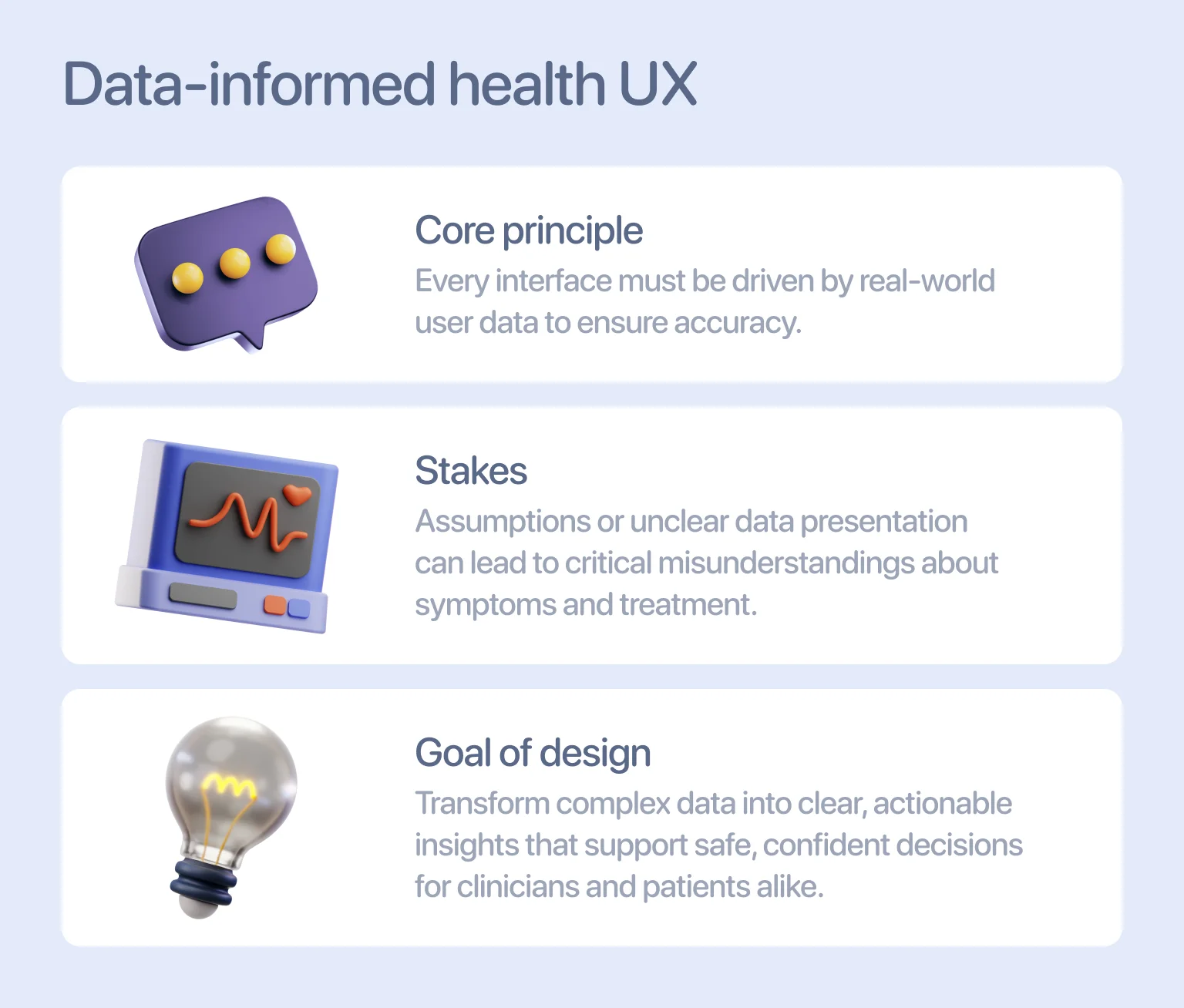
Health UX must be rigorously informed by real-world user data to ensure interfaces showcase the most relevant information. Misunderstandings or assumptions may lead to serious consequences, especially when related to critical symptoms or diseases. Design that focuses on accuracy and safety turns raw data into actionable insights without the risk of oversight, ultimately promoting better healthcare decisions for both doctors and patients.
Design and compliance are inseparable in a highly regulated industry like healthcare. UX design plays a key role in meeting strict regulatory standards, including HIPAA, GDPR, and FDA. Typical compliant features are secure authentication, audit trails, and clear consent management. By incorporating regulatory readiness into the UX framework early, health products can avoid last-minute challenges and costly penalties while accelerating development and building a reputation with patients and institutions.
Interfaces must reflect strong empathy as healthcare is supposed to be deeply personal. This is accomplished by providing supportive visuals, compassionate instructions, and color palettes that generate calmness to diverse populations. These accessible design elements help patients feel welcome and reassured.
This tenet is integral to our approach to medical apps for patients, where we excel at improving service accessibility and patient engagement. When empathy guides interface design, digital care becomes easier to trust and simpler to navigate for patients at every stage of care.
Keeping patients motivated is crucial for long-term health outcomes, especially when they're fighting chronic illnesses. Effective UX employs behavioral design to deliver personalized feedback — progress tracking, achievement celebrations, and adaptive encouraging messages.
Instead of the generic “Good job,” the notification might send users a note that says, “You've logged your blood glucose 10 days straight — keep up to score a streak!” This can turn routine tasks into meaningful experiences, allowing users to take ownership of their health journey.
In sum up, the trends discussed in this article offer a practical lens for understanding where healthcare UX is heading as we approach 2026. Alongside established design principles around trust, accessibility, and user focus, they point to a broader shift in how digital health systems are being designed and experienced. Ultimately, the goal is to create solutions that feel more innovative, reliable, intuitive, and equitable for all patients and providers.
Healthcare UX carries higher stakes in general. Unlike standard commercial products, health solutions often handle confidential information and life-impacting decisions: a confusing interface might lead to serious medical errors. Hence, it’s required to balance innovation with safety, inclusivity, and compliance.
AI-powered personalization for predictive analytics engines is arguably the most impactful technology for the daily patient experience. Together with other technologies such as XR for immersive care and voice-first interfaces, it’s expected to make digital healthcare more convenient for patients across all backgrounds.
Companies can begin by conducting thorough research on current patient journeys and identifying existing pain points. Next, determine the one trend that might solve the biggest problem, such as designing for interoperability to create a unified health ecosystem. Partner up with Halo Lab’s UX experts and initiate small-scale solutions for adaptability while minimizing risk.
Absolutely not. AI will assist with digital health UX by offering predictive insights and personalization, but it can never fully replace human guidance. Human designers remain irreplaceable for ethical judgments, empathy, and emotional understanding, which can’t be automated. The future sees human design and AI work together in harmony to create AI-enhanced care experiences.
Regulatory compliance is foundational in UX design for healthcare, serving as a component of user trust. Several regulations dictate core design elements, such as security, consent flows, and transparent data management. Adherence is more than a legal requirement, but a trust-promoting feature that allows patients to feel safe while providers avoid costly redesigns.



.avif)