







A radiologist stares at an AI-flagged anomaly on a chest scan. The model says 92% probability of a nodule. But with no context — no training data summary, no comparison cases, no confidence breakdown, the radiologist overrides the recommendation. Was the AI wrong? Not really. It was the design that gave no reason to believe it was right.

This scenario plays out thousands of times daily across health systems worldwide, revealing something many product teams overlook. The thing is, trust in healthcare AI is shaped less by model accuracy and more by how that accuracy is presented. This post discusses why an effective UI/UX governance model is the missing layer between creating a technologically robust AI product and one that clinicians will actually use in their daily practice.
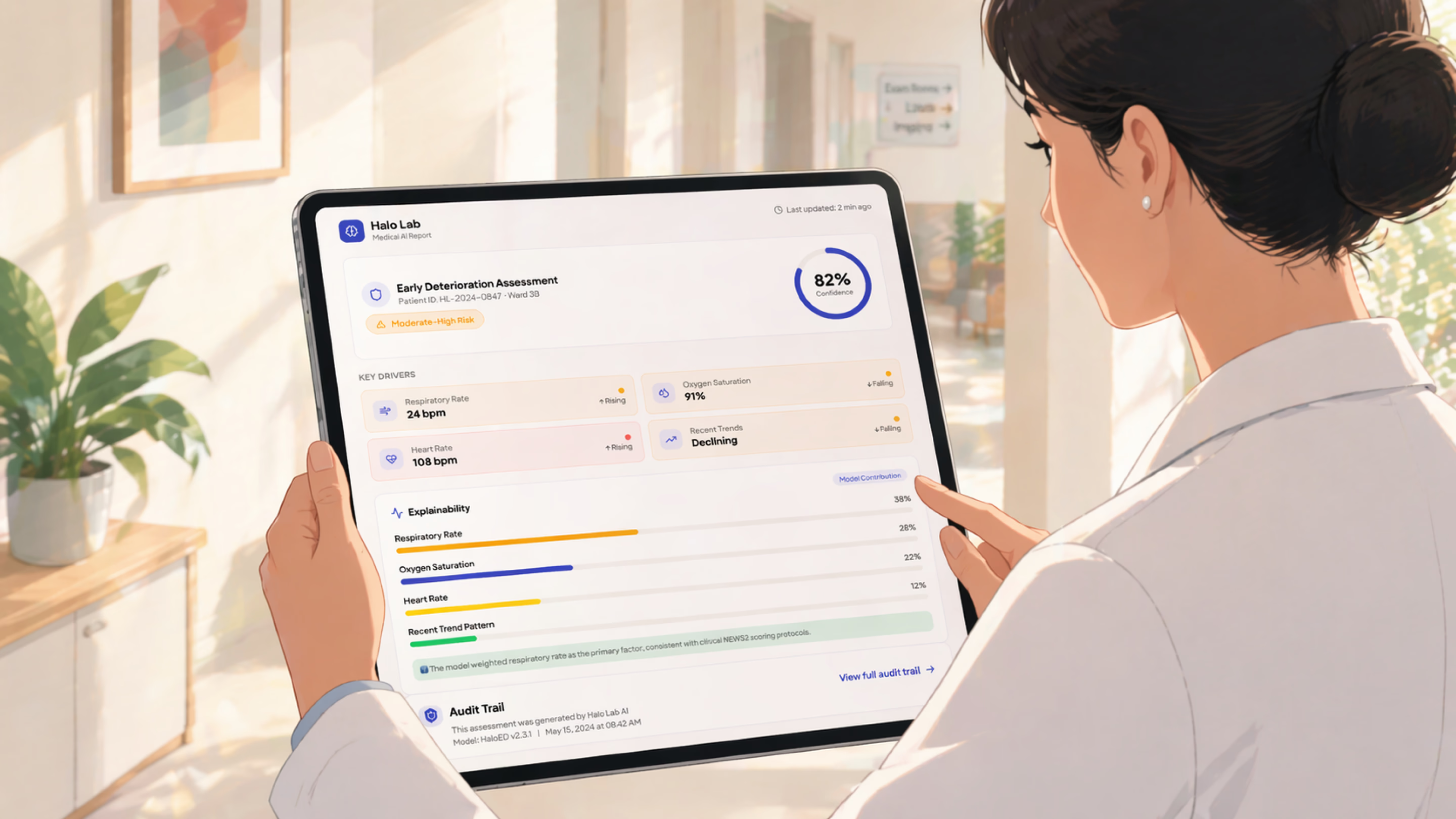
Studies show that when AI is more transparent, clinicians are far more likely to accept its recommendations — while opaque systems are often ignored. Same AI model, different interfaces, vastly different outcomes. In practice, physicians don’t evaluate F1 scores or training data. They see a recommendation on a screen and decide within seconds whether to trust it or override it.
The research supports this model. A scoping review published in Frontiers in Health Services indicates that trust is largely shaped by user-facing perception and experience, not deep technical understanding. Only two studies included in the review evaluated trust on a relational basis (i.e., not evaluating the technology itself but rather the relationship to people and systems associated with it).
This principle shaped our work on ACE Engine — a cancer care platform designed to make the treatment journey less overwhelming for patients. Cancer care generates enormous amounts of clinical data, and patients are often expected to navigate it alone between appointments. The design challenge was presenting AI-organized information in a way that felt supportive rather than clinical, keeping the human care team visible at every step, and never positioning the technology as the primary voice of authority. The interface needed to make patients feel guided by their doctor, with the platform acting as a quiet layer of support underneath.
That distinction matters enormously for product teams. Because it means building trust in healthcare AI requires designing the relationship between the clinician and the tool, and that relationship lives entirely in the interface. Think about the last time you used an unfamiliar medical device. Did you read the technical manual first? Probably not. You looked at the screen, tried to understand the controls, and made a judgment call about whether you could rely on it. Clinicians do the same with AI tools. The difference is that their judgment call affects patient outcomes.
{{banner}}
The primary focus of AI governance in the healthcare sector is adherence to regulations. Teams spend months setting up HIPAA frameworks, navigating FDA approval paths, and handling data residency requirements. This type of governance is important and necessary, but it answers one key question only: “Can we legally implement this?” Architectural governance answers the other key question: “Will people actually use any of this once it’s released?”
And right now, many teams skip the second question. A 2025 analysis in npj Digital Medicine of over 1,000 FDA-cleared AI devices found that most fail to disclose key details such as training data sources, dataset size, and performance metrics. If the manufacturers themselves aren’t disclosing this, imagine what the interface communicates to the clinician using the tool: nothing.
A 2025 World Economic Forum report notes that current healthcare evaluation frameworks were designed for static systems like drugs and medical devices, and are not well-suited to AI systems that continuously evolve after deployment. As such, governance of AI will require a new paradigm that undergoes continuous evaluation rather than being merely a “one-time” verification of compliance.
Design governance is a repeatable review process that audits every interface element - confidence scores, override paths, audit trails - for whether it earns clinical trust. Design governance will include the following:
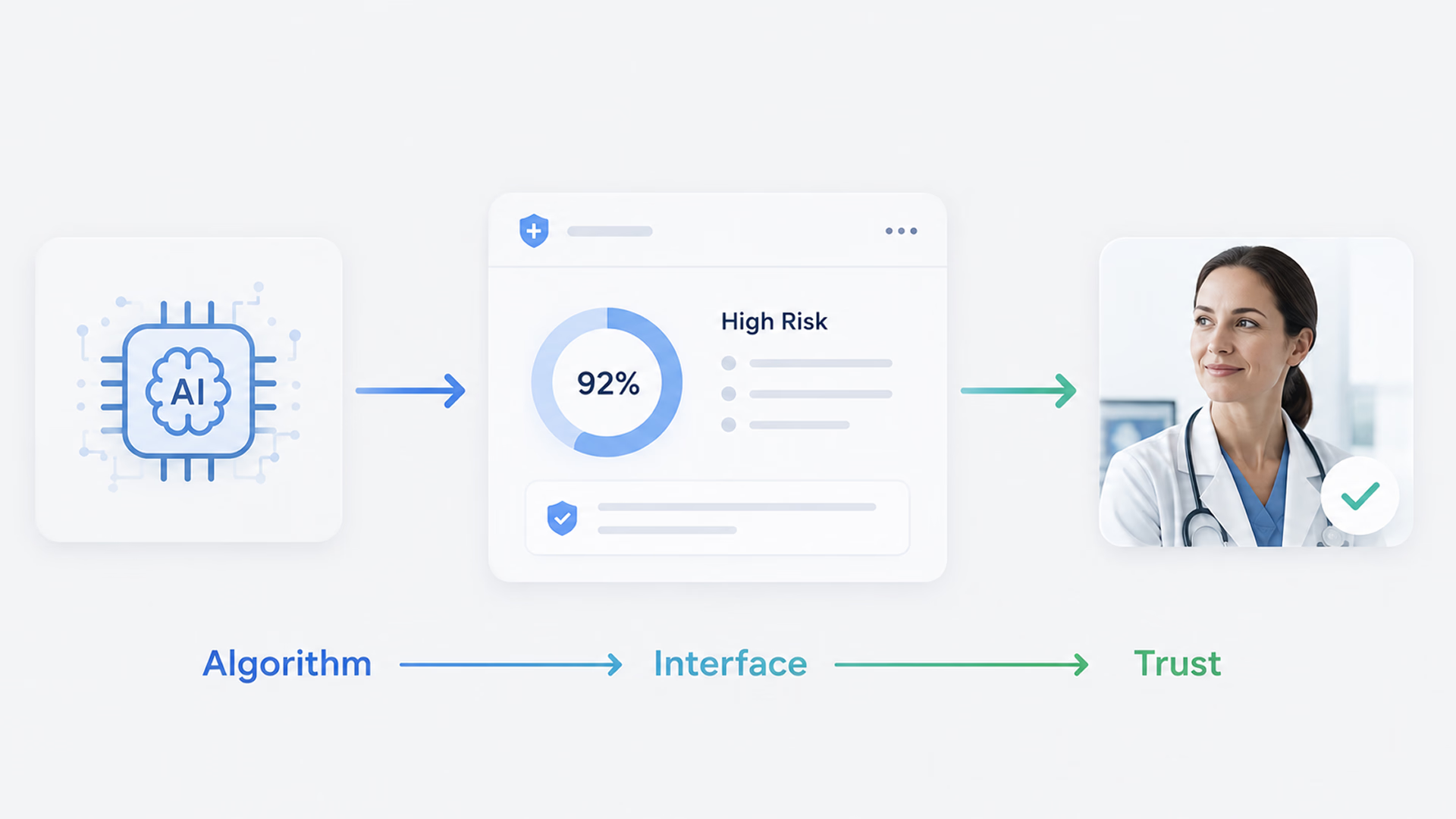
Having built healthcare products across telehealth, clinical decision support, and patient-facing tools, we’ve distilled what actually works into clear design pillars. Below, you’ll find out the reasons that directly shape whether clinicians trust or ignore AI recommendations.
Transparency and explainability are often treated as the same, but they are not. Transparency is about exposing how the system works; explainability is about making that information usable in real decisions. A full list of model weights may be transparent, but it isn’t helpful. A clear statement like “this recommendation is based on elevated CRP levels and recent imaging history” turns that information into something a clinician can actually act on.
For instance, Singapore General Hospital’s AI2D model achieved 90% accuracy in early validations. But the reason clinicians adopted it was not the accuracy. It was the contextual explainability. The system uses real-time patient data and explains its reasoning in clinical terms that the treating physician already understands. For product teams, this means: the explain ability layer cannot be an afterthought bolted onto a data science output.
This is something we worked through directly when designing an AI-assisted oncology platform. The system combines ML with patient data to help clinicians identify optimal treatment strategies — but raw model output means nothing to an oncologist in the middle of a consult. The core design challenge was translating complex analytics into an interface that communicates why a particular therapeutic approach is being suggested, using clinical language the treating physician already works with. Without that translation layer, even a highly accurate system gets ignored.
Different clinical decisions require varying amounts of information to support the decision. For example, a standard triage suggestion will require less background information than a cancer screening flag.
Design governance defines three tiers of confidence communication, each calibrated to a different decision speed:
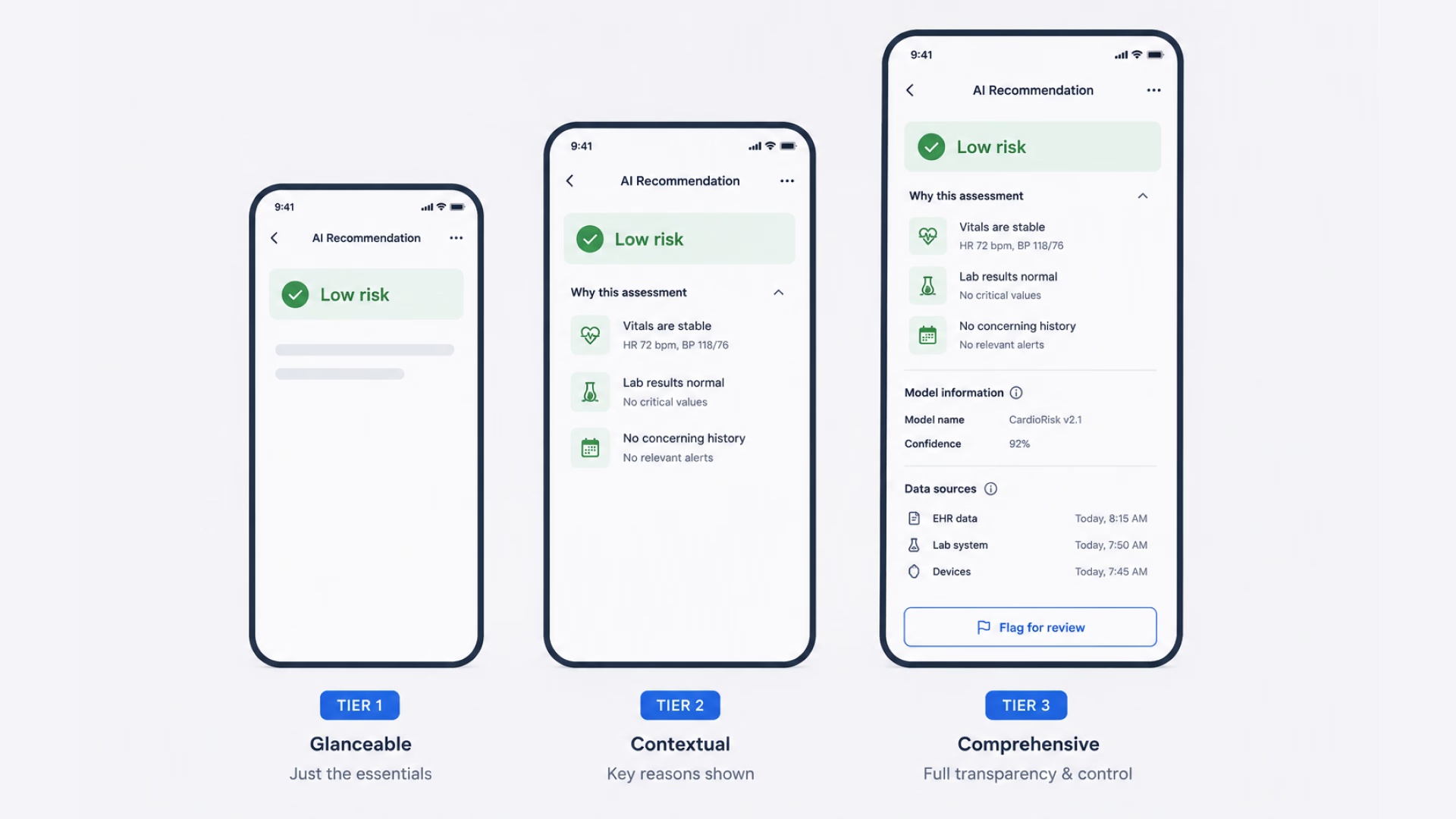
This tiered structure adequately respects clinicians’ time constraints while still allowing full accountability for the recommendations made. Many current health AI products are structured with all the information at tier 3 and none at tier 1; this is reversed, as the decision to establish trust typically occurs at the glanceable level.
“The glanceable trust layer is where clinicians decide to follow or override an AI recommendation. Get that wrong, and the deeper layers never get opened.”
The term “Human in the loop” appears frequently in AI ethics literature, but little attention is paid to its design aspects. In practice, this means that an interface should provide human oversight in a manner perceived as natural rather than bureaucratic. Let’s take a look at two examples of poor vs. good implementations:
When building AI trust in the healthcare industry, the interface should position the clinician as the final authority while making the AI’s contribution visible enough to be useful. This is a UX challenge, not an algorithm challenge. And it is where most clinical AI products lose their users.
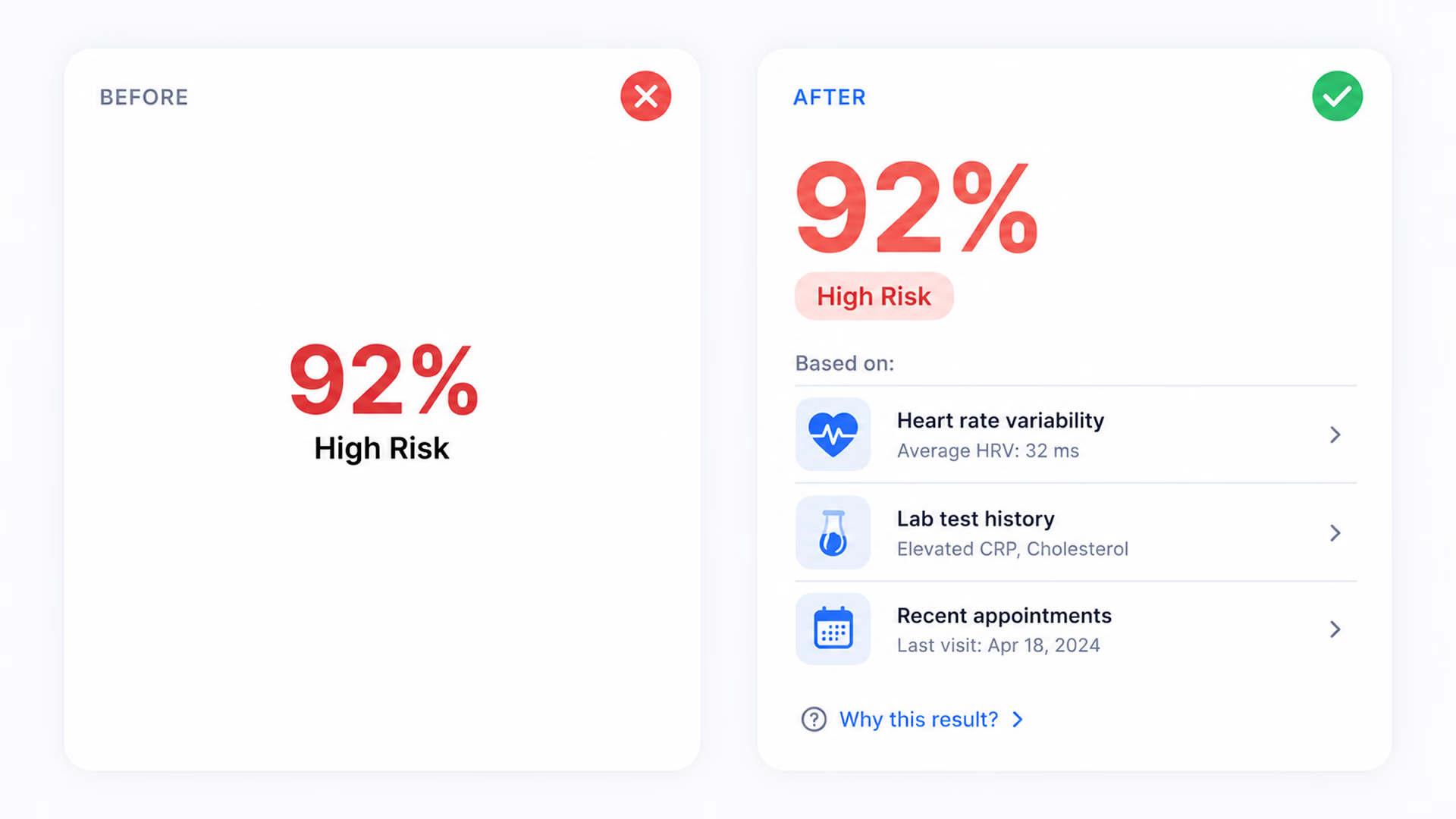
The final pillar of trust is a feedback system that lets clinicians rate AI suggestions and leave comments directly in the interface, in real time. These comments are added to the ongoing model-improvement process, but, most importantly, they tell the healthcare provider that their assessment is relevant to this particular model.
Researchers at CU Anschutz are developing tools such as MUSE to help clinicians determine when to trust AI predictions and when to be skeptical. The insight: trust calibration, or knowing how much to trust, is more valuable than blanket trust or blanket skepticism. Feedback loops in the interface help clinicians develop that calibration over time.
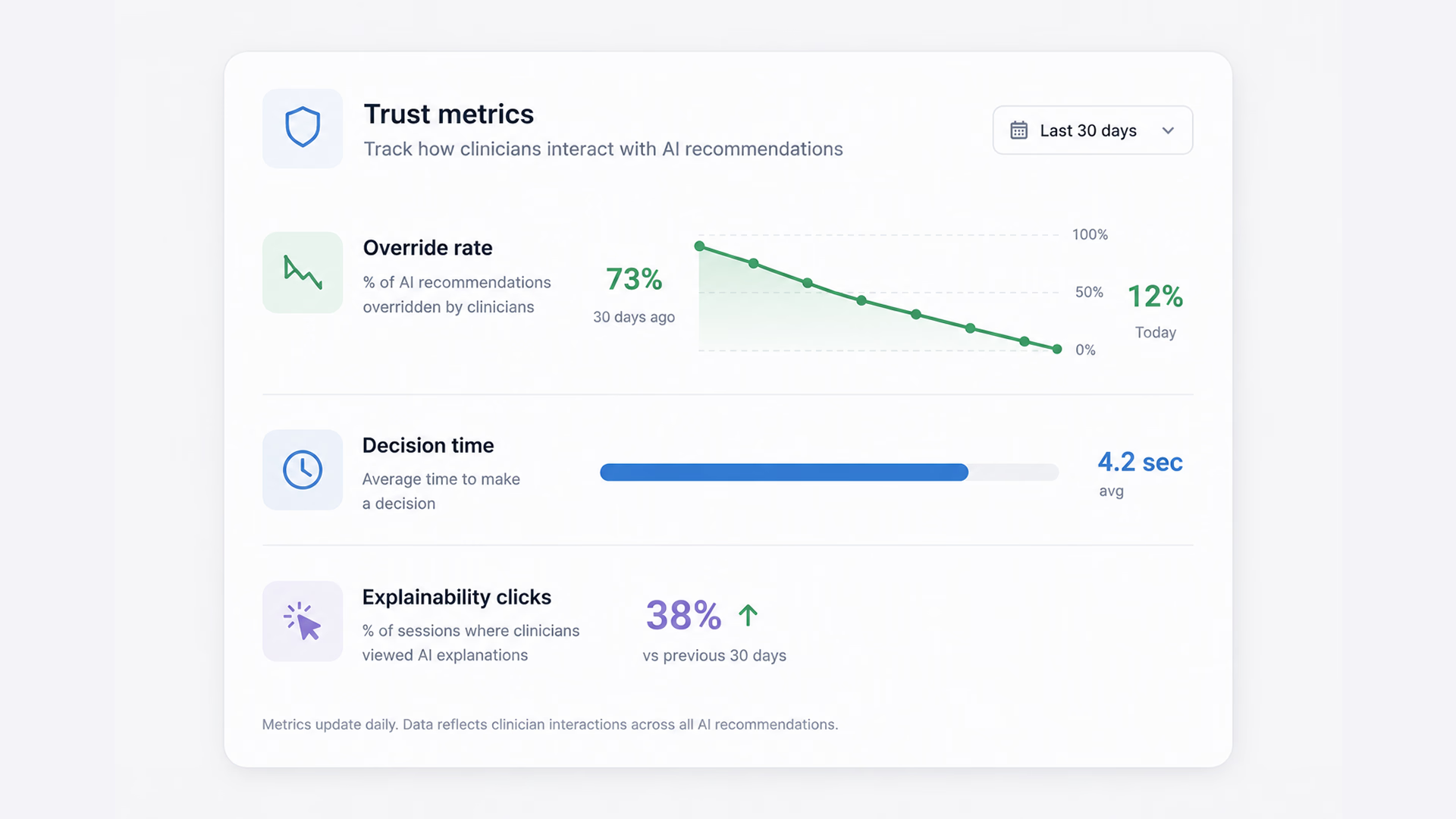
If you cannot measure it, you cannot govern it. Design governance requires trust-specific metrics that sit alongside traditional product analytics. Here are three we track on healthcare AI projects:
Ideas are helpful, but frameworks are what actually get products built. Here’s a governance model that teams can start using this quarter without a regulatory consultant.
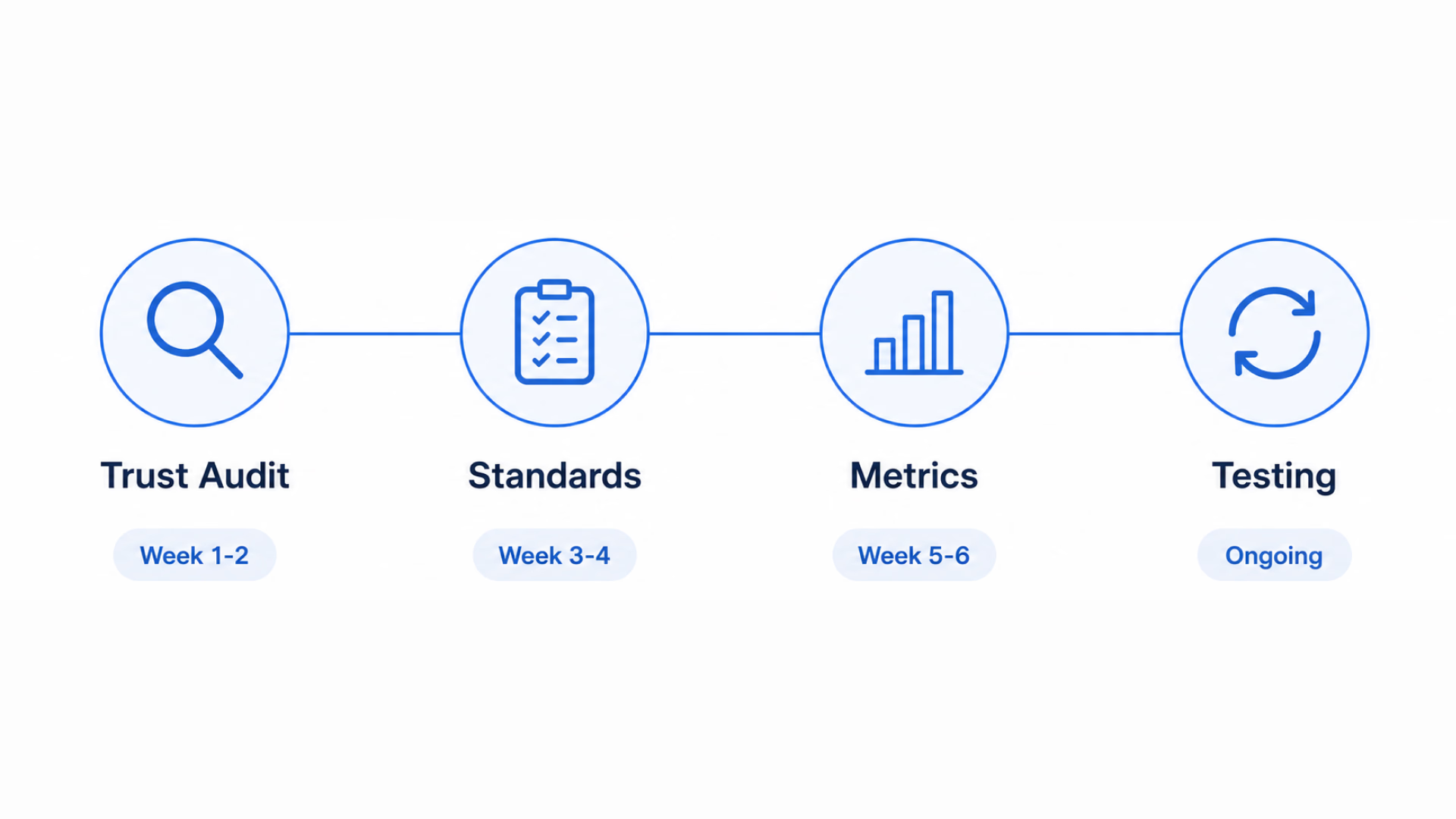
Before you create features that are new to an application, review the function of the feature as it is used in your application. Go to every screen where AI recommendations are displayed and ask yourself: “Is the clinician able to understand the reasons for the recommendation?” “Is it possible for the clinician to override the recommendation without any barriers?” “Can the clinician see the time at which the recommendation was last validated?” If any of these questions result in a negative answer, this becomes your starting point to improve the interface’s trust.
Halo Lab conducts UX audits specifically to identify usability gaps related to trust between the clinician and the technology within the clinical interface. The results of these audits are often surprising to product teams. A hidden disclaimer, an unclear score, or the lack of a timestamp can all create trust issues that will not become evident through standard usability testing.
Document what every AI output must show at each tier. Create a design pattern library for trust elements: confidence indicators, data provenance badges, model version labels, override buttons. Standardize these across your product so clinicians can develop a consistent mental model.
This is where healthcare UX trends are heading in 2026. Ethics and trust are becoming the determining factors as AI becomes a vital part of clinical workflows. Products that establish these standards now will have a structural advantage later.
Capture override rates, decision timestamps, and engagement to provide patients with information explaining why something is being done. Create a trust dashboard to track these metrics and review them monthly alongside clinical outcomes data. If trust metrics decrease, first assess your application’s design, not the model.
Each quarter, run usability studies focused specifically on trust, separate from standard task-based testing. In these studies, clinicians are shown AI recommendations, and their reactions are observed, including how much they trust the output, what additional context they rely on, and whether they choose to override it. The studies should also track how changes in the interface influence these behaviors.
This is where a key industry gap becomes obvious. Product teams often design AI features for demos, while clinicians need them for real clinical pressure — like a 3 a.m. shift.
A nurse in a busy emergency department doesn’t have time to interpret complex explainability dashboards. They need a simple, immediate recommendation with a clear next step. A specialist reviewing a pathology report, on the other hand, may want detailed context, but only after forming an initial judgment. If the AI output appears too early, it can bias their thinking; if it appears too late, it adds little value.
This timing problem is a design problem. And solving it requires understanding clinical workflow design at the level of specific roles, shift patterns, and decision contexts. We see this consistently in our product design practice: healthcare AI products that test beautifully in controlled environments collapse under real clinical conditions. The fix is almost never a model improvement. It is a workflow redesign that accounts for the cognitive load, time pressure, and interpersonal dynamics of actual clinical settings.
We encountered this gap when rebuilding a Laboratory Information System for a multi-branch diagnostics operation. The legacy platform had performance issues and fragmented workflows that forced lab staff to work around the system rather than with it. The problem was not missing features — it was that existing features didn't match how diagnostics teams actually moved through their day. We restructured the entire UX around real clinical workflows: sample management, result tracking, report generation — each redesigned to match the actual sequence of decisions lab personnel make, not the sequence that looked logical on a wireframe. The difference between a system that works in a demo and one that works at 7 a.m. in a busy lab is workflow fidelity.
Most discussions about building trust in healthcare AI focus exclusively on clinicians. But patients are stakeholders too, and their trust dynamics are entirely different.

Generally, patients trust AI as a backstage tool but not as a front-stage actor. Interface design must respect this boundary. Patients don’t care about model versions — they care about whether a human oversees the AI, if they can ask questions, and who has access to their data. Thus, you should check out:
Results from our telemedicine platform projects have consistently shown that when the patient interface clearly conveys the role of the human physician in the patient’s care process, patient trust in the system is significantly improved, without disclosing any technical architectural information.
{{banner-2}}
If teams treat trust as something they have to design — with clear metrics, testing, and strong review processes — they’ll build healthcare AI people actually use. Otherwise, even highly accurate tools risk being ignored. At Halo Lab, we have been designing for healthcare since our early telemedicine projects. We have seen firsthand how a single interface decision can shift adoption from resistance to routine. For this, you should make trust a feature, not an afterthought. Pick one screen in your AI product. Ask the three Phase 1 questions. If you can't answer all three confidently in five minutes, you have a trust problem and we'll audit it for free.
Trust in healthcare AI is the clinician’s or patient’s confidence that an AI recommendation is safe, accurate, and accountable. It matters because even highly accurate AI tools get overridden or ignored when the interface fails to communicate why the recommendation was made.
Doctors don’t evaluate the technical details of an AI model — they judge it based on what they see on the screen. Features like confidence scores, clear explanations, visible records, and easy override options shape whether they accept or reject its suggestions. In the end, good design is what builds trust.
Design governance is a set of clear rules and review steps that make sure every part of a healthcare AI interface shows trust, responsibility, and sound clinical thinking. It includes explainability standards, confidence communication tiers, override architecture, and continuous trust testing.
There are three important metrics: Override Rate by interface context (indicates where and how frequently clinicians override the recommended AIs). Time-to-Decision per AI recommendation (shows how quickly clinicians make decisions after receiving a recommendation from the AIs). Explainability Engagement Rate (indicates how frequently clinicians expand the contextual detail panel). Together, these metrics make up a Trust Dashboard.
Patients typically view artificial intelligence as a back-end tool while expressing doubts about its role as a primary consultant. Trust-building for patient-facing AI takes place through a combination of clearly defined consent processes, visible indicators of the role of humans in the AI process (e.g., “Reviewed by Dr. [Name]”), and simple language explanations.