




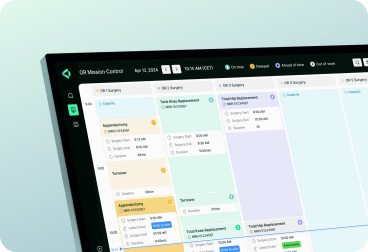



Generative AI in healthcare is no longer new. Many health systems have experimented with it, but far fewer have integrated it into tools clinicians use every day. Even so, GenAI is already transforming care delivery and healthcare product development.

In the AMA’s 2026 survey of nearly 1,700 US doctors, 81% said they use AI professionally, up from 38% in 2023. Most of the tasks they named are generative ones:
For care, this changes how the workday unfolds. Documentation that physicians often finished after hours now starts as a draft waiting for review. Instead of writing from scratch, the doctor edits a patient’s portal question with a suggested reply.
For the teams building healthcare software, the shift goes just as deep. AI-generated drafts need an interface that shows where the information came from, a workflow that requires clinicians to review and approve the text, and an integration that saves the approved version to the EHR. At the same time, GenAI is changing how these products are researched, designed, coded, and tested.
Below, we look at both sides of that shift: what generative AI already does for care, and what it takes to build products around it that clinicians trust.
Generative AI in healthcare is a type of artificial intelligence that creates new content, such as clinical notes, patient messages, record summaries, medical images, synthetic data, or candidate molecules, by learning patterns from large medical and general datasets. Where traditional healthcare AI classifies or predicts, generative AI produces drafts that people review and use. Its output can be far more useful, and it can also be fluent and wrong, which is why high-risk healthcare applications typically keep a human review step before generated content affects care or the patient record.
Healthcare products today operate on a few model families:
{{banner}}
Generative AI is opening up new possibilities across healthcare, from streamlining documentation and patient communication to supporting medical imaging, drug discovery, and synthetic data generation. Below, we explore some of the most relevant generative AI use cases in healthcare.
Ambient AI scribes listen to a visit, with the patient’s consent, and turn the conversation into a structured clinical note for the physician to review and sign. Documentation is one of the biggest pain points in healthcare, so GenAI adoption starts here.
First, a phone or workstation documents the conversation between a patient and a doctor. The AI model separates clinical content from small talk, and a draft note then appears in the EHR tailored to the specialty’s documentation requirements. Instead of rebuilding the visit from memory in the evening, the physician corrects a draft while the details are still fresh.
The effect shows up at scale. Over 63 weeks, 7,260 physicians at The Permanente Medical Group used an ambient scribe in more than 2.5 million encounters, according to an analysis published in NEJM Catalyst. Together they saved the equivalent of 1,794 working days in a year. Nearly half of their patients said the doctor spent less time looking at the screen.
After every patient visit, diagnoses and procedures must be translated into standardized medical codes that match the clinical documentation. Insurance claims must follow each payer’s rules to avoid payment denials. And when a treatment, test, or medication requires prior authorization, staff need to gather supporting evidence from different parts of the patient’s medical record. Generative AI healthcare tools can help teams handle these tasks by reading the record and preparing:
Staff then review and submit instead of compiling everything from scratch. Faster submission alone doesn’t guarantee lower costs, though. The products that hold up in audits keep every suggestion traceable to the line in the chart it came from.
Generative AI can also be used in patient communication. For care teams, it drafts replies to portal messages from the patient’s question and relevant chart context, so a nurse or physician doesn't write a response anymore, just edits it. On a patient's side, virtual assistants answer routine questions about medications, appointments, and preparation 24/7.
The hard part of AI chatbot development in healthcare is deciding when the answer is outside the assistant’s competency. A useful one recognizes symptoms that need a human and passes the conversation to staff with enough context to take over.
Generative AI can help radiologists analyze medical images, such as X-rays, by preparing draft reports and flagging potentially serious findings. Northwestern Medicine offers one of the clearest results so far. Its in-house generative model drafted reports for nearly 24,000 radiographs across 12 hospitals, according to a study in JAMA Network Open. Radiologists who started from those drafts documented studies 15.5% faster, and peer review found no difference in clinical accuracy. The system could also flag unexpected collapsed lungs so they were read sooner.
That pattern holds well beyond one health system. In imaging, the model prepares an initial report and highlights findings that may need urgent attention. The specialist reviews the images, checks the AI-generated report, and makes the final clinical assessment. This reduces the time spent writing reports from scratch while keeping medical decisions in the hands of clinicians.
Clinicians don’t want AI to read the scan for them. They want it to take the typing off their plate.
A patient’s history may span years of clinical notes, lab results, imaging, and genetic data, while relevant research and guidelines continue to change. Generative AI can bring this information together by summarizing the patient’s record and comparing it with current guidelines and research.
In oncology, for example, a model can prepare a case for a tumor board by pulling together the relevant history, genetic findings, and potentially relevant therapies or clinical trials, with sources for each recommendation. Specialists still make the final treatment decision, though.
Traditional drug discovery proceeds as follows: researchers find a biological target, design a molecule that acts on it, test it in the lab, and then move to human trials. Generative models can speed up the first two stages. They propose targets from biological data and generate candidate molecules with the desired properties, which narrows what chemists need to synthesize and test.
Rentosertib shows how far that path now reaches. Generative AI identified both its target and the molecule. In a phase 2a trial for idiopathic pulmonary fibrosis published in Nature Medicine in 2025, patients on the highest dose saw their lung function improve while the placebo group’s declined. Larger trials will decide its future, but it’s one of the first AI-designed drugs with results from a randomized trial.
Synthetic data is artificially generated patient data (records, images, or signals) designed to reflect the statistical patterns of real data without directly copying individual patient records. Teams commonly use synthetic data for three purposes:
One caution applies to all three. A generative model can memorize parts of what it was trained on, so synthetic datasets still need a privacy review before anyone treats them as safe.
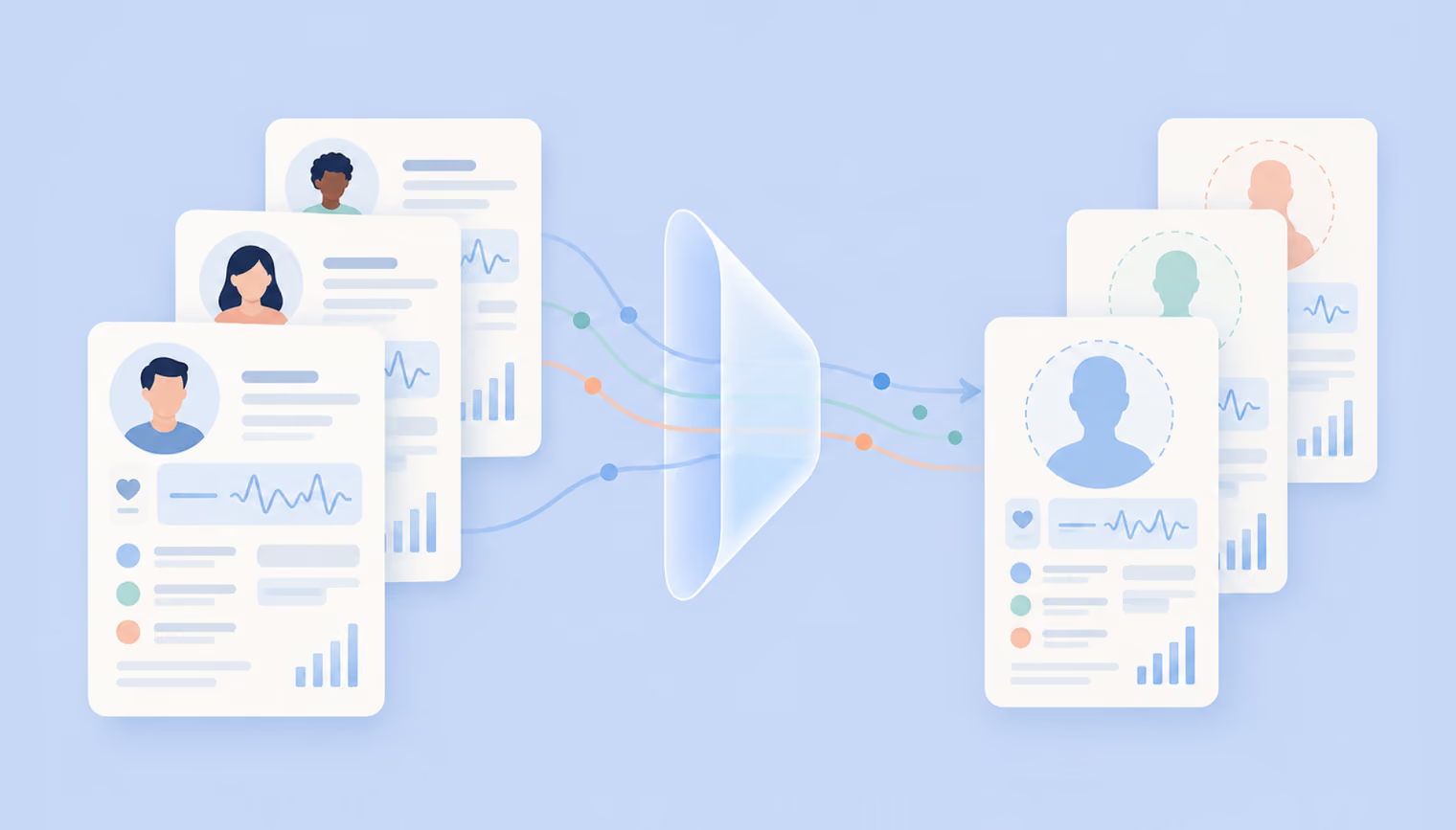
The value looks different for different members of the process: patients, clinicians, healthcare organizations, and product teams.
Value for patients comes up in three things that have little to do with the technology itself:
Burnout in medicine has many causes, but clerical work is one of the few that technology can remove directly. A multi-site study published in JAMA Network Open in 2025 followed clinicians using ambient documentation. At Mass General Brigham, burnout fell by 21.2 percentage points after 84 days. Notably, clinicians who spend less mental energy on notes have more of it for diagnostic reasoning, difficult conversations, and complex cases.
Generative AI can reduce the time teams spend on documentation, coding, prior authorization, and other repetitive tasks. That leaves more time for patient appointments, shortens waits, and lowers the number of claims returned for corrections.
When clinicians spend less time on paperwork, they have more time for patient care and less administrative work after hours. For organizations already struggling to hire and retain staff, lifting that burden can be part of the solution.
For the teams building generative AI for healthcare, research synthesis, interface prototypes, test data, and code drafts that once took weeks can now take days. That means more ideas can be tested with clinicians before the budget is committed to one direction.
But faster development doesn’t automatically mean a better product. Clinical workflows, compliance requirements, and usability still need attention throughout healthcare software design and development.
Building digital health interfaces has always meant working around the same challenges: clinicians have little time for interviews; every screen carries some clinical risk; the same content has to make sense to a specialist and to a patient reading it on a phone at night. Generative tools can help tackle some of them. Others remain a human responsibility.
To conduct reliable user research, researchers need to interview healthcare professionals, observe how they work in hospitals, and review support tickets. In the past, analyzing all this information took a lot of time and had to be done manually. Today, GenAI helps healthcare product teams process interview recordings, observation notes, and support tickets faster. It can transcribe conversations, group recurring problems, and draft profiles of typical users, such as ICU nurses or outpatient oncologists.
The output is a starting point, since models tend to amplify what is said often and miss what is said once. For example, ten comments about interface colors could outweigh one comment about a workaround nurses use on the night shift. Researchers therefore check the original recordings and notes behind each AI-generated theme before using it to make design decisions.
With generative AI, teams can explore several layout directions, turn a promising concept into an interactive prototype, and populate it with realistic synthetic patient data much faster than before.
This speed changes how ideas get validated. Instead of debating one direction in meetings, teams put two or three versions in front of users and let their reactions decide. The designer’s role shifts toward checking that:
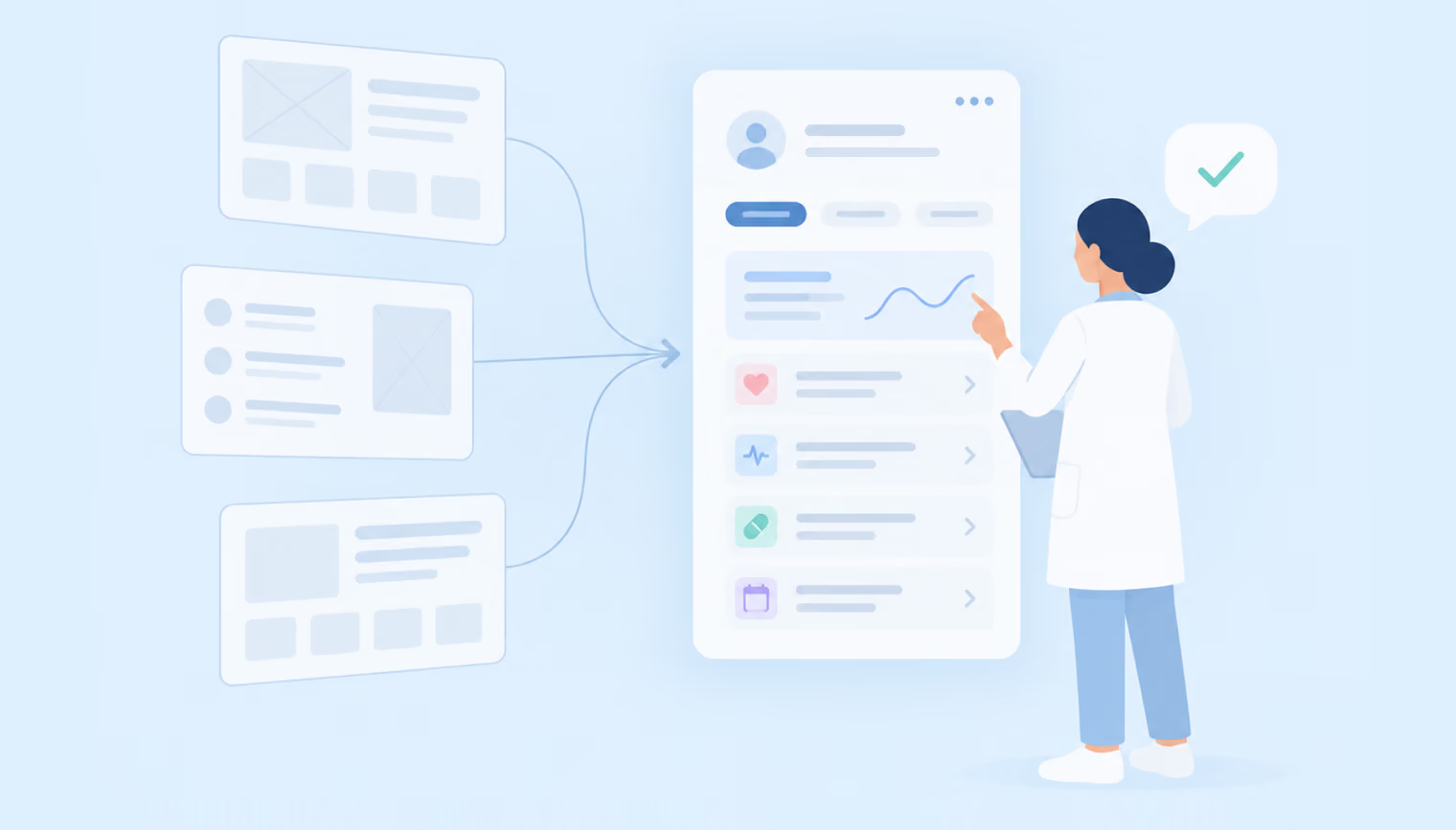
A generative feature is only as valuable as clinicians’ willingness to rely on it. In healthcare AI UX design, that trust comes from a few concrete decisions:
Keeping these interactions simple also matters for reducing cognitive load in ICU interface design, where clinicians need to make decisions quickly.
A discharge summary full of medical terminology can leave a patient unsure what to do next. With generative AI, that summary is tailored to the reader: a plain-language version for patients, a translated one for families, a concise one for a busy specialist.
Rewriting medical content still requires care. A simplified explanation might leave out an important dosage instruction, while a translation could change the meaning of a warning. Teams need to check these versions for clinical accuracy and test whether patients can follow the instructions.
Making complex medical information easier to navigate for different users was a key consideration in our work on an AI-assisted oncology platform. For a demo version presented to investors, the team mapped user journeys and designed a mobile experience for patients and a desktop workspace for clinicians. It then delivered a complete UI/UX system ready for further product development. The new structure made patient information easier for providers to see and remote guidance easier for patients to follow.
{{banner-2}}
When it comes to engineering, digital health teams are expected to ship features quickly while ensuring every release meets the requirements of security reviews, audits, and clinical scrutiny. Today, code assistants and automated testing tools take on part of that load, but engineers still own what reaches production.
The role of AI in healthcare software development is mainly to take care of repetitive coding tasks. Developers can use it to generate boilerplate, map data between systems, write unit tests, and draft routine functions. This frees them up to focus on the harder parts of the work, such as system architecture, integrations, and making different healthcare systems work together.
How much faster this makes a team is still an open question. Independent trials have produced mixed results, and the gains depend heavily on the codebase and the developer’s experience. That uncertainty is one more reason for caution in generative AI software development in healthcare: AI-written code goes through the same human review as any other code. Reviewers pay extra attention to how it handles patient data and standards like HL7 and FHIR, which general-purpose models know less well.
Medical software can fail in situations users rarely notice: an unusual date format in a lab result, a claim with a missing field, or a timeout during an EHR sync. Writing tests for every possible case by hand is slow, which means some scenarios may go untested.
Generative tools can speed up this work. They can read requirements and existing code, suggest test cases for edge conditions, and update test suites as features change. Engineers still decide what needs to be covered and review the generated checks, because automation cannot catch problems it was never designed to look for.
Healthcare software teams need realistic data to test their products, but using real patient records during development can put sensitive information at risk. Testing with empty or overly simple records can also hide problems that might arise in real clinical settings.
Synthetic data offers an alternative: artificially generated records that mimic real-world data. Teams create and use these records in three steps:
This approach lets teams test performance, integrations, and interfaces under realistic conditions while reducing their reliance on real patient data during development.
In regulated software, documentation is part of the product. Requirement specifications, traceability between requirements and tests, risk files, and release notes all have to stay in sync with the code, and they drift the moment a sprint gets busy. AI in healthcare software development drafts and updates these documents from commits and tickets, which keeps them current with far less manual effort. An engineer still signs off on every artifact before it goes to an auditor. Teams seeking this approach from day one can explore Halo Lab’s healthcare software development services.
Every strength of generative models has a shadow in clinical settings. Just like the fluency that makes a draft useful can also make an error convincing.
Language models predict the most plausible next words, and plausible isn’t always accurate. When the prediction is accurate, everything goes smoothly; when it isn’t, the model fills a gap with a dose, a lab value, or a citation that sounds right but doesn’t exist. Such hallucinations can lead to something minor, like an embarrassing marketing email, or something as serious as the wrong treatment in a discharge summary.
A safe clinical AI system has several layers of control:
Healthcare AI tools must protect patient information, especially when building a HIPAA-compliant AI portal. In practice, it looks like this:
Bias isn’t limited to humans; generative AI can reproduce or amplify biases present in its training data. In dermatology, for example, studies have found that some AI models are less accurate when assessing skin conditions in people with darker skin tones. Similar biases can occur when training data underrepresents certain age groups, languages, or communities.
These disparities may not be obvious in overall accuracy scores. To identify them, teams need to test performance across different patient groups, monitor results after launch, and include people from diverse backgrounds in design research.
The regulatory risk rarely comes from the model itself. It comes from discovering late that the product counts as a medical device, which can mean months of extra validation, a redesign, or a delayed launch. In the US, software that helps diagnose or treat patients can require FDA clearance. Tools that let clinicians independently review the basis of a recommendation may fall outside that definition, a line the FDA restated in its clinical decision support guidance updated in January 2026. The regulatory requirements also depend on the product’s intended use and the type of data it analyzes.
Models that keep learning bring a second risk: every significant update could trigger a new review. The FDA’s final guidance on predetermined change control plans, issued in December 2024, addresses this. Manufacturers can describe planned updates in their submission and roll them out without starting over.
Products sold in Europe face an additional layer. The AI Act entered into force in August 2024 and classifies AI used in regulated medical devices as high-risk. Its requirements for risk management, data governance, human oversight, and technical documentation phase in over the coming years. Teams that account for these requirements early can reduce the risk of costly redesigns and delays further into development.
A model that works perfectly in a demo can still fail on day one in a hospital. The reason is usually integration:
Standard interfaces such as HL7 FHIR make the data connection more predictable, but workflow fit takes observation.
Plenty of promising pilots stall somewhere between a convincing demo and daily use. The sections below illustrate the ways to incorporate GenAI into a healthcare product.
The best first use case is rarely the most impressive one. Teams that get to production tend to pick a task with three qualities, in this order of importance:
Drafting notes, answering routine portal messages, and preparing prior authorization packets all fit that profile. Autonomous diagnosis does not.
If a pilot is gone, and nobody notices it, it’s not worth the investment.
A model works with whatever it’s given to read. Medication lists may live in one system, allergies in another, and half the history in scanned PDFs. In that case, the output will be incomplete no matter which model runs underneath. Preparation comes first:
That groundwork often takes longer than building the AI feature itself.
Among GenAI models, three options cover most cases:
The choice depends on the task’s risk, the data’s sensitivity, and the volume you expect, and many products end up combining two of them. Whichever mix you choose, most of the effort goes into connecting the model to records, permissions, and audit trails, which is the core of our AI integration services.
Human review is the core safety mechanism of almost every clinical AI feature. So, it has to be designed as carefully as the model. Reviewing should take less effort than writing from scratch; otherwise people skip it. What’s more, clinicians’ edits become valuable feedback, and the record should always show who approved the final version.
Testing runs in widening circles:
After the launch, the team needs to ask different questions. Patient populations shift, documentation habits change, and vendors update their models, so performance that looked stable in the pilot can quietly drift. Teams that scale well do two things:
Even a promising pilot can run into problems with integration, adoption, and performance, which makes the transition from healthcare AI prototype to production particularly challenging.
A year ago, most of the AI conversation focused on single-task assistants, like ambient scribes, inbox drafts, or summaries. The future of GenAI in healthcare centers around agents that can complete a workflow from start to finish.
Take prior authorization: instead of drafting a request and stopping, an agent can gather records, submit the request, and track the payer’s response. It only returns to staff when a decision is needed. That also changes the design challenge: teams need to decide where human checkpoints belong and how staff can see what the agent has already done.
Patients are also bringing AI into their care. A KFF poll from March 2026 found that 32% of US adults had used AI for health information or advice in the past year. Yet only about six in ten who used it for physical health questions later followed up with a doctor. Patient-facing products will increasingly compete with chatbots patients already use. They need to offer something those tools can’t: a clear, quick path to the actual care team.
Models are also becoming multimodal, combining text, images, and other signals. A single feature can weigh a scan, lab trend, and clinician note together. This makes it even more important for interfaces to show which inputs shaped an answer.
Finally, governance is becoming part of the product itself. Health systems are formalizing AI oversight, so buyers increasingly look for monitoring dashboards, audit trails, and clear accountability for AI outputs. Products that include these from the start will be easier to evaluate and approve.
GenAI can already change familiar healthcare workflows. But faster note-taking or automatically generated responses don’t necessarily make a clinician’s job easier. If the output is difficult to verify or the new tool doesn’t fit into existing workflows, some of the time saved simply gets lost.
That’s why developing healthcare products with GenAI takes much more than configuring a model. Thoughtful design helps clinicians work with AI-generated outputs, reliable engineering ensures the tool integrates with other systems, and clinical validation shows whether it performs well outside a test environment. The goal is to create a tool that makes everyday work easier, not one that adds another complicated process to it.
{{banner-3}}
Clinical documentation with ambient scribes, drafting replies to patient messages, and administrative paperwork such as coding and prior authorization. Imaging report drafts, research summaries, and synthetic data are growing quickly. Personalized treatment support and drug discovery are promising but less mature.
Traditional AI analyzes data and returns a label or a score, such as a sepsis risk or a flagged region on a scan. Generative AI creates new, more open-ended content, like a visit note, a patient reply, or a synthetic image.
The biggest risk is hallucination, where a model states an invented detail with confidence. Other potential risks include patient data exposure, bias against underrepresented groups, unclear regulatory status, and poor fit with clinical workflows.
Yes. Generative AI can be used with protected health information (PHI) when the setup meets HIPAA requirements. This includes having a business associate agreement with any vendor that handles PHI, limiting prompts to the minimum necessary data, and logging access and model outputs.
They should first identify a frequent, time-consuming task where errors can be caught before they affect patients. Then teams should check whether the required data is accessible and reliable, define where clinicians review the output, and test the system in stages before scaling it.


