






A data leak from an unsecure chatbot brings federal auditors to your door. It can bankrupt your practice and end patient trust overnight. Speed without compliance is a liability — a HIPAA-compliant AI portal built to the highest security standards is the viable path forward.

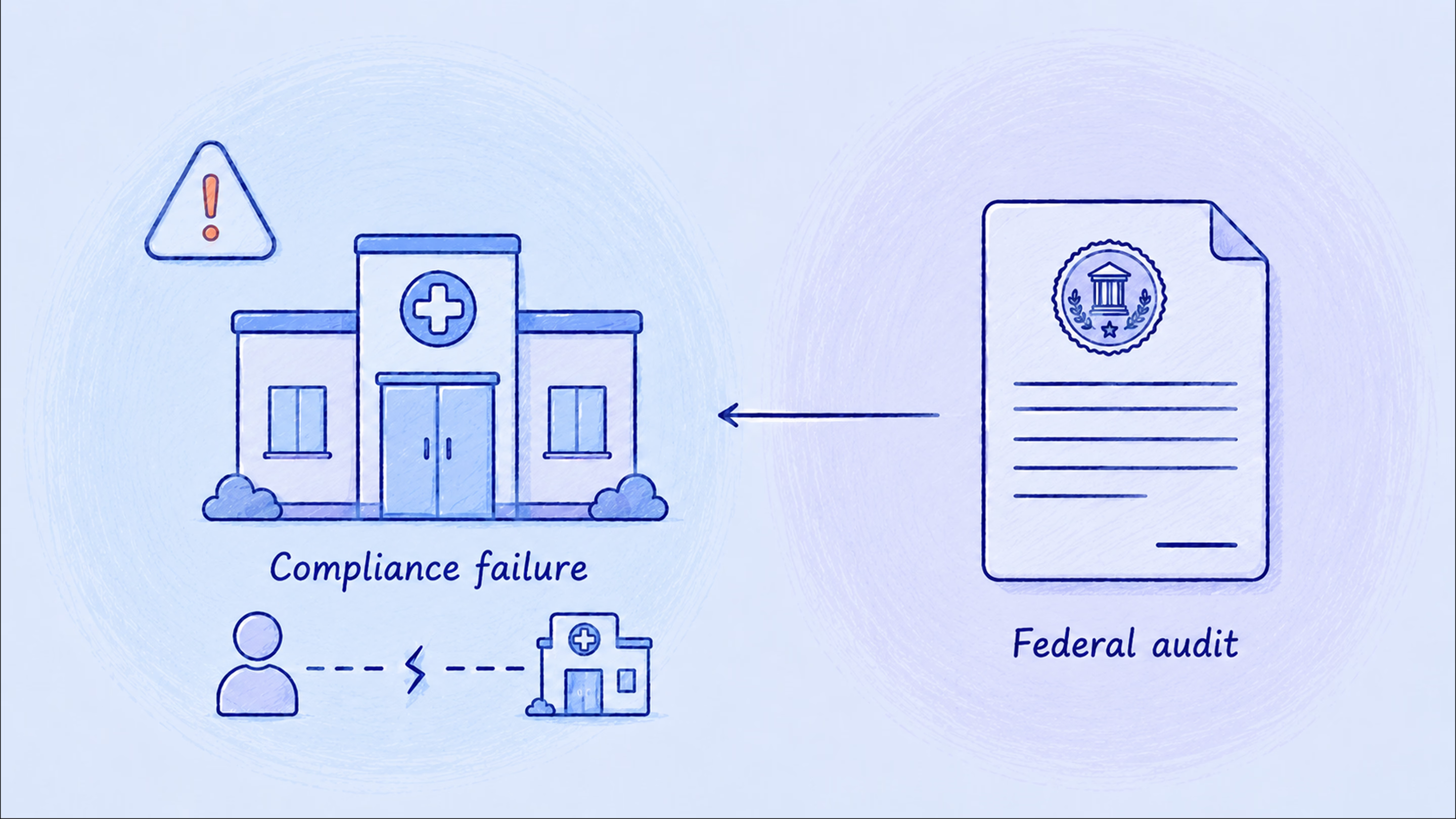
Using AI in a clinic is a practical response to the administrative burnout hitting healthcare workers. However, moving patient records into a machine-learning environment is complicated. Guarding a login is the easy part. The bigger risk lies in protecting the patient data used to train the system.
So how to build a HIPAA-compliant AI portal? This guide covers the technical requirements, the legal limits of a HIPAA-compliant AI platform, and the actual steps to launch a system that keeps regulators away.
Healthcare staff spend a surprising amount of time on tasks that have little to do with treatment. Appointment coordination, intake forms, follow-ups, insurance questions, and repetitive patient communication consume hours every day. Clinics are trying to reduce that pressure while still maintaining fast response times and accurate documentation.
That is where AI portals are gaining popularity. Instead of being just a simple patient dashboard, modern platforms serve as operational hubs that streamline communication, organize requests, and provide information more quickly for both staff and patients.
Many clinics start using AI for specific tasks like automated scheduling or chatbot support. Over time, these tools grow into wider workflows. A portal may begin by managing appointment requests and later help with intake analysis, patient triage, or follow-up reminders.
Patient expectations are also driving this change. People now expect instant digital interactions in banking, retail, and travel. Healthcare systems that still depend on phone queues and manual coordination are increasingly lagging behind these expectations.
A modern AI-powered patient portal can reduce administrative bottlenecks in several ways:
The shift is already well underway. A December 2025 study published in JAMA Network Open found that nearly a third of US hospitals had integrated generative AI with their EHR systems by 2024, with a further quarter planning to follow within a year. The infrastructure is moving faster than most providers realize. Yet this swift adoption requires equally prudent safeguards.
Clinics cannot afford careless implementation. The healthcare industry manages some of the most sensitive data types. AI systems that process ePHI can expose organizations to legal risks that many underestimate during early planning.
This is why infrastructure decisions are important from the start. Authentication systems, audit logging, API structure, and data isolation are not secondary issues to be added later. They influence how safely the portal operates once real patient data enters the system.
The software landscape is also changing quickly. Clinics now link scheduling systems, EHR platforms, mobile apps, AI assistants, billing tools, and telemedicine services into one operational environment. Interoperability standards like FHIR R5 and USCDI v3 are becoming more crucial because disconnected systems create operational friction and compliance gaps.
Some healthcare providers try to add AI to older software without redesigning permissions or logging systems. This approach often creates hidden vulnerabilities. Others build AI features directly into custom healthcare platforms designed specifically around HIPAA requirements.
If you want to better understand how such systems fit into modern healthcare infrastructure, this overview of types of healthcare software provides useful context around the platforms clinics already rely on today.
“The clinics that implement AI carefully will have a structural advantage over those that implement it quickly.”
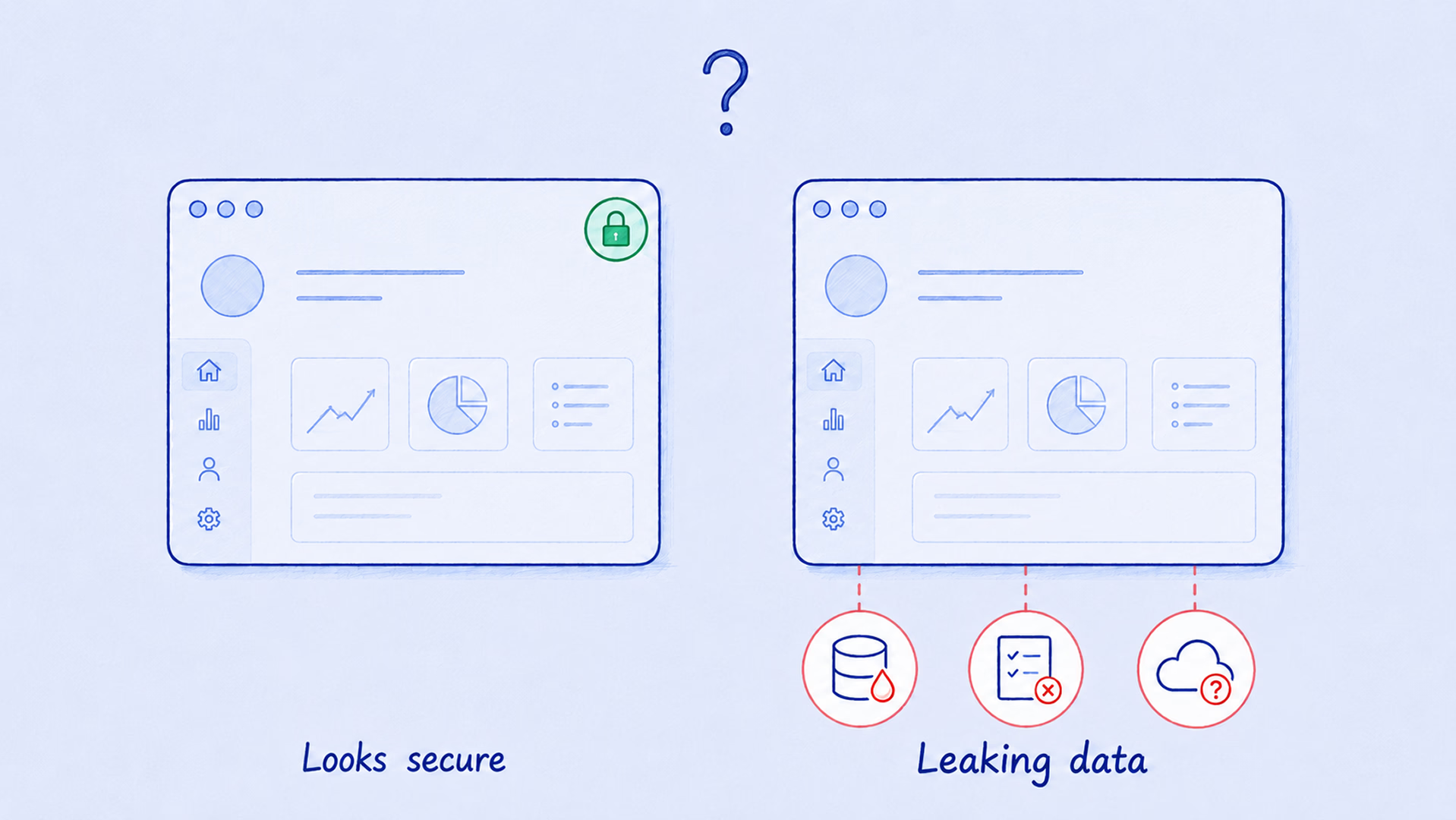
Prioritizing AI features over compliance creates a dangerous blind spot. A portal may look secure on the surface while exposing data through weak permissions, incomplete logs, or unvetted integrations. Compliance failures often begin with rushed rollouts, poor vendor oversight, or tools built for non-clinical environments. The fine affects the balance sheet, but the more serious damage reaches operations, patient trust, and the clinic’s ability to recover after a breach.
HIPAA fines have become far more aggressive over the past few years, especially in cases involving repeated negligence or inadequate safeguards around ePHI. Penalty amounts usually depend on the severity of the exposure, the number of affected records, how quickly the issue is addressed, and whether regulators identify repeated negligence or ignored warnings. According to The HIPAA Journal’s 2026 penalty update, HIPAA civil monetary penalties can now reach $2,190,294 per violation in the most serious cases.
A small clinic is not protected simply because it handles fewer patients. HHS OCR notes that it has investigated many types of organizations, including small provider offices, and may impose civil money penalties when a covered entity fails to resolve noncompliance appropriately.
One unsecured AI workflow may expose patient histories, diagnostic information, insurance records, uploaded documents, and even sensitive AI prompt data. The risk becomes even higher when clinics connect multiple external vendors without fully reviewing their compliance posture or signed BAA agreements.
Many AI systems are not HIPAA compliant by default, so every integration needs a clear compliance check before it goes live. That means reviewing how PHI is collected, processed, stored, and shared — and making sure a BAA is in place whenever a vendor handles PHI on the clinic’s behalf.
Financial penalties can be calculated. Reputation damage is harder to recover from. Patients trust healthcare providers with deeply personal information. Once that trust breaks, many patients leave quietly without filing complaints or announcing their reasons publicly.
A single breach can trigger legal claims, negative media attention, online reputation damage, patient attrition, and additional insurance scrutiny. Trust erosion becomes especially severe when AI systems are involved because patients already feel uncertain about how medical AI handles sensitive information.
Strong security architecture directly affects patient trust. The portal experience itself matters too. Poorly designed login systems, inconsistent permissions, or suspicious authentication flows create anxiety even when no breach occurs.
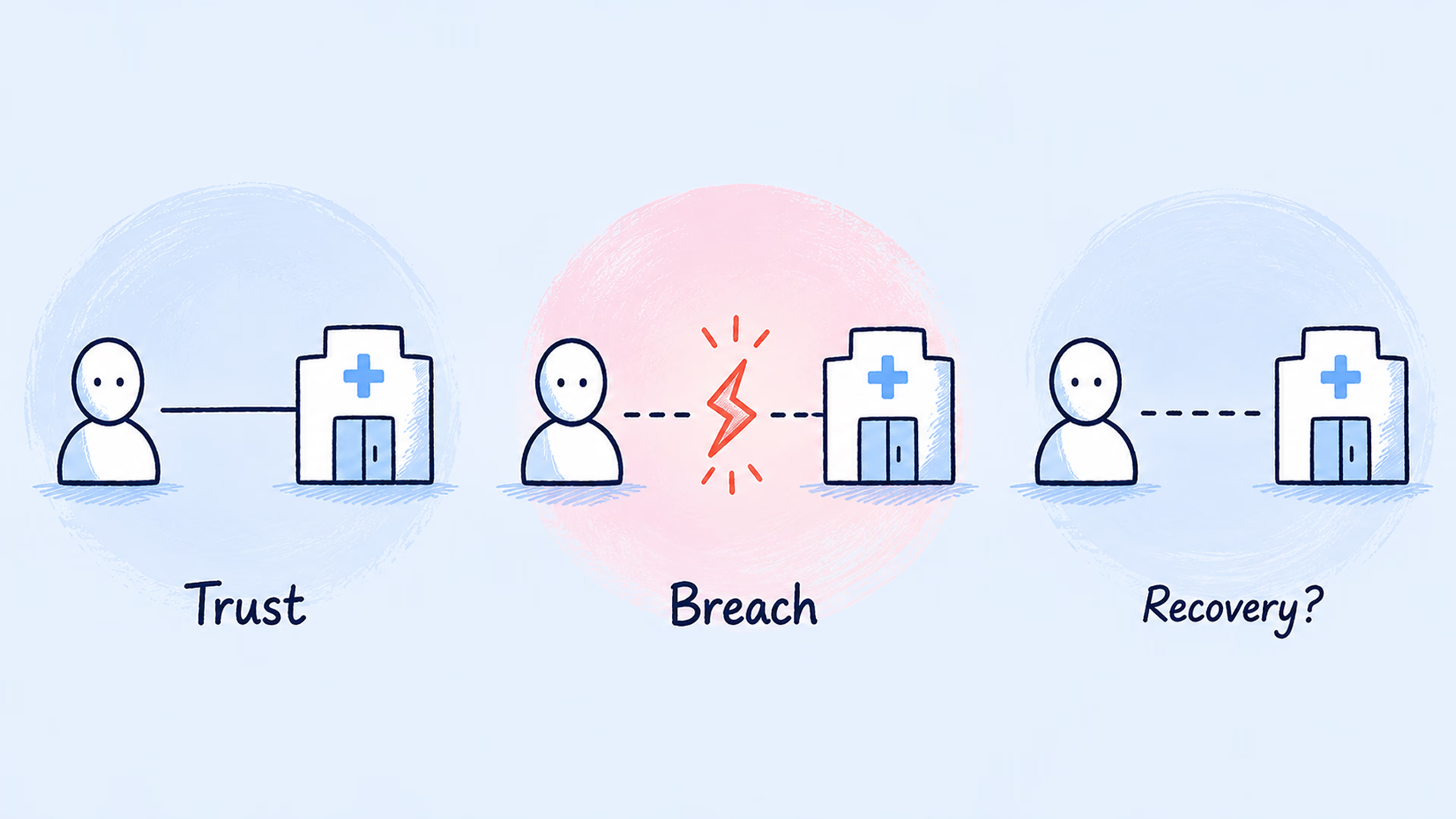
A breach does not end once unauthorized access is detected. In many cases, that’s when the largest operational problems begin. Healthcare organizations often experience temporary shutdowns, forced password resets, forensic investigations, delayed appointments, and interruptions in patient communication after a breach occurs.
Staff productivity drops immediately because teams shift attention away from patient care and toward containment efforts. AI systems introduce additional complexity during investigations. Clinics may need to review:
This becomes particularly difficult when organizations lack proper audit trails or centralized monitoring.
Some clinics also underestimate how long post-breach recovery takes. Organizations still running older, fragmented systems face particular challenges here — a pattern our healthcare software modernization guide examines in detail. Restoring systems is only part of the work. Teams must verify data integrity, rebuild workflows, notify patients, and document remediation measures for regulators.
Security standards like NIST are increasingly referenced during healthcare security reviews because they offer clearer operational guidance around risk management and incident response.
Patients now expect their health apps to work with the same snap and logic as their banking or travel tools. If a portal hangs or feels like a 90s database, they’ll stop using it and go back to calling the front desk.
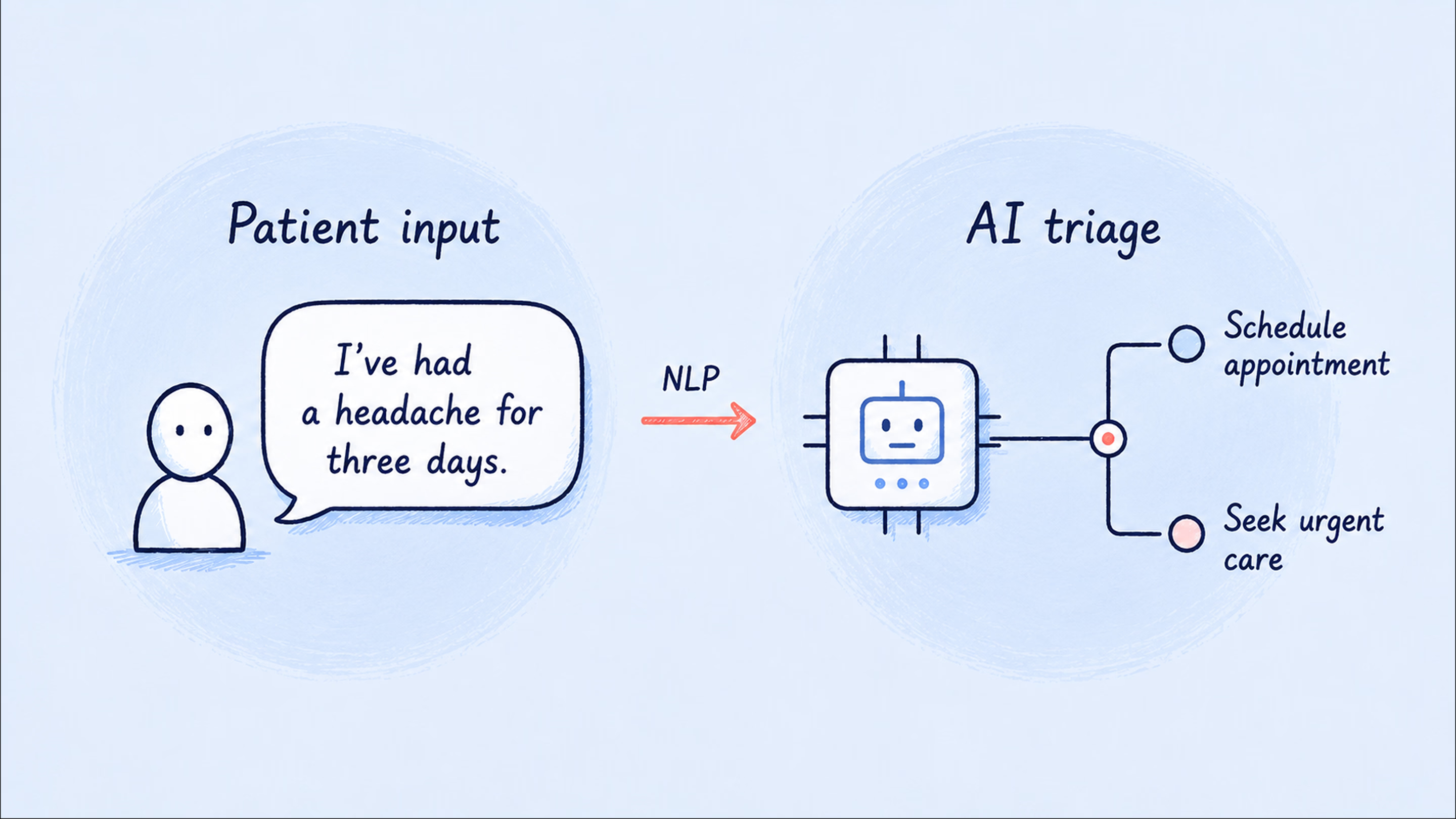
Using Natural Language Processing (NLP), the portal serves as your first-line triage. Patients describe what’s wrong in their own words. Rather than searching through unverified sources, they interact with an AI trained on verified clinical data.
The system decides if they need to head to the ER immediately or if a standard check-up next week is the right move. This keeps the “worried well” from clogging up urgent care while ensuring serious issues get flagged fast.
The AI digs through your scheduling data to identify which patients are most likely to miss their appointments. Instead of a generic text reminder, it sends targeted alerts to those high-risk appointments. If a cancellation happens, the system immediately reaches out to nearby patients on the waitlist. You keep exam rooms busy, prevent scheduling gaps, and reduce unnecessary waiting-room congestion.
Reviewing rows of lab results is time-consuming for clinicians and difficult to interpret for patients. High-end portals transform six months of erratic blood pressure readings into a sharp, interactive graph. When a clinician sees a trend line spike at a glance, they make faster, more accurate decisions. It shifts the conversation from “What do these numbers mean?” to “Here is the plan to fix this trend.”
The AI can listen to a patient’s voice update or read their check-in notes to draft a summary directly into the EHR. This cuts out the hours of “pajama time” doctors spend typing notes late at night. It captures the nuance of a patient’s complaint without the doctor needing to transcribe every word, making the digital record an actual tool rather than just a storage bin for text.
For patients managing long-term issues like hypertension, the portal becomes an active health coach. It can pull data from wearable devices and trigger a specific alert if a heart rate stays too high. This creates a continuous link to the patient’s recovery, catching small health slips before they turn into expensive hospital stays.
Want to see how complex healthcare workflows can look in practice? Explore real interface examples in our healthcare design showcase.
To stay clear of federal audits, your portal needs a multi-layered defense. The goal is a system that protects data from the moment it’s typed until it’s archived years later. Security has to be built into the architecture from the ground up — it cannot be retrofitted once the system is live.
Encryption is a fundamental requirement rather than an optional enhancement. As of today, any data sitting on your servers stays locked behind AES-256 encryption. When that information moves between a patient’s phone and your database, TLS 1.3 stops hackers from intercepting the signal. Even if a database were exported, the contents remain a useless scramble of characters without the specific keys.
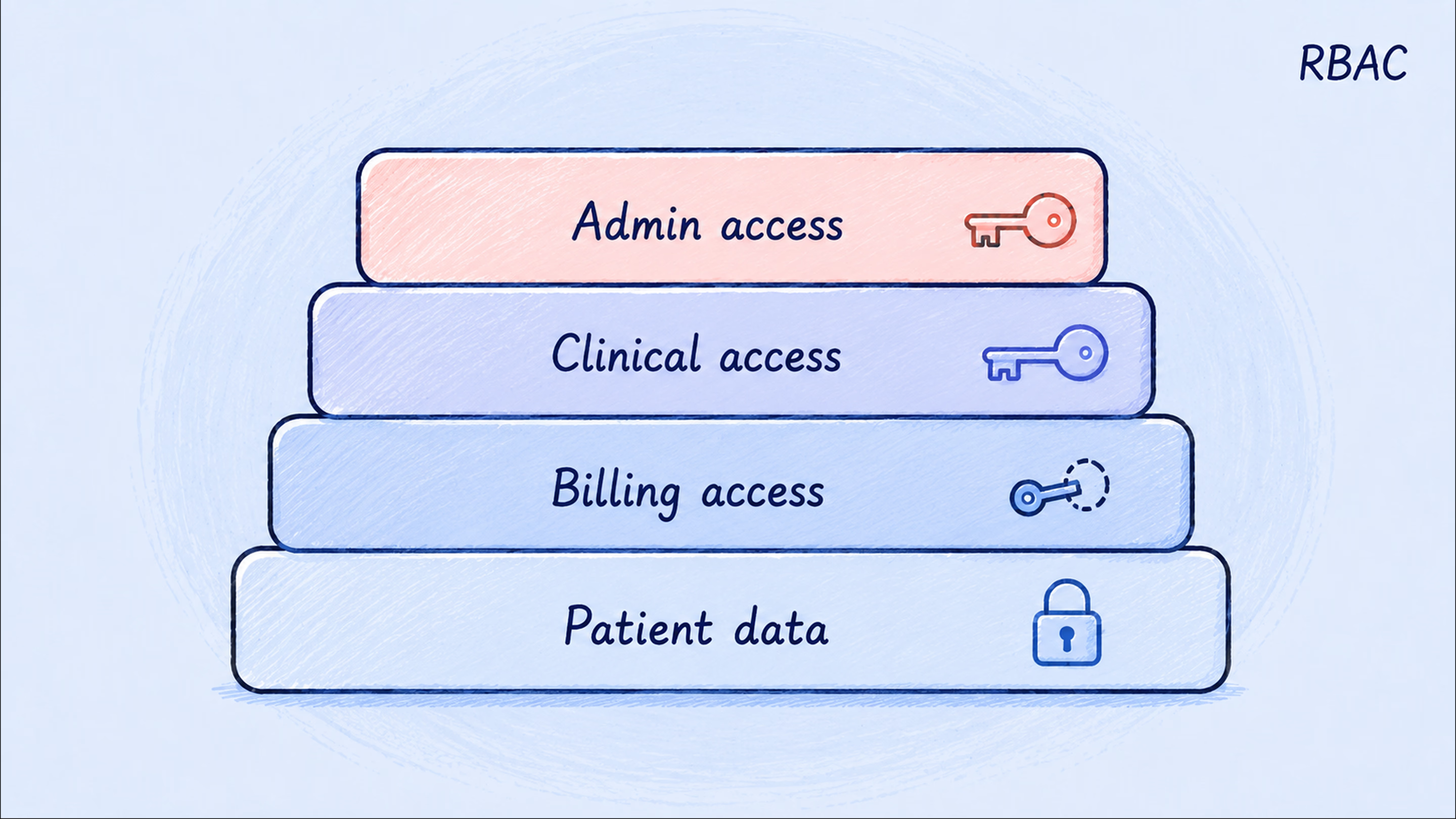
Relying on passwords alone creates a massive liability. Every login requires Multi-Factor Authentication (MFA) — ideally, phishing-resistant methods like hardware keys or biometric checks. Beyond the front door, Role-Based Access Control (RBAC) keeps people in their own lanes. A billing clerk can process an insurance claim, but lacks the technical ability to open a doctor’s private session notes or a patient’s mental health history.
Think of this as the “black box” for your clinic. Your audit trails record every instance of a record being viewed or the AI pulling data to answer a query. You also have to watch for model drift. AI accuracy can slide over time. Continuous monitoring prevents the system from “hallucinating” or giving outdated medical advice that could lead to a malpractice claim.
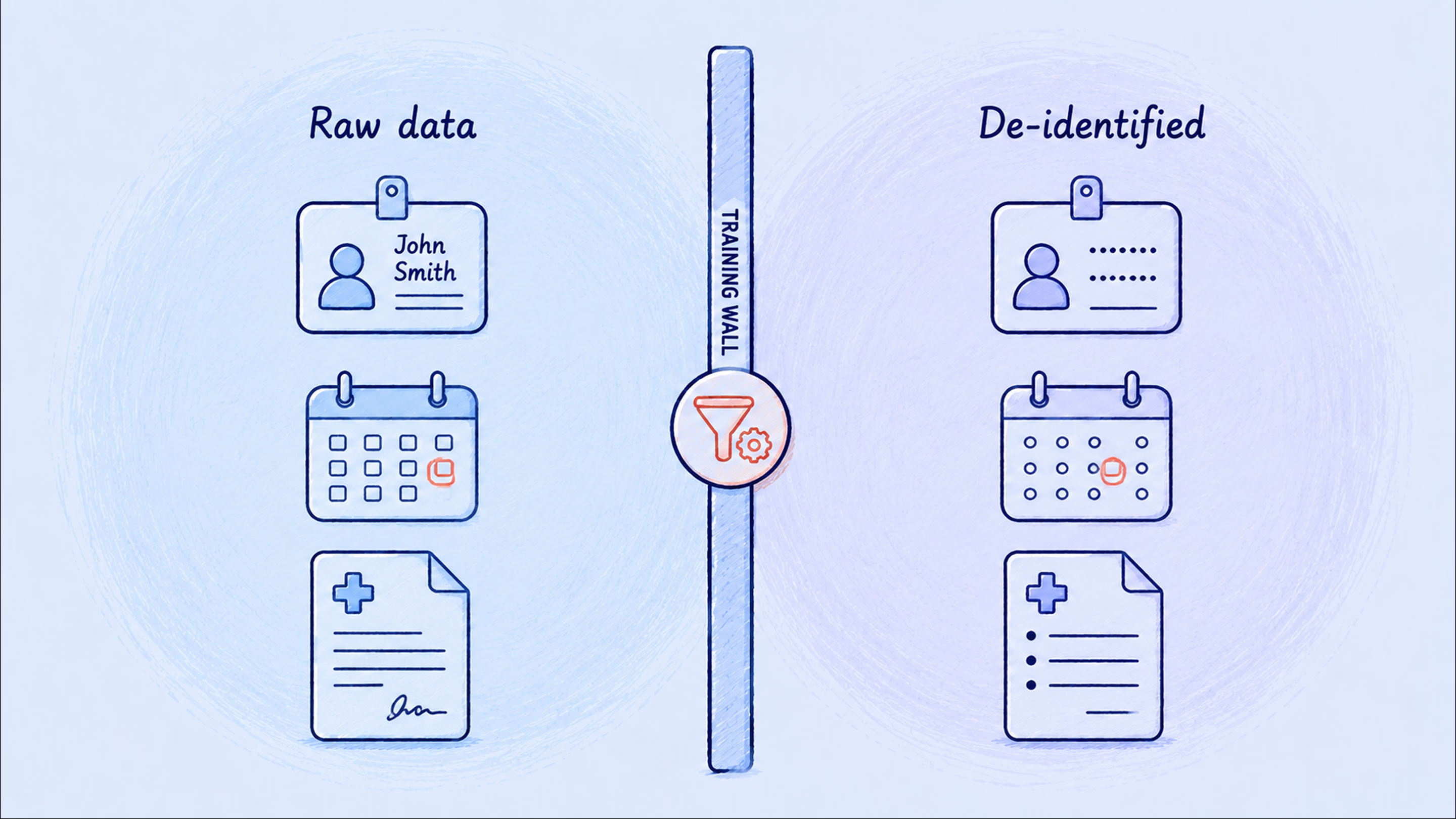
If you use patient data to fine-tune your AI, you cannot use raw files. You need a “training wall” where de-identification scripts strip out names, birthdays, and social security numbers. This allows the AI to learn patterns — like identifying a specific type of rash — without knowing the identity of the patients it learned from. This prevents the AI from accidentally leaking personal details in future responses.
Compliance extends to your third-party tools. Every provider — including your cloud host and AI API provider — must sign a BAA. This legal contract shifts part of the liability to them. Generic service agreements no longer offer adequate protection; verifying that your vendors follow strict NIST or ISO standards is now a baseline expectation, otherwise their breach becomes your legal liability.
“A compliant portal is measured in the moments when access, evidence, and patient trust have to hold.”
If you wait until the portal is finished to “add security,” you have already failed. In a medical environment, compliance is a structural requirement. A single architectural flaw in how the AI handles data can force you to scrap the entire project and start from zero.
Instead of building a portal and then “adding security,” you start by threat modeling. You map out every path a piece of data takes — from a patient’s phone to the AI model and back. At the current stage of regulatory maturity, compliance is a measurable performance of controls. You must set up network segmentation from day one, ensuring the AI training environment is logically separated from the live patient database.
You need a clear inventory of every asset, including cloud services and medical devices. This stage focuses on the “Minimum Necessary” rule — restricting the AI’s access to only the specific data points it needs to function. If the AI is helping with scheduling, it doesn't need to see the patient’s full oncology report. Mapping this lifecycle ensures data is purged or archived automatically, reducing your liability window.
Raw patient files never enter a machine learning model. You implement a robust de-identification process that strips out identifiers while maintaining the clinical utility of the data. This allows your AI to learn patterns — like recognizing high-risk vitals — without ever “knowing” the individual patient. The stage also includes setting up bias detection to ensure the AI doesn’t produce skewed results for different patient demographics.
The portal must communicate with your existing EHR using modern standards like FHIR R5. This stage is about ensuring that permissions travel with the information. If a patient revokes consent for a specific data flow, the API must honor that change across all connected systems in real-time. These same interoperability and compliance questions also apply to wider virtual care products, which we touch on in our telemedicine app development guide.
Before launch, you conduct mandatory penetration testing and vulnerability scans. But the roadmap doesn’t end at deployment. You set up automated monitoring for “model drift,” where the AI’s accuracy degrades as it encounters new data. In 2026, you are required to formally verify your safeguards every 12 months, shifting HIPAA from a static policy to a proactive, living system.
{{banner}}
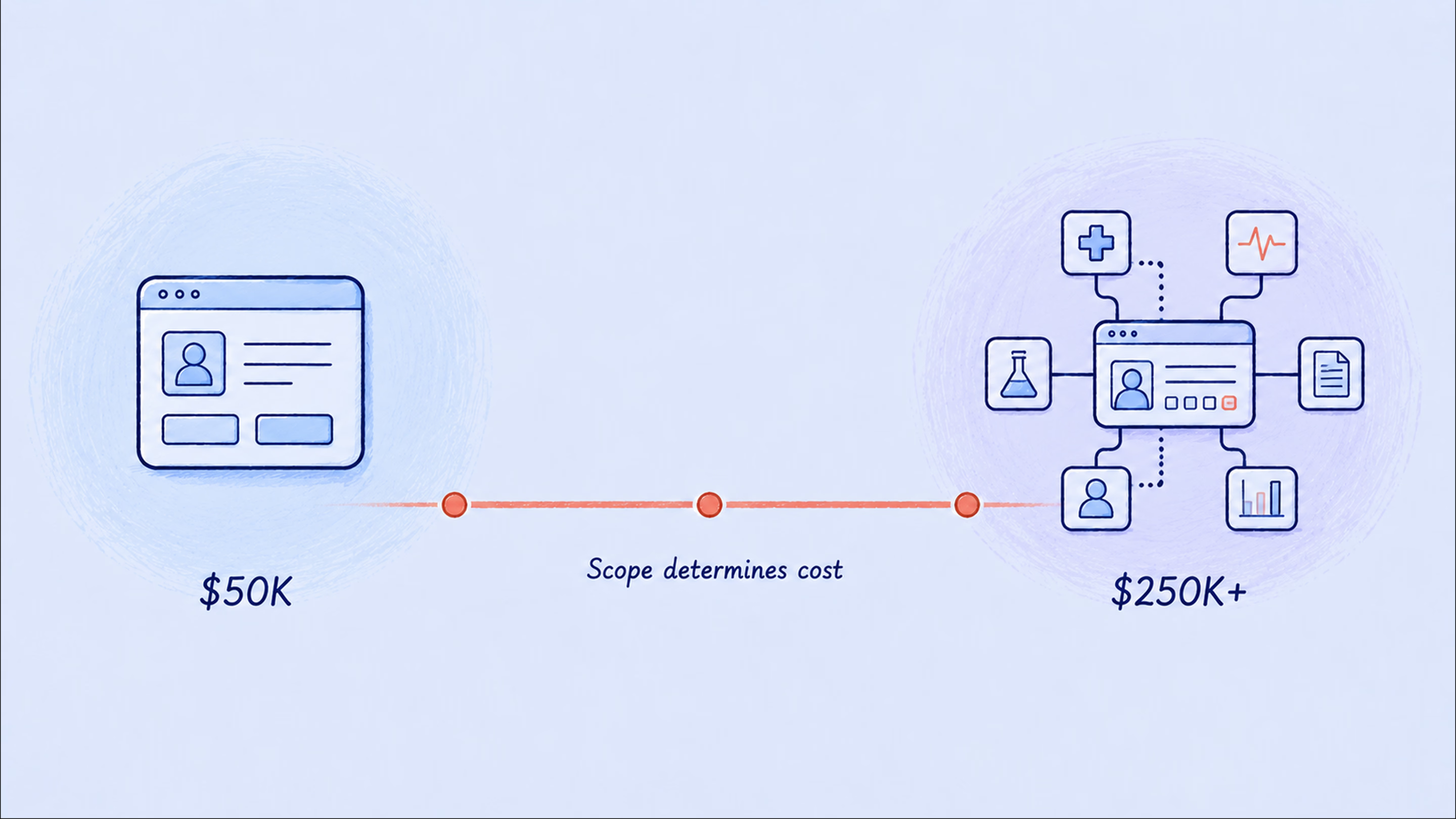
As a rough directional estimate, a basic build with a simple interface might start at $50,000. For a portal that connects to multiple legacy EHRs and handles complex diagnostic triage, budgets commonly reach $250,000 or more — though actual costs vary significantly depending on scope, existing infrastructure, and the vendor’s location and seniority.
The price depends on three specific factors:
If the portal cuts 20 hours of manual front-desk work per week, most clinics see a return on their investment within 18 months.
Development teams without healthcare domain experience rarely understand the distinction between building a standard application and a regulated medical product. A developer who treats a patient portal like an e-commerce site — optimizing for speed and features while overlooking compliance architecture — leaves your clinic legally exposed before the first user logs in.
Look for these specific markers:
These standards should be visible in how a team makes technical decisions. A credible partner can explain where clinical data, privacy requirements, interoperability, and AI-related risks influenced the architecture of previous healthcare products.
This was the case with Rytmo, a wearable-powered cardiovascular monitoring app we built for a major corporate research laboratory. The platform had to collect continuous physiological data from custom hardware, process it through machine learning models, and let patients securely share clinical insights with healthcare providers. Privacy was built into the system from the start, with data processing handled locally on the device by design.
By the end of the build, patients will not ask which encryption standard you used or how your vendor agreements were structured. They will simply expect the portal to work, protect their information, and support their care without adding confusion.
That is why every technical decision in this guide matters. Access rules, audit logs, training walls, vendor checks, and EHR integrations all serve one practical goal: helping the clinic use AI without losing control of the data behind it.
A good AI portal should make healthcare delivery feel calmer, faster, and safer for everyone involved. When compliance is built in from the beginning, the technology has a much better chance of earning that trust.
{{banner-2}}
No. The standard version of ChatGPT uses your data to train its public models, which breaks HIPAA rules. You can only use these models through private, enterprise-level APIs where the provider signs a BAA and keeps your data separate.
Expect a timeline of 6 to 9 months. You spend the first few months on discovery and architecture, followed by the build, and then at least 4 weeks of security testing.
The clinic is ultimately responsible. However, signed BAAs let you share that liability with your vendors. If a breach occurs because a developer ignored a protocol they agreed to follow, you have a legal way to hold them accountable.
Yes. Hosting an open-source model on your own secure servers keeps the data in-house. It offers more control over security and training, though you need a specialized technical team to manage the environment.