







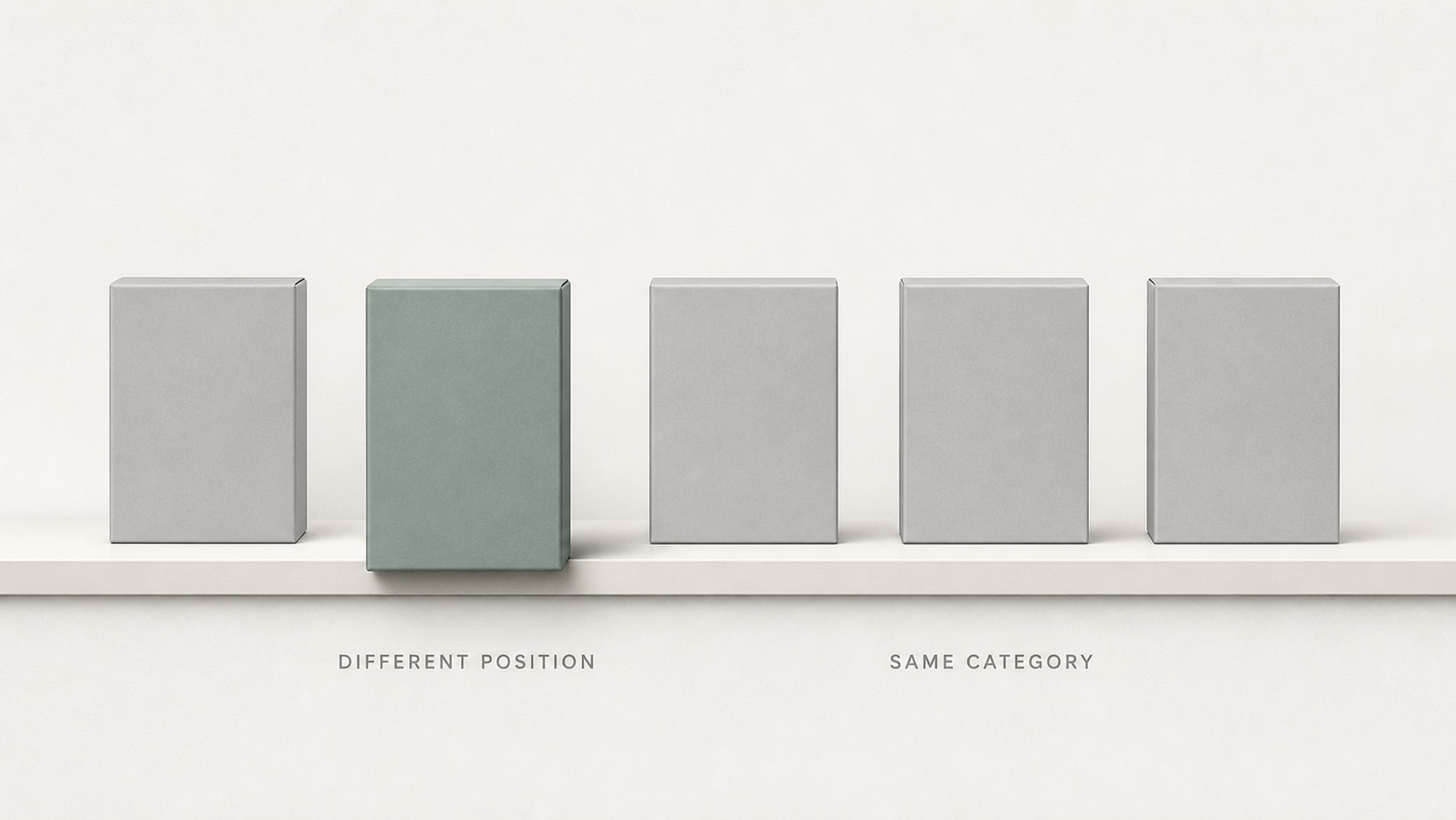
If you scan any modern market, you’ll see a sea of brands that all look, sound, and act the same. When every business uses similar colors and slogans, they become interchangeable in the customer’s mind — and the decision defaults to whoever offers the lowest price or the most familiar name.

To stand out, you must identify a meaningful way to provide value that your competitors can’t or won’t match. This requires a deep understanding of your own strengths and of the opportunities your competitors overlook. When you get this right, you stop competing on price and start building a community of loyal fans. Throughout this article, we’ll explore how brands create these unique positions and design a competitive brand differentiation strategy.
{{banner}}
At its core, differentiation is the process of distinguishing a product or service from others to make it more attractive to a particular target market. It’s the “why” behind a customer’s decision. If two products do exactly the same thing for the same price, the customer has no reason to prefer one over the other.
Differentiation provides that reason. It involves identifying a unique set of characteristics that your company possesses and highlighting them so that they resonate with your audience. This can be anything from the way you package your products to the specific values your company stands for.
“The goal isn’t to appeal to everyone — it’s to be the only logical choice for someone.”
However, true differentiation is not a marketing gimmick you add at the last minute. Instead, it’s a fundamental business decision that affects every part of your organization.
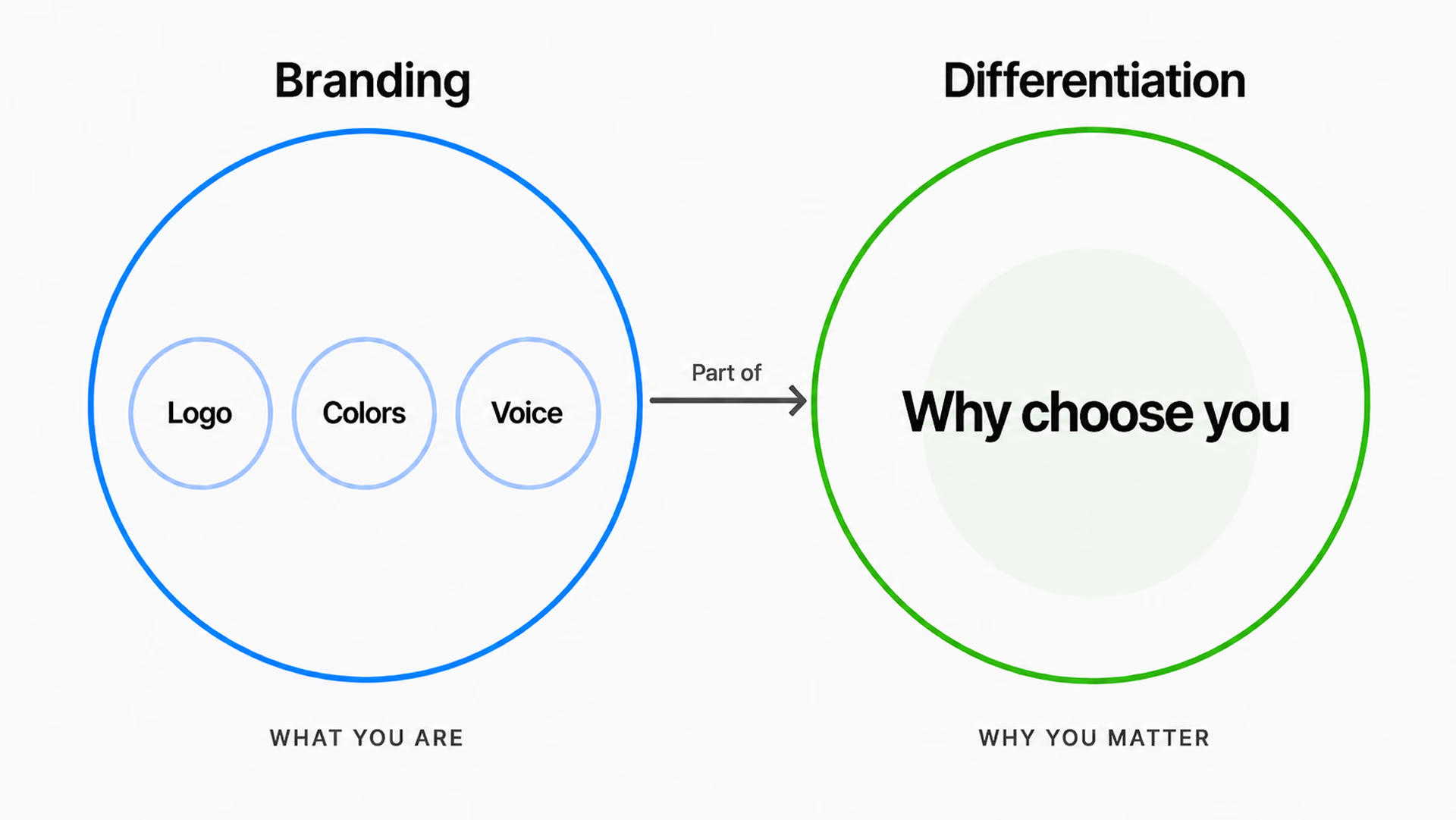
It’s easy to confuse these terms, but they serve different purposes. Branding is the broad identity of your business, covering your logo, colors, voice, and the overall feeling people get from your company. It tells the world who you are and makes you recognizable on a shelf or social media feed.
Brand differentiation is the specific strategy within that identity that explains why a customer should choose you over anyone else. You can have a beautiful logo and still fail if your message promises the same seamless integration and user-friendly interface as every other tech startup. Branding services can translate complex ideas into bespoke designs, so you know exactly how to differentiate your brand for years to come.
Now that you know what brand differentiation is and how it differs from branding, it’s time to understand why a clear brand differentiation strategy is non-negotiable for your business.
We are currently living in an era of extreme market saturation. The abundance of choice has led to a strange side effect: everything is starting to look the same, and consumer fatigue is increasing. To break through this sameness, a brand has to be willing to take a clear position, even if that means alienating part of the market. As markets become more crowded, the cost of being boring goes up. Understanding where your positioning overlaps with competitors is the first step to breaking out of it.
When a customer faces a wall of options, their brain looks for a shortcut to make a decision. Differentiation simplifies this choice by highlighting a specific benefit that resonates with the buyer’s current needs. For instance, some people buy a watch to tell time, while others buy one to signal status. A brand that understands these distinct motivations can position itself as the only logical choice for a specific audience.
Moreover, the process of choosing a brand is often more emotional than it is logical. People want to feel like they are making a smart, safe, or trendy decision. If your business can clearly articulate its unique value proposition, you remove the friction from the buying process.
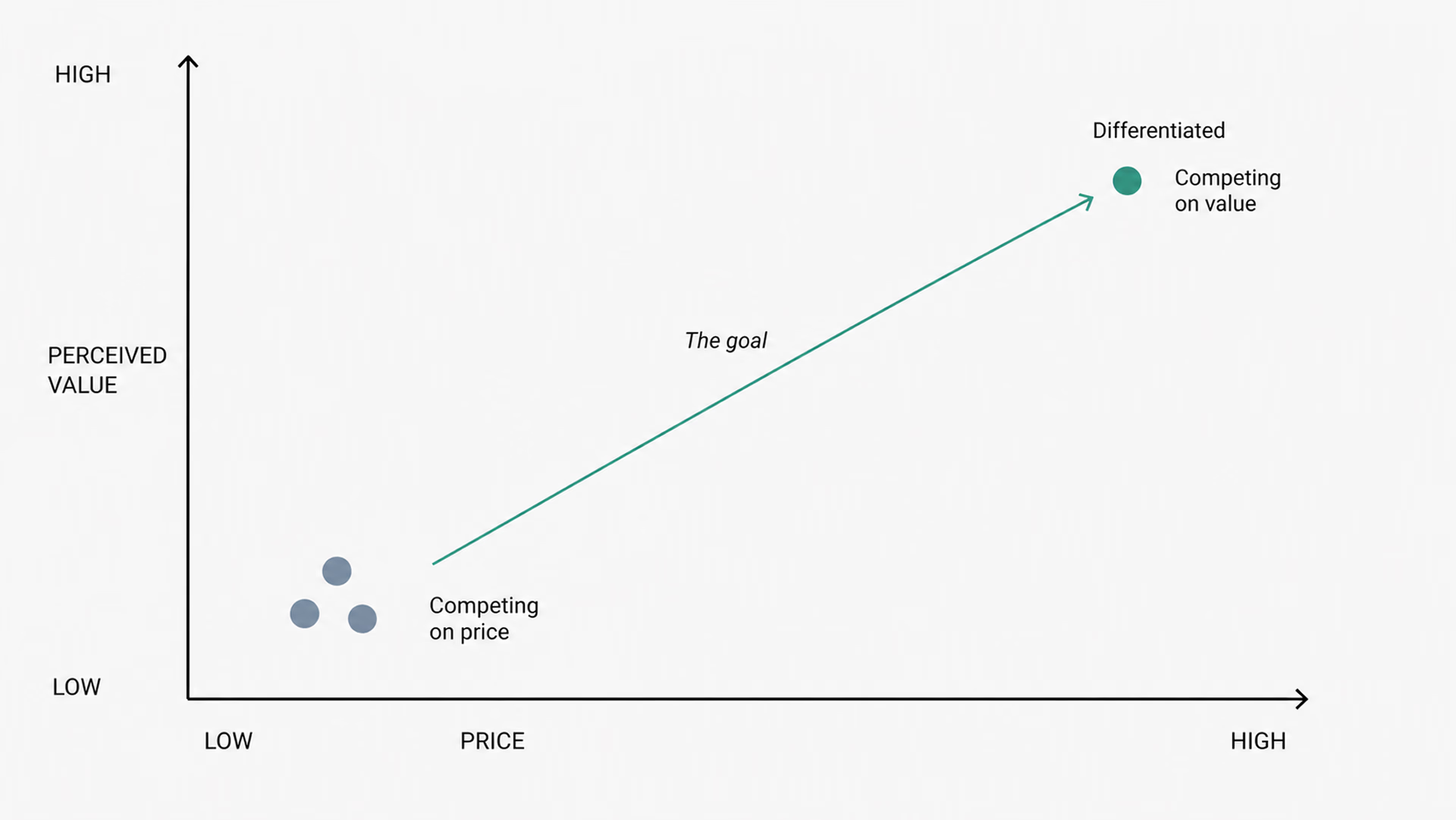
Standing out delivers measurable financial advantages because you aren’t just another generic option. It gives you the ability to charge more than your rivals without losing customers who value your specific service. Higher margins create reinvestment capacity — giving differentiated brands a compounding advantage over time.
“A brand that stands for something specific stops competing and starts attracting.”
Beyond just the money, figuring out how to differentiate your brand builds a strong defense that is very hard for others to copy. While rivals can mimic your features, they can’t steal your reputation or the trust you’ve built with your audience. This long-term loyalty helps your business grow naturally because your existing customers become advocates, generating referrals that no paid channel can replicate.
A differentiated brand also builds a competitive position that is genuinely difficult to replicate — competitors can copy features, but they can’t replicate the trust and reputation built over time. For a deeper look at how strategic branding translates into measurable business outcomes, our guide on branding for growth covers the connection in detail.
Finding your edge isn’t just about the product you sell. You can also stand out through your distribution channels, your staff, or even your location. Exploring these different areas is the key to a strong brand differentiation strategy.
The most obvious place to start is with what you are actually selling, focusing on traits like design, durability, or ease of use. If every other software in your area is heavy and complicated, your edge could be deliberate simplicity, or you might offer a model where you do the work for the client instead of just giving them a toolkit to do it themselves. The key is to make sure these features actually solve a real problem for the user rather than just being different for no reason.
However, product features are the easiest things for rivals to copy, which is why knowing how to differentiate your brand from competitors requires looking at the services as well. This could mean having the fastest delivery or providing amazing technical support that others don’t. When your product and service work together to create something unique, it becomes significantly harder for a competitor to displace you.
Every interaction a customer has with you — from seeing an ad to opening their package — is an opportunity to build a lasting impression. Small details — a thoughtful onboarding sequence, a personal follow-up after the first purchase — build a human connection that a purely transactional interaction can’t replicate.
By identifying where competitors are cutting corners or serving undeserving customers, you can find gaps to fill, such as having a real person answer the phone instead of an annoying automated system. This level of care builds deep trust and ensures people remember your business long after the purchase.
Many businesses mistakenly believe that being the cheapest is the only way to compete — but sustained price leadership erodes margins and rarely builds lasting loyalty. A smarter choice is to focus on value perception. A focused startup branding kit — covering a unique logo, typography, and color system — gives early-stage businesses a consistent foundation without the investment of a full-scale brand development. High-end brands like Rolex signal superiority by setting high prices based on prestige rather than competing on discounts.
You can also stand out by changing how people pay, such as using subscriptions or transparent pricing in an industry full of hidden fees. The goal is to match your pricing to how your customers want to buy, building trust by being more straightforward than your rivals.
One of the biggest mistakes a business can make is acting differently on different platforms. If your website looks sleek but your social media is messy, you will confuse your audience. To stand out, your look, voice, and message must remain consistent whether a customer is reading a post or talking to a salesperson.
Using a shared set of rules helps your whole team stay on track and ensures your message stays the same even when your company scales up. This level of discipline is key, since consistent brands are much easier for people to remember and trust.
Today’s consumers, especially younger generations, want to buy from companies that stand for something. Your “why” — the reason your business exists beyond making a profit — can be your strongest differentiator. This isn’t about vague mission statements; it’s about taking a stand on issues that matter to your customers. Whether it’s environmental sustainability, social justice, or supporting local communities, your values give people a reason to feel good about spending money with you.
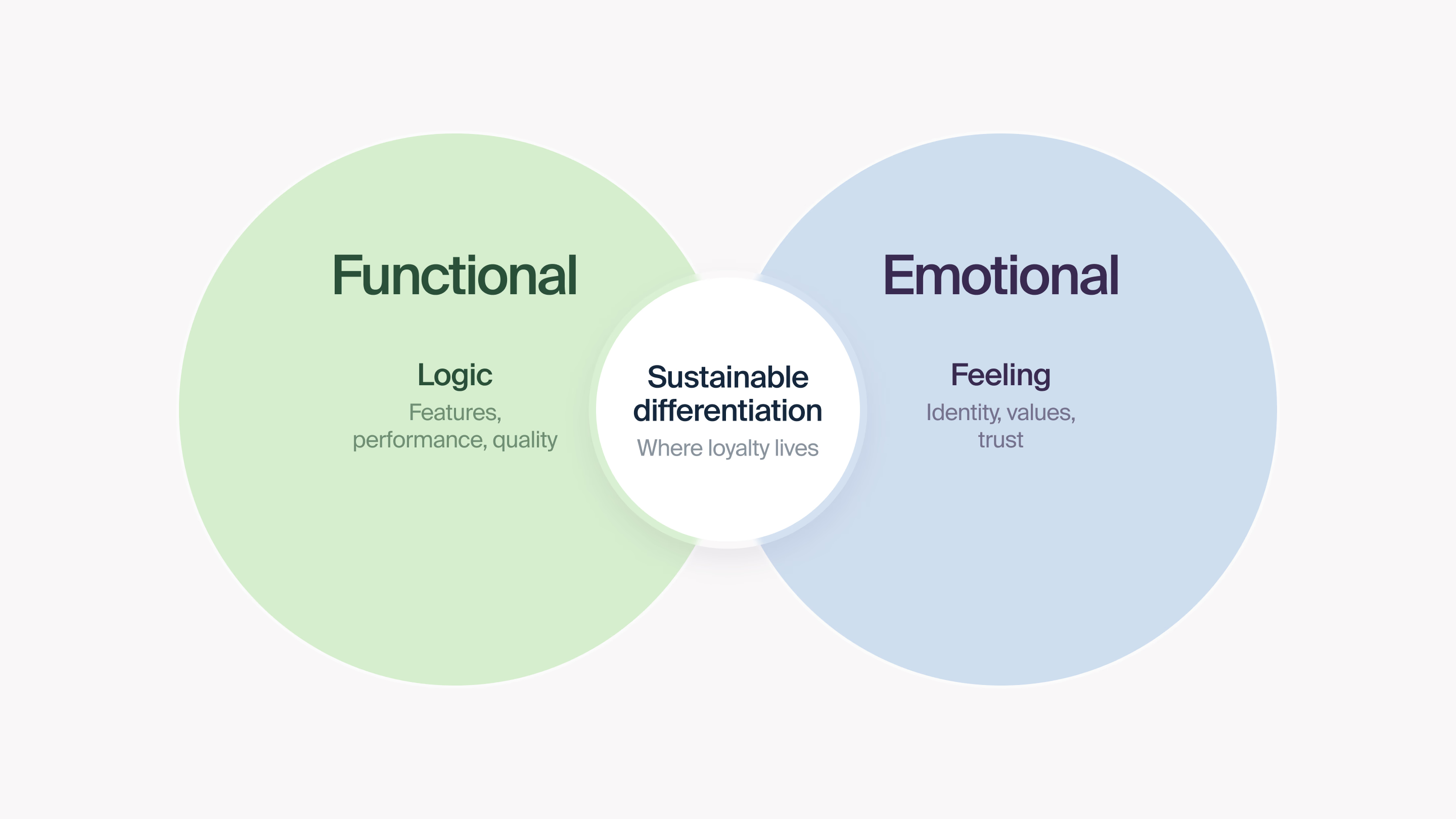
Most strategies fall into two buckets: functional and emotional. Moreover, balancing logic with a gut feeling gives customers a real reason to choose you. That's why understanding these distinct methods for brand differentiation helps you pick the right tools for your business.
Functional differentiation is grounded in the physical reality of what you offer — tangible features that people can see, touch, or measure. This might involve superior performance, a more durable material, or a unique design that solves a specific problem.
However, relying solely on functional traits can be risky. If your only edge is a specific technical spec, a competitor with more resources can eventually close the gap and eliminate that advantage. Moreover, functional benefits are often easy to compare on a spreadsheet, which pulls the buying decision back toward price.
This type of differentiation is about how your brand makes people feel. Emotional differentiation is often much more durable than functional differences because it’s harder to replicate a feeling than a feature. High-end luxury brands excel at this by selling the feeling of status, exclusivity, and tradition.
Creating an emotional bond requires a deep understanding of your audience’s aspirations and fears. You have to speak their language and show that you share their worldview. If your brand feels like a trusted friend, people will stick with you even if a competitor releases a slightly faster product.
The most iconic brands in the world don’t choose between function and emotion. Instead, they master both. Think about the Apple company. Functionally, their products are known for being sleek, integrated, and easy to use. Emotionally, they sell the idea of “Thinking Different” and being part of a creative elite. By combining a great user experience with a powerful emotional narrative, they’ve created a brand that is incredibly difficult to replicate or edge out.
When you find this balance, your business gets much stronger. The functional part gives people a logical reason to believe in your product. Moreover, the emotional side gives them a personal reason to care about your message.
The same principle holds at every level of the market, not just for category-defining companies. In specialist health markets, where clinical authority and consumer accessibility rarely coexist, the tension between the two often becomes the differentiator itself. When DrPawluk.com — an e-commerce platform for Pulsed Electromagnetic Field therapy devices — came to Halo Lab, the challenge was precisely this balance.
The platform needed to serve two distinct audiences: medical professionals who required scientific credibility, and wellness enthusiasts who needed an approachable experience. Leaning too far toward clinical authority would alienate everyday users; leaning too far toward lifestyle positioning would undermine trust with practitioners.
The solution was a science-driven design that made medical-grade expertise feel accessible — functional differentiation through product depth, emotional differentiation through a clean visual language that made a complex technology feel within reach. For more detailed information, refer to our full case study.

Finding your unique angle requires a structured approach. You have to look outside at what everyone else is doing and then look inside at what you can uniquely provide. This process helps you identify market gaps no one else is filling.
Before you can be different, you have to know what you’re being different from. This involves a deep audit of your main rivals:
In many industries, you’ll find that most companies are all crowding around the same safe message. For instance, if everyone in your space is talking about “reliability,” there might be an opening for a brand that talks about adventure or speed.
However, don’t only look at your direct rivals. Sometimes your biggest competition is the status quo. When you look at the whole market, you’ll see where everyone is acting the same. This makes it easier to identify a gap worth occupying.
Once you see where the gaps are, you need to find a way to fill them that actually matters to your target audience. This is where the 3 C’s framework comes in. Your differentiator must be Customer-valued (they actually care about it), Company-deliverable (you can actually do it consistently), and Competitor-proof (it’s hard for others to copy). If you find a point of difference that hits all three, you’ve found a huge advantage.
Moreover, your point of difference doesn’t have to be a massive technological breakthrough. It can be as simple as a radical new way of packaging a boring product or a commitment to a specific set of values that your competitors ignore.
Once you see where the gaps are, you need to find a way to fill them that actually matters to your target audience. Your point of difference doesn’t have to be a massive technological breakthrough — it can be as simple as a radical new way of packaging a product or a commitment to values your competitors ignore. This is where the 3 C’s framework comes in.
Before committing to a differentiator, run it through three criteria — a strong point of difference must satisfy all three, and failing any one is enough to undermine the strategy:
One of the biggest traps in marketing is fake differentiation. This happens when a brand makes a claim that is either unbelievable, irrelevant, or easily copied. For instance, claiming to have the best customer service is rarely a true differentiator because every company says the same thing. It remains an empty claim unless you have a specific, measurable way to substantiate it.
Real differentiation is built into your company. It should be visible in every part of your business, from how you hire staff to how you handle refunds. For example, if you claim to be an eco-friendly brand but use way too much plastic in your shipping, your audience will notice the contradiction immediately. This inconsistency destroys trust and makes your business look dishonest.
For some brand differentiation examples and inspiration, you can look at successful brands. The top brands mostly focus on one or two specific areas, instead of trying to win at everything. Here are some great illustrations:
One of the most famous examples of modern differentiation is Oatly. In a market full of wholesome milk brands, Oatly decided to be weird, self-deprecating, and loud. Their packaging is full of long-winded, humorous rants that have nothing to do with the product itself. This edge made them a cult favorite among younger consumers who were tired of traditional corporate marketing. They won over a huge audience by selling a personality that felt refreshingly honest.
Moreover, you don’t need a large budget to start building this kind of identity. A startup branding kit is a cost-effective way to get essentials like a unique logo, font, and color without the high price of a full-scale brand. It works like a small boat that helps you reach your destination, so you can eventually trade up to a bigger ship once you’ve grown.
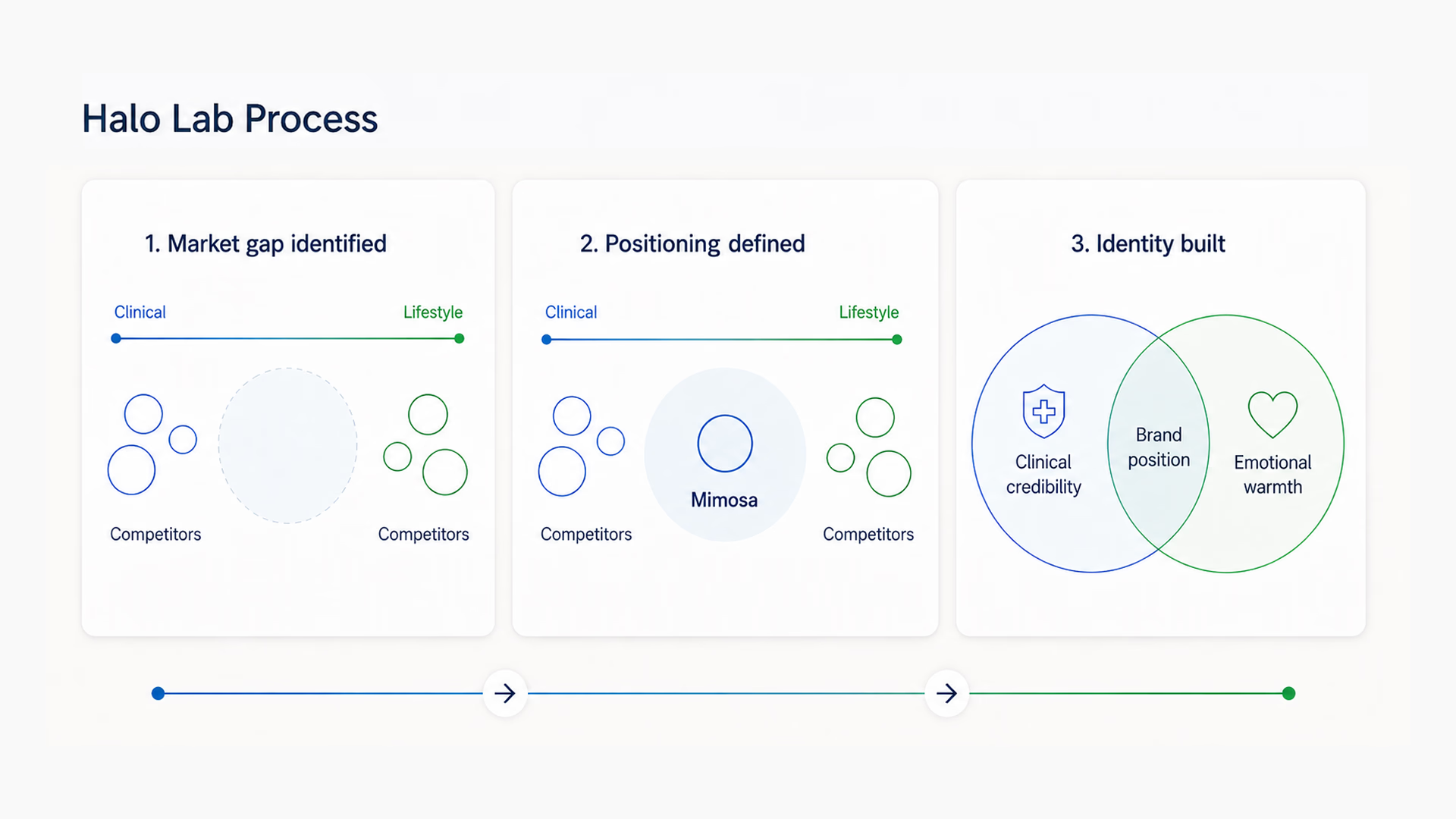
A contrasting example comes from Mimosa, a digital health app supporting women through menopause. When TaraCares approached Halo Lab, the FemTech market presented a familiar dilemma: most competitors were either fully clinical — authoritative but cold — or fully lifestyle-oriented — warm but lacking medical credibility. Mimosa needed to serve three distinct audiences simultaneously: individual users seeking personal guidance, clinicians evaluating reliability, and businesses assessing viability.
The differentiation strategy was to occupy the precise intersection between medical authority and emotional care — a visual identity and website that communicated clinical credibility without sacrificing personal relevance. Rather than choosing between the two registers, the brand was built to hold both. More on the process and outcome in the Mimosa case study.
Successful companies don’t try to appeal to everyone; instead, they narrow their focus to serve a specific niche better than any generalist. This strategy allows them to make bold decisions that might alienate some people but will deeply resonate with their ideal customers.
What these brands also share is a willingness to take positions that might alienate some people in order to resonate deeply with the right ones. The businesses understand that being ignored is a bigger risk than being disliked, so they use a bold attitude to challenge the status quo. They also stay consistent across every touchpoint, from website copy to sales calls.
Putting these ideas into practice requires a systematic approach because simply changing a logo won’t yield results. Let’s wrap up everything you’ve learned about an effective differentiation strategy:
If your brand is stuck in the past or customers are starting to tune you out, a full makeover can help you step into your next chapter. For this, you must opt for professional rebranding services that focus on a “zag” growth strategy that modernizes your identity while keeping the parts your audience already trusts.
Differentiation is the only way to avoid a race to the bottom and build a brand that compounds in value over time. Whether you focus on functional excellence, emotional connection, or a commitment to your values, the goal is to find a unique angle that makes competitors irrelevant.
The brands that get this right don’t just win customers — they make the competition less relevant with every decision they make. When you get this right, you win customers and build a loyal community. Start by finding the one thing that makes your business special and use it to drive your brand differentiation strategy with confidence.
{{banner-2}}
It fails when your unique angle is no longer relevant to your customers. What was special years ago often becomes a basic expectation today. Staying unique requires constant attention to how your specific industry is moving.
Yes. If your brand is so radical that people can’t figure out what you actually sell, you’ve gone too far. You want to stand out while remaining familiar enough that your value stays clear. Changing too many things at once usually just confuses and loses your audience.
Most lose it when they try to please everyone until their personality disappears. They become a generic version of what they used to be. Competitors can also copy your main features, which neutralizes your advantage unless you find a new way to show your value.
In the long run, yes. Competing on price is a race to the bottom that destroys profit margins. When you provide a unique value that people can’t get elsewhere, they stop obsessing over the price tag. It is a much more sustainable way to grow a business.
You don’t need a massive technological breakthrough to be different. You can stand out through your storytelling, customer service, or company values. As long as you are creative in how you solve problems or present your work, you can remain distinct without changing the product itself.
Customers look for consistency. If you claim to be unique but act like everyone else, they won’t believe you. Real difference shows up in your visuals, your tone of voice, and your specific actions. When every touchpoint aligns, it creates a clear, trustworthy image in the buyer’s mind.


.avif)