






Have you ever thought about what makes a business memorable? A great product or service gets you noticed, but branding keeps people coming back. Which elements shape a strong company’s identity and create a lasting emotional bond with its audience?

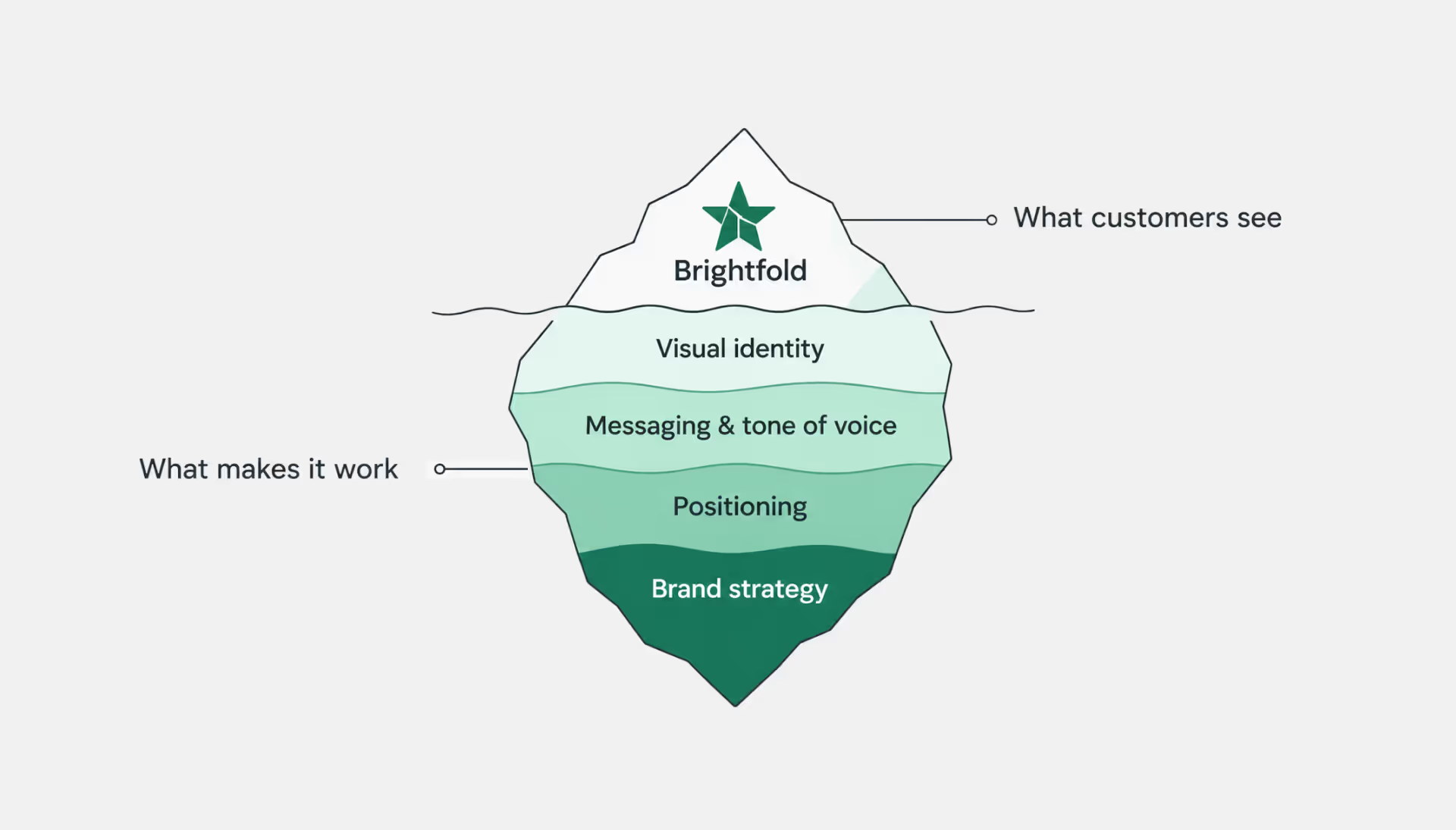
Today’s market is crowded, and customers can choose between dozens of comparable options. A high-quality product can be a strong entry ticket, but not a main differentiator, as features are quickly matched and pricing advantages rarely last. Yet what competitors can’t replicate is your unique story: why the company exists, what it believes in, who it serves, and what it promises. That’s what people remember and choose.
A story only works if it sounds the same everywhere. When the website says one thing, the ads another, and the customer experience a third, trust risks breaking down. That’s why branding needs a coordinated approach, from positioning to visual identity, messaging, and guidelines. This article walks through the full branding services list: what each service covers, when you need it, and what you get at the end.
{{banner}}
Branding services are the strategic and creative work that helps businesses define, develop, communicate, and maintain their brand identity, shaping how a company presents itself to the market. The scope typically includes brand strategy and positioning, naming, messaging, visual identity, and their rollout across every place where customers meet the brand.
Beyond this, branding services help businesses shape customer perceptions and establish meaningful associations. As a result, a familiar name wins when the options look alike. They also provide a foundation for consistent brand management as a company grows or enters new markets, giving every team the same rules for how it looks and speaks. Such consistency is important to keeping the trust a brand has already earned.
A brand launch is a single milestone. Brand building is a continuous discipline of sharpening, defending, and renewing a distinct market position.
To understand why branding matters for any organization, think of it as the company’s DNA. It holds the core code of purpose, values, and personality, and every product, campaign, and customer conversation grows out of that code. In practice, branding pays off in four key ways:
Simply put, much of branding comes down to storytelling. Specs and feature lists fade quickly, but a narrative gives them context: the problem a client faced and the change the product brought. In a strong brand story, the customer is the main character and the company plays the guide. When people see themselves as part of the plot, they tend to feel an emotional connection and share their experience with others, so a marketing message can grow into word of mouth.
The importance of branding lies in its ability to turn a company into a story, an experience, and a relationship.
The main types of branding services fall into four groups. Strategic work, from brand strategy and positioning to naming, defines who the business is and where it stands in the market. Messaging and tone of voice shape how the company speaks, while visual identity, logo design, and the brand book define how it looks. Rebranding and brand implementation complete the picture, keeping the identity relevant and carrying it to every touchpoint.
A pre-launch startup may need the full set, while an established company often picks one or two items. To help you decide which ones fit your needs, the list of branding services below explains what each covers and when it makes sense.
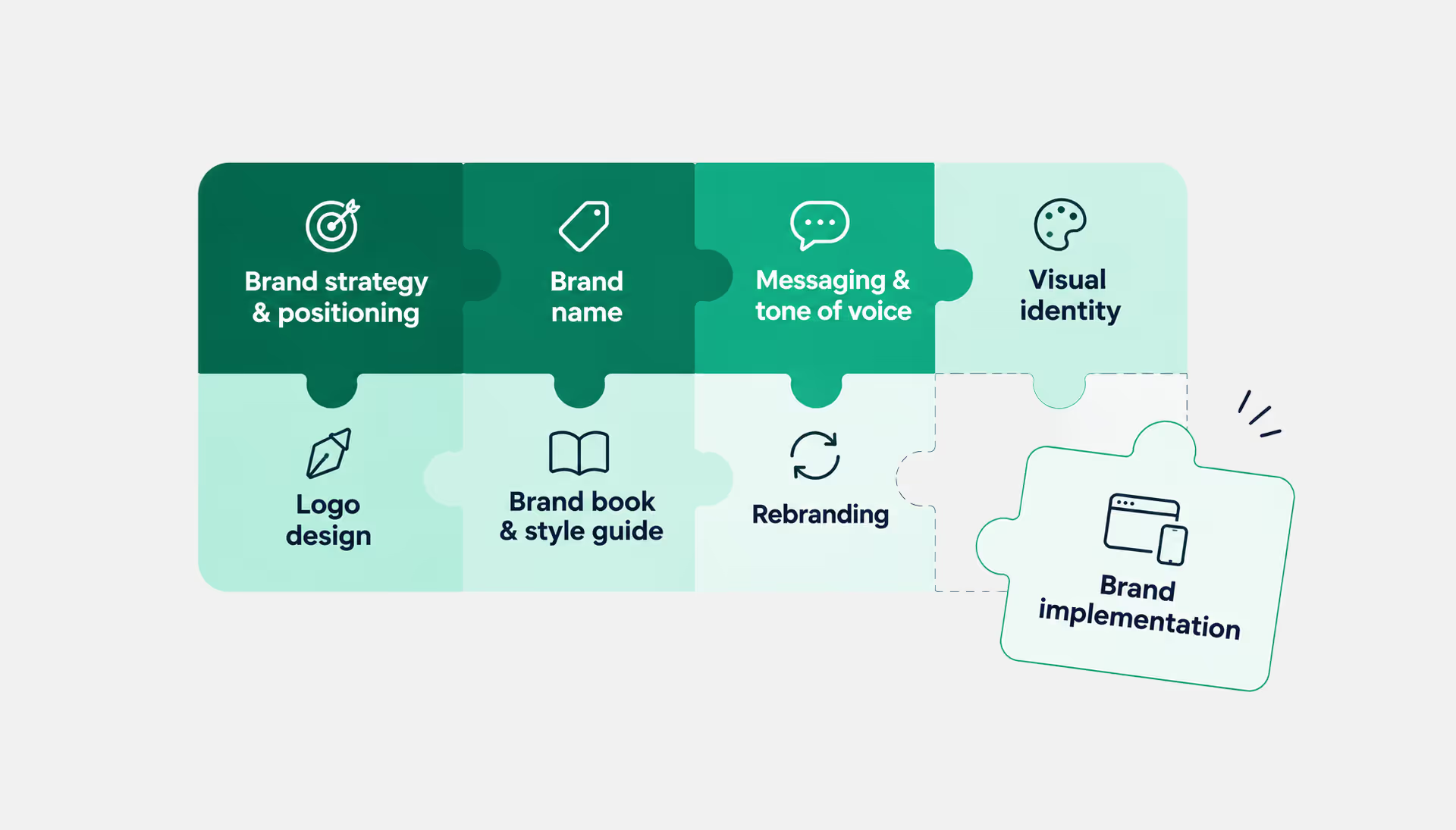
Brand strategy is the foundation the rest of the list is built on. It defines your audience, competitive context, value proposition, and the personality your brand will carry. Positioning then narrows all of that down to one sharp idea: the space you want to own in customers’ minds. Both are needed when launching, entering a new market, or noticing that prospects can’t tell you apart from competitors.
The work usually starts with discovery: stakeholder workshops, competitor analysis, and audience research. This stage compares how the company views itself with how buyers perceive it and reveals which spots in the market are already taken. Based on these findings, strategists define the target segment and choose a relevant, unclaimed position. Finally, all the components are compiled into a brand strategy document that includes the positioning statement, value proposition, brand archetype, and core messages.
If you’re struggling to pin down who your brand is for and what makes it different, our team can help you build a clear brand strategy and positioning that would establish your place in the market and set the creative direction for your visual identity.
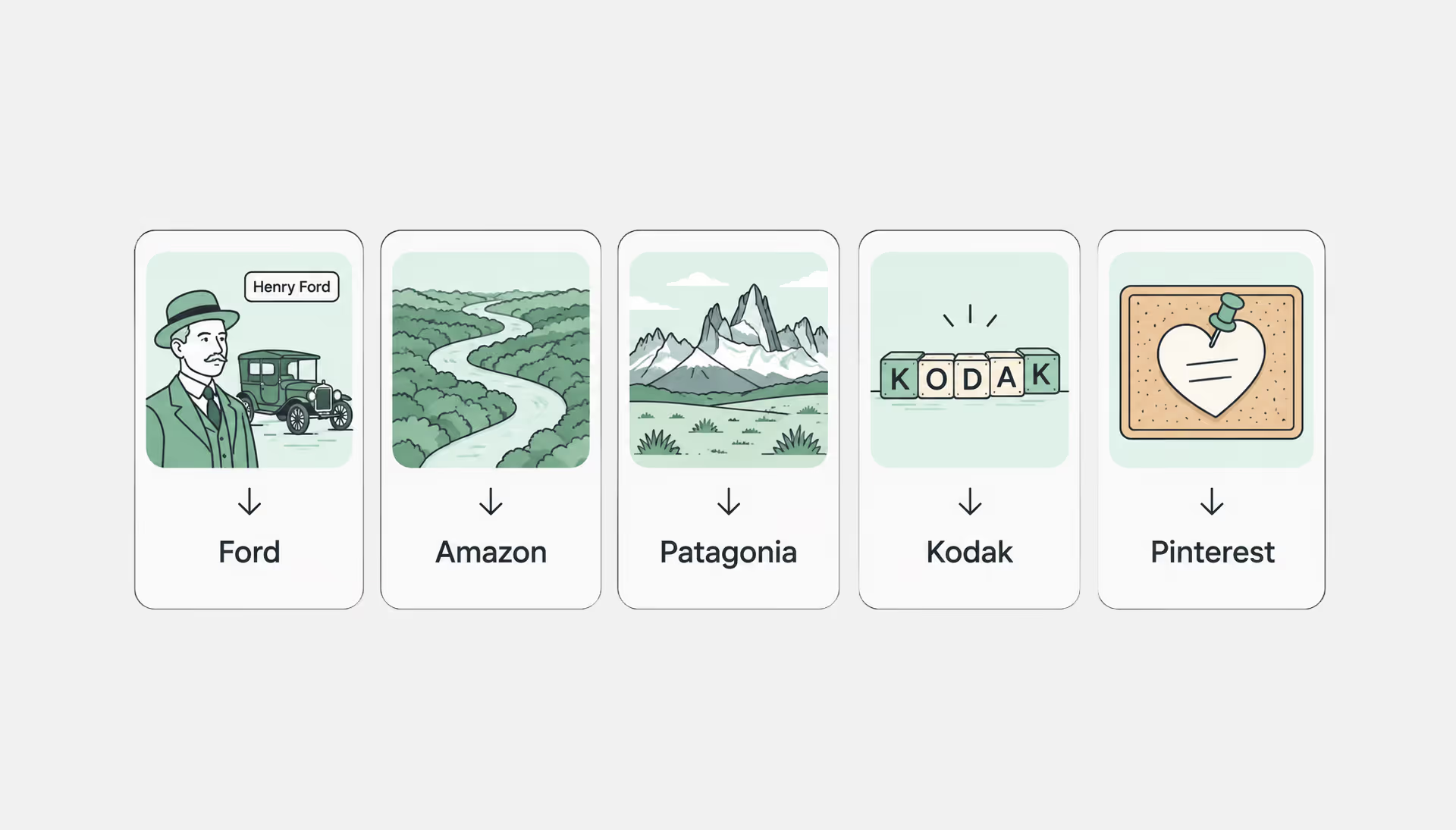
There are many ways to name a brand. Companies may build it around the founder’s surname (Ford), a metaphor (Amazon), a location (Patagonia), a coined word (Kodak), or a playful mash-up (Pinterest). Each approach brings its own strengths and trade-offs. For instance, names close to what the company does are easy to understand but hard to protect legally. Invented ones are easier to trademark, but they need more marketing before they mean anything to people.
Many brand names have become icons and evolved into synonyms for quality, performance, or lifestyle. Let’s do a quick test: if we ask you to name a soda company, does Coca-Cola come to mind? We bet it does. The list could go on forever, but one thing is clear — your name is crucial for your identity.
When you’re stuck, bringing in experts is a wise move. A professional name development process starts with a detailed brief and uses techniques like semantic mapping and morphological blending to generate a long list of candidates. Several rounds of filtering then narrow it to a shortlist, with each option backed by a rationale and checked for pronunciation, cultural associations, domain availability, and potential trademark conflicts.
Brand messaging is what your company says about itself, from the tagline on the homepage to the arguments a salesperson uses on a call. Tone of voice, in turn, is how it sounds: does it come across as formal, friendly, bold, or playful? Both these elements grow out of positioning and turn a rather abstract strategic idea into specific words people read and hear every day.
To see the difference in action, imagine a banking app turning down a payment. The notification might read “Transaction declined due to insufficient funds.” Alternatively, it could say “Not enough in your account for this one. Top up and try again.” Both messages carry the same information, yet the second one sounds like it comes from a company that cares, as it explains the problem in plain words and tells the user what to do next.
This service is worth investing in when each team describes the product in its own words or when you start speaking to a new audience. As a result, you get a framework with your core narrative and key messages for each audience segment. It comes with tone-of-voice guidelines, including writing principles and before-and-after examples, so anyone on your team can write in the brand’s voice.
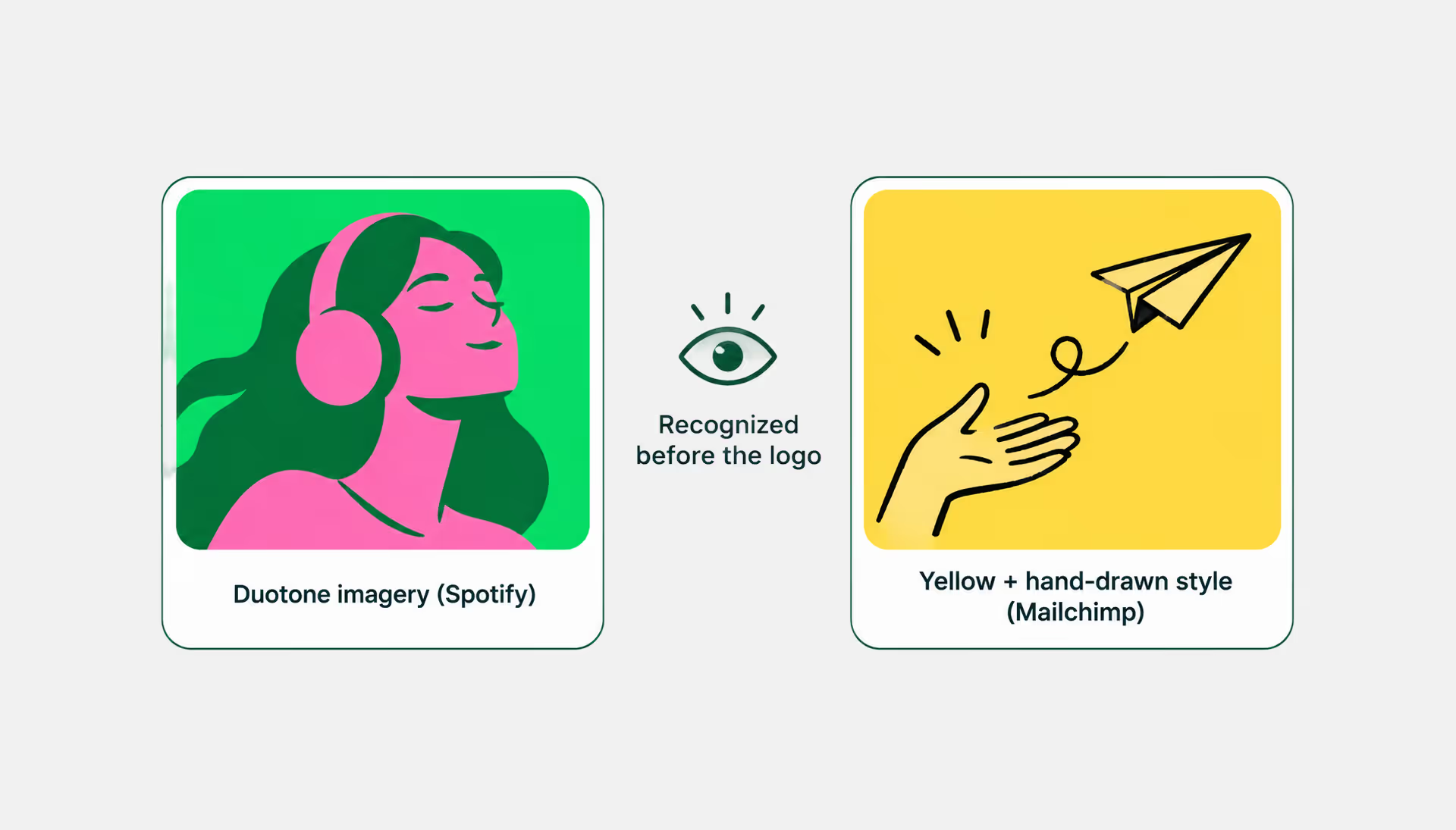
Visual identity is the full system of visual elements that makes a brand recognizable. It includes the logo, color palette, typography, imagery style, iconography, graphic patterns, layouts, and optionally motion. Think of Spotify’s duotone photos or Mailchimp’s yellow with hand-drawn illustrations. You can identify both brands at a glance, before the logo even appears.
What matters most here is the system. Every element follows shared rules, so a social post and a product screen look like they come from one company, even when different people create them. The service makes sense at launch or when your visuals vary from one channel to another. Growth is another common trigger, when the early DIY look no longer matches the company behind it.
In the case of a new identity, the work builds on the brand strategy and a moodboard that translates it into visual references. Designers then explore several concept directions, and once the client picks one, it’s refined and tested on real touchpoints such as the website or social media. Finally, all approved assets are packaged into a brand kit that designers and marketers can use right away.
A logo is an integral part of your brand’s identity. It’s a simple and powerful symbol that represents who you are and what you stand for. Consider Nike’s Swoosh. Designed in 1971 by student Carolyn Davidson, it depicts Nike’s wing, the Greek goddess of victory. The curved stroke suggests speed and motion, the essence of the sports the brand serves.
A new logo is needed in a few situations. The obvious one is a launch, when the company has no mark yet. Another is a rebrand, when the business has changed its focus or audience and the old symbol no longer fits. A redesign is also worth considering when the logo looks outdated next to competitors or turns into a blur on a phone screen.
Anyone can draw a shape. But only genuine insight into a brand can turn it into a logo people recognize, remember, and trust.
Although the final mark may look simple, an effective logo takes time, creativity, and, in many cases, the expertise of professional designers. In return, you get a complete logo package, which typically includes:
A brand book and style guide keep your branding consistent once it leaves the designers’ hands. Usually delivered as a single document, they set detailed rules for using logos, typography, colors, imagery, and other visual elements across platforms. More comprehensive guides also cover tone of voice and real-life application examples.
A brand book becomes essential once more people start creating materials for the brand, whether it’s a growing in-house team or external contractors. Its primary purpose is to ensure visual consistency across all marketing and communication materials.
Branding agencies usually tailor the guide to each company’s specific needs. Once it’s developed, you can distribute it to employees, stakeholders, influencers, and other representatives of your brand, giving everyone the same reference point. A practical tip: check that the kit includes the PDF. Ready-to-use logo files, fonts, and templates will save your team hours of searching.
Rebranding can breathe new life into your company’s image. It updates how your company looks, sounds, or positions itself when the current brand no longer fits. This usually involves updating logos, changing color schemes, or redefining a brand’s message and values.
It’s a thoughtful process that weighs your brand’s history against its future ambitions. Companies usually turn to it when the two stop matching, and the old image no longer fits where the business is heading, for example, during expansion into new markets, a shift in business direction, or a merger.
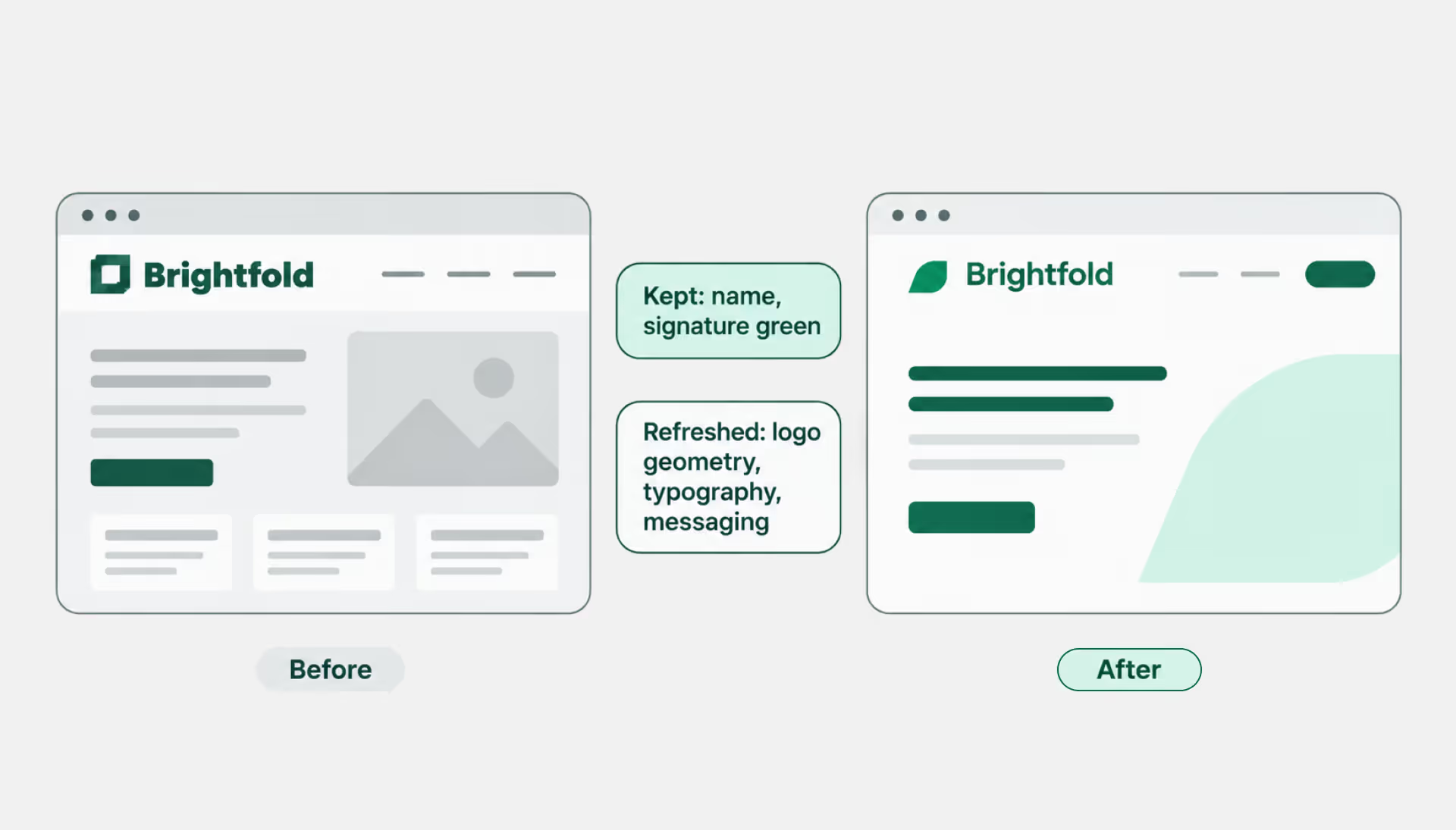
Whatever the reason, a good rebrand keeps the equity customers already recognize and changes only what’s holding the company back. The deliverables usually include a brand audit, refreshed messaging and visual identity, updated guidelines, and a plan for introducing the new look to existing customers.
{{banner-2}}
A brand only comes alive when customers actually see it. Brand implementation takes your identity out of the guidelines and onto real touchpoints, and this is where you find out whether the system works in practice. The key touchpoints usually include:
Importantly, implementation should follow your channel priorities. Start with the touchpoints where customers are most active and the brand gets the most exposure, then expand step by step. A clear rollout plan keeps the budget focused and saves your team from producing branded materials “just in case.”
Branding assets are the tangible outputs you receive at the end of a branding project: the documents, files, and assets your team will actually use. The exact list depends on the services you choose. The table below clarifies what each one typically includes.
It is worth understanding the difference between the two main categories of brand deliverables. Brand identity deliverables, like logos and color palettes, show the brand visually and can be evaluated at a glance. In contrast, brand strategy deliverables, such as the positioning statement and key messages, describe it, and their value shows up later, when your team uses them to plan a campaign or enter a new market.
The Halo Lab team collaborated with diverse companies, transforming their identities with creative branding solutions. Explore our best branding service examples below to see how we put this expertise into practice.
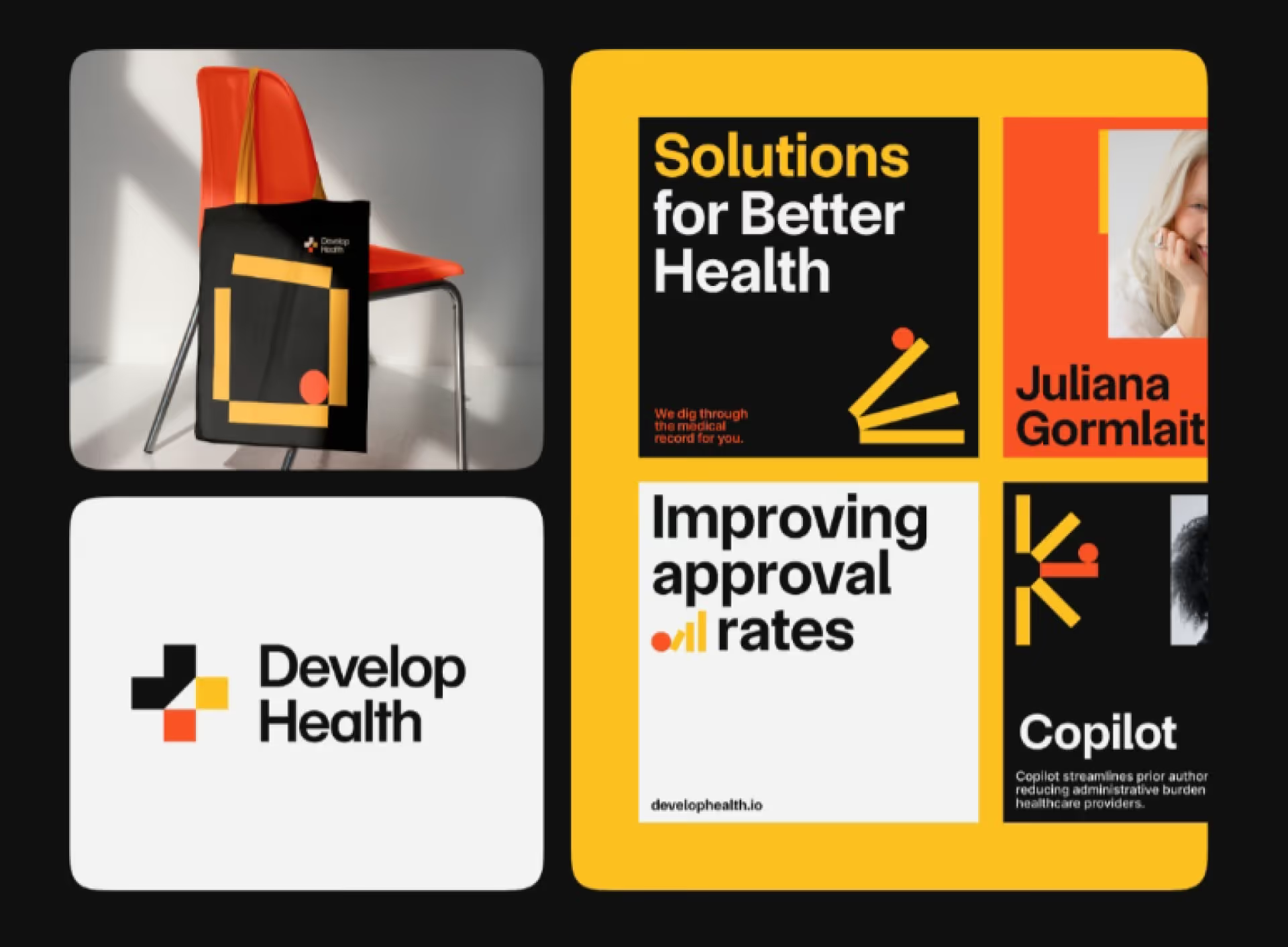
The Develop Health project was a unique and innovative journey for Halo Lab. This company is focused on building a better medication utilization infrastructure using innovative AI technology, all to optimize healthcare processes.
The client wanted a brand identity that felt confident, and we were excited to bring that to life. Our team took a Swiss-style approach, using layouts with plenty of free space and unique grids to really show off their tech expertise. The black-and-white palette gave the brand a bold, classic feel, while flame red and bright yellow accents added a pop of energy.
When working on identity, we focused on visual stories that really stand out. Our designers created two key elements — an orange circle and a yellow rectangle — symbolizing how the company overcomes challenges in healthcare. The result is a modern look that captures the industry’s spirit and sets Develop Health apart visually in a crowded marketplace.
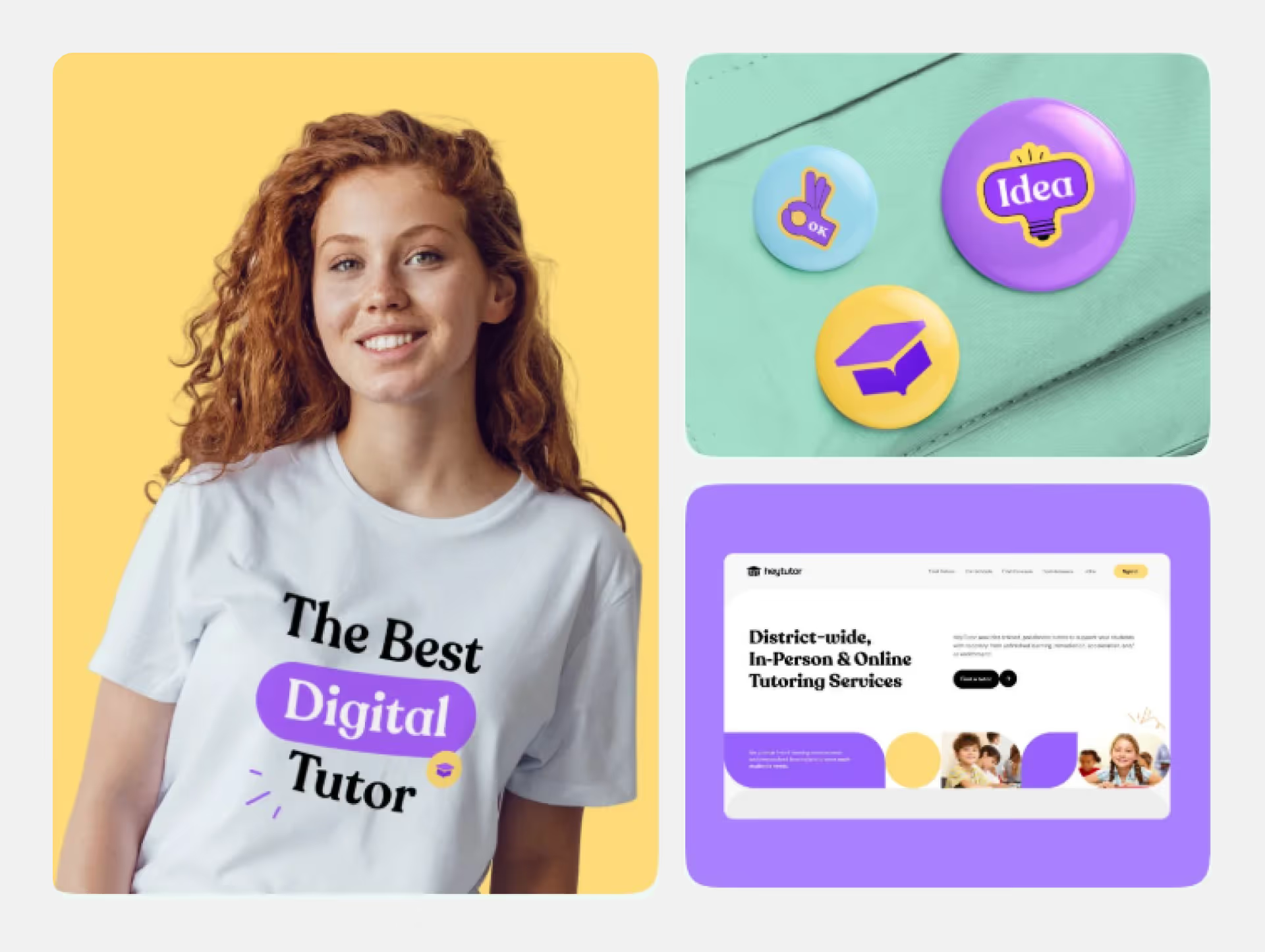
Then, we had the opportunity to work on full-scale branding and web design for the HeyTutor project, an online platform connecting tutors, students, and educational centers.
By conducting target audience research, we created a memorable brand identity representing joyful, fast, and smart studying that set HeyTutor apart from competitors. Our team incorporated graphic elements such as hand-drawn lines, arrows, varied shapes, and minimalist icons to break up the monotony of the page, making it more informative and attractive to users.
For the light white & greyish background, the designers added pastel corn, lavender, mint, sky, and baby pink colors to bring a touch of vibrancy and life. To associate the platform with an education and learning theme, we presented the logo as an academic cap.
Overall, the final branding result effectively conveys HeyTutor’s mission to provide an intelligent and intuitive platform for online tutoring.
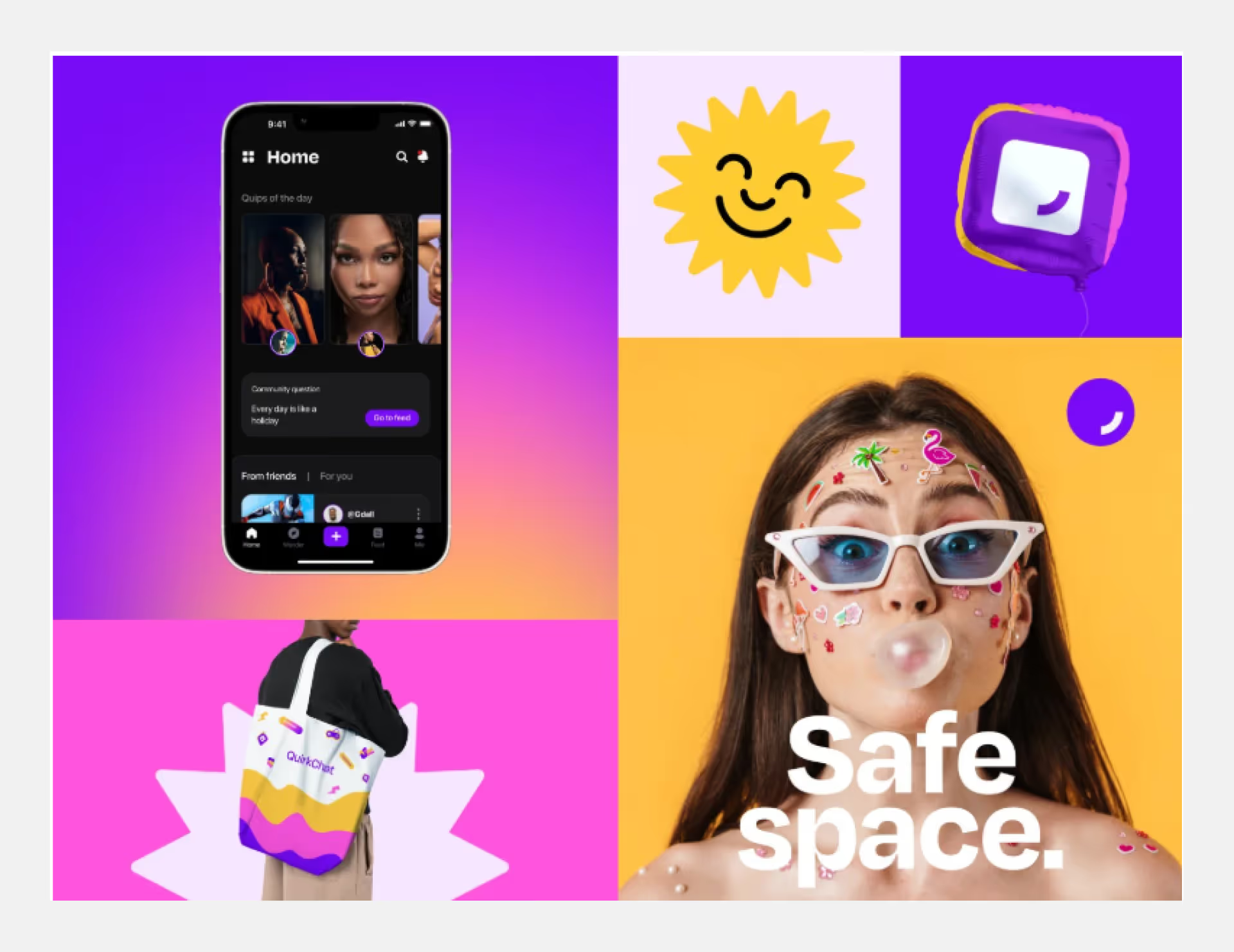
In another case, the Halo Lab led the revamp of the QuirkChat project, a global collaborative platform for geek culture enthusiasts. Our team was entrusted to tell this platform’s unique story, not through words but through colors, fonts, icons, and other wizardry tools we have in stock.
To better reflect the brand's personality and attract a new audience, Halo Lab brand designers chose a bright summer color palette. The concept of the logo was memorable, without any text or extra elements. We moved on with the Q letter as a central part, with spicy details — a smile and a tail. Quite simple but impressive, the logo reflected the technicolor QuirkChat mood.
As a result of a vibrant palette and unique typography, the brand identity echoed QuirkChat’s essence: inclusivity, freedom, and creativity.
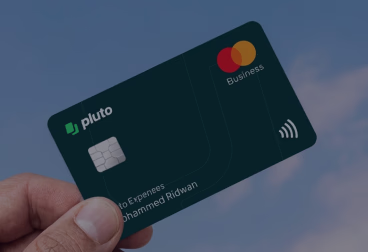
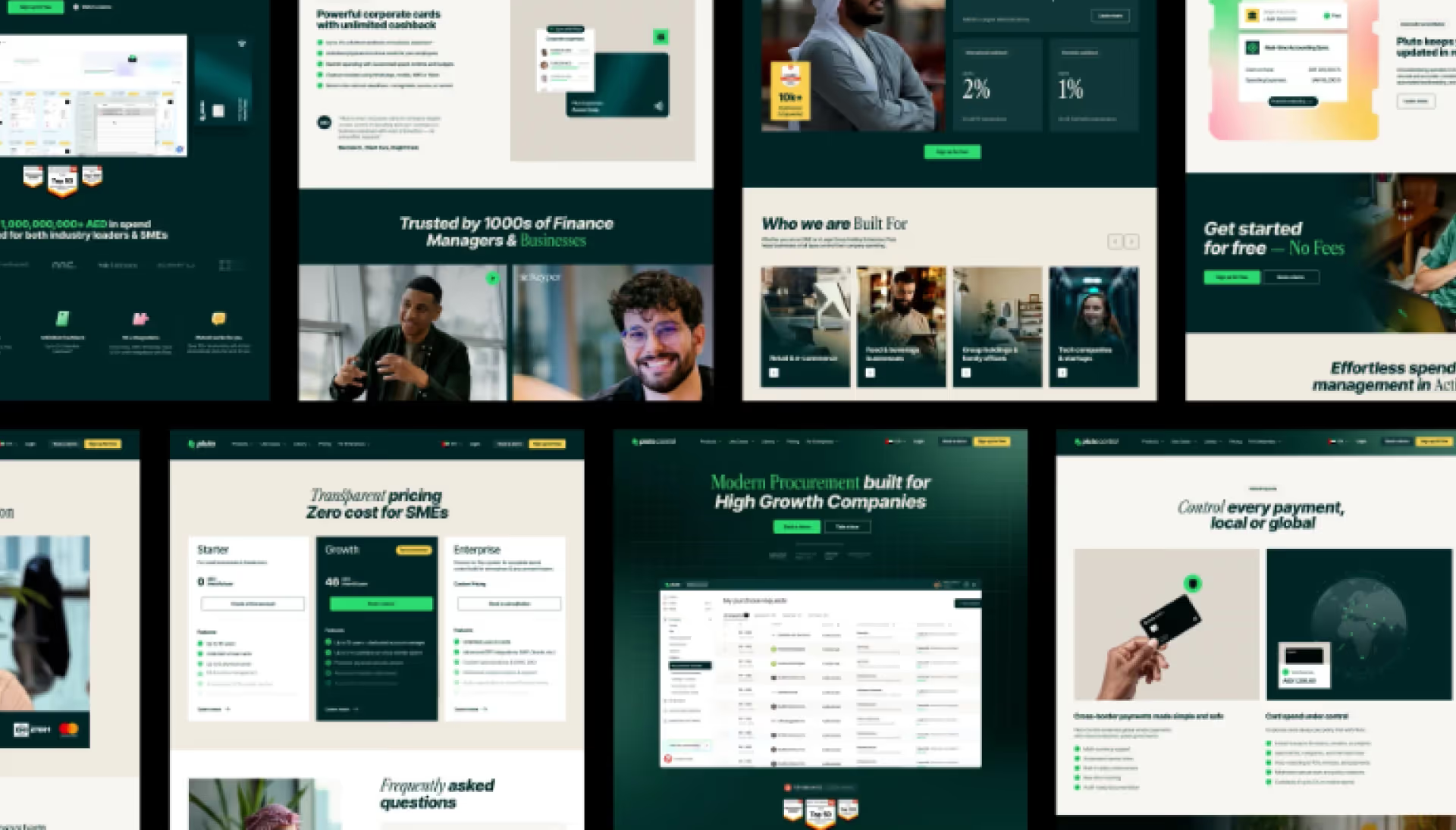
While the previous projects focused on visual identity, our work for Pluto covered not only the visuals but also the strategy behind them. This UAE-based platform helps finance teams at small and mid-sized businesses manage spending with smart corporate cards and automated approvals.
The product was strong, but the brand no longer reflected its scale or ambition. Ahead of international expansion, Pluto needed sharper positioning and a premium presence to stand out among global competitors.
We started with a strategy. A live workshop and an analysis of four competitors defined Pluto’s archetype and tone of voice, shifting the brand from cold fintech conventions to a human, growth-oriented personality. Our designers explored three creative directions and merged the best ideas into one concept built around momentum and disciplined flexibility. Instead of replacing the logo, we refined its geometry to convey motion while keeping it recognizable to existing customers.
The work was captured in brand guidelines covering typography, color, imagery, icons, layouts, and motion principles, along with a ready-to-use brand kit. Later, we brought the new identity to life on Pluto’s website. As a result, Pluto was repositioned from a regional fintech provider into a globally structured spend management platform.
Branding shapes the complete experience customers have with your company, from the first ad they notice to the support email they get months later. The right set of branding services depends on your goals and the brand’s stage of development, so it makes sense to start with the ones that address your most pressing challenge.
Still, each service delivers the most value as part of a whole. Strategy gives the brand its direction, identity turns that direction into something people can see and hear, and implementation keeps it consistent wherever customers meet the company. When these parts are planned together, every new campaign or market builds on the same foundation.
If you’re preparing a launch or rethinking an existing brand, contact us — we’ll help you choose the services that fit your goals and build an identity your audience will connect with.
Branding services typically cover brand strategy and positioning, naming, messaging and tone of voice, visual identity, logo design, brand guidelines, rebranding, and brand implementation.
Branding deliverables are the concrete results of a branding project that your team can put to use. They range from strategy documents such as positioning statements and messaging frameworks to design assets like logos, color palettes, typography, and icons. Brand guidelines and ready-made templates for presentations, social media, and other materials complete the set.
It depends on the scope. A logo refresh moves much faster than a full rebrand with research, strategy, identity, and implementation. Timelines also depend on how deep the discovery goes, the number of creative concepts and revision rounds, how quickly stakeholders give feedback, and whether the project includes a rollout across a website or product. A reliable agency gives you a timeline after defining the scope.
A branding agency defines who your company is and how it looks and sounds: strategy, positioning, messaging, identity, and guidelines. A marketing agency uses that foundation to reach and convert audiences through campaigns, advertising, content, and channel management. Its work is usually measured by performance metrics like leads and conversions. Some agencies do both, and in that case the brand work usually comes first, since every campaign relies on clear positioning and identity.