







Most founders can explain what their company sells, who it serves, and why the product works. Ask what the brand stands for once features, positioning, and revenue are stripped away, and the answer gets harder. So what gives a brand a deeper sense of direction?

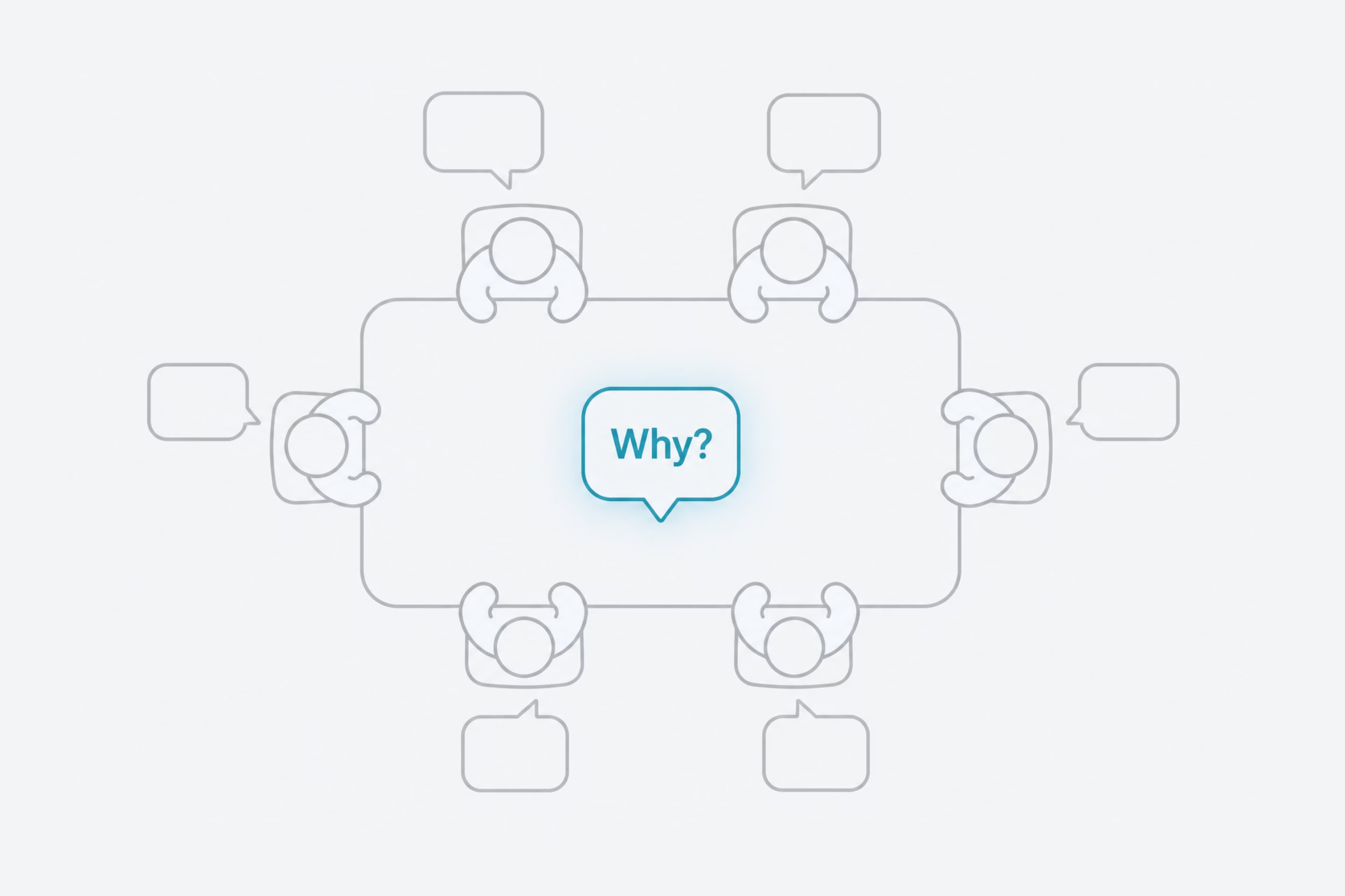
That uncertainty rarely stays abstract. It shows up in messaging that drifts, brand decisions that depend on who is making them, and an identity that feels less coherent as the business grows. Customers may understand what you offer without getting a clear sense of what the company stands for.
A well-defined brand purpose gives that direction a clearer shape. In the sections ahead, we’ll look at how it differs from mission, vision, and values, what makes it meaningful, and how to turn it into something that can guide real brand and business decisions.
Brand purpose is the reason a company exists beyond making money: the difference it wants to make for the people it serves. A strong definition stays short and human — clear enough that a customer and a new hire could describe it in nearly the same words.
It becomes easier to understand when you separate it from the things that express a brand. A logo, tagline, or color palette can shape how a company is perceived, but none of them explains why it exists in the first place. That deeper reason sits behind the visible identity and gives it meaning.
One simple way to test whether the idea is real is to ask what would be missing if the brand disappeared. A mapping app, for example, may be useful because it makes unfamiliar places easier to navigate. If customers would genuinely feel that absence, the brand is solving something that matters beyond the product itself.
{{banner}}
A clear purpose rarely drives growth through one big moment. Its value shows up in the smaller patterns a business repeats over time — how customers learn to trust it, why they choose it over similar alternatives, and how consistently the team carries the brand forward. Those effects are where purpose starts to translate into business value.
That same direction also shapes the practical work behind a brand, from naming and messaging to visual identity — areas we cover in our overview of branding services.
Trust grows when a company’s actions match what it claims to care about. That consistency gives customers a standard against which to judge the brand and makes its promises easier to believe over time.
Trust is what customers extend to a brand that behaves the same whether or not anyone is watching.
In crowded categories, products converge. Features get copied, prices settle into a narrow band, and specs blur together in the buyer’s mind. What a company stands for is harder to imitate because it comes from deeper convictions than the latest product release.
Two companies can sell nearly identical software, yet the one that stands for something specific gives buyers a reason to prefer it beyond the feature list. That preference creates a form of differentiation competitors cannot match simply by changing features or price.
A shared reason for existing gives teams a common reference point for decisions. Messaging, campaigns, product choices, partnerships, and customer experience can all pull in different directions when each department optimizes for its own goal.
With one standard to work from, those choices are easier to align before inconsistencies reach the customer.
When people identify with what a brand represents, the relationship can become less transactional. That effect can show up on both sides:
In both cases, the connection has more chance to last because it rests on something deeper than a single purchase or task.
Brand purpose is often grouped with mission, vision, and values, but each answers a different question. Without that distinction, it is easy to end up with four polished sentences that all say roughly the same thing.
Brand vision describes the future you are working toward — a picture of where the company wants to go. Purpose explains why that future matters in the first place. A fintech might envision a world where small businesses compete on equal footing with larger players, while the belief underneath is that access and opportunity should be fairer.
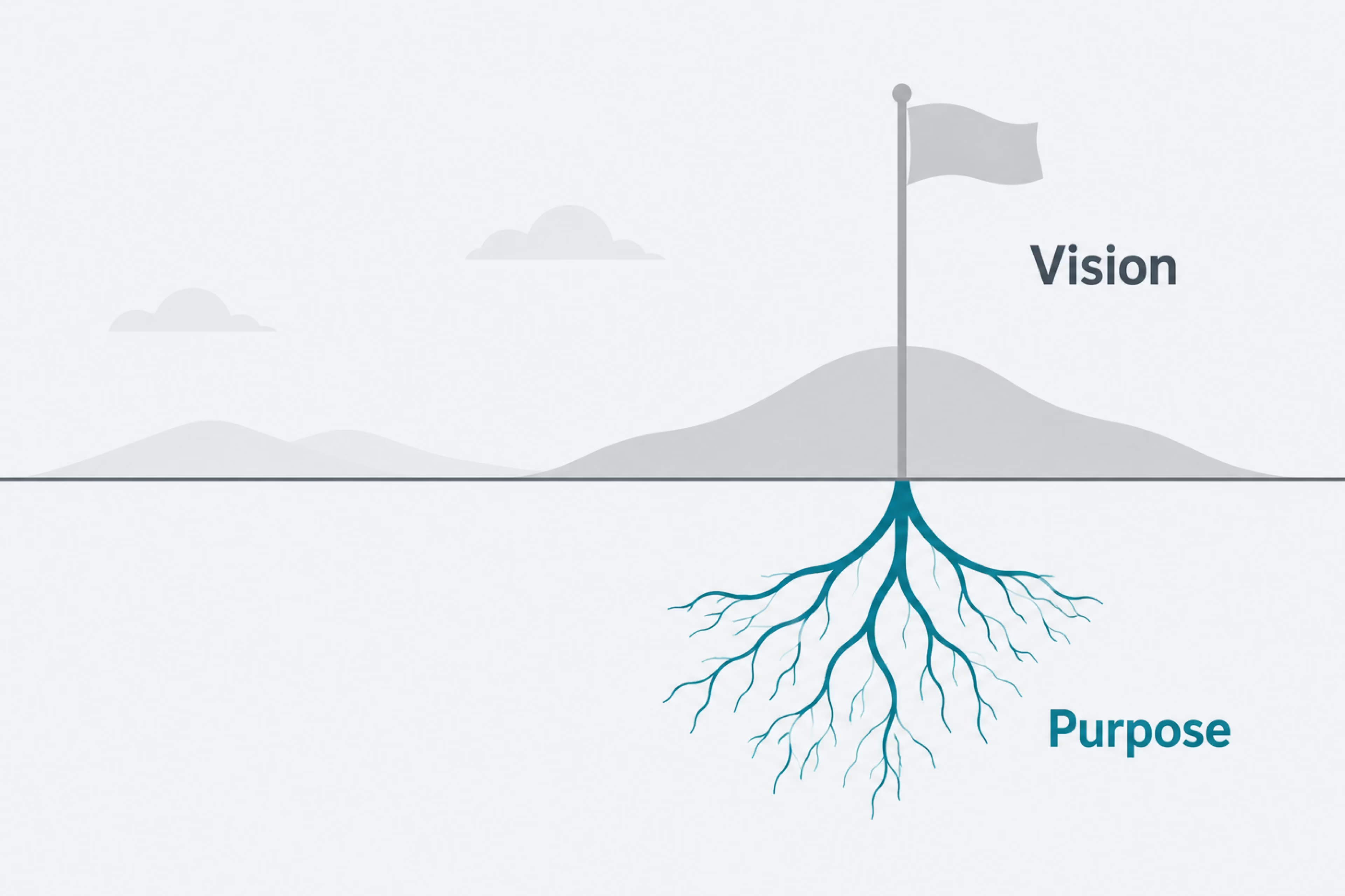
Brand mission describes what the company does, who it serves, and how it creates value. Purpose sits behind that work and explains why it is worth doing. If the mission is to help freelancers get paid on time, the underlying belief might be that independent work should come with financial security, not uncertainty.
Brand values are the principles that shape how a company behaves. Purpose sets the direction while values define how you pursue it. A brand that prizes openness has to stay transparent even when withholding information would be easier. That consistency is what makes the belief credible rather than purely aspirational.
A meaningful brand purpose usually comes from something already true about the business and the people it serves, not from whatever sounds admirable at the moment. The strongest foundations tend to emerge where a few forces overlap.
The strongest starting points often come from a need the audience already feels. Look at where customers are frustrated, underserved, or quietly working around a problem nobody has solved well. When the brand responds to something people already recognize in their own experience, the idea feels earned rather than invented.
A founder’s original motive is another rich place to look. Go back to the problem that pushed someone to start the company in the first place — it often predates the product and survives long after the original solution changes. That history can reveal a conviction that later branding exercises would struggle to manufacture.
Audience needs tell you what people are struggling with; the market shows you why that struggle still exists. Look for gaps the category keeps ignoring, outdated assumptions competitors repeat, or problems everyone treats as normal. Those gaps often reveal where your brand has a genuine reason to take a different position.
This is also where purpose and positioning begin to meet. Our guide to brand differentiation explains how that difference becomes visible in the market.
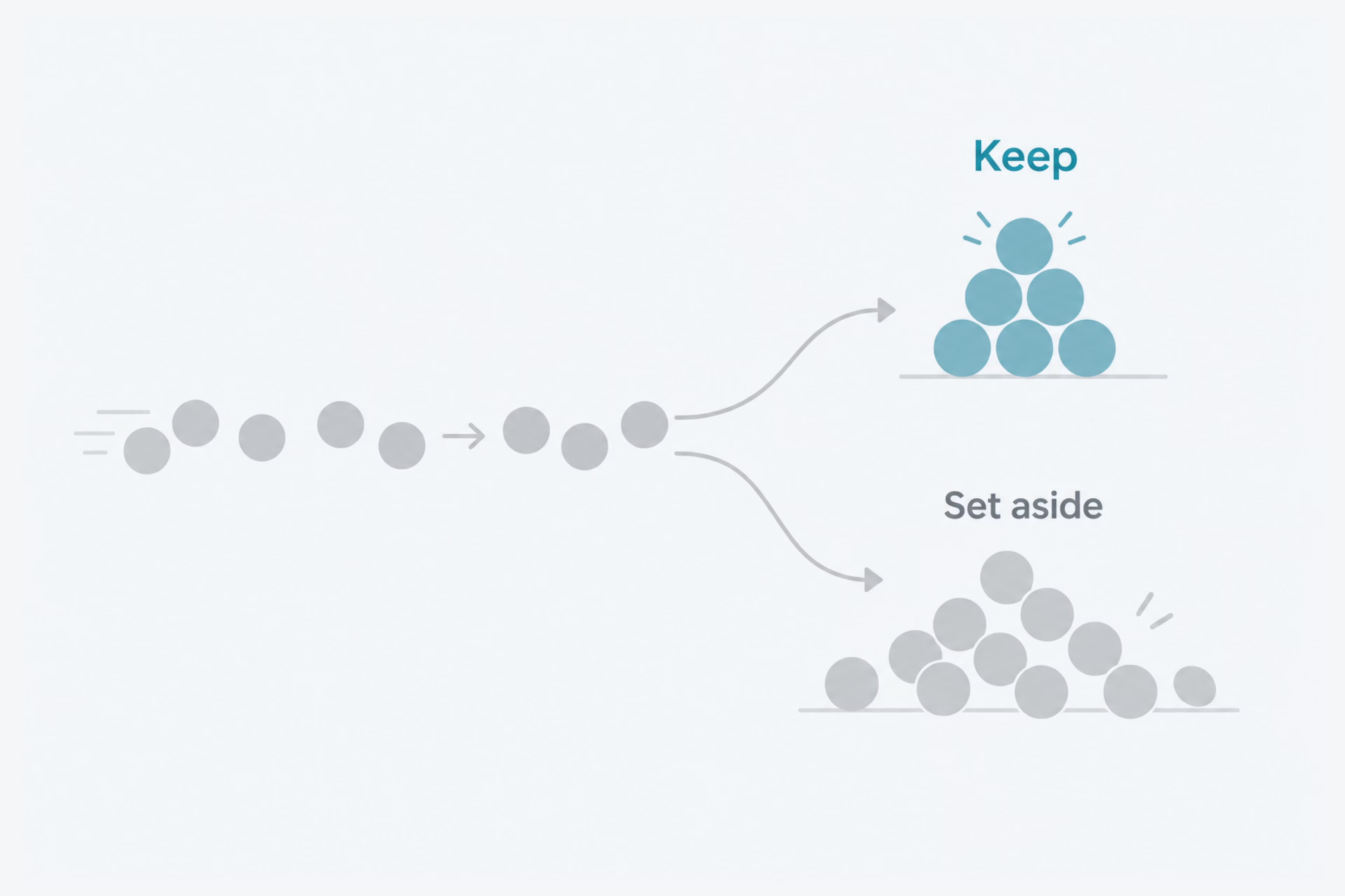
A company shows its values in the choices it already makes. Look at what it consistently protects, what it refuses to compromise on, and what it is willing to set aside. Those patterns reveal the principles the business already treats as non-negotiable.
A strong direction can also come from the longer-term change the company wants to contribute to — whether that means improving customers’ lives, changing how an industry works, or creating a broader social benefit. The point is not to attach a grand cause to the brand, but to identify an impact the business can credibly help create over time.
Defining your brand purpose means turning what you already know about the business into a clear statement the team can actually use. The process works best when you move from evidence to synthesis: revisit where the company came from, clarify the problem and audience, connect the pieces, then test the result against real decisions. Let’s explore these steps in detail.
The earliest materials often hold the clearest clues about what motivated the company in the first place. Revisit the first pitch deck, launch notes, founder interviews, or early investor emails and look for ideas that still feel true today. Those recurring themes give you a useful starting point.
Name the problem in the customer’s language rather than your own. Be specific about the frustration, barrier, or unmet need your business addresses. The sharper the problem, the easier it is to explain why the company matters.
Put that problem in context. Look at what customers care about, what alternatives they already have, and where the category still falls short. This helps separate a genuine role for your brand from an internal story that only sounds convincing inside the company.

Lay your mission, values, and commercial goals side by side and look for the thread connecting them. This is where purpose starts to work as part of a broader brand strategy, aligning what the company believes with how it creates value. If the reason you claim to exist sits in tension with the business model, the wording needs another pass.
Turn the patterns you have found into one plain sentence. Keep it clear enough to understand quickly and specific enough to sound like your company rather than any company in the category. At this stage, focus on getting the core idea right — the next section looks at how to sharpen the wording.
Test the statement against a real choice the company is facing — a partnership, product decision, campaign angle, or market opportunity. Does it help rule something in or out? If almost any option can be justified through the statement, it is probably still too broad. A useful version creates enough direction to make some choices easier and others clearly less fitting.
Turning the idea into one sentence is where brand purpose often loses its edge. The strongest statements stay clear, connect to real audience needs, reflect how the business actually behaves, and leave room for the brand to grow. The tips below can help you keep the wording focused without flattening the meaning.
Write in a way that a stranger can understand on the first read. Vague language feels safe because it is hard to disagree with, but that same vagueness makes the statement interchangeable with dozens of others. Name the change you want to create and cut anything that sounds impressive without adding meaning.
“Empowering a better future,” for example, could belong to almost any company; “helping independent workers build more predictable financial lives” gives the idea a clearer shape.
Ground the statement in something your customers genuinely care about. A line that sounds good internally but has little relevance to the people you serve will not shape how they see the brand. The test is whether a customer can recognize their own need or ambition in it.
A statement is only as strong as the behavior behind it. If the promise conflicts with how the company actually operates, customers will notice the gap. Write toward what the business is genuinely willing to do, so the sentence describes a commitment rather than an aspiration.
A purpose you can’t act on is just a sentence waiting to be found out.
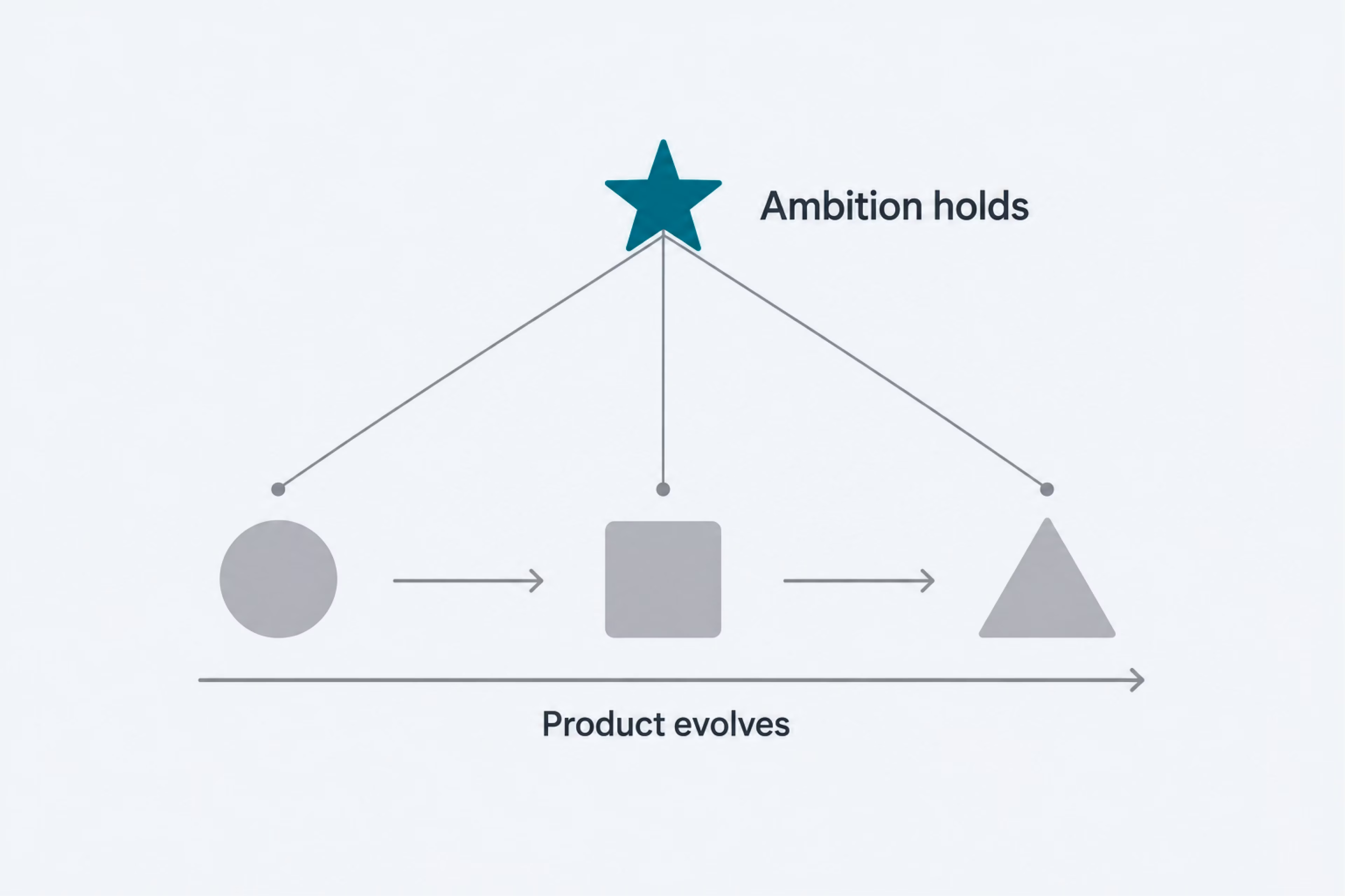
Aim for language that can hold as the company grows. A statement tied too closely to one product, audience, or moment may age quickly as the business evolves. A company that says it exists “to make invoicing easier for freelancers” may outgrow that line if it expands into payroll or banking. A broader idea around giving independent workers more financial control can travel further.
A strong brand purpose is easiest to spot when it clearly answers one question: what change does this company want to create for the people it serves? The product may evolve, but that larger ambition gives the brand a direction that can hold over time.
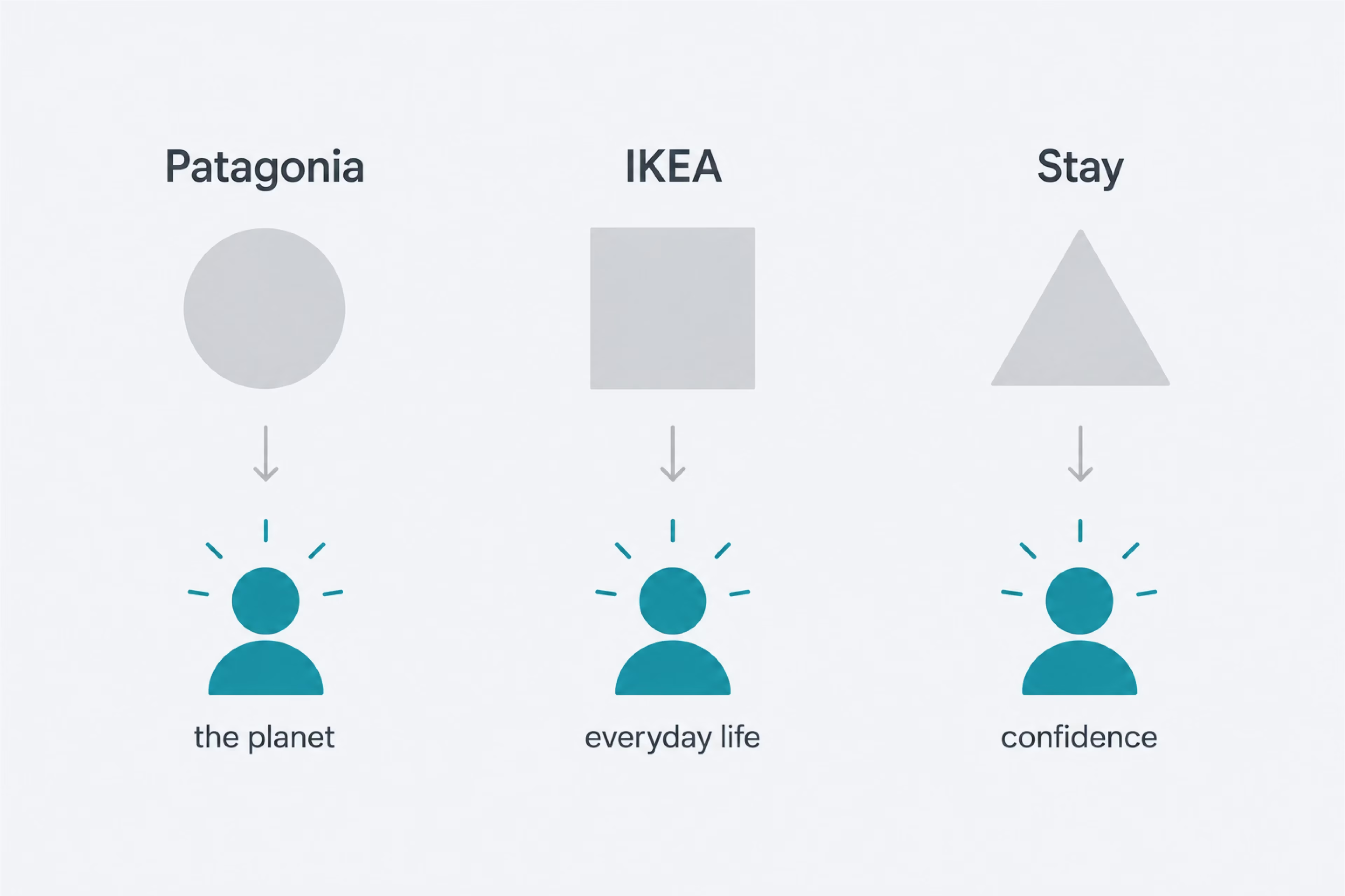
Patagonia states that ambition directly: “We’re in business to save our home planet.” The line is not simply a marketing message. It is reflected in how the company approaches ownership, funding, and environmental action.
IKEA frames its purpose around everyday life. Its long-standing vision is to “create a better everyday life for the many people,” with home furnishing serving as the way the company works toward that goal. The emphasis is on the outcome for people, not only on what IKEA sells.
The same principle can also shape a brand without appearing as a formal statement. In Halo Lab’s work with Stay, an independent insurance brokerage for English-speaking expats in Germany, the central challenge was clear: customers were making important financial decisions inside a system they did not yet know well. Confidence and clarity therefore became central to how the brand needed to show up.
That direction gave Stay a recognizable role in the customer’s experience — helping make an unfamiliar process feel easier to navigate and less intimidating. It shows how a deeper brand idea can become visible in practice even when it is not presented as a polished purpose line.
A strong brand purpose should carry through the parts of the business people actually encounter — messaging, positioning, brand identity, customer experience, and the decisions behind them. The goal is to carry the same idea through each of those touchpoints without turning it into a repeated slogan. Here’s how that idea can carry through the brand in practice.
Let the central idea behind the brand shape both what you say and where you choose to stand in the market. Messaging feels more consistent when it comes from the same point of view, while positioning becomes harder to copy when it rests on something deeper than features or price. Together, the two give campaigns a clearer direction.
A brand should not need to explain its purpose every time someone encounters it. The underlying idea should be recognizable across the identity and the experience people have with the company. That can show up in a few different ways:
The same direction should carry into higher-stakes choices, from which markets to enter and partnerships to pursue to the campaigns worth funding. When brand and business decisions point the same way, the company is less likely to say one thing publicly while acting differently behind the scenes.
Most mistakes happen when the statement sounds finished before it has been tested against the business itself. It can end up too polished, too broad, disconnected from what the company actually does, or attached to a cause that never belonged there in the first place. Below are the traps worth watching for.
A memorable line can make the idea easier to communicate, but it should not be mistaken for the idea itself. If the wording sounds good yet changes nothing about how the company behaves or decides, it is functioning as a slogan rather than a genuine reason for existing.
Adopting a fashionable cause with little connection to the business can feel opportunistic. The strongest directions grow from what the company already does, believes, and is willing to act on. A payments brand standing for financial dignity has a natural link to its work; an unrelated social cause may not.
A statement becomes too vague when almost any company in the category could claim it. Phrases about making life better, empowering people, or creating positive change may sound appealing, but they give the brand little direction. Specificity matters because a useful statement should reveal something distinctive about what the company is trying to change.
A purpose that never reaches everyday work quickly becomes background decoration. If it appears on the About page but not in planning, hiring, product, or marketing conversations, teams stop treating it as meaningful. The idea only stays credible when the company can point to choices that reflect it.
A business can grow without ever putting its deeper reason into words. But the bigger it gets, the harder it becomes to keep messaging, decisions, and customer expectations moving in the same direction by instinct alone.
Defining brand purpose makes that shared direction explicit. The value is not in the sentence itself, but in what becomes easier once the company knows what it stands for — what to prioritize, what to leave out, and how to stay recognizable as products, teams, and markets change. If the idea still holds when the business has to make a difficult choice, you have probably found something worth building the brand around.
{{banner-2}}
Yes. A company can operate with a clear mission even if its broader purpose is not fully defined. The mission explains what the business does and for whom, while brand purpose adds the deeper reason behind that work. The two become more useful when they reinforce each other rather than compete for the same role.
A good statement is clear, specific, credible, and easy to act on. It should sound like your brand rather than any company in the category and reflect something the business is genuinely willing to stand behind.
It can evolve, although the core idea usually changes more slowly than the way it is expressed. Growth, new markets, or a shift in the business may call for a fresh articulation, but frequent changes can be a sign that the original idea was too loosely defined.
Authenticity shows in the match between what the brand says and what the business actually does. Look at products, customer experience, partnerships, internal decisions, and trade-offs. If those choices consistently support the same idea, the statement is likely grounded in something real.
Yes. For a small business, a clear reason for existing can help create focus early, especially when budgets, teams, and product lines are still limited. It can also make positioning more distinctive and give a growing team a shared direction as new people join.
There is no fixed review schedule. Revisit it when the business changes meaningfully — for example, after entering a new market, changing leadership, expanding the offer, or repositioning the brand. The goal is not to rewrite it regularly, but to check that it still reflects what the company stands for.