






If you're planning to build a telemedicine app — whether you're a healthcare startup mapping your first product, a hospital system expanding into virtual care, or a digital health company adding remote capabilities — this guide is written for you.

Healthcare systems are under pressure. Physician shortages are projected to reach tens of thousands in the coming years, while millions of people live in areas with limited access to mental health and specialty care. As telehealth becomes part of the response, in this article, you'll find a complete step-by-step overview of how to approach such products strategically and responsibly.

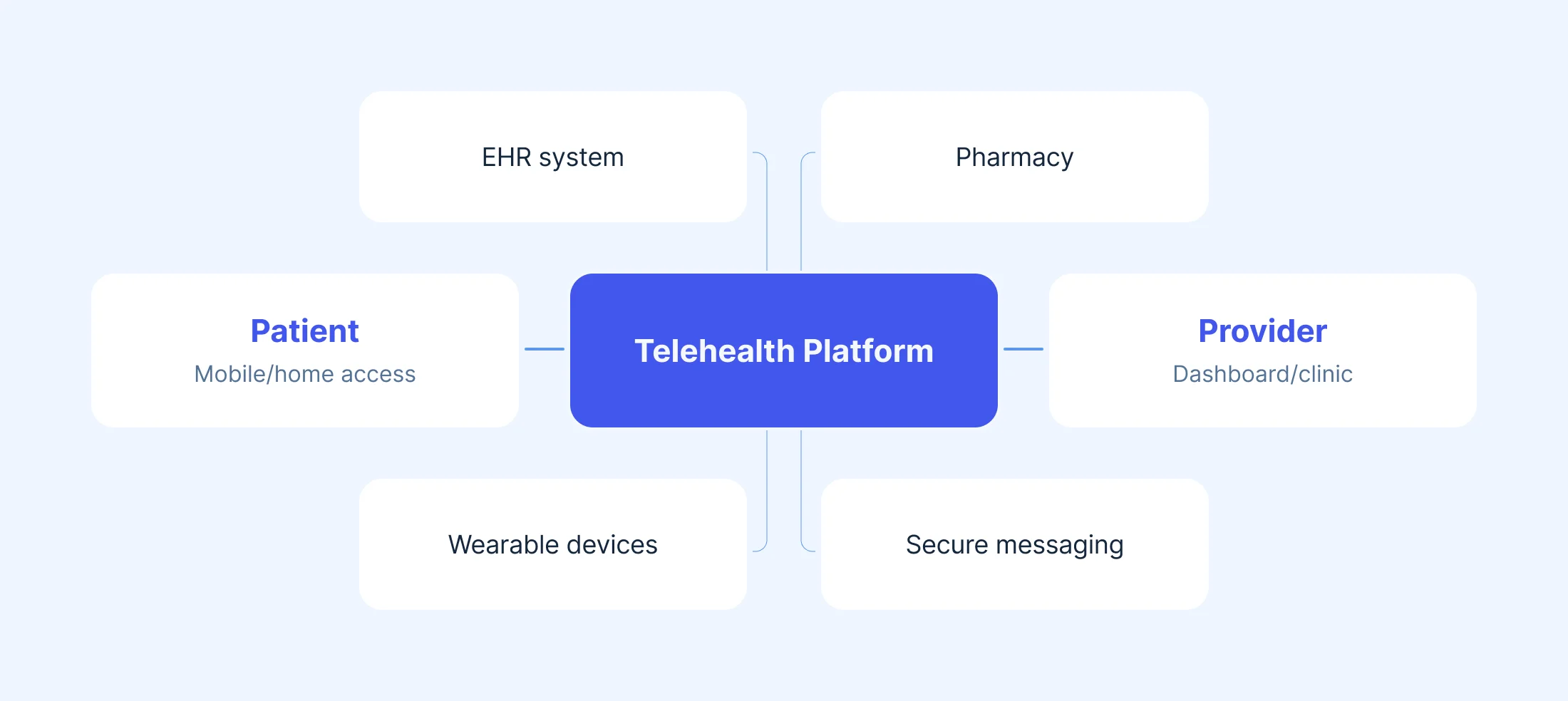
A telehealth platform lets patients and healthcare providers stay connected from a distance through video calls, phone consultations, secure messages, and digital monitoring tools. At its core, telemedicine app development focuses on enabling safe, compliant, and structured remote care.
{{banner-4}}
Live consultations, asynchronous messaging, digital prescriptions, remote diagnostics, and EHR access are all possible through telemedicine apps — integrated with cloud infrastructure to store and transmit PHI securely under HIPAA and GDPR.
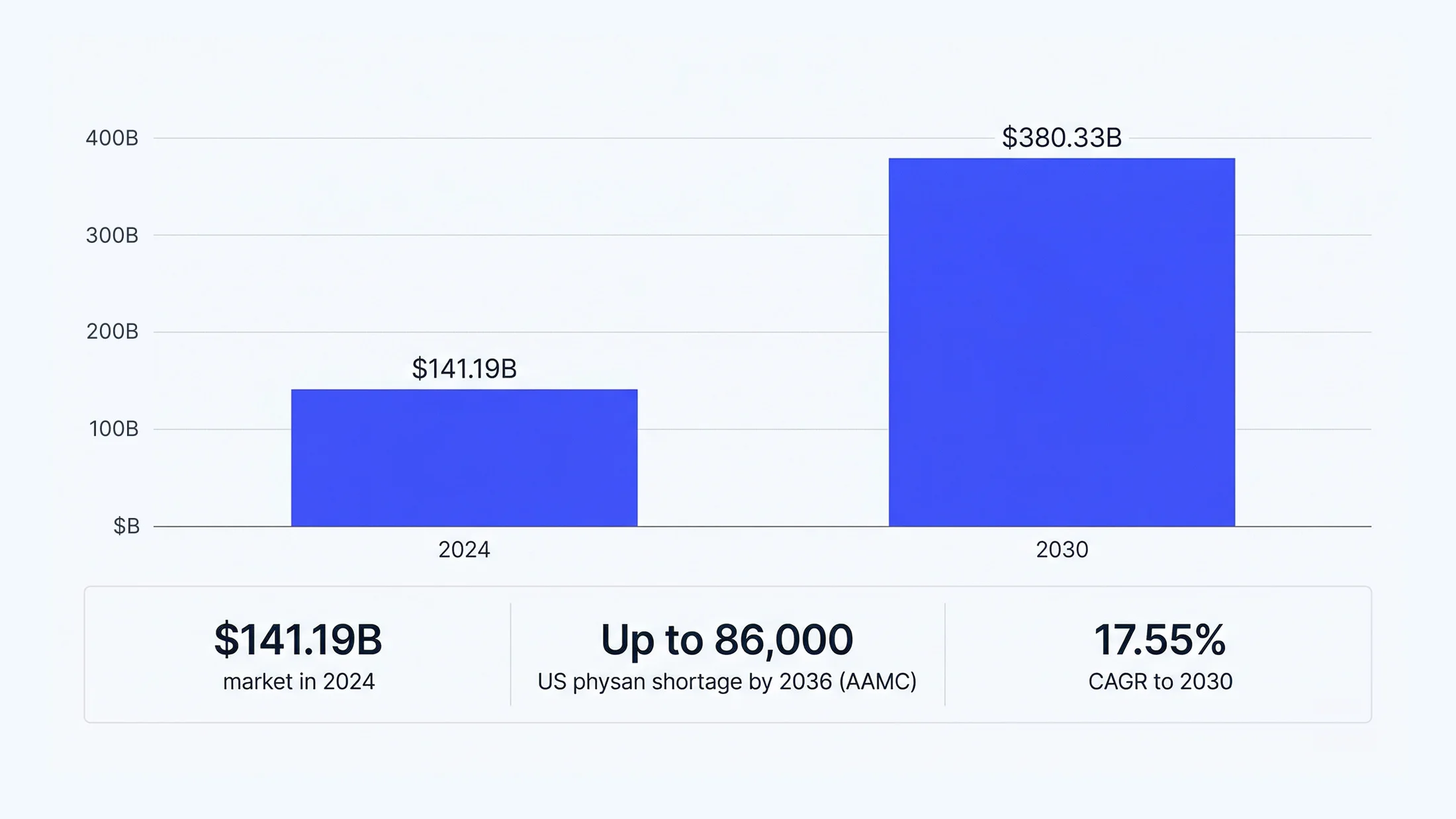
The telehealth market has shifted from pandemic-era spike to sustained structural growth. The global market was estimated at $141.19 billion in 2024, projected to reach $380.33 billion by 2030 (CAGR 17.55%) — driven by physician shortages, aging populations, and the permanent normalization of hybrid care. The AAMC projects a shortage of up to 86,000 physicians by 2036.
The shift is visible across several structural trends shaping how telehealth is adopted and scaled:
Before investing in telemedicine app development, define which category fits your strategy. Our healthcare app development services can help you align your product's direction with clinical goals. But before that, check out different kinds of telehealth apps.
Support general medical consultations — video calls, secure messaging, appointment scheduling, e-prescriptions, and EHR integration for primary care, urgent care, and follow-up visits.
Licensed professionals conduct therapy sessions, medication management, and crisis assessments via video. Audio-only services remain common for reimbursement scenarios. AI-assisted intake assessments reduce session overhead.
Collect health data from wearables and transmit it to providers in real time — tracking heart rate, glucose, and blood pressure. Designed around billing codes and compliance requirements for chronic condition management.
Dermatology, cardiology, oncology, neurology, and remote orthodontics — each requiring imaging integrations, device compatibility, and domain-specific data processing. Deeper technical integration and specialized clinical knowledge required.
Multi-role dashboards, audit logging, compliance tracking, SSO, and legacy EHR interoperability. Scalable cloud infrastructure capable of handling large volumes of concurrent visits across multiple facilities.

When designed correctly, a telemedicine app creates value for multiple stakeholders: patients, healthcare providers, as well as clinics and healthcare organizations. Let's take a closer look at them.
A well-architected telehealth product creates a defensible market position. A focused MVP validates product-market fit before full-scale investment — and demonstrates clinical outcomes to investors and payers.
Removes geographic barriers, reduces no-shows, and enables hybrid care models that reduce clinic overcrowding. EHR integration eliminates double documentation. Organized telehealth workflows simplify reimbursement.
Asynchronous consultations, pre-visit messaging, and streamlined intake free up appointment time. Remote monitoring provides ongoing patient data to support proactive care decisions.
"Hybrid care models don't disrupt the workflow — they make it more effective, organized, and accessible."
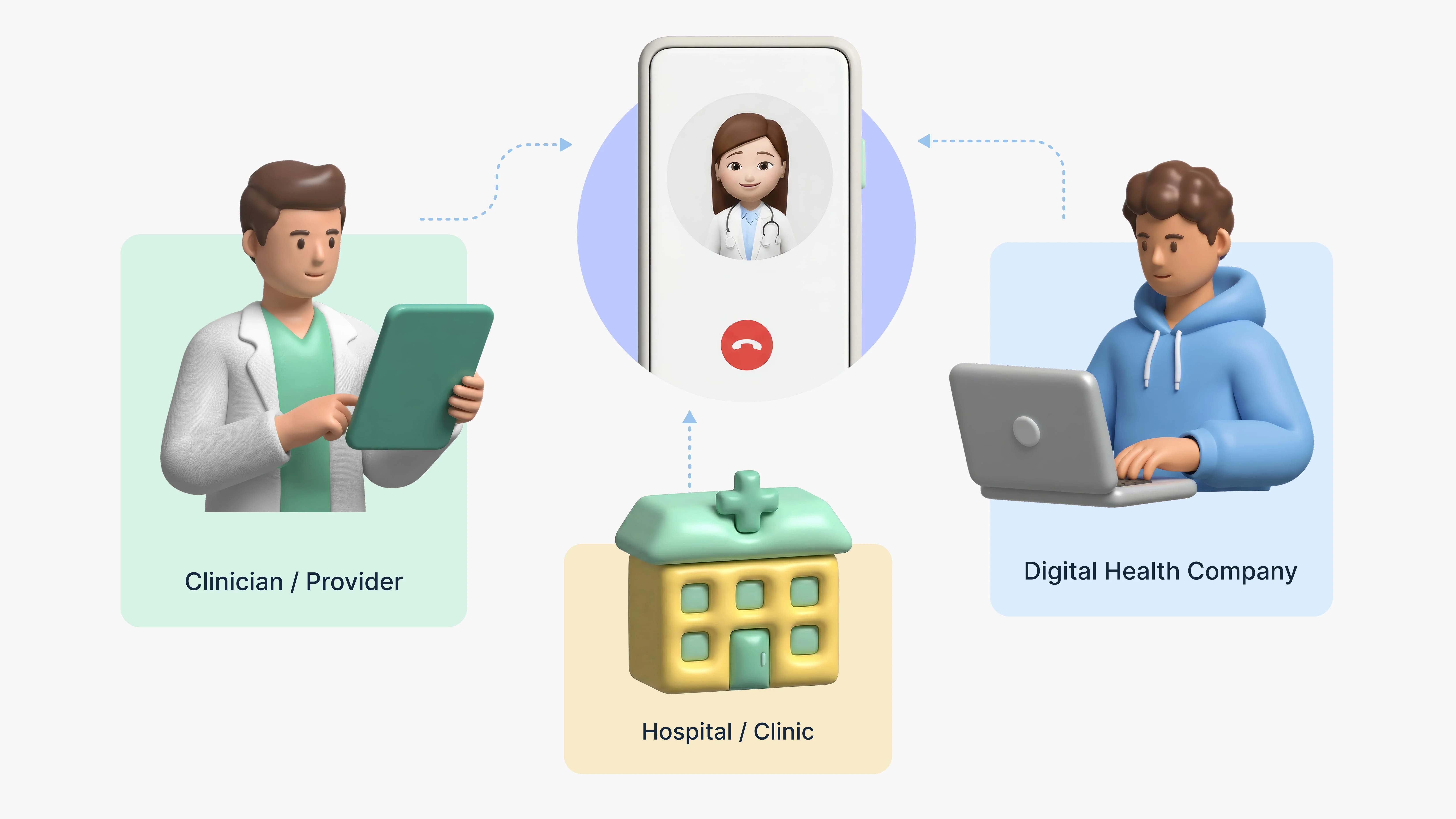
A successful product starts with the right feature set — balanced between speed-to-market and long-term scalability. Most teams begin with a structured MVP and expand gradually.
A well-scoped MVP focuses on a small set of features that support secure, reliable care delivery:
"An effective MVP starts small — secure communication, clear workflows, dependable data handling. Trust and compliance first, advanced capabilities later."
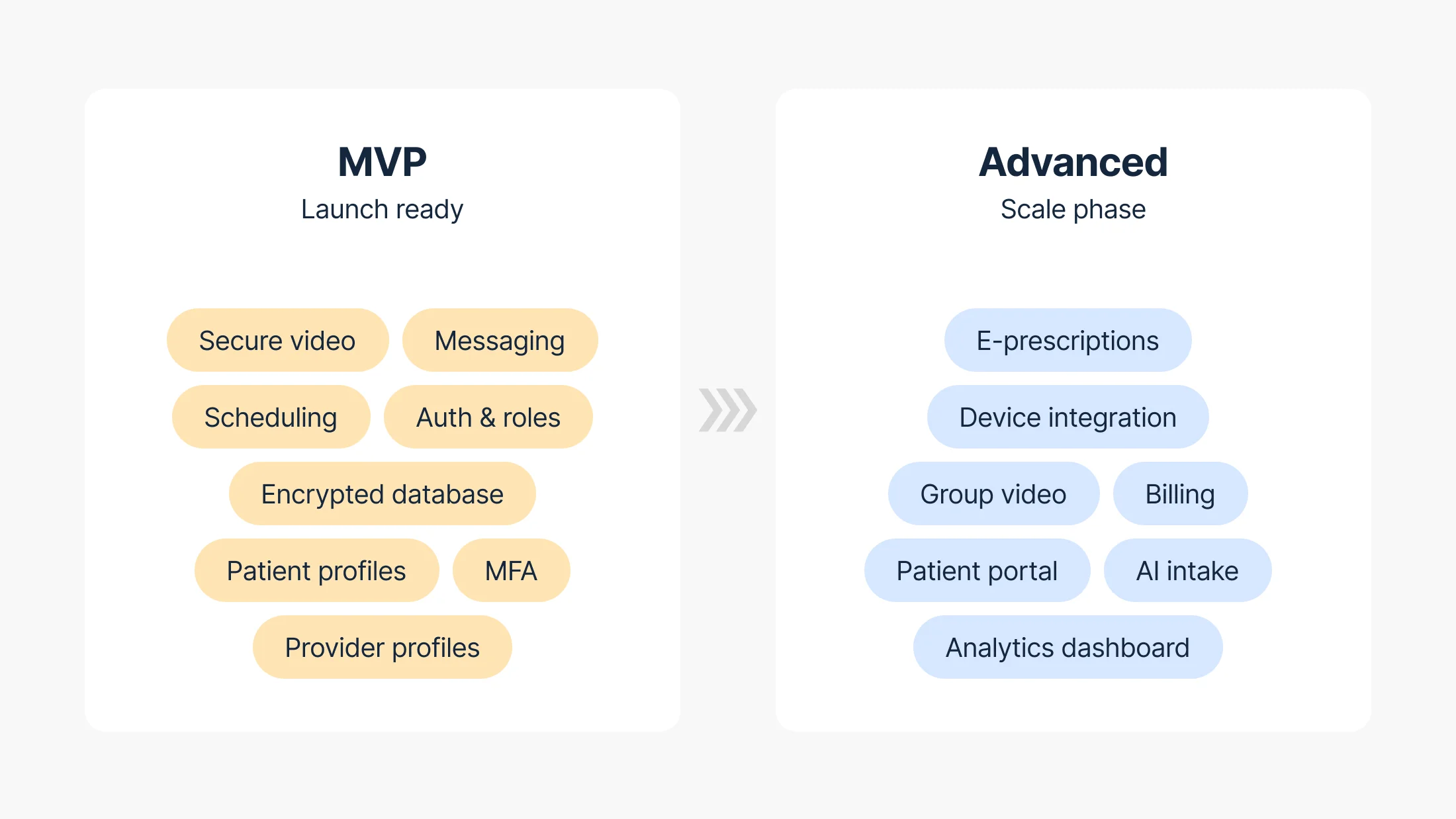
After validating the core experience, the next layer of development focuses on extending clinical capabilities and improving operational efficiency:
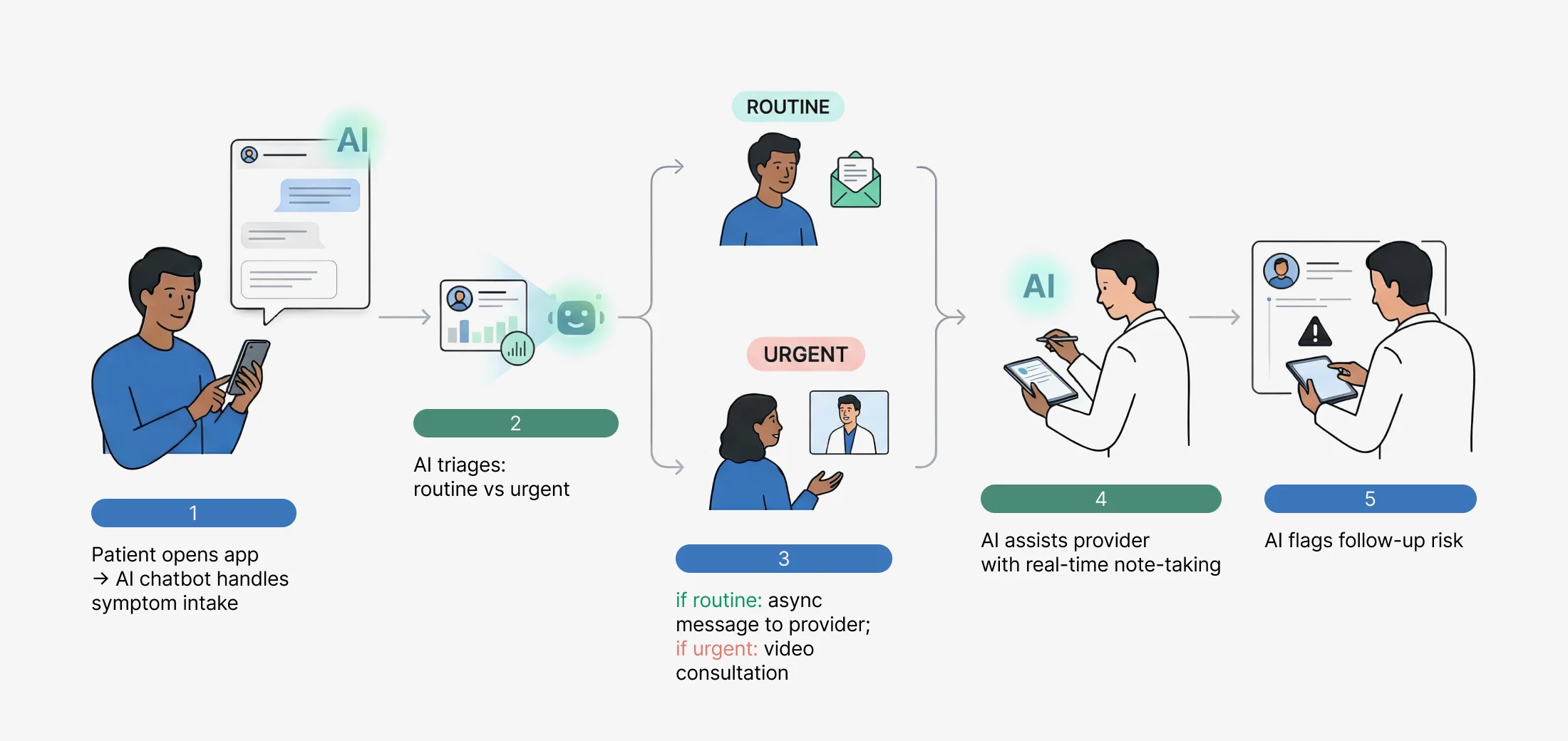
AI-powered chatbots assist with symptom intake and triage, reducing provider workload before a live consultation. Large Language Models (LLMs) can help generate structured clinical notes from consultation conversations or summarize patient histories. Scheduling systems use ML to predict cancellation risks. Predictive analytics support preventive care by identifying high-risk patients early.
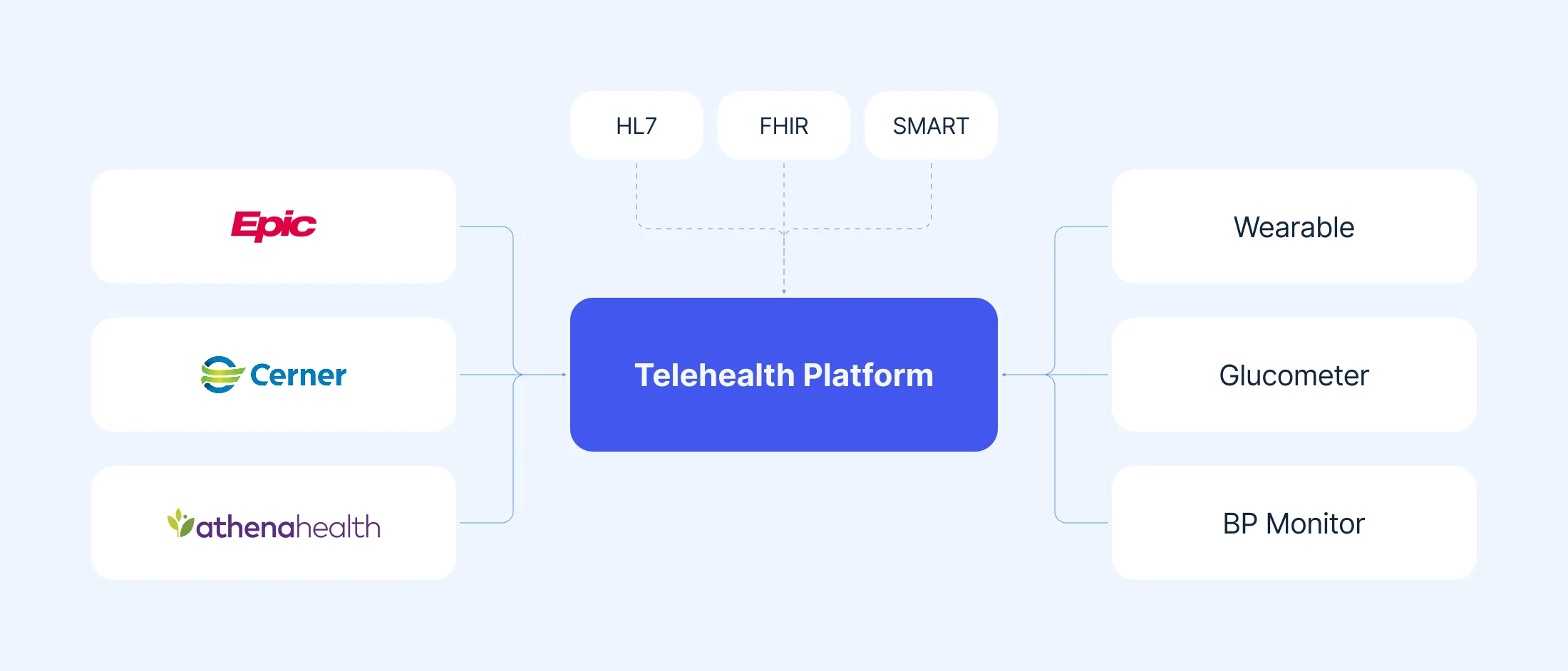
Integration with existing healthcare systems is often one of the most technically complex aspects of telemedicine app development. Without interoperability, providers face double documentation and fragmented workflows.
HL7 provides the structure for how data moves between platforms. FHIR builds on this, making data sharing simpler across modern applications. SMART on FHIR allows secure third-party apps to connect directly inside EHR systems without breaking existing workflows.
Legacy EHR platforms often don't support modern APIs. Data mapping inconsistencies can lead to mismatched records. Retry logic and queue systems manage temporary data exchange failures. Plan integration around specific workflows first — not every system at once.
Building healthcare technology goes beyond innovation — it requires responsibility. Every feature, integration, and user interaction must operate within a strict regulatory and security framework. A single compliance gap creates serious legal and operational risk.
The following regulations define how telemedicine platforms must be designed, deployed, and operated:
In addition to regulatory requirements, security must be enforced through concrete technical and operational controls. These practices form the foundation of a secure and compliant telemedicine platform:
"Security planning should begin during architecture design, not after development is complete."
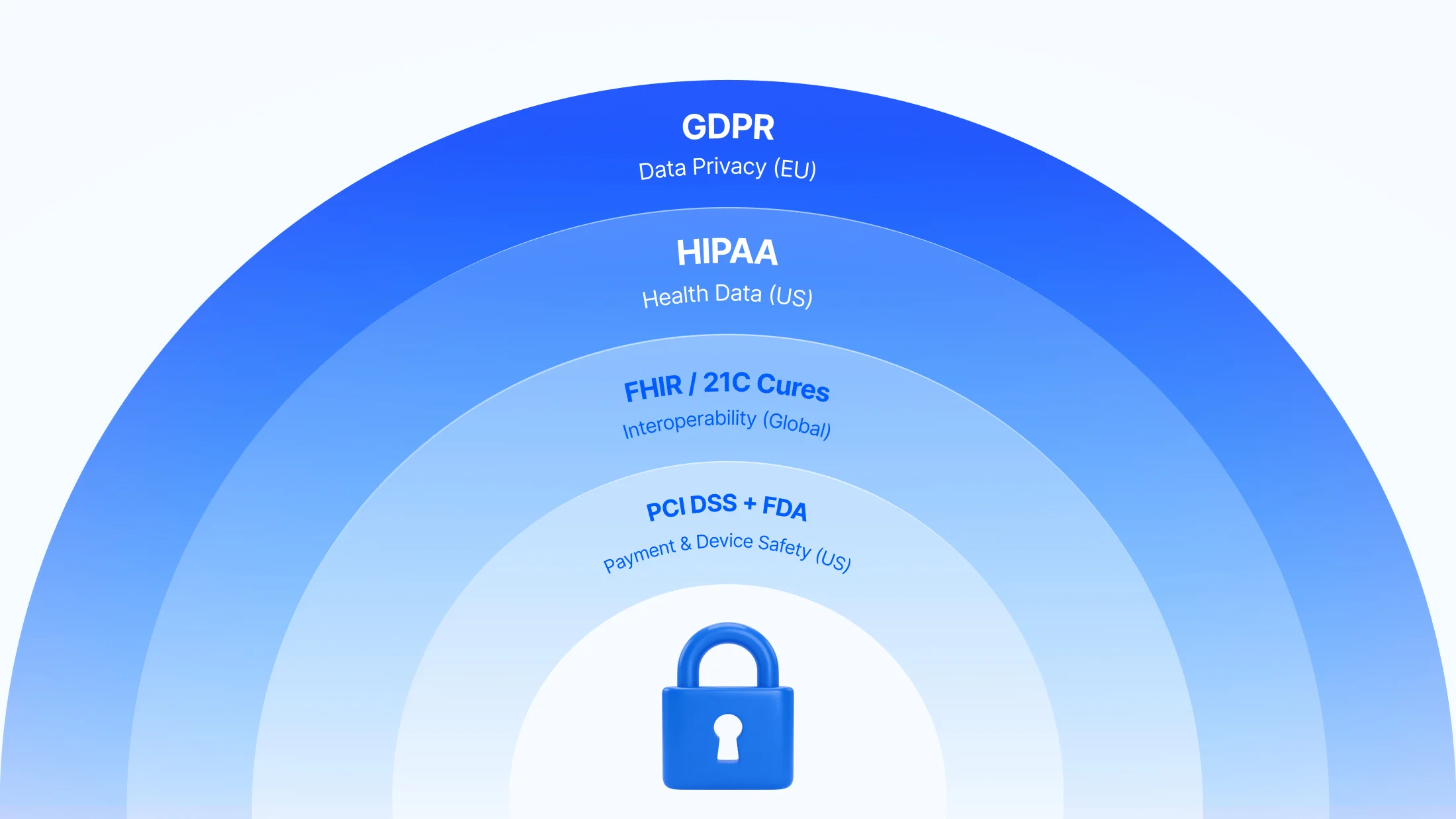
Legal compliance extends beyond data protection. In most jurisdictions, providers must be licensed in the state or country where the patient is located at the time of consultation.
Telemedicine platforms must also account for jurisdiction-specific legal requirements that directly affect product design and operations:
In practice, these considerations are best addressed during product planning, not after development has started.
Neurological rehabilitation doesn't end at hospital discharge. Patients recovering from stroke, Alzheimer's, or multiple sclerosis need months of ongoing therapy — often at home, without supervision, and at an older age. myReha, a Vienna-based digital therapeutics company (now part of nyra health), developed a tablet app offering adaptive, game-like exercises. Although the clinical model was effective, the product experience struggled to keep pace as the solution expanded.
Therapists needed quicker access to patient data, while patients required an interface that supported both their condition and their dignity. Simultaneously, the product was shifting from tablets to smartphones and from hospital settings to home care. Halo Lab worked on this challenge for 17 months, redesigning the therapist dashboard (nyra.insights) around one core principle: clinicians should assess patient status in seconds, not clicks.
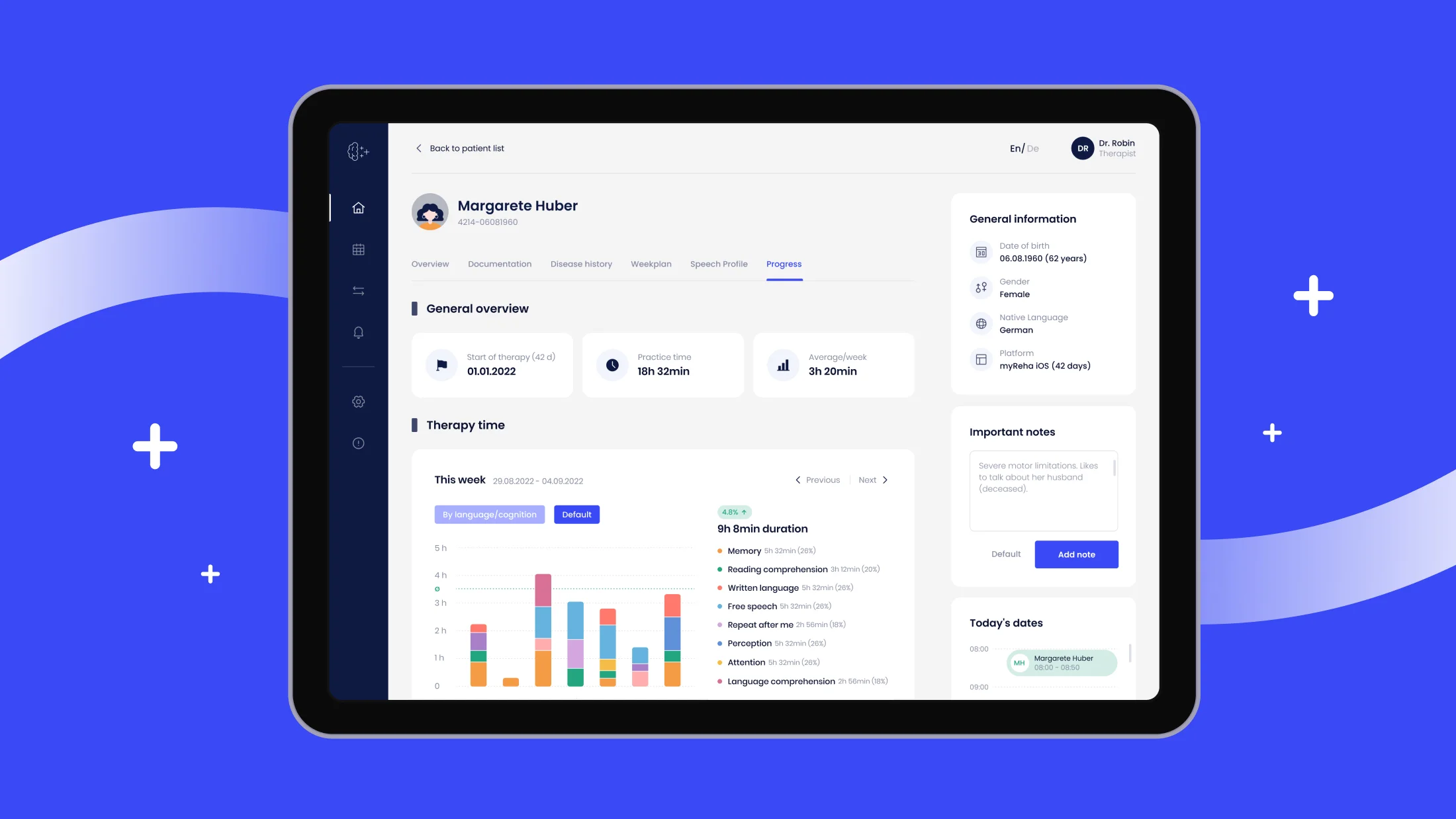
On the patient side, every decision prioritized accessibility — high-contrast visuals for stroke-related impairments, a single-day therapy view to reduce cognitive load, and neutral illustrations instead of patronizing visuals. As the app transitioned to smartphones, layouts were adapted selectively to maintain exercise quality. The result is a cohesive design system spanning multiple devices and a growing network of rehabilitation clinics across Europe.
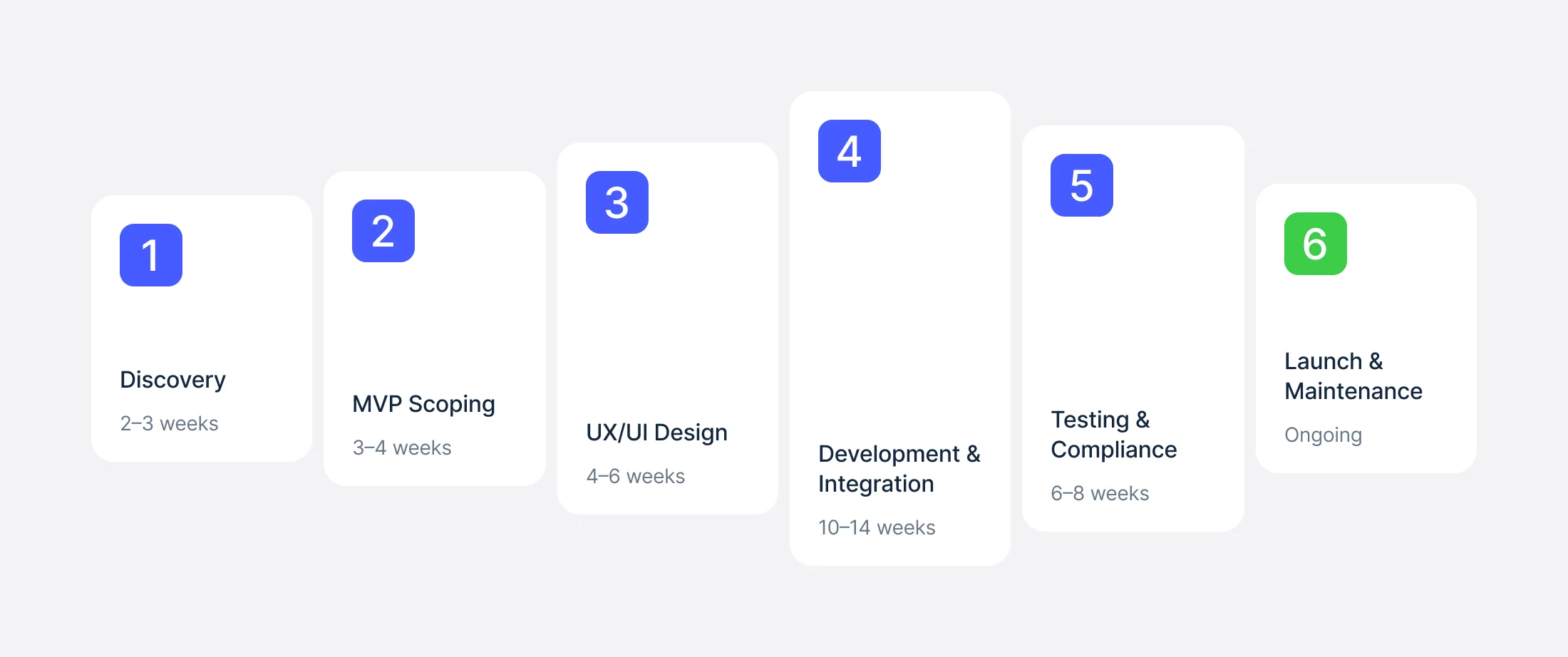
Building a healthcare product requires structured phases. Here is how our team at Halo Lab approaches each stage — and why the sequence matters as much as the work itself.
This phase sets the direction for the entire project. We explore target users, map clinical workflows, and establish the regulatory scope before making any design decisions.
Projects that skip or rush discovery often require expensive rebuilds within the first few months. In practice, many teams bring in external expertise at this stage to align product decisions with regulatory and operational constraints before development begins — often through structured healthcare IT consulting.
During this phase, we define what belongs in the first release, what can follow, and what is being introduced too early. Scope creep at the MVP stage is one of the most common reasons healthcare products miss their launch window.
A clearly defined MVP development scope helps teams prioritize effectively and build a phased roadmap that supports both validation and future growth.
Healthcare UX has constraints that standard product design doesn't. Users include elderly patients, time-pressured clinicians, and administrators managing multiple providers. Accessibility features — larger text, screen reader compatibility, clear navigation — are not optional in healthcare. When AI features are part of the product, clinical trust must be designed in from the start — covering explainability, confidence signals, and override architecture. Our healthcare UI/UX design services ensure interfaces meet both usability and regulatory standards.
At this phase, our team brings together three coordinated layers: backend infrastructure for secure data processing, frontend interfaces for patients and providers, and third-party integrations for video, messaging, payments, and EHRs. Compliance controls should be built into the architecture from the start — a principle that underpins effective healthcare software development.
This stage includes functional checks, usability assessments, security reviews, compliance validation, and stress testing under peak load. We validate each layer before launch to ensure the system performs reliably in real clinical environments. This level of validation is central to healthcare software testing.
The final stage includes mobile app publication, secure cloud infrastructure configuration, and launch monitoring. After release, our teams typically support the platform through ongoing security audits, compliance updates, and feature development informed by real user behavior and operational feedback.
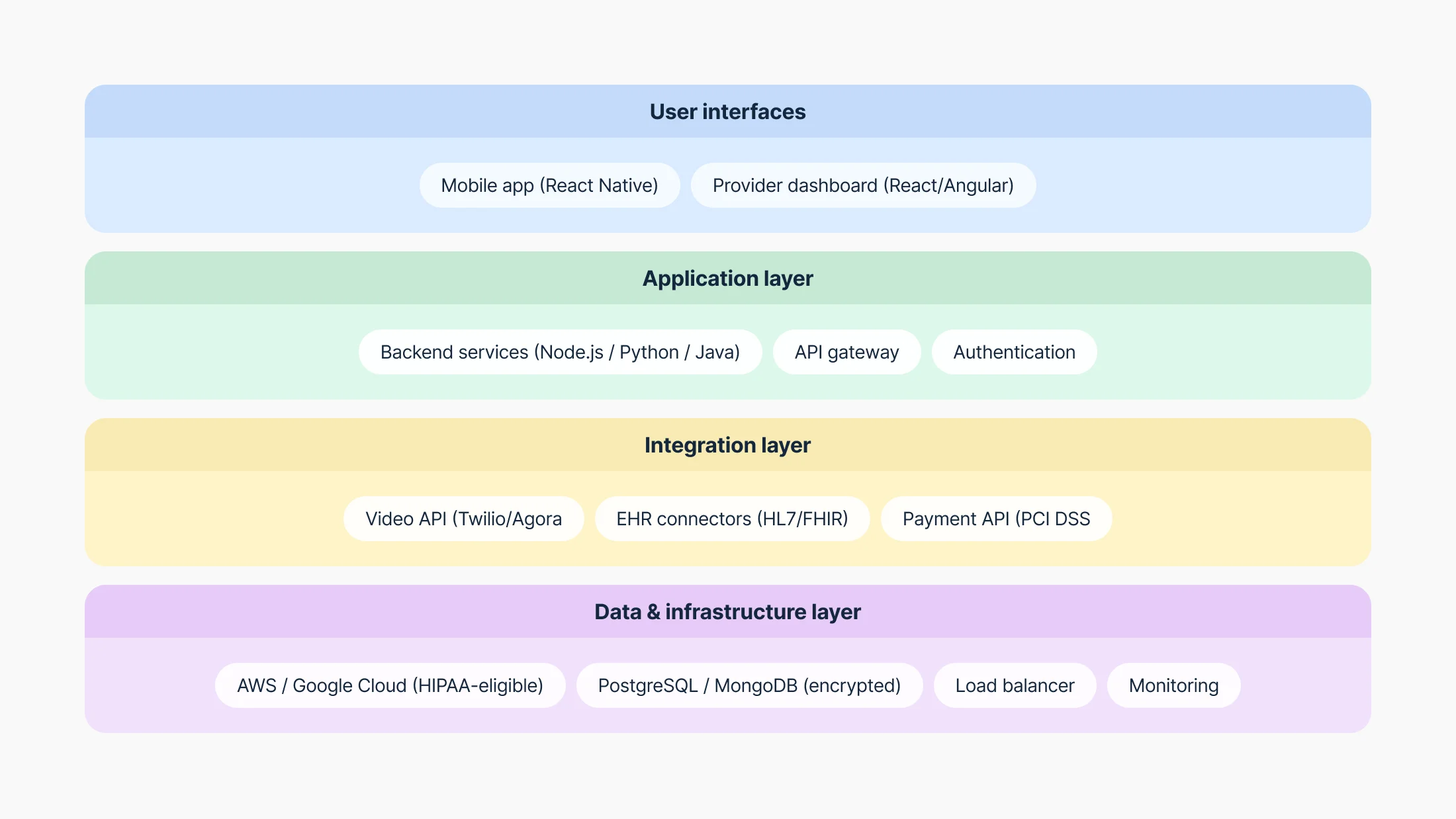
Infrastructure decisions at the architecture stage directly affect performance, compliance, and long-term costs. A typical telemedicine architecture includes the following components:
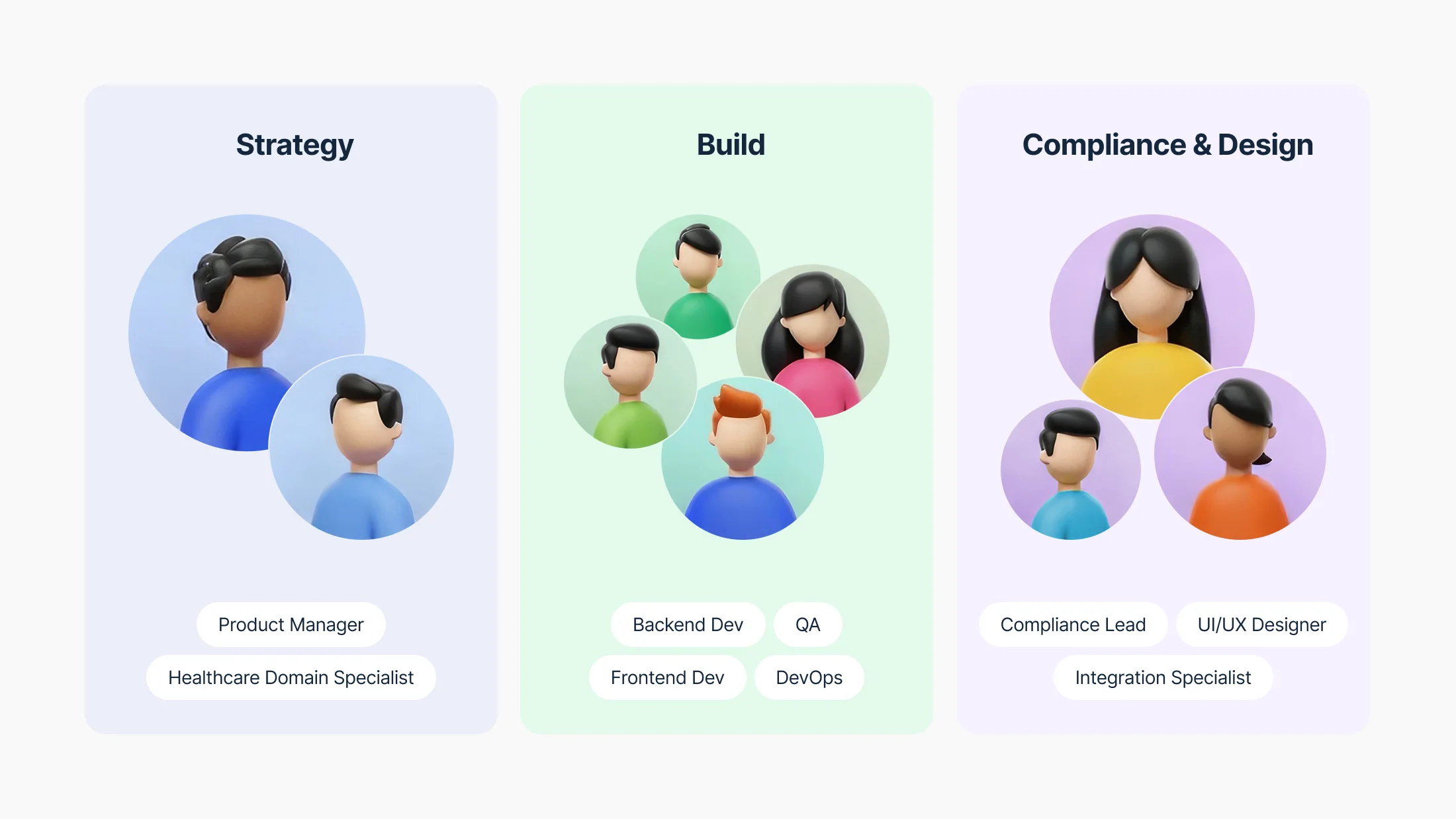
A telemedicine platform depends on coordinated expertise across product, engineering, and healthcare domains. The following roles typically form the core team:
"When all roles work together in a coordinated structure, teams reduce delays and prevent the compliance gaps that cause cost overruns."
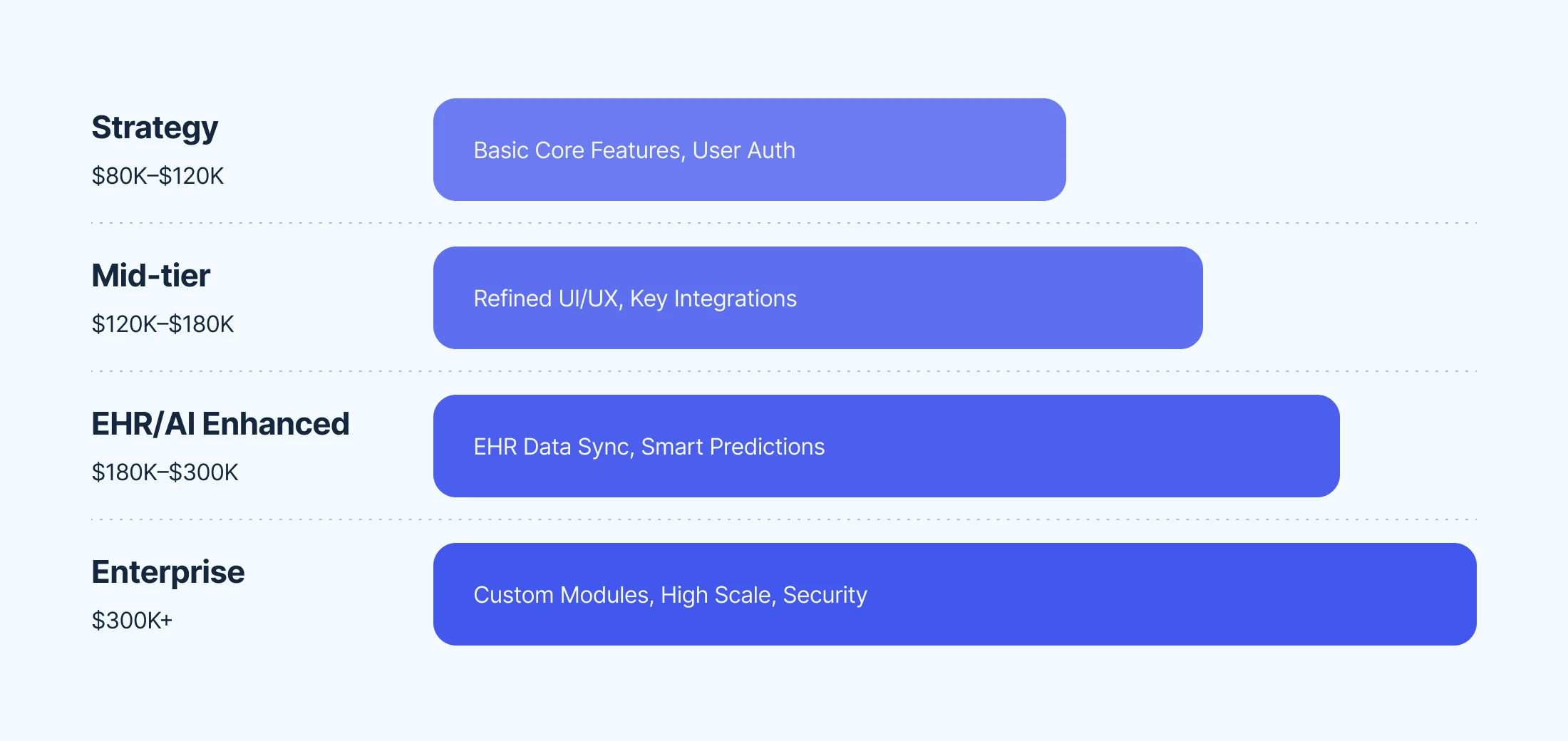
The full picture of app development cost varies significantly based on feature depth, integration requirements, and compliance scope.
| Tier | Cost range | What’s included |
|---|---|---|
| Lean MVP | $80,000 – $120,000 | Secure video, messaging, scheduling, auth, basic profiles. ~10–14 weeks. |
| Mid-tier platform | $120,000 – $180,000 | All MVP + payments, e-prescriptions, patient portal, enhanced dashboard. |
| EHR/AI enhanced | $180,000 – $300,000 | EHR integration (Epic, Cerner), remote monitoring, AI-assisted intake/notes. |
| Enterprise / multi-site | $300,000+ | Multi-role dashboards, advanced permissions, audit trails, SSO, enterprise scale. |
Beyond initial development: budget for monthly cloud hosting, monitoring, security updates, and compliance maintenance as the platform scales.
{{banner}}
Healthcare software presents specific technical and operational challenges, and identifying them early helps ensure a smoother, more successful telemedicine app development.
Teams that treat HIPAA and GDPR as a final checklist routinely discover they need to rebuild core data infrastructure. Start compliance planning before the first design decision.
Legacy EHR systems don't behave like modern APIs. Plan integration around specific workflows first — not all systems at once — and budget time for repeated testing and data mapping.
Too many features in the first release is the most common reason healthcare MVPs miss their launch window. Define the minimum to validate clinical demand, then expand.
Adaptive streaming and fallback mechanisms are baseline requirements. Stress test before launch — not after the first failure under real-world load.
Opaque privacy policies and confusing consent flows erode confidence before the first consultation. Simple onboarding is especially critical for elderly patients and users with limited technical comfort.
"Early attention to privacy, compliance, and integration scope lays the foundation for secure, reliable, and trusted telehealth growth."
A structured intake flow can carry most of this weight. For a Canadian DTC telehealth platform for women's health, we designed an online questionnaire that replaces the first in-person visit entirely — patients complete it in minutes and receive treatment without scheduling a consultation. For stigma-associated conditions like weight loss or menopause, that low-friction entry point directly determines conversion.

Telehealth continues to evolve. What does the future hold for those entering this field? Here are some trends you can expect.
AI agents are expected to support triage, intake, and documentation at scale, reducing administrative burden on providers. Predictive models will identify high-risk patients earlier. Teams building for this now will have a significant advantage over those who retrofit AI later. Our AI integration services can help implement these tools responsibly and in line with regulatory expectations.
Behavioral health will continue performing exceptionally well, driven by strong demand for remote therapy platforms and psychiatric services.
Stronger FHIR-based data exchange and anti-information-blocking regulations are making interoperability a market expectation, not just a technical nicety. Platforms that connect seamlessly with the broader healthcare data ecosystem will win in enterprise and health system sales.
WCAG accessibility standards, voice recognition, and screen reader compatibility will become baseline expectations. Platforms easy for everyone to use — not just the tech-comfortable — will retain patients better.
Preventive care models gain traction as health data becomes more accessible. Predictive analytics helps providers identify potential risks before conditions escalate — reducing hospital readmissions and supporting better long-term outcomes.

Secure video conferencing, encrypted messaging, appointment scheduling, user authentication with role-based access, and a secure backend database. Everything else follows once clinical demand is validated.
A focused MVP may take 10–14 weeks. Platforms with EHR integrations or enterprise requirements usually take 6–9 months or longer. Timelines depend heavily on integration complexity and how clearly the scope is defined before development starts.
Integration complexity. Connecting to EHRs, ensuring compliance at every layer, adding AI or monitoring features, and planning for scalability all require significantly more time. MVP scope clarity before development starts also has a major impact on the final cost.
Apps providing clinical decision support or connecting with regulated devices must comply with HIPAA and applicable regional laws. Some tools require FDA review if they influence clinical decisions. Identifying this early prevents costly launch delays.
Yes — with the right architecture from the start. Multi-role dashboards, advanced permissions, audit trails, enterprise SSO, and high-concurrency infrastructure need to be planned in from day one, not retrofitted.


.avif)

.avif)
