






In today’s crowded online ecosystem, a website that excels in both design and performance is invaluable for capturing the finite attention of potential customers. That’s where the right Webflow development agency can make the difference between success and failure.

Choosing an ideal Webflow partner sounds easy — until you’re knee-deep in proposals, portfolios, and promises that all start to look the same. The wrong choice doesn’t just delay your launch. It can leave you with a fragile, underperforming site that needs constant fixes. In this article, we’ll cover the key steps to choosing a Webflow development agency with the right expertise to transform your vision into a stunning website.
{{banner}}
Experienced agencies can take full advantage of Webflow’s features to optimize your site for SEO and conversions. More traffic, revenue, and online visibility are what they bring to the table, helping your site stand out in every aspect. On top of that, agencies build your site with flexibility in mind, allowing for quick adjustments and future growth as your business evolves.
“Webflow is a powerful platform, but its real-world impact from a business standpoint is almost completely dependent on how it’s used and the expertise of those using it.”
Your website plays a direct role in how your business grows, converts, and scales. While Webflow provides a powerful foundation, the outcome depends on how well it’s implemented. The right development agency can turn it into a high-performing, scalable platform, while the wrong one can introduce limitations that impact performance, flexibility, and long-term growth.
Here’s where that difference becomes visible:
From managing interactions and structuring CMS collections to reusing components and integrating third-party services, deep platform knowledge enables agencies to maximize impact beyond just aesthetics. Without this knowledge, agencies may create fragile builds that lack long-term maintainability. These sites are difficult to update or scale and often turn clients into test cases. As a result, even small changes may require developer support, defeating the purpose of using Webflow.
A practical example: when we built the ZoomSphere marketing site, we chose Webflow for its flexibility and layered in Swiper.js for content sliders and Matter.js for physics-based interactive elements. The engagement didn’t end at launch either: we continued as an ongoing partner, building new subpages and updating the blog as the product evolved. That kind of depth only comes from teams that genuinely know the platform.
Agencies specialize in developing tailored strategies that align with your specific business goals and vision. This meticulous and targeted approach makes sure that your site is perfectly calibrated to draw visitors and convert them into customers. Conversely, companies that prioritize visuals over strategy often deliver attractive but ineffective websites. Without reflecting business goals, the site fails to convert or support growth. This leads to a product that looks good but lacks real impact.
From web design to functionality, agencies can craft a custom-built website that sets it apart and gives you a strong competitive edge. However, if an agency lacks advanced customization in both design and functionality, you risk ending up with a cookie-cutter template that doesn’t differentiate your brand. Design-led teams often fall short when it comes to the technical reliability needed for more complex requirements. As a result, the site may struggle to scale with your business, creating friction as your needs evolve.
“Without advanced customization, you don’t get a competitive edge — you get a template your competitors already have.”
Optimizing your site for search engines is indispensable, and Webflow development agencies have the know-how to correctly structure your website from an SEO perspective. This means your product will shine through the crowd and receive the visibility and traffic it needs to succeed. Webflow’s built-in SEO capabilities, like clean semantic markup, fast load times, and flexible metadata controls, give agencies a strong foundation to work with. Of course, only skilled teams know how to use them to their full potential. Our guide to Webflow and SEO covers exactly what good looks like. Without a proper SEO structure, a website won’t rank or attract organic traffic. Even great design becomes ineffective if users can’t find the site.
A practical example: On the Carbon Diet Coach project, we ran a full SEO audit before writing a single line of Webflow code. Then, we structured every page, component, and CMS collection around the findings. We also handed the client a Webflow management guide so their team could update content independently from day one.
“Their responsiveness, collaborative workflow, and ability to stay strictly on schedule made the project seamless and highly successful.”
— Erin Kraker, Marketing Director at Carbon Diet Coach
Clean code directly translates to better performance, and skilled agencies have the technical knowledge to build your site with neat and efficient code, so that it can outperform rivals. On the other hand, poor coding practices lead to slow, underperforming websites. This often results in higher long-term costs due to necessary fixes and optimizations.
Finding a Webflow development agency that doesn’t lack in any of these core competencies might be challenging, but there is a solution.
Not all Webflow development companies are equally reliable, and not choosing the right one can spell doom for the dream website launch. So, that begs the question: how do you choose a website development company? To help take the guesswork out of the equation, below is a comprehensive seven-step guide.
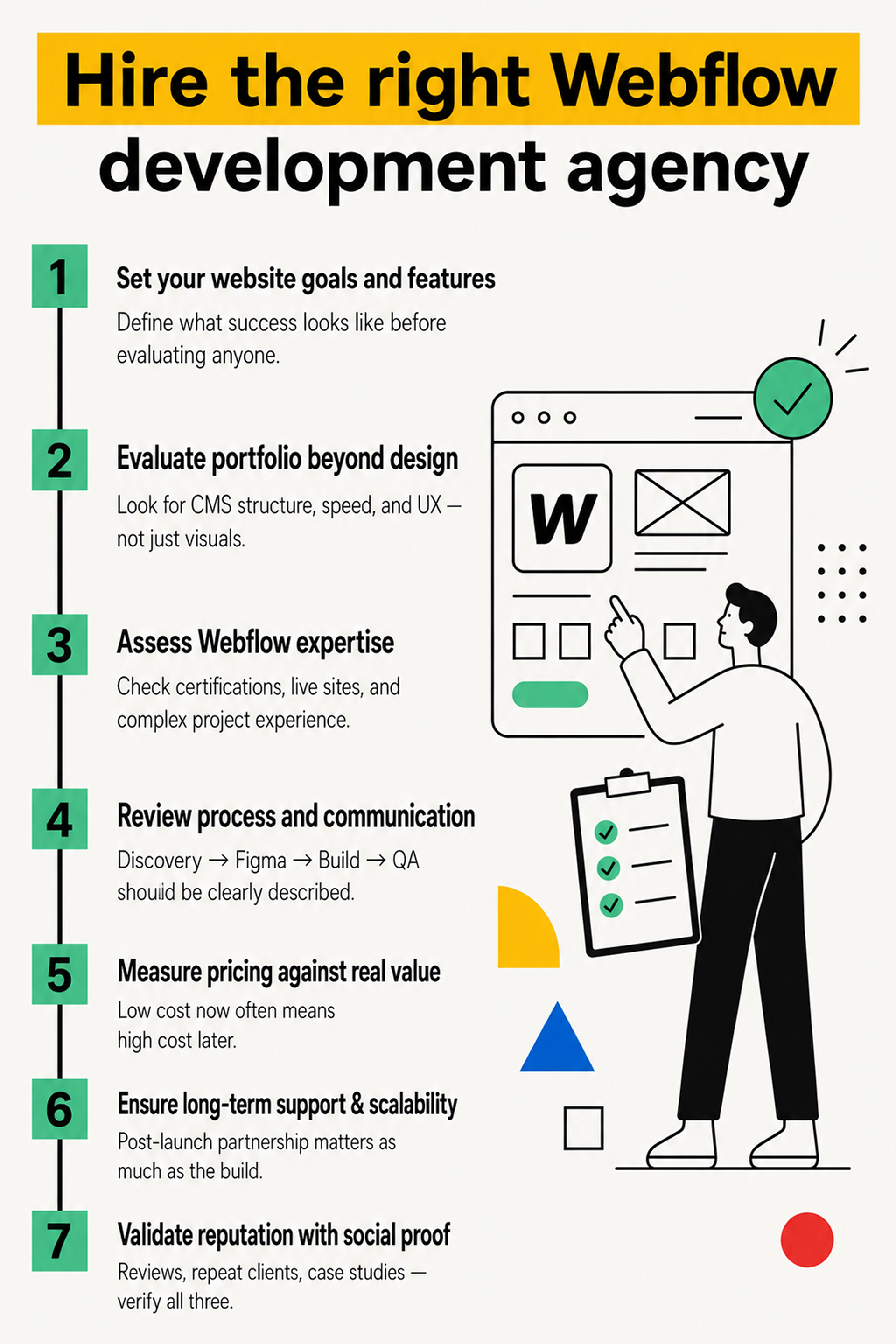
To make sure your site truly matches your vision and performs as intended, it’s imperative that you first identify why you need a website for your business. Knowing primary goals will play a fundamental role in shaping the site’s design and development from start to finish.
Once you’ve defined your goals, the next step is to determine what features are best suited to helping you achieve them. Take into account SEO requirements, integrations, and CMS functionality. For example, a marketing team that needs to publish landing pages frequently without developer support has very different requirements than a SaaS company that needs custom member authentication and gated content. Defining this upfront stops you from overpaying for complexity you don’t need. Once you have a clear picture of your website goals and the features that will work alongside them, you can evaluate agencies based on your exact needs.
While design is a critical element of any top-tier website, it’s not the be-all and end-all. Many, however, place too much emphasis on design alone when searching for the right agency for the job. Beyond creativity, many strategic and technical aspects are equally important to your site breaking through the online noise and thriving. These include:
When evaluating Webflow development portfolios, it’s prudent to put weight on factors such as purposeful flow from page to page or how intuitive the user experience is. Experienced agencies will excel in both the visual and technical sides of website creation and can show real examples of their Webflow work. Anything less is a major red flag.
Pro tip: When reviewing a portfolio, ask to see the live site. Click through the actual pages, test load speed on mobile, and check whether the CMS is structured logically or looks like it was bolted on as an afterthought. If the agency can’t share a live URL, that’s a bad signal.
While many agencies may claim to have extensive Webflow expertise, taking it at face value can lead to a nightmare if this turns out to be untrue. For this reason, it’s critical to check their competency beforehand. Here are some key indicators to look out for:
A practical example: Our Develop Health project is a good illustration of what genuine Webflow expertise looks like under pressure. The client needed a medically credible website built with a bold, non-conventional design system delivered in Webflow. It featured unusual orange and yellow tones for a healthcare brand, plus HubSpot CRM integration via Make.com for form handling and marketing automation. Our team recorded a full screencast walkthrough of the admin panel after handoff so the client’s team could manage and update content independently. That kind of end-to-end ownership is what you should expect from a team claiming deep Webflow expertise.
Two central pillars of any skilled Webflow development agency are clear communication, free of unnecessary jargon, and a methodical process with well-defined steps. It’s crucial to review both of these important elements prior to making your decision to have peace of mind that you’re working with a capable and professional partner. This includes:
“A dedicated team runs smoothly and independently, delivering results with minimal effort on your part.”
Pro tip: A reliable process for a Webflow project typically covers four stages. Among them are a business discovery session and a Figma design phase with client review. Then come Webflow build with staged previews and a pre-launch QA pass covering responsiveness, speed, and browser compatibility. If an agency can’t describe these stages clearly, or skips the discovery conversation entirely, that’s a red flag worth taking seriously.
The lowest price doesn’t always mean the best value. Instead of choosing the cheapest option, evaluate what’s included and whether it supports your long-term goals. An agency may cost more upfront but deliver a faster, more scalable, and conversion-focused website — yielding higher ROI over time.
To get the most value from your investment, focus on these considerations:
As an approximate guide: a professional Webflow marketing site for a growing business usually falls in the $8,000–$25,000 range, depending on the scope of work, CMS complexity, and level of custom interactions. Simpler campaign landing pages tend to be on the lower end. Meanwhile, more advanced builds, such as enterprise sites with multi-language CMS, custom integrations, and rich animations, sit at the higher end.
A practical example: The Vestox financial management platform illustrates where investment in Webflow pays off. The client needed a site that combined high-contrast visual identity with a technically complex CMS architecture supporting diverse content types. Delivered in 2 months, the build required both advanced Webflow interactions and a structured content system that the client could extend as the product grew. A cheaper build would have produced a static site with no room to scale; the investment in proper architecture meant the client owned an asset, not a liability.
{{banner-2}}
A website is not finished once it has been delivered. It requires long-term support to continue generating high-impact results and a solid infrastructure to grow and evolve as needs change. Webflow development agencies can build your site with the future in mind — making it easy to scale, adapt, and stay well-maintained so performance remains strong over time. Services that should be verified in advance include:
Before signing, ask a few specific questions: what does post-launch support look like? Is it included, or billed separately? What’s the typical response time for urgent fixes?
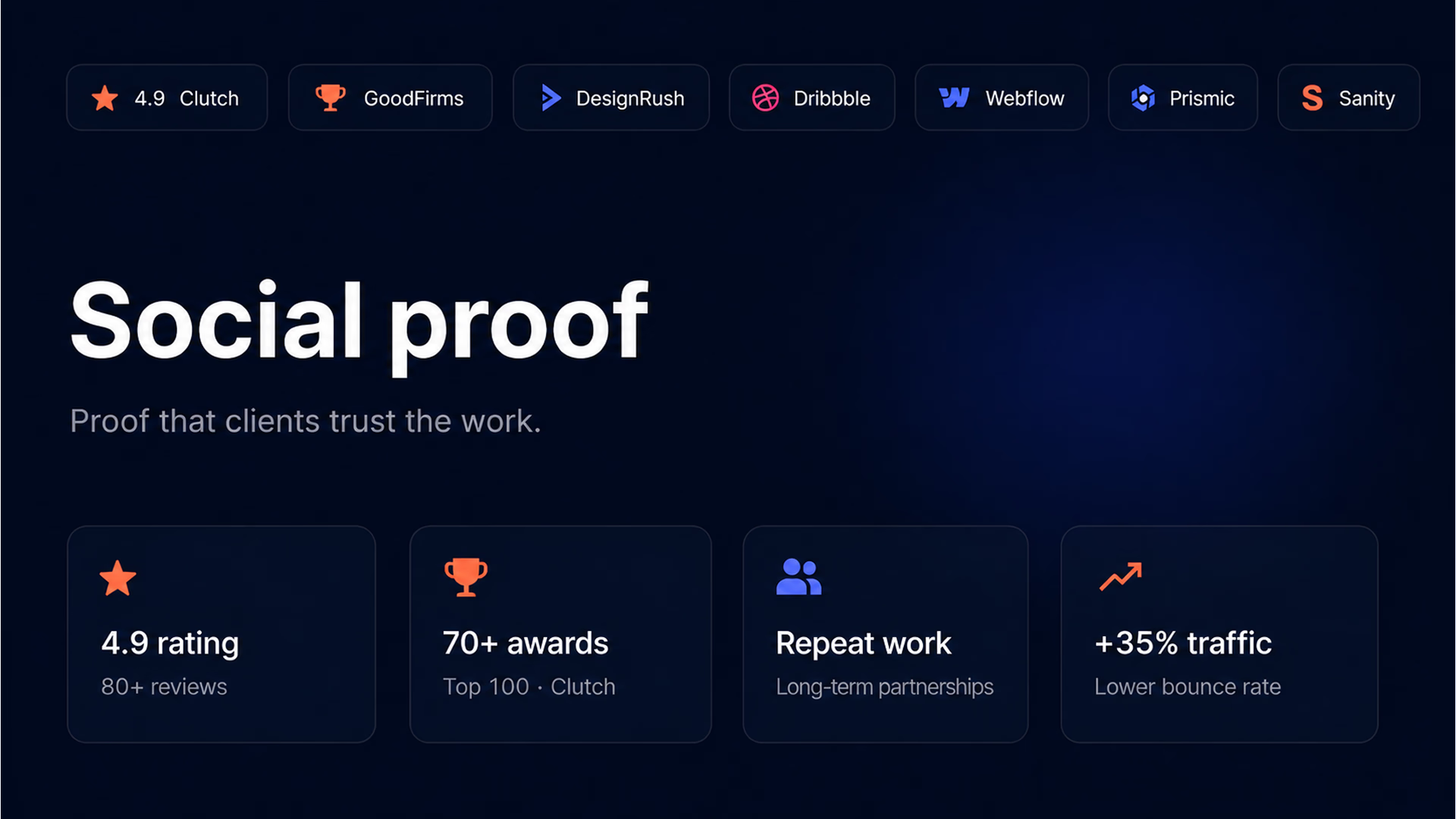
One of the most reliable ways to validate a Webflow development company is to look at proof from past projects. Reviews, testimonials, case studies, and platform recognition help you understand whether the agency can actually deliver a well-built website — or whether the pitch sounds stronger than the evidence behind it. Before making a decision, check for:
At Halo Lab, we make this proof visible through verified review platforms, industry recognitions, and partner badges:
Webflow development agencies are flourishing in the digital age as businesses and individuals continue to shift their day-to-day activities into the online space, driving strong demand in the sector. However, the downside of this is that there is no shortage of subpar companies looking to make a quick buck without the technical ability and experience. To avoid unreliable agencies, here are some common red flags to look for when making your choice.
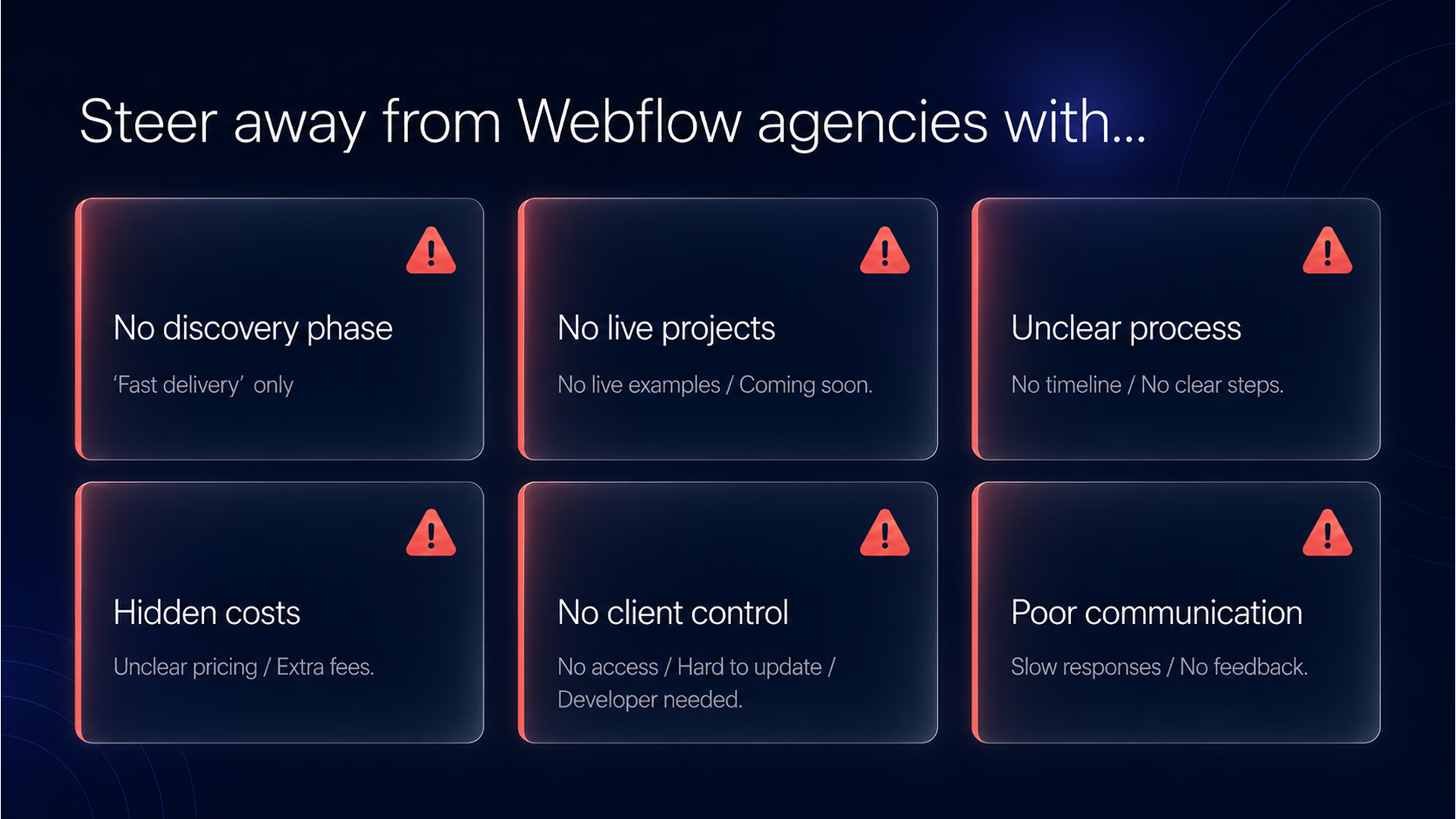
While Webflow is known for enabling businesses to launch sites faster than traditional development, this speed should not come at the expense of a strategic foundation. Great websites must start with “great conversations” and a dedicated discovery phase to understand business goals, target audiences, and operational needs. Agencies that prioritize speed or low cost above all else tend to overlook these critical groundwork steps, which typically leads to costly revisions down the line rather than genuine savings. A “strategy-first” approach is essential to ensure the site supports conversions and business outcomes rather than just looking good.
A major red flag is an agency that lacks live, verifiable Webflow projects in its portfolio. Some may claim Webflow proficiency yet have no active websites to back it up. Depending on conceptual work, pre-built templates, or unsubstantiated promises is a gamble, as it may mean you end up being a trial run for an inexperienced team. Professional agencies should be able to demonstrate real results and functionality from past projects — and ideally share the challenges they overcame. This demonstrates both transparency and a thoughtful approach to their work.
“A portfolio without live sites is just theory. You need proof in action.”
A reliable agency should have a proven, predictable development process rooted in strategy and collaboration. For example, a thorough process typically covers business discovery, defining a clear growth roadmap, designing in Figma, and thorough pre-launch testing. You should be able to ask an agency to explain their specific build process, including how they handle complex layouts and integrations. A lack of clear timelines, deliverables, or feedback loops is a significant warning sign.
Ambiguous fees and concealed costs are widely regarded as major red flags. Although project pricing varies considerably depending on scope, a credible agency should be able to offer a transparent estimate tied to the work involved. Unclear pricing frequently goes hand in hand with insufficient strategic planning, potentially resulting in a poorly constructed site that is hard to maintain.
One of Webflow’s core advantages is empowering marketing teams to update content independently, without relying on a developer for every minor change. When an agency builds a site that still demands developer involvement for routine edits, it directly contradicts the entire purpose of the platform. Top agencies focus on building clean, scalable systems, so your internal team can manage content independently after the handoff.
Successful projects require an agency that acts as an extension of your team, providing clear communication (involving the marketing and content teams) and regular feedback loops. If an agency does not prioritize understanding your business through deep conversation from the start, they are unlikely to exceed your expectations. A true Webflow partner treats the relationship as ongoing, supporting development, performance, and maintenance long after launch. Communication should also address scalability, so the site can grow smoothly as your business evolves.
Finding the right partner to trust with the launch of your dream website can be daunting, especially given how essential websites are today. However, by taking the time to assess companies based on the mentioned criteria, you can make a confident, informed decision.
{{banner-3}}
There is no one price that fits all, as each project is unique and requires a customized approach. As a general benchmark, a professional Webflow marketing site typically ranges from $20,000 to $30,000, depending on scope, number of CMS collections, custom interactions, and integrations. Simple landing pages sit lower; complex enterprise builds with multi-language support or custom API integrations sit higher. However, once the project requirements, complexity, and goals have been assessed, you can receive transparent pricing that covers all bases without any hidden fees.
Yes. You can build a Webflow site without an agency, as the platform is flexible and allows non-technical teams to manage content and launch campaigns independently. However, skipping professional expertise carries risks, including rookie mistakes, fragile builds, hidden long-term costs, and limited scalability. Thus, businesses should hire agencies for complex CMS setups, custom integrations, enterprise-level needs, or when the site must drive growth and align with broader business goals.
Definitely. Once the project has been delivered, you will fully own the site and all of its content.
Webflow projects usually launch much faster than traditional development. Given that each project is unique, there is no set timeline for completion, as it varies depending on factors such as project complexity and the agency’s workflow. As a rough guide: a straightforward marketing site typically takes 6–10 weeks from kickoff to launch. More complex builds with custom CMS architecture, multiple integrations, or large animation work can run 10–16 weeks.
Yes. The experienced Webflow development agencies can handle both SEO and content for your website.
Certainly. A Webflow agency can seamlessly integrate your site with a vast array of other software and tools, including design, development, marketing, and CMS tools, as well as analytics and e-commerce platforms. Common integrations include Zapier for automation workflows, Memberstack or Webflow’s native logic for gated content, HubSpot or Mailchimp for marketing, and Airtable for dynamic data management. For a comparison of how Webflow stacks up as a CMS alongside other platforms, see our Webflow vs. HubSpot guide.
Both options have upsides and drawbacks, and this should be assessed on a case-by-case basis. In practice, the quality of communication, process clarity, and portfolio strength matter far more than geography. Whether remote or local, choosing a Webflow development agency that meets all the criteria covered in this guide is what defines a good decision.



.avif)