






Your product works perfectly, yet users are leaving. All the features are there, but something feels off, and your support team is overwhelmed with preventable complaints. The problem isn’t always your interface — it’s how people experience your product across the entire journey. At that point, it’s time to look at customer experience design.

What is CX design? At its core, it’s a strategic commitment to empathy. It requires moving beyond building isolated tools and toward shaping a cohesive ecosystem where each touchpoint connects naturally to the next.
In this guide, we break down the core customer experience design principles, outline a practical approach to implementation, and show how improving the experience can directly impact retention, loyalty, and growth.
User expectations have shifted. People now look for products that work smoothly, interactions that are predictable, and issues that are resolved without effort. When an experience feels fragmented or inconsistent, switching to a competitor takes seconds — and often happens without warning.
What matters most is not a single feature or campaign, but the quality of everyday interactions. A confusing onboarding flow, a delayed response from support, or a mismatch between promise and delivery can outweigh months of marketing. CX design focuses on aligning these moments to make the experience feel consistent and reliable over time.
Bain & Company found that even a 5% increase in customer retention can lift profits by as much as 95%. It happens not because retained customers spend more immediately, but because the cost of serving a familiar user is a fraction of the cost of acquiring a new one. CX design is the operational discipline that makes retention a structural outcome.
At the same time, changes in data privacy and AI adoption are reshaping how users evaluate products. Automation is no longer a differentiator — it’s expected. What stands out is how well that technology supports real needs: whether it simplifies decisions, reduces effort, and respects user context. The role of CX design is to ensure these systems feel helpful and intentional rather than intrusive. To explore this further, see our article on personalized UX.
“Customers don’t compare you to your competitors — they compare you to the best experience they’ve had anywhere.”
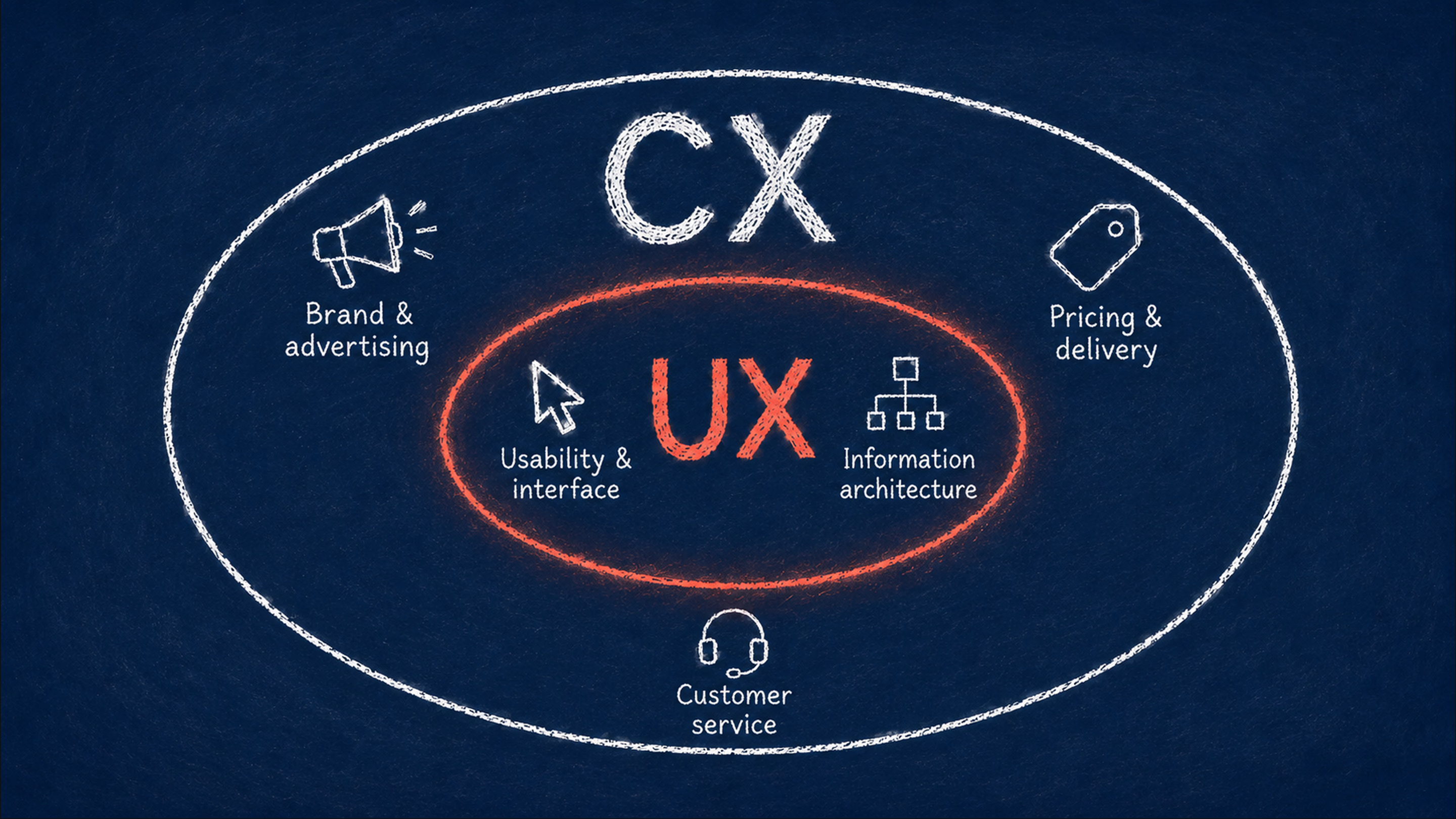
While they share a common goal of making users happy, these two fields operate at different levels. UX design focuses on the usability of a specific product — how easily users complete tasks, how clearly the interface communicates, and how confidently people move through a flow without friction.
CX design encompasses the UX of the product, the tone of the customer service representative, the speed of shipping, and the relevance of email marketing. Where UX deals with product interactions, CX shapes the overall relationship with the brand.
A well-designed interface alone doesn’t guarantee a positive experience. If the product arrives damaged or support falls short, the perception of the brand suffers. UX is a component of CX, much like a single instrument is part of an orchestra — it can be beautifully played, but the symphony comes from how everything works together.
For a closer look at how interface design and experience design differ, explore our guide on the difference between UI and UX design.
{{banner}}
Consistency across the entire user lifecycle doesn’t happen by accident. It requires a clear set of operating principles — rules that guide how a company behaves every single day. Three core principles define that logic.
True customer experience design success comes when a company stops guessing and starts listening. Every decision — whether made by product, marketing, or engineering — should be grounded in a clear understanding of how it impacts the end user. This means moving beyond gut feelings toward actual research that highlights real human needs.
Tools like customer journey mapping and touchpoint analysis help ensure that this focus translates into concrete actions across the entire lifecycle. When you design customer experience frameworks that prioritize human outcomes over internal convenience, you build a product that people genuinely want to use. This means investigating what people do and why.
A disjointed company creates a disjointed experience. If the marketing team sets an expectation that the product team cannot meet, the customer is the one who suffers. Fixing this requires shared accountability — where every team owns a piece of the customer outcome.
When departments operate from the same data and work toward the same customer goals, consistency follows naturally. Not consistency of tone, but consistency of the entire experience — from the first touchpoint to the last. That alignment, more than any single tool or campaign, is what builds lasting authority with customers.
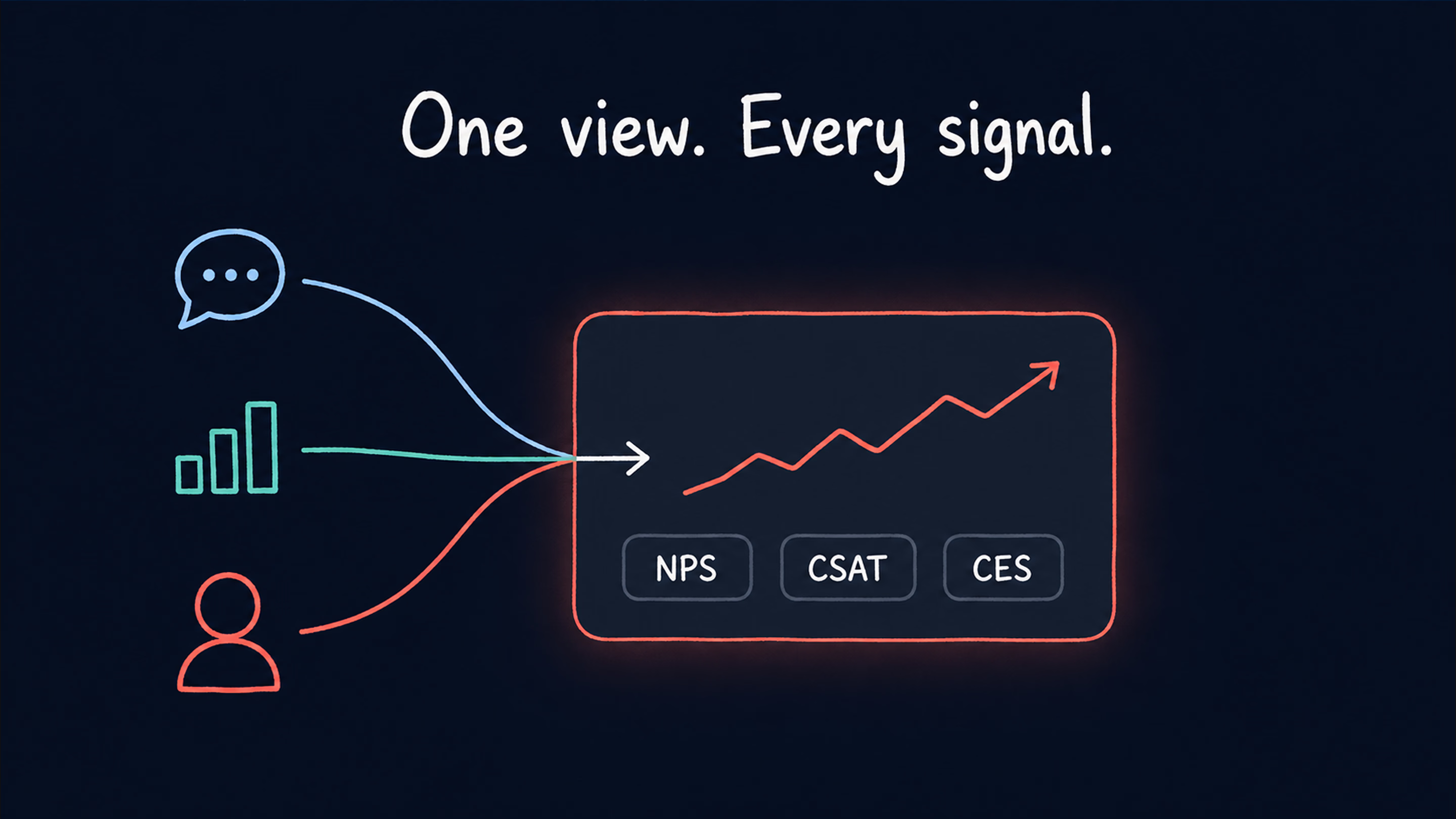
Success in this field is measured by a collection of behavioral insights. While revenue is an outcome of getting CX right, leading indicators like Net Promoter Score (NPS), Customer Effort Score (CES), and Customer Satisfaction Score (CSAT) tell you if you are actually solving problems.
By tracking these metrics, you can identify precisely where interactions are failing and allocate resources to the areas that will have the biggest impact on growth. It is important to combine the quantitative numbers with qualitative feedback to get a full picture of how users perceive the product, where trust is building, and where friction is silently pushing them away.
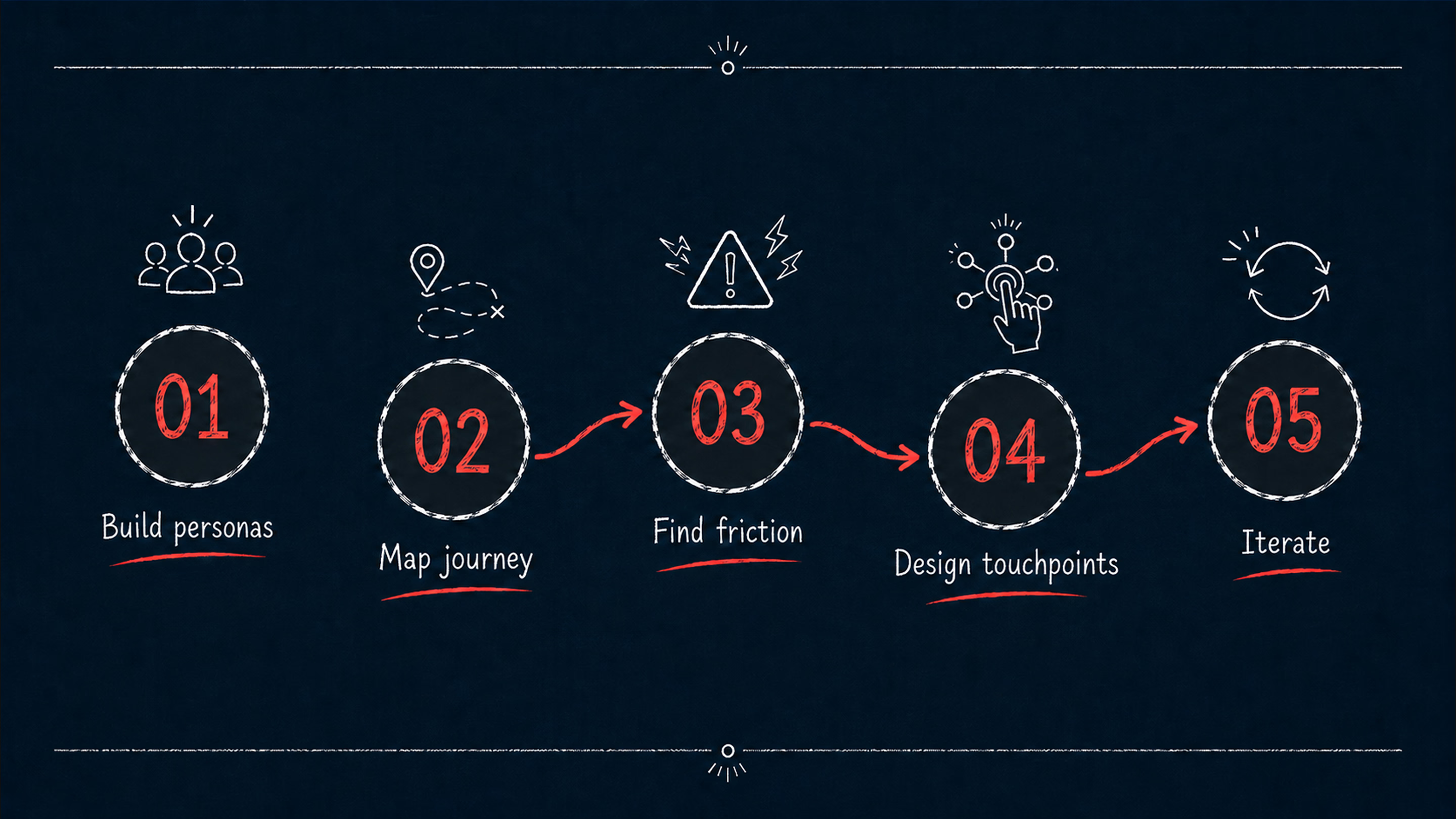
Now that we’ve answered the question “What is customer experience design?”, it’s time to put it into practice. Below are the key steps to turning that vision into a real, working experience.
Effective CX design starts with defining your audience. These are not generic portraits — they are behavioral profiles built on real data, capturing frustrations, goals, channel preferences, and the stage of the customer lifecycle each segment occupies. A well-defined profile allows your team to ask whether a specific feature actually helps a specific person solve their problem — and at which point of their interaction with the product.
When Halo Lab worked on Bookclub24, Germany’s largest online library for book collectors, the process began with exactly this kind of profiling. Rather than making assumptions, the team built a detailed portrait of the archetypal Bookclub24 user. We took into account their reading habits, navigation expectations, and what emotional connection they wanted to feel with the platform. That research shaped every design decision that followed, from the Scandinavian-inspired visual language to the information hierarchy in the catalog.
Mapping is the act of visualizing every step a customer takes with your brand — their emotions, expectations, and the channels they move through at each stage. It reveals where the experience breaks down or fails to meet what the user anticipated. These moments can be analyzed using various methods. For a deeper understanding of how they differ, explore our guide on the experience map vs. customer journey map.
In practice, journey mapping often reveals problems that no amount of analytics alone would have found. When Halo Lab redesigned the nyra health therapy platform, the mapping phase revealed that therapists were spending too many clicks to reach the data that mattered most. The redesign was built around a single principle derived from that mapping: clinicians should be able to assess patient status in seconds, not clicks. The result was a 16% increase in platform engagement and a design system now running across rehabilitation clinics across Europe.
Unmet expectations leave a mark that can be seen in drop-off rates, in silence, in customers who never come back. Analytics and direct feedback reveal where people get stuck, lose trust, or walk away quietly — long before they tell you about it. Fixing these moments changes how the product feels and how far users are willing to go with it.
Identifying where experience breaks down is one thing. Designing interactions that move people forward is another. Customers stall. They lose sight of what the product offers. A well-timed nudge or a small concrete win can change the trajectory. And consistency across every touchpoint matters, as one disconnected interaction undermines everything the previous one built.
The ZoomSphere project shows what this looks like in practice. When ZoomSphere came to Halo Lab mid-transformation, the challenge wasn’t adding features. It was ensuring that every touchpoint communicated the new positioning clearly enough. The redesign rebuilt the visual language, navigation, and information hierarchy from the ground up. This, in turn, created consistency across a product suite that had previously felt scattered.
Mature companies treat their customer experience design strategy as a permanent beta. Consistency, predictability, and reliability — these are the qualities users remember. That requires a culture willing to admit when a process is broken and move quickly to fix it.
{{banner-2}}
Design-driven customer experience work depends on accurate signals. Modern CX design relies on connected tools that expose behavior patterns, surface friction early, and tie experience decisions to measurable outcomes. The table below shows which category to prioritize first based on where your team currently stands:
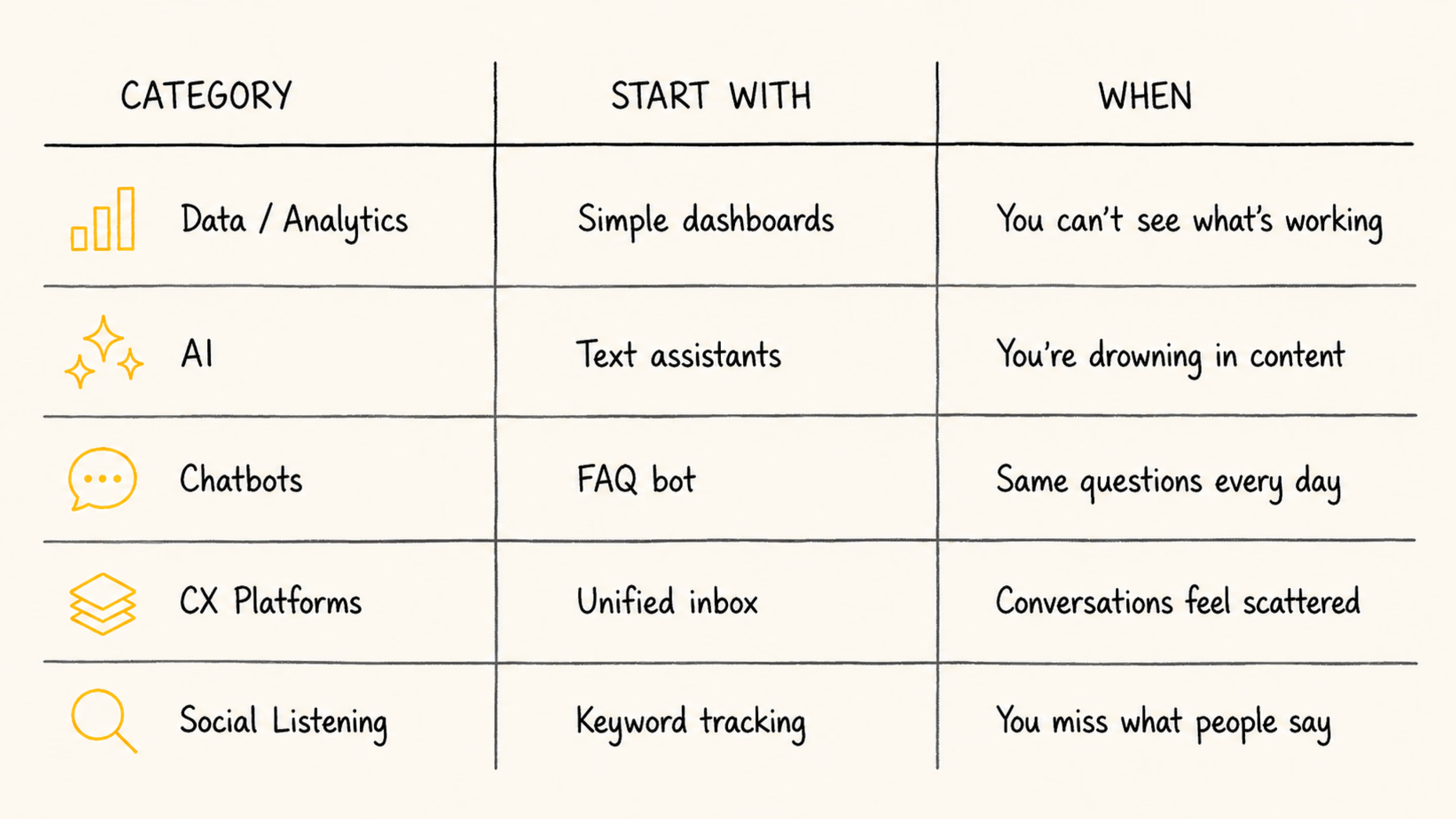
Remember that not every tool is necessary for every team, and the right starting point depends on your current visibility into user behavior.
Tracking behavior is only part of the picture. Tools like Google Analytics, Hotjar, and Mixpanel reveal where users drop off, how they move through a flow, and where intent and actual experience start to diverge. That combination — behavior plus satisfaction signals — is what turns raw data into actionable CX insight.
Used correctly, these insights help teams prioritize fixes based on evidence rather than subjective opinion. Over time, historical data also reveals which changes produce durable improvements rather than short-term spikes.
AI powers predictive systems such as IBM Watson and Salesforce Einstein. These technologies analyze behavioral patterns to identify customers at risk of churning — often before they voice a complaint. AI can also categorize thousands of feedback tickets into actionable trends within minutes.
Such a predictive layer shifts CX work from reactive to preventative, reducing the cost of recovery efforts. It also enables informed decisions to be tested against projected outcomes instead of relying solely on past performance.
Best starting point for: teams that don’t yet have clarity on where users drop off. Start here before investing in any other category.
Speed is a feature. Platforms like Intercom, Drift, and ManyChat handle routine queries, but their role in CX extends further to include onboarding sequences, lifecycle messaging, and retention flows. When automation covers the predictable interactions, the human team can focus on the ones that require real empathy and judgment.
Consistent automated responses reduce variability in customer interactions, making the quality of the experience easier to measure. Over time, automation logs reveal recurring friction points that can be addressed through design changes rather than support volume.
Best starting point for: teams where support volume is growing faster than headcount, or where onboarding drop-off is the primary retention problem.
Decisions are only as good as the data behind them. Platforms like Qualtrics and Medallia centralize customer insights across teams, while tools like Zendesk manage the service layer that feeds into that picture. Together, they give every department a shared view of what customers are actually experiencing.
This consolidation prevents design and product decisions from being based on partial or outdated information. It also makes experience improvements easier to track across releases, tying CX work directly to measurable outcomes.
Best starting point for: companies with multiple customer-facing teams (support, sales, product, marketing) who are currently making decisions from different data sources.
Your brand is shaped by conversations that happen outside your product. Tools like Hootsuite, Sprout Social, and Brandwatch help teams monitor sentiment, identify emerging issues, and respond quickly when it matters most.
These signals provide early insight into expectations and reactions, but they reflect only part of the overall experience. Many issues, such as silent churn, B2B dissatisfaction, or complex support cases, never surface publicly. Treating social feedback as one input among many helps teams stay responsive without over-relying on what is most visible.
Translating a better experience into a better bottom line requires focusing on long-term value rather than short-term gains. This involves prioritizing customer retention, increasing lifetime value, and reducing support costs over time, with each decision linked to a specific, measurable outcome rather than a general improvement in satisfaction. The following sections break down the core components of a scalable strategy.
Retention efforts need to shift from reactive support to proactive engagement. Forrester’s CX Index shows that CX leaders grow revenue significantly faster than laggards, often by multiples over time. Habit-forming loops, such as gamified milestones or predictive re-ordering, build behavioral loyalty over time. Trust, familiarity, and ecosystem reliance do the rest. Learn how to foster this in our practical guide to boosting user loyalty.
Modern personalization goes beyond adjusting interface elements. It shapes the messaging users receive, the offers they see, the support they get, and the timing of every interaction. Behavioral data makes this possible, giving each segment an experience calibrated to where they are and what they actually need. This level of adaptability is especially critical in SaaS products, where the same platform has to serve a first-time user and a seasoned power user equally well. This challenge is often addressed through thoughtful SaaS design services.
Users don’t decide to trust a brand. They arrive at it gradually, through accumulated experience. A support interaction handled well, a policy that doesn’t hide anything, a delivery that matches the promise — these moments compound. When a platform consistently honors user intent without manipulation, referrals and organic advocacy follow naturally.
Analyzing drop-off points in the user flows helps reveal product-level friction. Yet the deeper causes of churn often lie elsewhere — in support interactions, customer feedback, or pricing sensitivity. Effective CX design treats negative feedback as a critical input for addressing systemic issues, whether they originate in the product, in policy, or across disconnected teams. Resolving these root causes ensures that acquisition budgets aren’t spent compensating for avoidable losses, helping stabilize revenue over time.
Strong CX increases willingness to pay a premium. Customers become less price-sensitive when the experience is consistently effortless. A frictionless experience encourages higher-tier adoption and cross-sell opportunities, as users trust the platform to deliver value over time. By optimizing the post-purchase interactions, you extend the customer lifecycle and generate more revenue from existing customers without increasing acquisition spend.
“There is a big difference between a satisfied customer and a loyal customer.” — Shep Hyken, a customer service expert
The gap between strategy and execution is where most CX initiatives fail. In practice, tools alone don’t change the experience — what matters is how teams work, how decisions are made, and how consistently the customer is considered in everyday actions. Here are some tips on how to make customer experience part of daily operations and turn it into a measurable business impact.
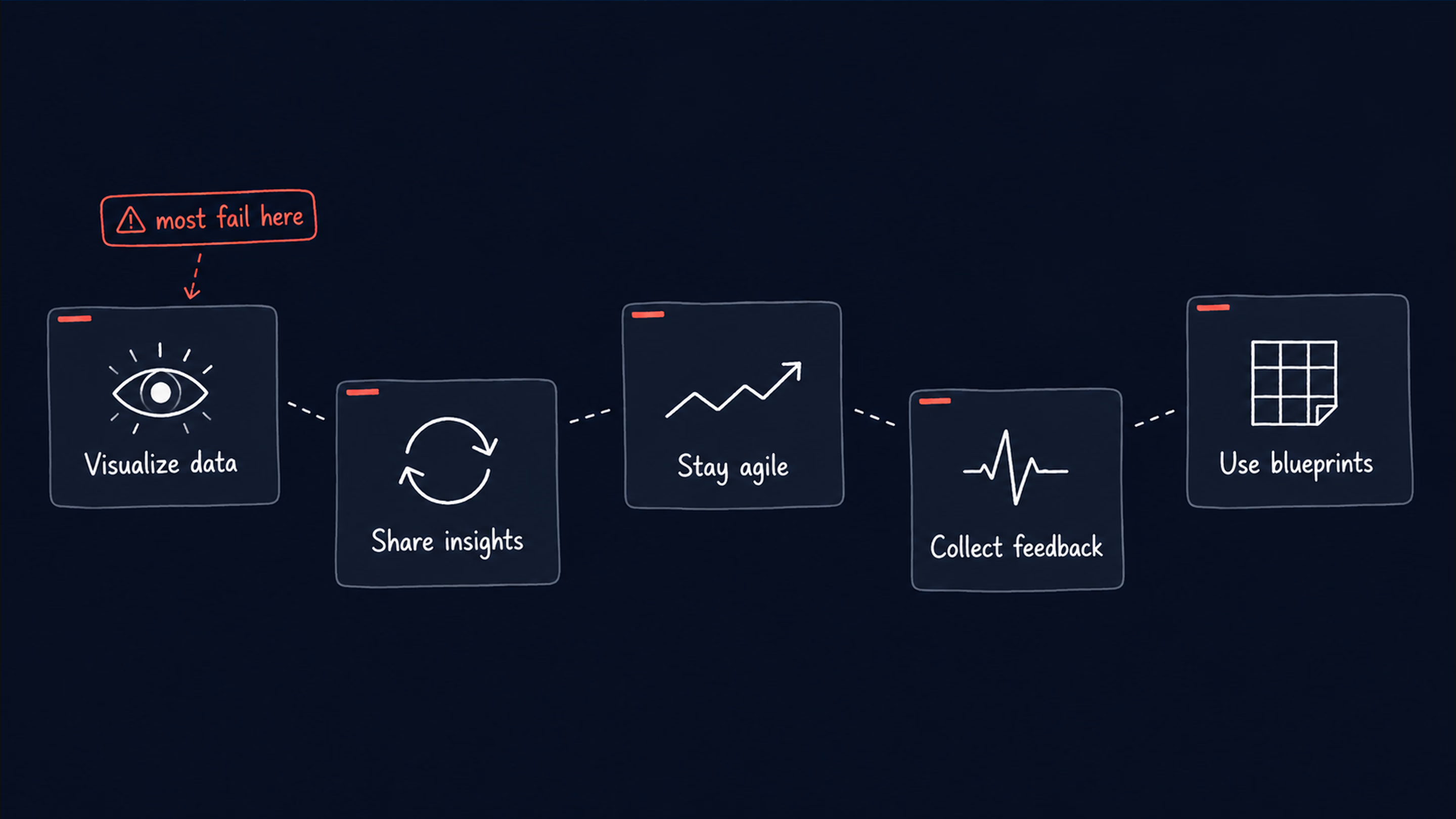
A common failure mode involves optimizing the product while neglecting the periphery. Your audit must capture the “invisible” interactions that often carry the most emotional weight, such as the tone of a password reset email or the clarity of a billing statement.
For example, a user might love your mobile interface but churn because the invoice they receive is unclear or difficult to process. Mapping helps uncover these hidden friction points. See our guide on digital product design secrets to learn how to audit these micro-interactions effectively.
Data silos create inconsistent experiences, where sales promise one thing, and the product delivers another. To address this, companies can establish a “Voice of the Customer” pipeline that brings support tickets and user recordings directly to developers and designers on a regular basis.
A spike in support requests around a new feature can inform a design sprint or a targeted fix instead of sitting in a quarterly report. With direct visibility into user friction, engineers are more likely to build solutions that address real needs.
Rigid annual roadmaps often become outdated before they are fully executed. An effective customer experience design strategy relies on continuous iteration, treating customer journey maps as evolving tools rather than fixed plans.
For instance, if analytics show that users are shifting from a native app to mobile browsers, priorities should adjust accordingly, with more focus on web optimization within available resources. This approach allows teams to respond to real-time behavior and focus on current user needs instead of outdated assumptions.
Sending a survey weeks after an interaction often yields data that is less precise and less timely than what you can capture in the moment. Embed micro feedback mechanisms directly into the workflow, such as a simple “Was this helpful?” toggle immediately after a support resolution or a feature usage session.
This “in-the-moment” data capture provides a high-fidelity pulse check on user sentiment while the experience is still fresh. It transforms feedback from a lagging indicator into a leading one, allowing you to intervene before a frustrated user decides to cancel.
While a journey map tracks the customer’s path, a service blueprint reveals the internal machinery required to support that path. It draws a “line of visibility,” separating what the customer sees (frontstage) from the logistical processes (backstage) that make it happen.
For example, a seamless “one-click return” button on a website requires complex coordination between inventory systems, shipping partners, and accounting software. Using blueprints verifies that your backend infrastructure is actually capable of delivering the seamless experience your frontend promises.
Customer experience is rarely improved through isolated changes. It requires a clear understanding of how decisions, systems, and interactions connect — and where they break down over time.
At Halo Lab, we’ve worked with companies at every stage of that process. The work spans SaaS products, e-commerce platforms, healthcare tools, and consumer apps, but the approach stays the same. We try to understand how the user actually moves through the experience, identify where the friction is, and fix the right things in the right order.
{{banner-3}}
SaaS, e-commerce, and finance often see the fastest return because their interactions are frequent, digital, and easy to measure. However, any business with multiple customer touchpoints can benefit from improving how those interactions connect.
Start by identifying the most critical interaction in your customer flow and improving its clarity and reliability. Even small changes in key touchpoints can reduce friction and improve retention without requiring a large investment.
Yes. Smaller teams can move faster, adapt more quickly, and maintain closer relationships with customers. That flexibility often translates into more consistent and responsive experiences.
There is no fixed cost. It depends on the scope, the complexity of your product or service, and the level of change required. Many improvements can start with focused adjustments rather than full-scale transformation.
Yes. When the experience is consistent and easy to navigate, customers are more likely to return, expand their usage, and remain less sensitive to price changes.
CX design connects technology decisions with real user needs. It ensures that new systems, tools, and processes improve how people interact with your product rather than adding complexity.
The most reliable early signals are behavioral, not attitudinal. Rising support volume around specific features, increasing time-to-first-value for new users, drop-off at the same point in the onboarding flow, and declining NPS among users past the 90-day mark all indicate CX problems. The key is having instrumentation in place to see these patterns. That’s why analytics and session recording tools are the right first investment before any redesign work begins.