







Fintech startups increasingly use AI agents to review credit files, triage fraud alerts, and interact with systems that move real money. That raises the architectural stakes: how do you keep autonomy useful without turning one model error into a financial, security, or compliance risk?

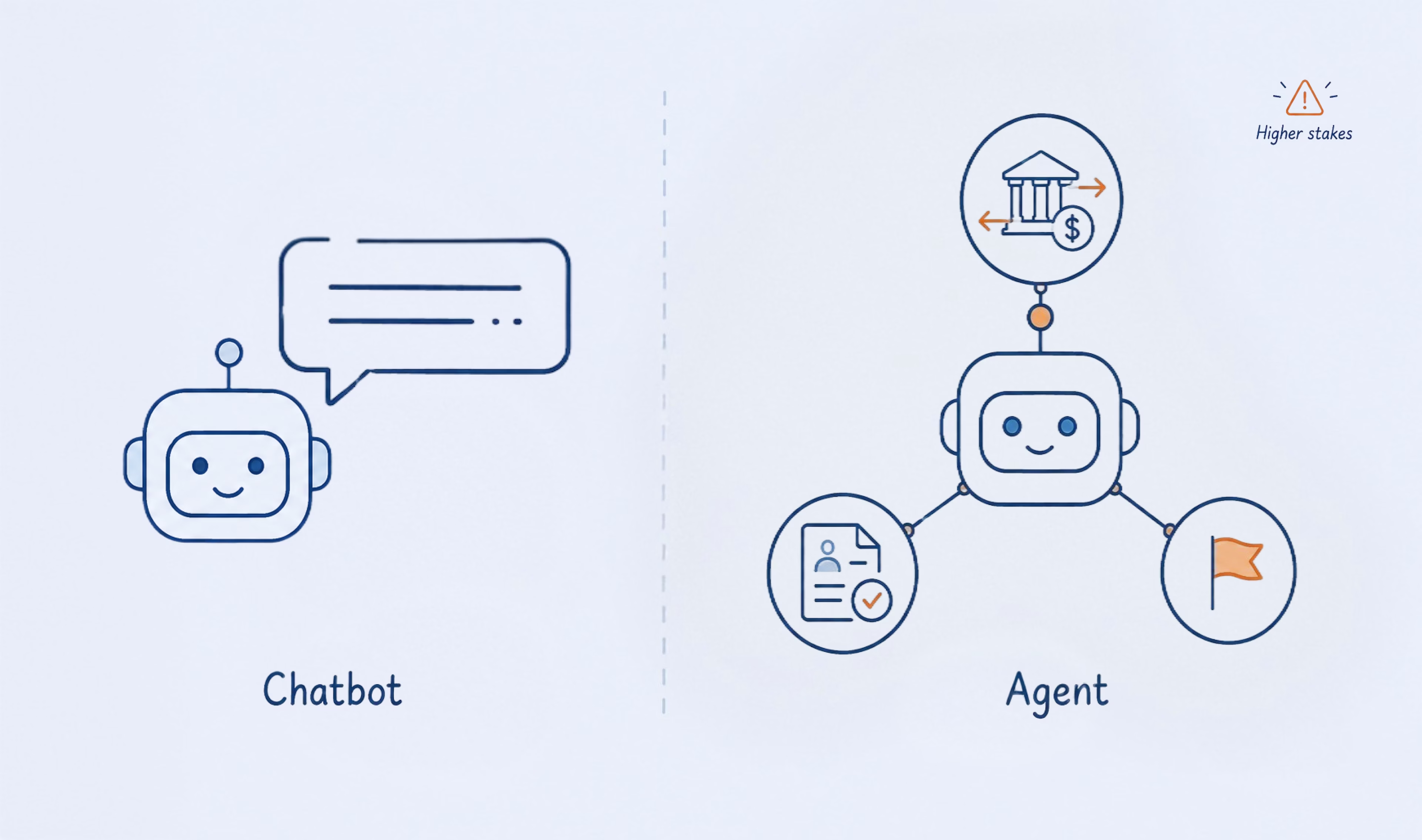
A minor hallucination in a customer support chatbot might only create an awkward reply. The same kind of failure inside an investment, lending, or payment system can expose a fintech product to regulatory scrutiny, financial loss, and loss of customer trust.
That is why agentic AI in fintech cannot be treated as a simple model integration or an early-stage prototype. It needs architecture that defines what each agent can access, which actions require human approval, how data moves through the system, and how every decision can be audited later. In this guide, we break down the core patterns, security controls, and execution steps behind secure, production-grade AI agents in finance.
Agentic AI architecture is the system design that allows an AI agent to plan steps, use tools, access context, and complete tasks with limited human input. It usually combines a large language model (LLM) with memory, orchestration logic, external tools, and clear rules for what the agent can and cannot do.
A chatbot mainly responds inside the conversation. It can answer questions, summarize information, or explain a process, but it does not usually decide which systems to query, which steps to take next, or when to trigger an external action.
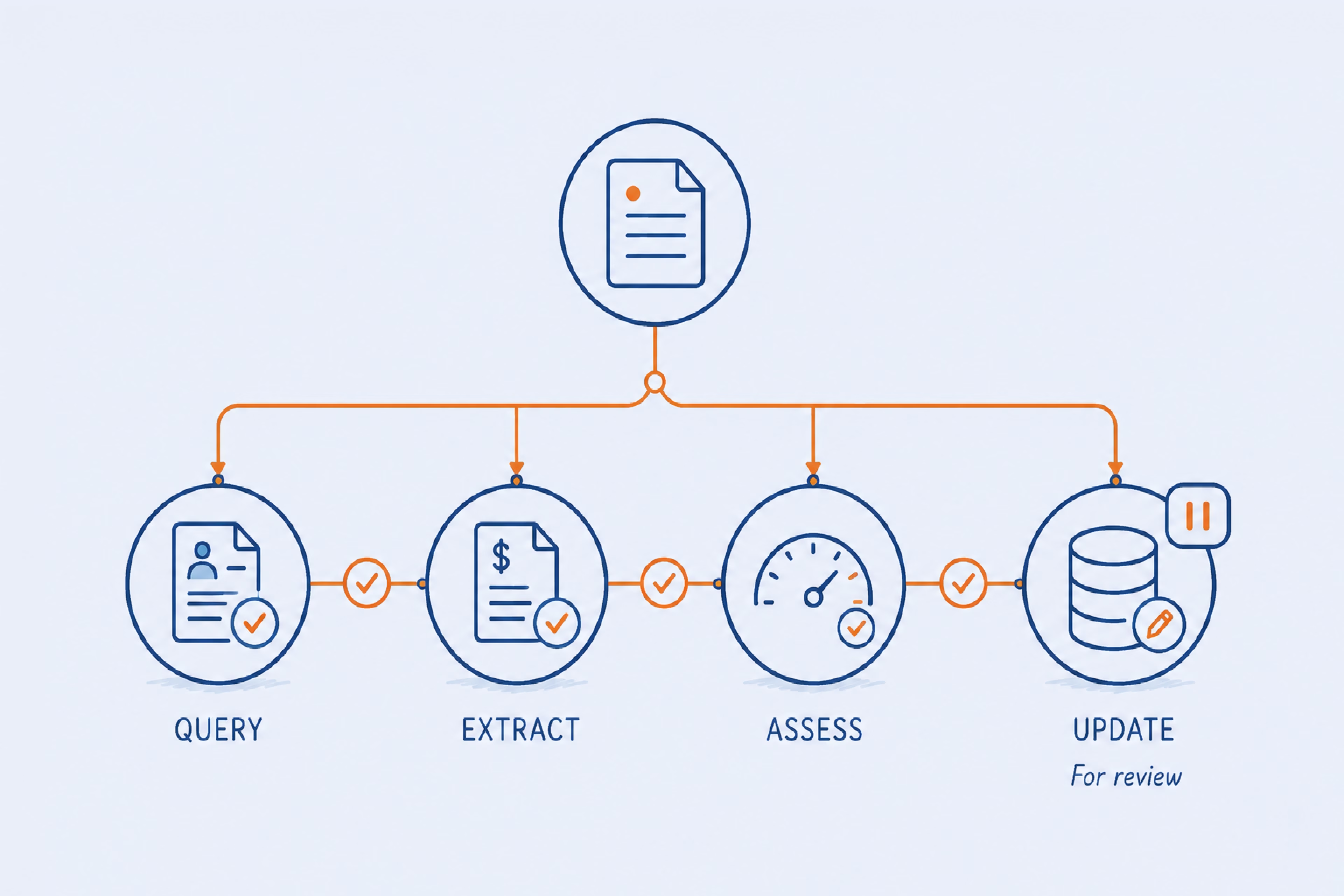
An agentic system works differently. It breaks a broad instruction into smaller tasks, checks its progress, and uses approved tools to read or update information in connected systems. In fintech, that could mean querying credit data, extracting details from payroll documents, running a risk model, and preparing a database update for review.
{{banner}}
AI agents become harder to manage once they move from answering questions to working inside financial workflows. In fintech, the same system may need to handle sensitive data, support regulated decisions, and stay affordable as usage grows. That is why the architecture has to be planned around more than model performance.
Financial data often includes highly sensitive personal information, from social security numbers and bank account details to private transaction histories. A purpose-built AI agent architecture separates the reasoning layer from the systems that store and process this data.
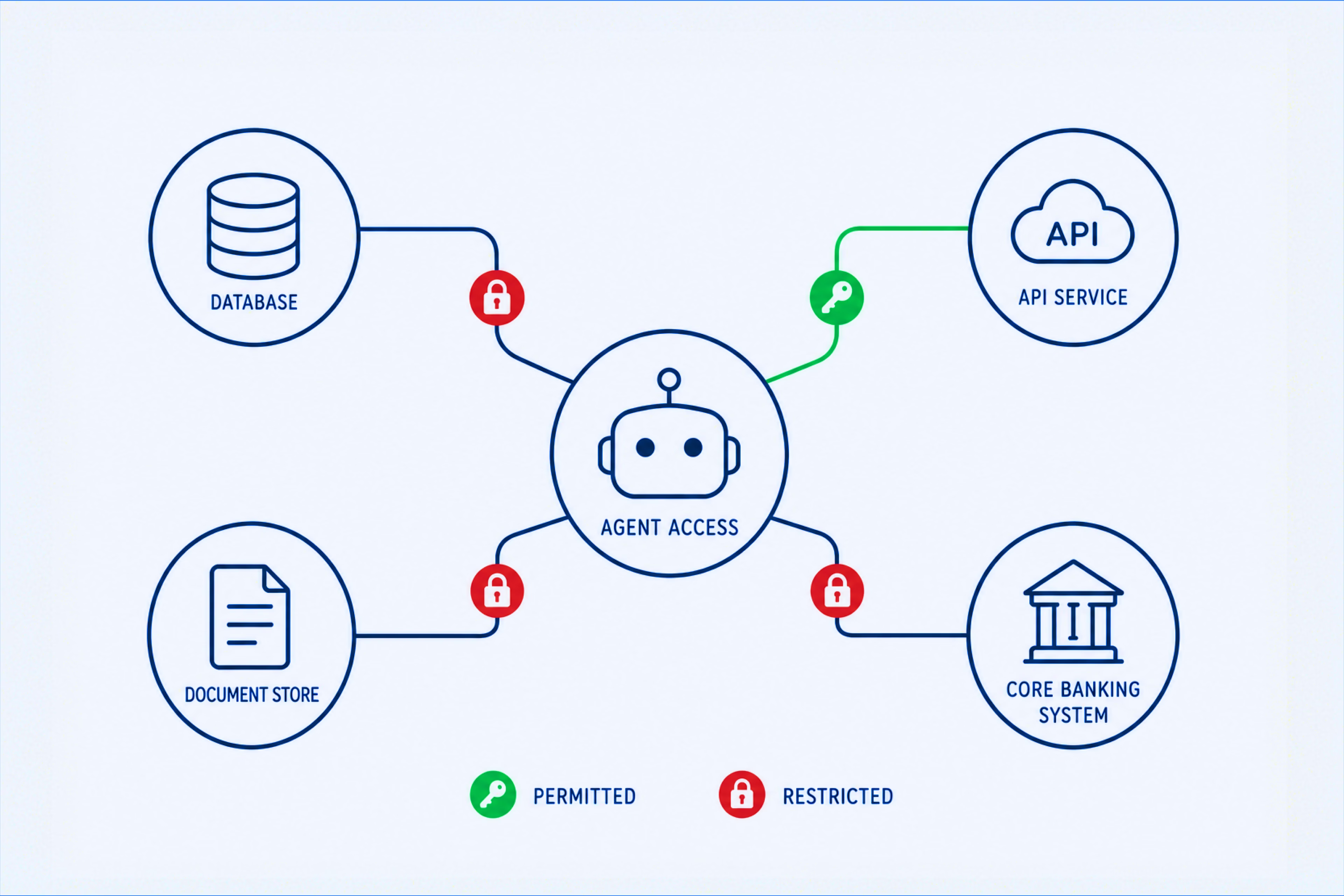
With the right access controls, a customer-facing agent cannot view internal revenue data, reach another user’s records, or bypass permissions through prompt wording. Each agent should only access the data and tools it needs for its specific task.
Some financial actions should never be completed by an agent alone. If a system declines a credit application, blocks a legitimate transaction, or recommends a high-impact financial action without proper review and audit trails, the company can face serious compliance and customer trust risks.
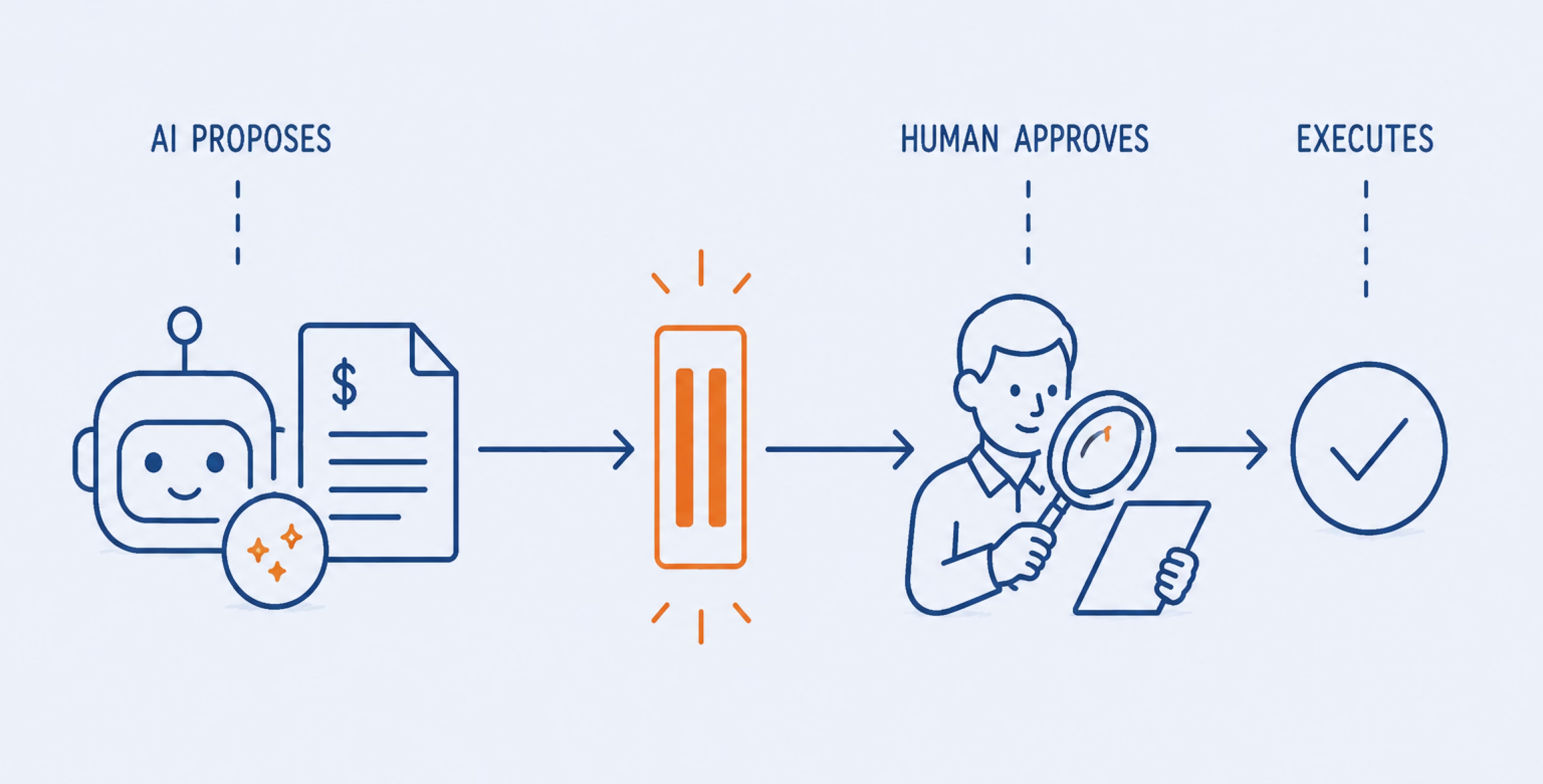
A fintech architecture should build human approval directly into the workflow. The agent can gather documentation, organize files, and draft recommendations, but high-risk actions should pause until an authorized employee reviews and confirms the next step.
Large AI models can become expensive when every request sends long prompts, documents, and tool outputs through the same advanced reasoning layer. For an early-stage fintech startup, that approach can make even simple workflows costly to run.
A stronger architecture splits work between lightweight models, deterministic rules, and advanced reasoning systems. Simple tasks stay efficient, while complex or high-risk steps receive the extra processing they need. For teams mapping out early development expenses, our MVP development cost guide explains what usually shapes the budget before launch.
Choosing between one agent and a network of specialized agents affects system stability, development speed, maintenance, and cost. The right choice depends on how complex the workflow is, how many systems it touches, and how much risk the agent is allowed to handle. Here is where each approach fits best.
A single-agent setup uses one agent to plan the task, call approved tools, and return the final result. It works best for linear workflows with a narrow scope, limited context switching, and a small number of possible outcomes. Typical examples include:
When the task follows a predictable path and does not involve conflicting rules or high-risk actions, a single agent can keep the system easier to build, test, and maintain.
A multi-agent architecture divides a workflow among specialized agents, each with its own instructions, permissions, and tools. This approach works better when a financial process requires several types of analysis or different levels of data access.
For example, in commercial loan underwriting, one agent can extract data from uploaded documents, another can verify records, and a third can prepare a contract draft. Each agent handles a defined step before passing its output forward, creating a workflow that is easier to control and audit.
Multi-agent systems can add unnecessary engineering overhead when the workflow does not truly need them. For early-stage fintech teams, a simpler architecture is often safer when the product has:
In these cases, adding more agents can make the system harder to debug without improving the user experience or risk controls.
Before selecting a framework or writing code, fintech startups need to understand what the agent is expected to do, what data it will touch, and how much autonomy the product can safely allow. These decisions shape the architecture more than the model choice itself. The main factors include:
These factors should not be reviewed in isolation. A budget decision can limit the architecture, the architecture can shape the compliance posture, and compliance requirements can restrict what the system is allowed to do autonomously. The goal is to make these trade-offs visible before the team commits to a technical direction.
The right architecture pattern helps fintech teams keep agent behavior structured, traceable, and easier to evaluate. Below are five practical orchestration patterns that can support financial workflows with different levels of complexity and risk.
This baseline pattern connects one agent to a defined set of external tools. The agent receives a user request, chooses an approved tool, reads the result, and returns a response or prepares the next step.
Suppose a customer asks, “What was my largest transaction in November?” The system can call a transaction search tool, then filter records by date and amount, retrieve the relevant line item, and finally format a clear answer.
A supervisor-led system uses a single coordinating agent to route work among specialized agents. The user interacts with the supervisor, who evaluates the request, assigns sub-tasks, collects outputs, and returns the final result.
For example, a user submits a complex corporate merchant account application. The supervisor sends tax documents to a verification agent, the business owner’s name to an AML screening agent, and the combined findings to a risk evaluation agent.
A sequential workflow moves data through a fixed series of specialized agents. Each agent handles a defined step, uses a limited set of tools, and passes its output to the next stage.
A typical pipeline might look like this: raw account data enters the system, the first agent extracts structured details from uploaded files, the second runs identity verification, and the third uses the verified data to support a credit risk assessment.
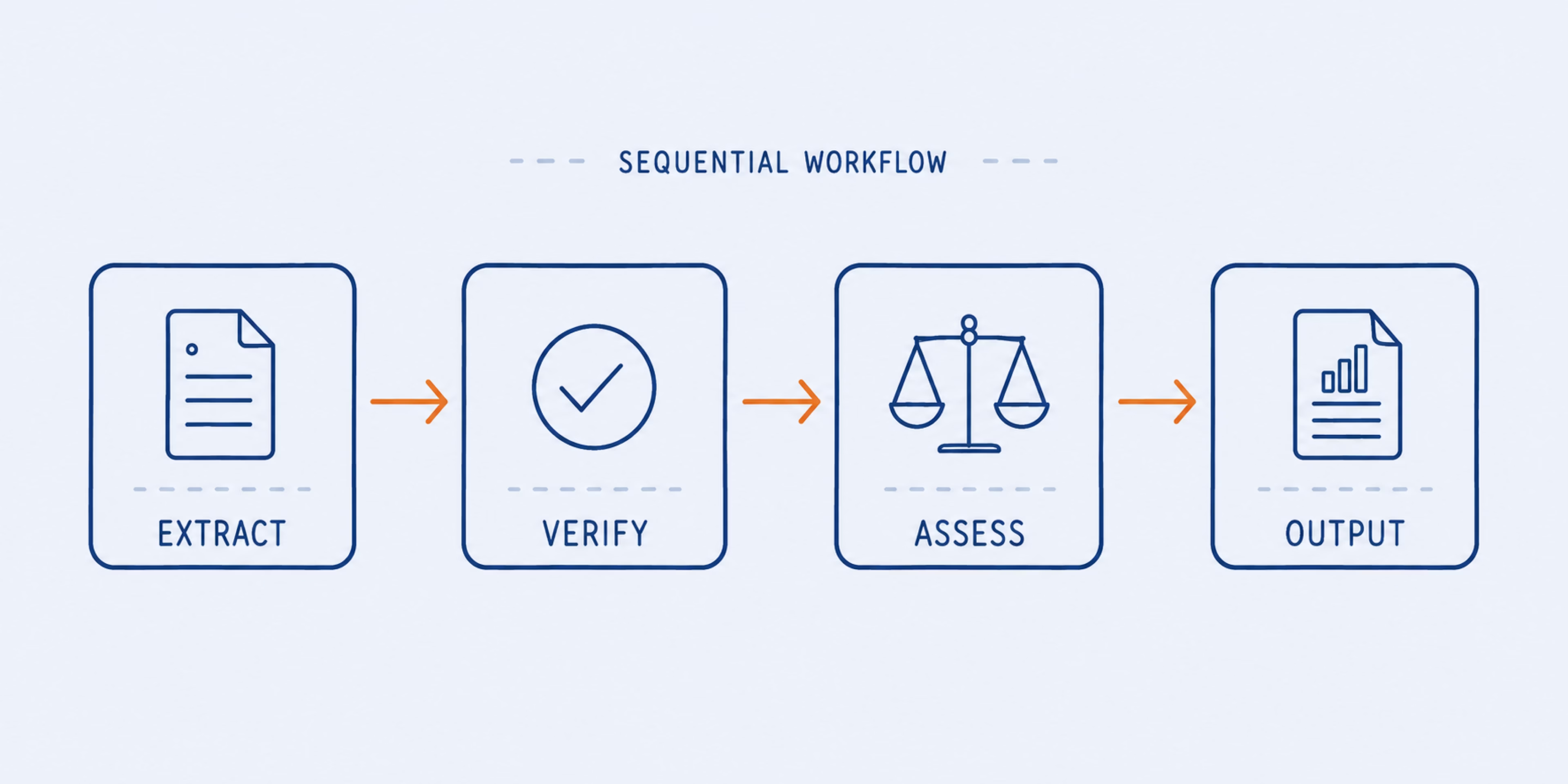
This pattern sends the same problem to several specialized agents at the same time. Each agent analyzes the case from a different angle, and an evaluator reviews the outputs, identifies contradictions, and prepares a consolidated recommendation.
For example, when reviewing a high-value wire transfer, one agent can evaluate historical transaction volume, another can check location data, and a third can review processing velocity. The evaluator then compares the findings and flags the case for the appropriate next step.
A human-approved workflow builds a hard review point into the system. The agent can research, organize information, and prepare a proposed action, but it cannot complete a high-risk step until an authorized person approves it.
The stakes become clear in a billing scenario. An AI agent analyzes an invoice issue and prepares a recommendation to issue a $5,000 credit to a corporate account. The system pauses execution, sends the proposed action to an internal review dashboard, and waits for a manager’s approval before any ledger change is made.
Agentic AI can support many parts of a fintech product, but its value depends on choosing the right workflow. The strongest opportunities usually sit where repetitive work, sensitive data, and clear business impact meet. The following use cases show how that looks in practice.
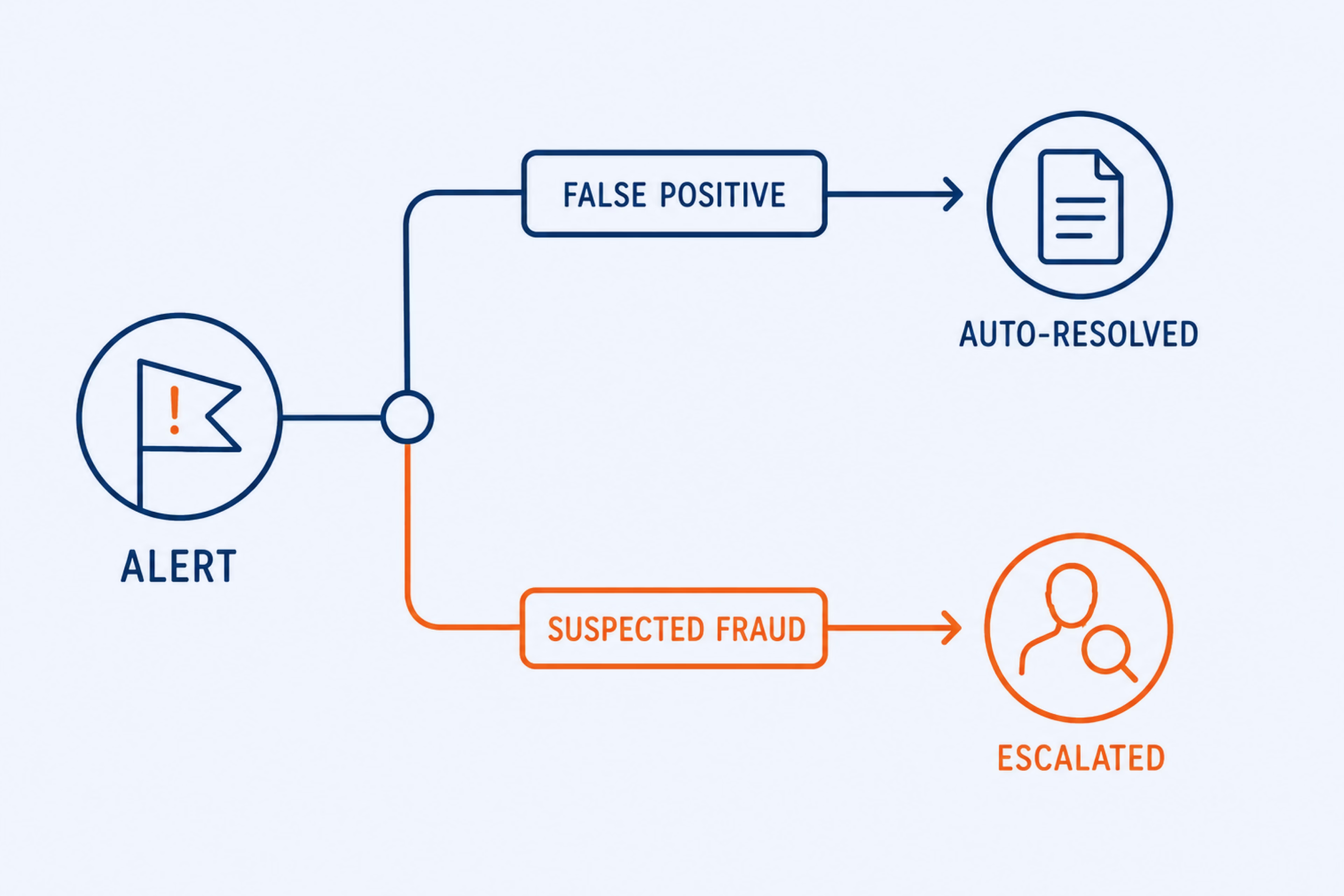
Traditional Anti-Money Laundering (AML) monitoring tools often generate large volumes of false-positive alerts, leaving compliance teams to review many low-risk cases manually. AI agents can support this process by preparing structured alert summaries before a human investigator steps in.
When an alert appears, a triage agent can gather relevant signals, such as historical account activity, watchlist status, transaction velocity, and recent device or location data. It then organizes the findings into a concise dossier. Clear false positives can be logged with supporting evidence, while suspicious cases are escalated to a human investigator for review.
Manual account verification can slow down onboarding and increase drop-off during registration. AI agents can help fintech startups scale Know Your Customer (KYC) workflows by separating the process into controlled steps.
One agent can extract data from passports, utility bills, or business documents. A second can compare extracted details against approved identity sources. A third can support PEP or adverse media screening. This setup helps standard applications move through the workflow faster, while complex or flagged cases remain routed to manual compliance review.
For example, a fintech startup could build a three-agent KYC pipeline for document extraction, identity verification, and PEP screening. Instead of leaving every application in a manual queue, the system could process straightforward cases automatically and send only unclear, incomplete, or high-risk files to reviewers. The audit trail remains intact because each step is logged and tied to a specific agent action.
Credit workflows require precision, explainability, and strong oversight. Multi-agent systems can support these reviews by separating document analysis, income verification, risk scoring, and recommendation drafting across controlled agents.
This is also where regulatory classification matters. For example, the EU AI Act Annex III treats AI systems used to evaluate creditworthiness or establish credit scores as high-risk, except where the system is used to detect financial fraud. For fintech teams, that makes traceability especially important: the architecture should show which data was used, which checks were completed, and where human review entered the decision process.
Standard support systems often struggle with complex, multi-part questions that require context from several internal systems. Agentic AI can help by gathering account information, checking policy rules, and preparing a response for review.
For example, when a customer asks about a retirement account, the agent can check current balances, review risk tolerance settings, and pull relevant internal guidelines. It can then draft a response or suggested next step for an advisor to review before any investment-related action is taken.
Agentic AI can also support back-office finance teams. A multi-agent workflow can check ledger entries, call payment processor APIs, compare transaction amounts, and flag discrepancies in processing fees or settlement records.
Once the data is verified, an internal agent can prepare a draft report with the flagged issues and supporting evidence. Human accountants can then focus on resolving exceptions instead of manually reviewing every transaction line.
Agentic AI risk rarely appears only after launch. It usually starts earlier, when teams define what the system can access, which actions it can take, and how much of the workflow remains visible to people. These choices become especially important when the product is preparing for technology due diligence or investor review. The risks below are the ones fintech startups should address before agentic AI reaches production.
An AI agent can support lending, identity verification, fraud review, or fee calculation, but the startup remains responsible for the outcome. If the system produces a biased recommendation, applies the wrong rule, or fails to verify key information, the risk does not sit with the model. It sits with the company operating the product.
The architecture should create a clear record of every relevant prompt, model output, tool call, data source, and human review point. These logs help teams reconstruct how a decision was reached and explain the process if regulators, auditors, or internal reviewers ask for it.
Fintech agents may process names, addresses, account numbers, transaction histories, identity documents, and other sensitive data. Sending that information directly to an external model can create unnecessary exposure.
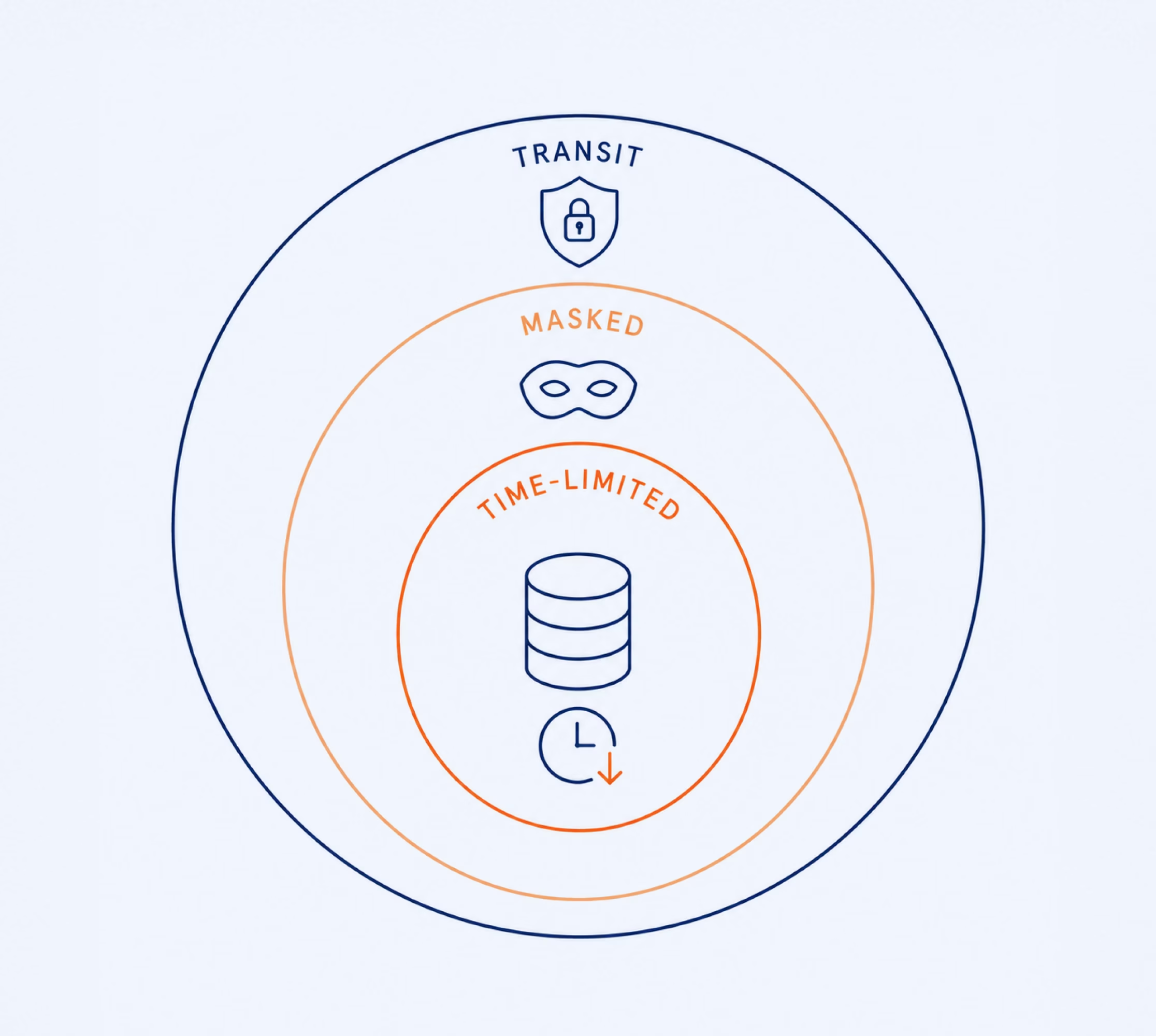
A safer architecture adds a data filtering layer before model interaction. This layer can mask or tokenize sensitive details before text reaches an external model, then restore the correct values inside the secure product environment. The goal is to limit what the model sees while still giving it enough context to complete the task.
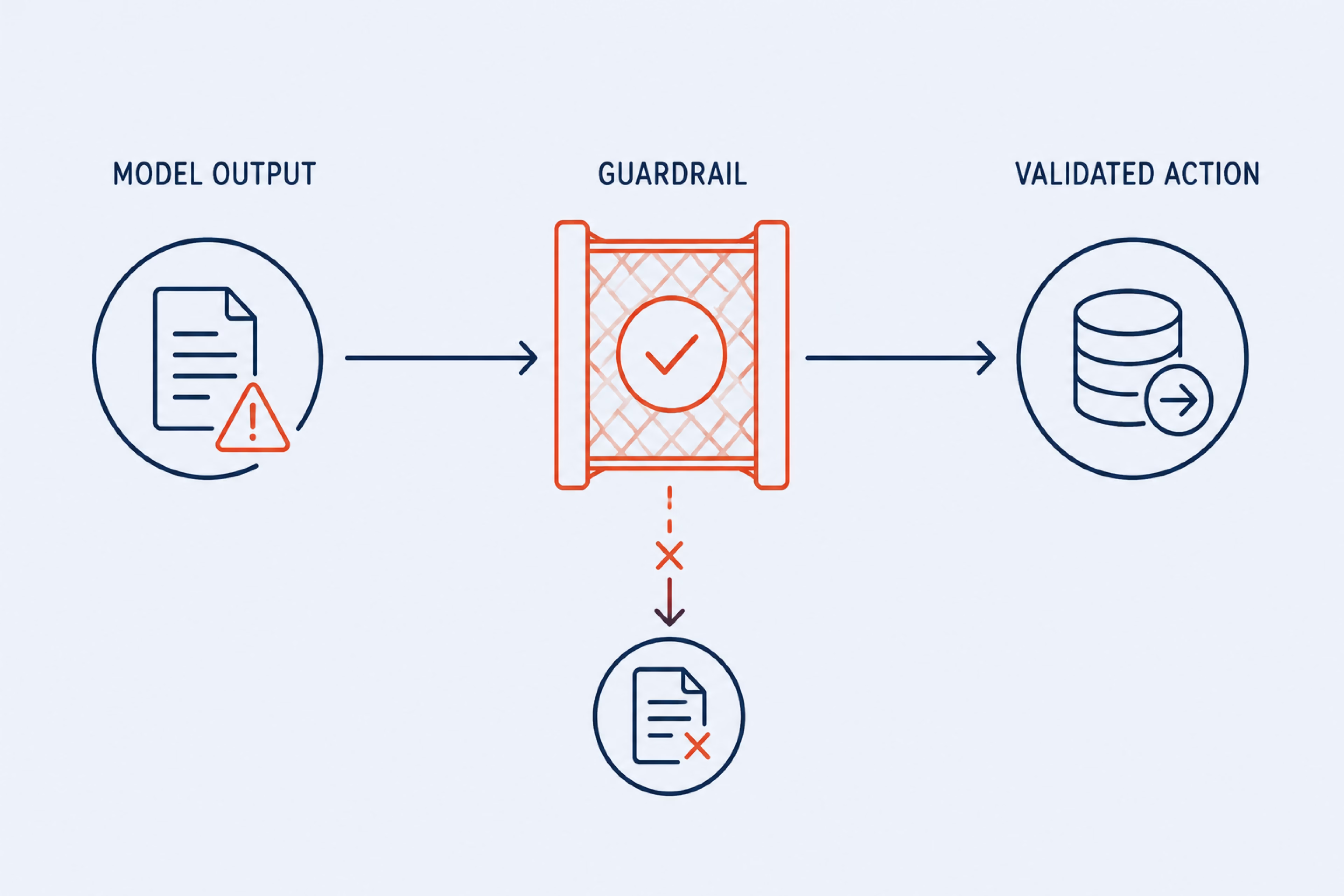
LLMs can produce incorrect information with confidence. In fintech, a wrong account number, inaccurate interest calculation, or unsupported fraud explanation can create real operational damage if it triggers an action without verification.
Input and output guardrails reduce this risk. They check whether generated values match expected formats, whether transaction amounts stay within allowed limits, and whether the proposed action aligns with business rules. No external action should be executed until the output passes validation.
Depending on one AI vendor can create operational risk. A provider may experience an outage, change model behavior, update pricing, or revise data terms in a way that affects the product.
Startups can reduce this dependency with a model-agnostic abstraction layer. This allows the system to route tasks between different providers, smaller internal models, or self-hosted open-source models when needed. The goal is not to switch vendors constantly, but to avoid making the entire product dependent on one external endpoint.
Agentic systems can become expensive when agents pass long prompts, documents, and tool outputs between each other without limits. A poorly designed loop can turn a single request into a slow and costly chain of model calls.
Every agent workflow should have runtime limits, token caps, timeout rules, and loop detection. These controls stop failing processes before they create large bills, slow down the product, or overload internal systems.
When several agents work on the same financial file, it can become difficult to identify where an error entered the process. If a wrong address appears on a tax form or an incorrect risk label reaches a reviewer, the team needs to know which agent produced it, which data it used, and whether the output was validated.
Each agent should leave a traceable record of its role in the workflow. This can include agent identifiers, timestamps, input sources, validation results, and approval status. Without that trail, multi-agent automation becomes difficult to debug, audit, or defend.
AI adoption in financial services is moving faster than many oversight processes can adapt. The Cambridge Centre for Alternative Finance’s 2026 global AI in financial services report found that 52% of surveyed industry respondents are actively adopting agentic AI, with fintechs reporting higher adoption than traditional financial institutions — 57% versus 45%. As adoption accelerates, architecture becomes especially important: fintech systems need to be traceable, reviewable, and explainable as regulatory and investor scrutiny increases.
In finance, untraced automation is indistinguishable from negligence.
Building agentic AI for fintech requires a clear workflow, defined risk boundaries, and a gradual path from testing to production. A broader software development roadmap can help teams organize the move from technical concept to MVP, but financial agents also need strict access, validation, monitoring, and approval rules.
In a regulated environment, early architecture decisions are much easier to control than late fixes. The seven steps below outline a practical sequence for building agentic AI architecture safely.
Start with one constrained workflow instead of trying to build an all-purpose AI financial assistant. Choose a process that creates visible operational friction, such as the initial review of merchant billing disputes. A narrow scope makes it easier to define success metrics, security rules, and return on development effort.
Decide which actions the agent can complete independently and which ones require human review. For example, the system might pull account statements and calculate dispute metrics on its own, but route any credit adjustment above $50 to a manager for approval. These limits protect the product from unmonitored financial actions.
Document every database, payment API, file store, and internal system the agent needs to use. Then apply least-privilege access so each agent can only read or update the data required for its role. The goal is to keep core financial infrastructure inaccessible unless the workflow truly needs it.
Choose the pattern that fits the workflow’s complexity and risk profile. A straightforward data pipeline may work best as a sequential workflow, while a process that needs several checks across different sources may require a supervisor-led multi-agent setup. This decision also shapes how easily the team can test, monitor, and improve the system later.
Build the first version around a stable end-to-end workflow, not a broad feature set. Open-source orchestration frameworks such as LangChain, LangGraph, or AutoGen can support early development, but the MVP should run in an isolated staging environment with synthetic or masked data before it connects to live systems.
Add observability and evaluation tools before the system handles production traffic. Platforms such as LangSmith, Phoenix, or Arize can help teams inspect agent runs, track token usage, measure latency, and spot failures. Pair monitoring with validation rules, access controls, and alerts for unexpected behavior.
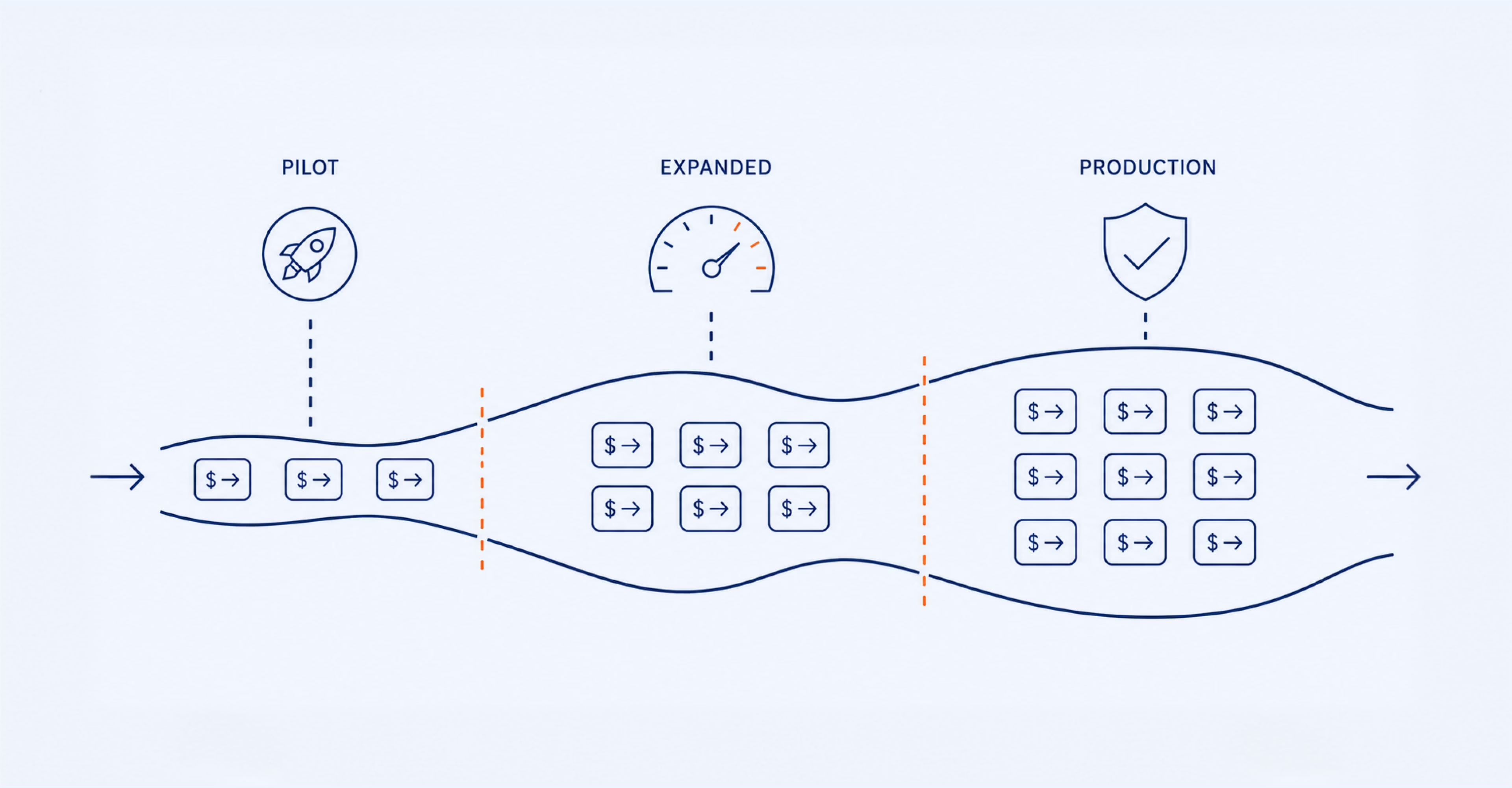
Release the system gradually instead of sending all production traffic through it at once. Start with a controlled pilot, monitor accuracy and latency, and collect feedback from compliance or operations reviewers. Expand the agent’s scope only after the workflow proves stable, safe, and useful under real conditions.
Building a dependable agentic AI system requires expertise across model behavior, financial infrastructure, data security, and compliance. The team needs to understand how agents make decisions, how financial systems exchange data, and where regulatory review affects product logic. The main roles usually include:
Early-stage startups do not always have all of these roles in-house. In that case, a dedicated development team can help cover the missing expertise without forcing the company to hire a full internal department before the product is ready.
Not every fintech AI workflow needs to be built from scratch. The right choice depends on what creates value, what carries risk, and where the team needs control. In practice, that usually leads to one of three paths: buy, build, or combine both.
Buying makes sense for generic workflows that do not create a competitive advantage. Customer support ticketing, internal expense processing, or basic document routing can often be handled by existing SaaS tools at a lower cost than custom development.
A custom system makes sense when AI is part of the product’s core value or when the workflow needs data handling that commercial tools cannot support. This may include proprietary underwriting, fraud detection, or trading workflows where the team needs full control over access rules, validation logic, and audit trails.
A hybrid approach is often the most practical option for fast-growing fintech startups. The team can use commercial models and open-source frameworks for general processing, while building proprietary layers for guardrails, data masking, human review, and integrations. This gives startups a faster path to launch without giving up control over the parts of the system that carry the most risk.
The build-or-buy decision is, at its core, a decision about where your competitive advantage lives.
Before committing development resources, fintech founders and product leaders should test whether a proposed architecture matches the workflow, risk level, and operating constraints of the product. These questions can help evaluate proposals from internal engineering teams or external development partners.
Start by defining the financial, operational, and compliance risks attached to the workflow. The team should know what can go wrong, which actions require approval, and whether the agent will ever touch transactions, customer records, or regulated decisions.
The proposal should explain how sensitive data is masked, stored, separated, and retained. Protection should extend beyond encryption in transit. For higher-risk data, teams may need separate schemas, stricter permissions, and limits on how long information remains available after processing.
High-risk actions should pause before execution and route to an authorized reviewer. The reviewer should be able to see the relevant data sources, validation results, proposed action, and approval history before making a decision.
The architecture should include token limits, runtime limits, timeout rules, loop detection, and fallback options. These controls help prevent slow workflows, unexpected API bills, and service disruption when a model or vendor fails.
A strong proposal should include observability, automated testing, continuous evaluation, rollout planning, and rollback procedures. It should explain how the system will be built, monitored, improved, and recovered if production behavior differs from expectations.
Agentic AI can be valuable for fintech startups, but its real strength depends on the system around it. A financial agent is only as safe as the access rules, approval points, validation layers, and audit trails that shape what it can do.
For fintech teams, the main lesson is simple: autonomy should never outpace control. When the architecture is built with that balance in mind, AI agents can support complex financial workflows without turning every decision into a new source of risk.
{{banner-2}}
This is a software design that combines language models, planning capabilities, memory, and secure access to financial systems.
AI agent architecture defines the overall system structure, including security controls, data access, and model boundaries. Agent orchestration manages how specialized agents communicate, share information, and coordinate tasks during execution.
Yes, when designed with proper security controls and least-privilege access policies. Separating responsibilities across specialized agents reduces the risk of exposing sensitive financial data.
This architecture is the right choice for complex workflows involving multiple stages, data sources, or compliance checks. Common examples include fraud investigations, loan underwriting, and merchant onboarding.
Key risks include regulatory violations, data privacy issues, model hallucinations, and uncontrolled operating costs. These risks can be reduced through monitoring, validation rules, and human oversight.
Costs depend on workflow complexity, security requirements, and development resources. A focused MVP may cost $30,000–$80,000, while full enterprise multi‑agent platforms with compliance and custom models often exceed $200,000 and can reach $500,000 or more based on scope.
Yes. Frameworks such as LangGraph, AutoGen, and CrewAI can accelerate development, but they should be supplemented with custom security, compliance, and review mechanisms.