





An AI-driven wellness app bringing daily guidance to the femtech landscape
Despite growing awareness around hormonal health, many women still navigate their cycle with little understanding of how it shapes their energy, mood, and daily capacity. The app at the center of this project set out to change that, helping women not just log their cycle, but live in sync with it. Created by a solo UK founder, it enters a market where most tools collect data but rarely help act on it.
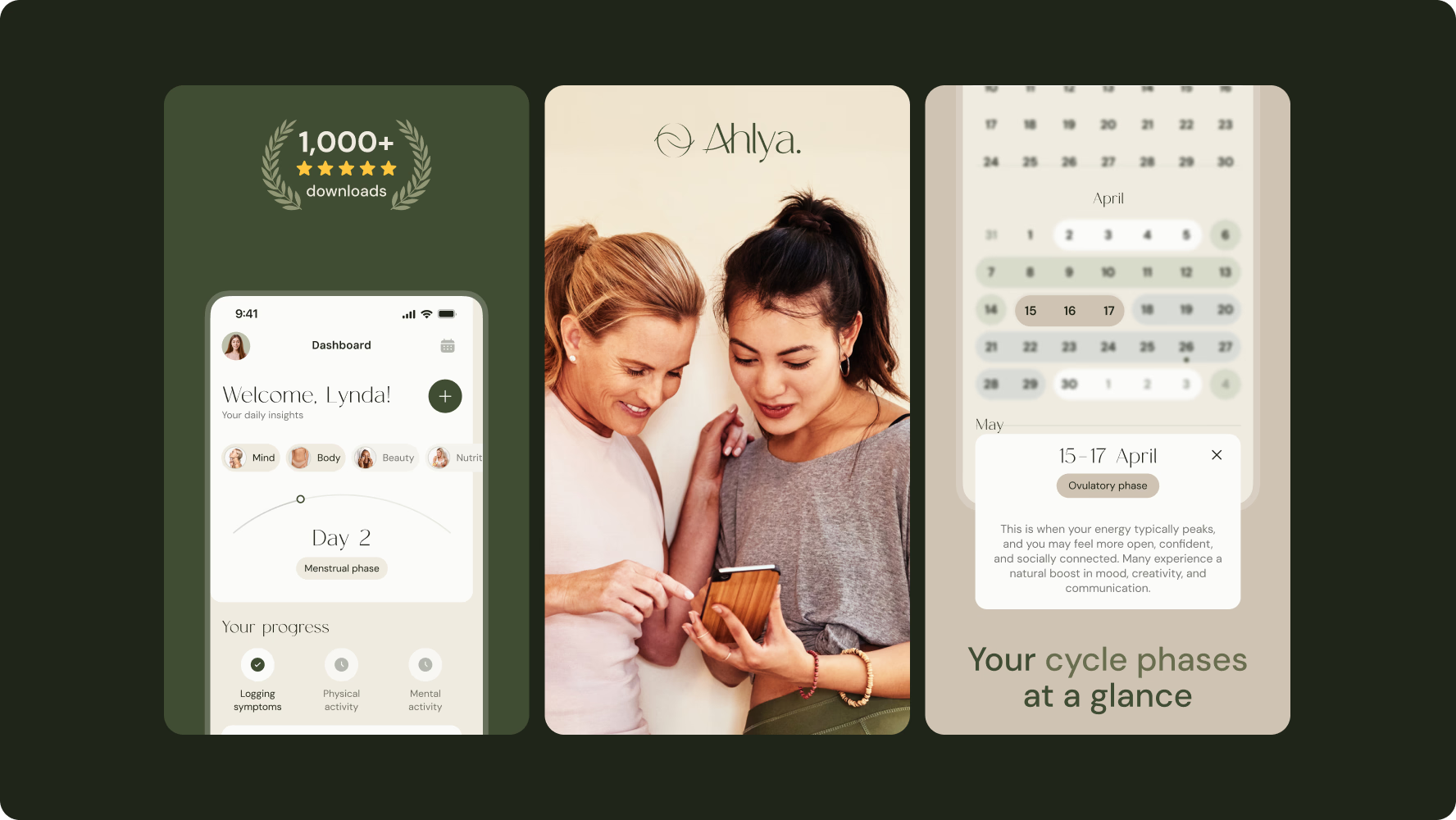
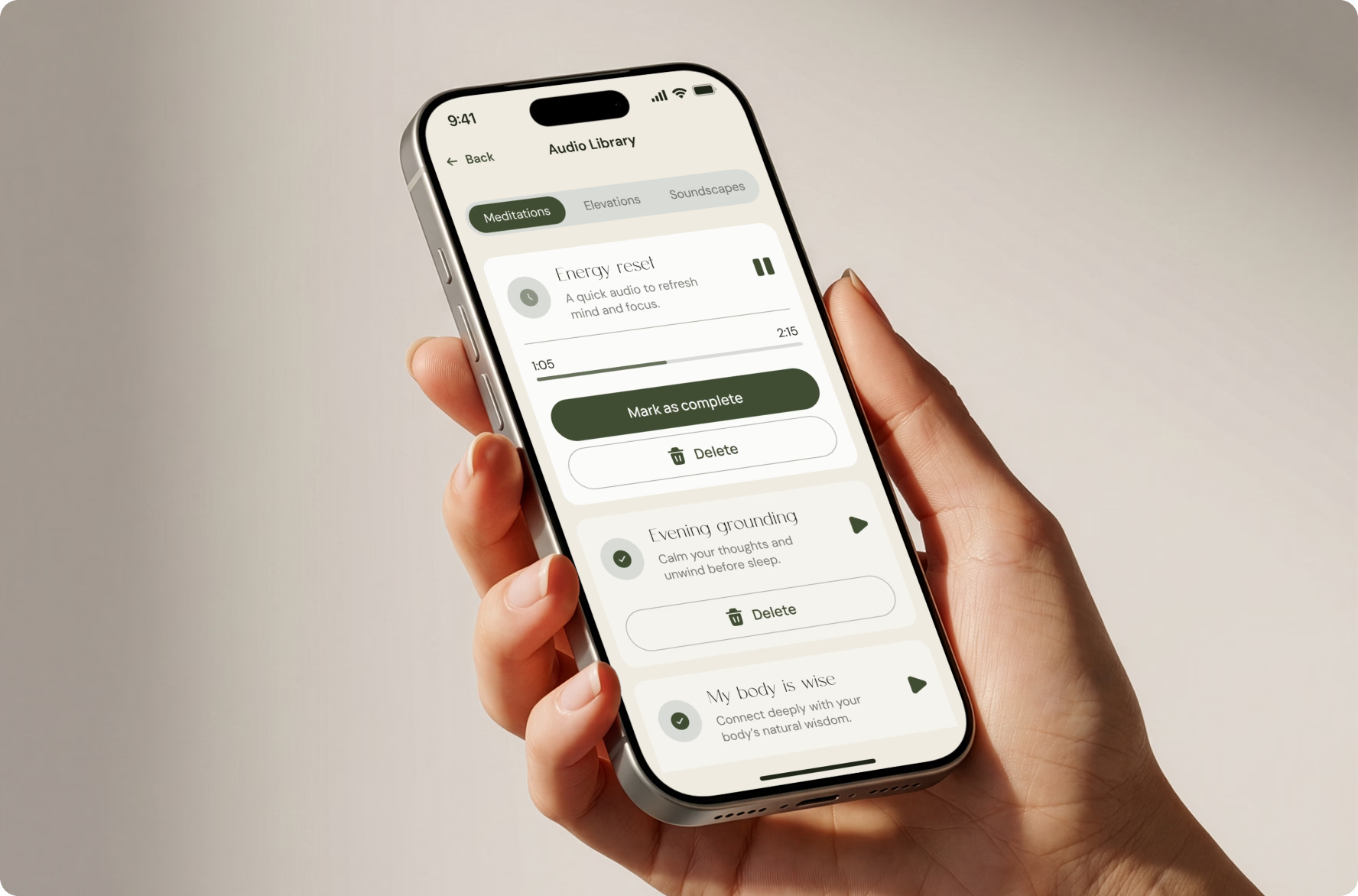
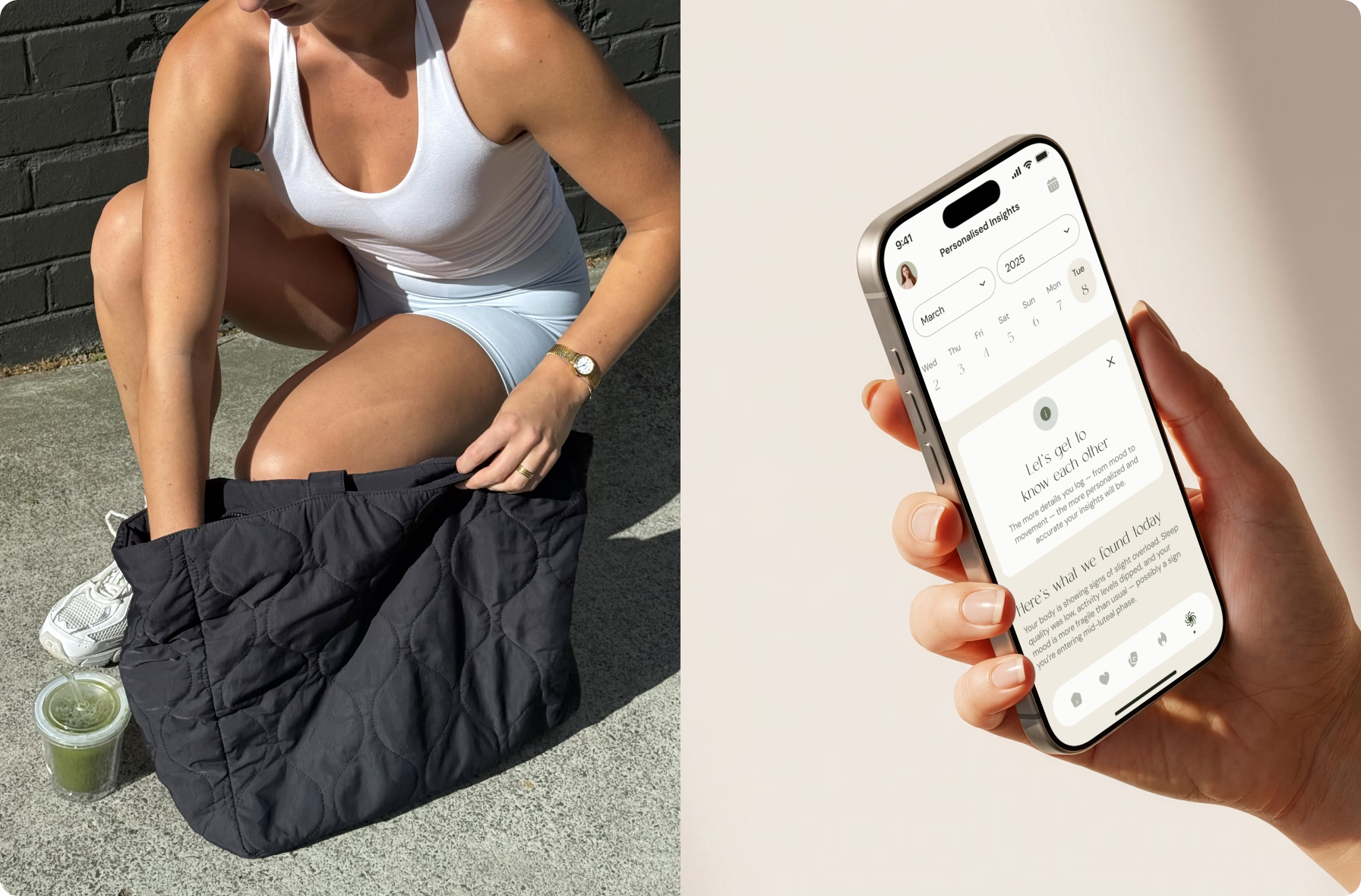
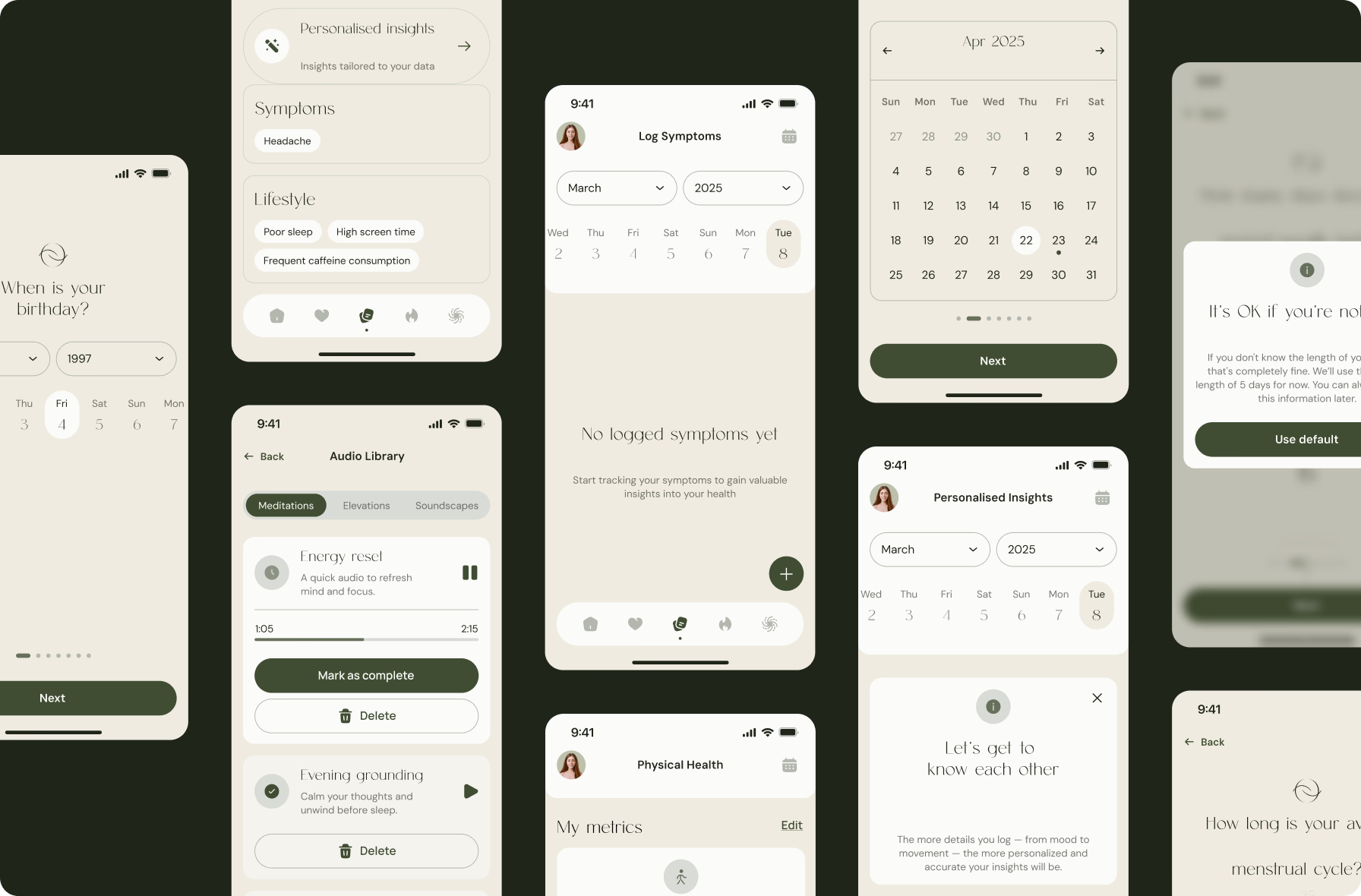
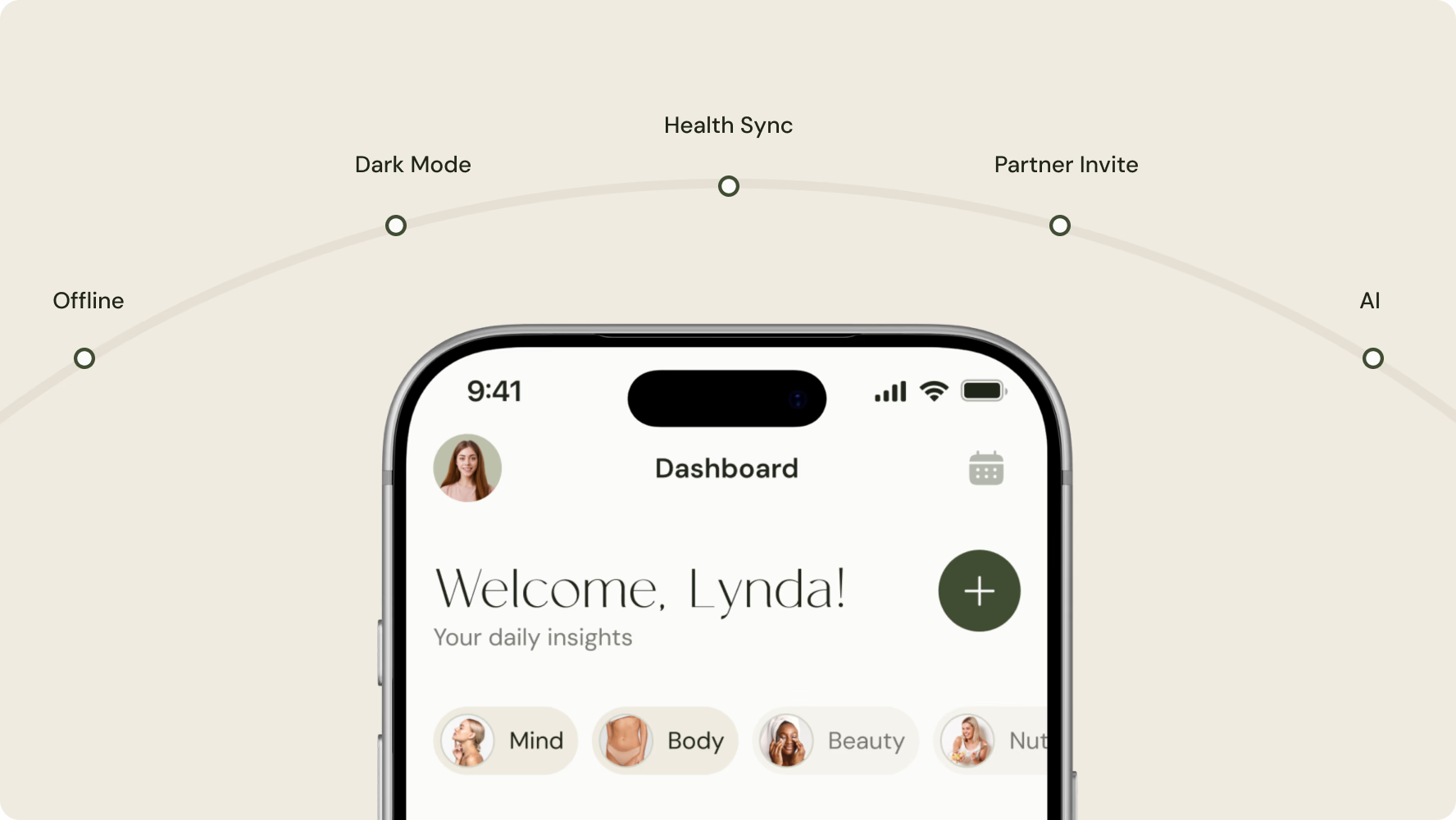
Beyond tracking, the app brings together AI-driven daily insights, symptom logging, guided meditations, and a partner-sharing feature, covering physical and mental health in one space. Its calm, non-clinical design prioritizes emotional comfort over data density, making it feel more like a wellbeing space than a health tracker.
The client came to us with a strong concept, zero existing product, and tight deadlines. The goal was to build a complete, marketplace-ready app, covering research, design and development, and faithfully execute a founder-defined vision for a calming, premium product that could stand out in a saturated femtech market.
In the femtech space, users share deeply personal health data and expect both accuracy and genuine care. That’s why, from a concept trial to a dual-marketplace launch, we shaped every layer of the product — UX, development, and quality — to match the brand’s emotional promise and earn the trust women place in it.
Working from the client’s existing brand, our team guided design from competitor research through UX architecture and a screen library, creating a space that felt not just functional, but made for women.
{{dropdowns-1}}
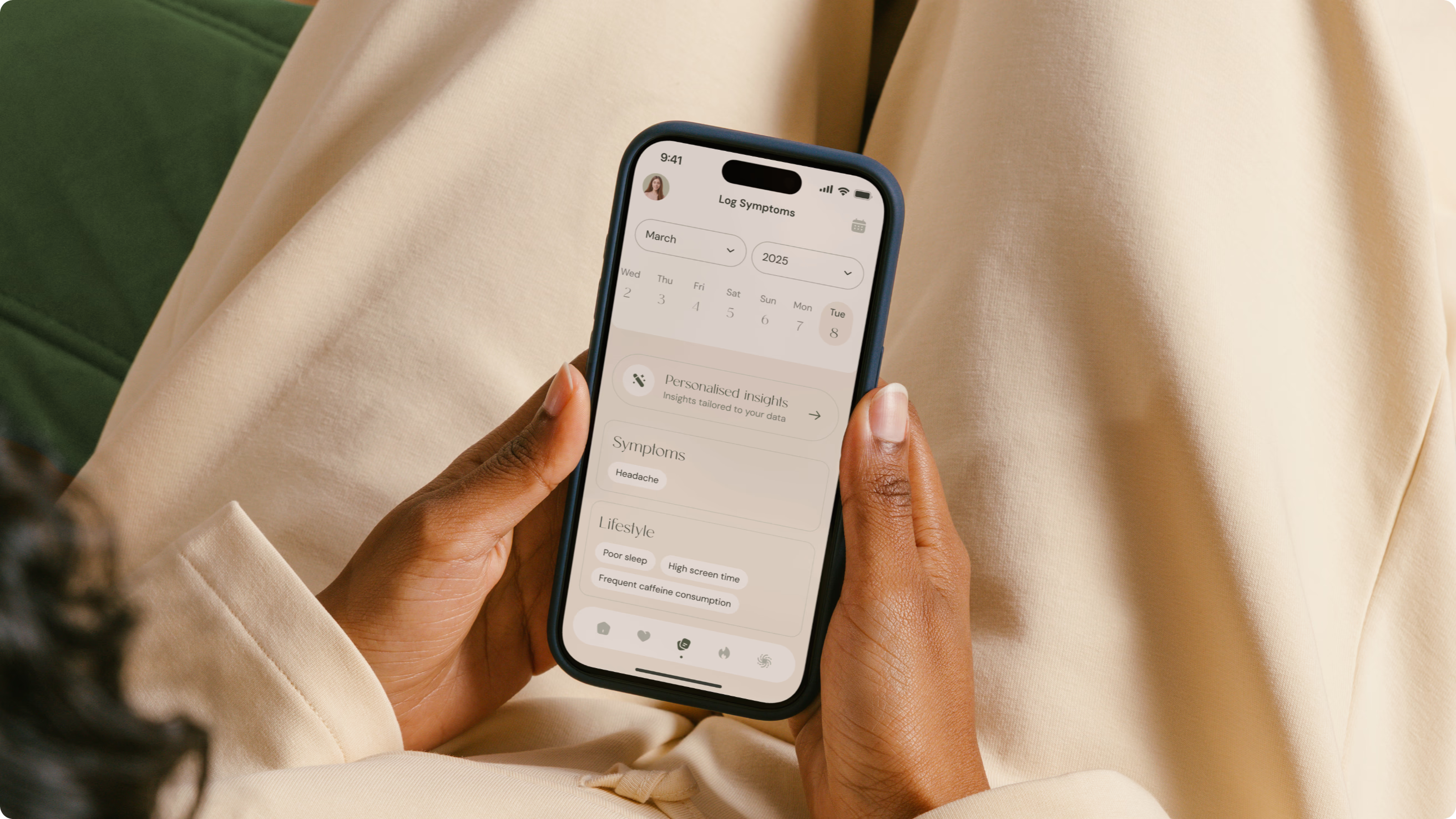
We built the product’s foundation in React Native and Expo, structuring the architecture to handle complex cycle logic and real-time data with ease, so the app could scale without losing stability.
{{dropdowns-2}}
Quality and compliance ran alongside development — systematic testing and early marketplace submissions kept the product on track for launch.
{{dropdowns-3}}
{{review}}
The founder came to us with a clear philosophy: women’s health deserved more than a tracker. Our role was to translate that vision into a product, preserving its emotional intent across every layer of design and development.
{{approach}}
{{slider-1}}

“Working with the Halo Lab design team has been an absolute pleasure and one of the highlights of my project so far. From our first conversation, they understood my vision and brought it to life with incredible attention to detail, creativity, and professionalism.”

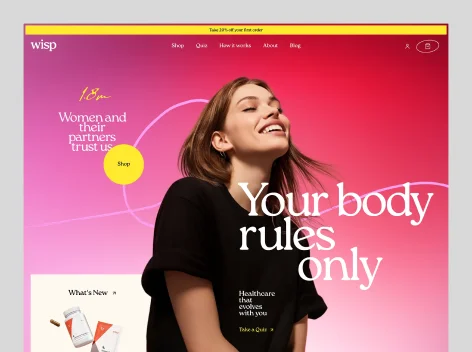
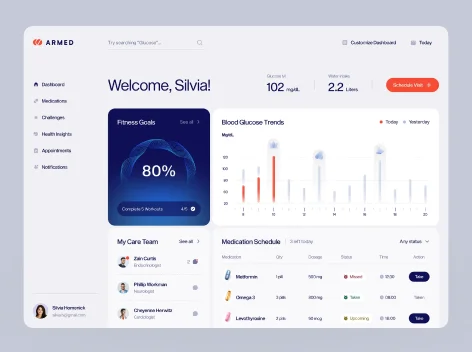
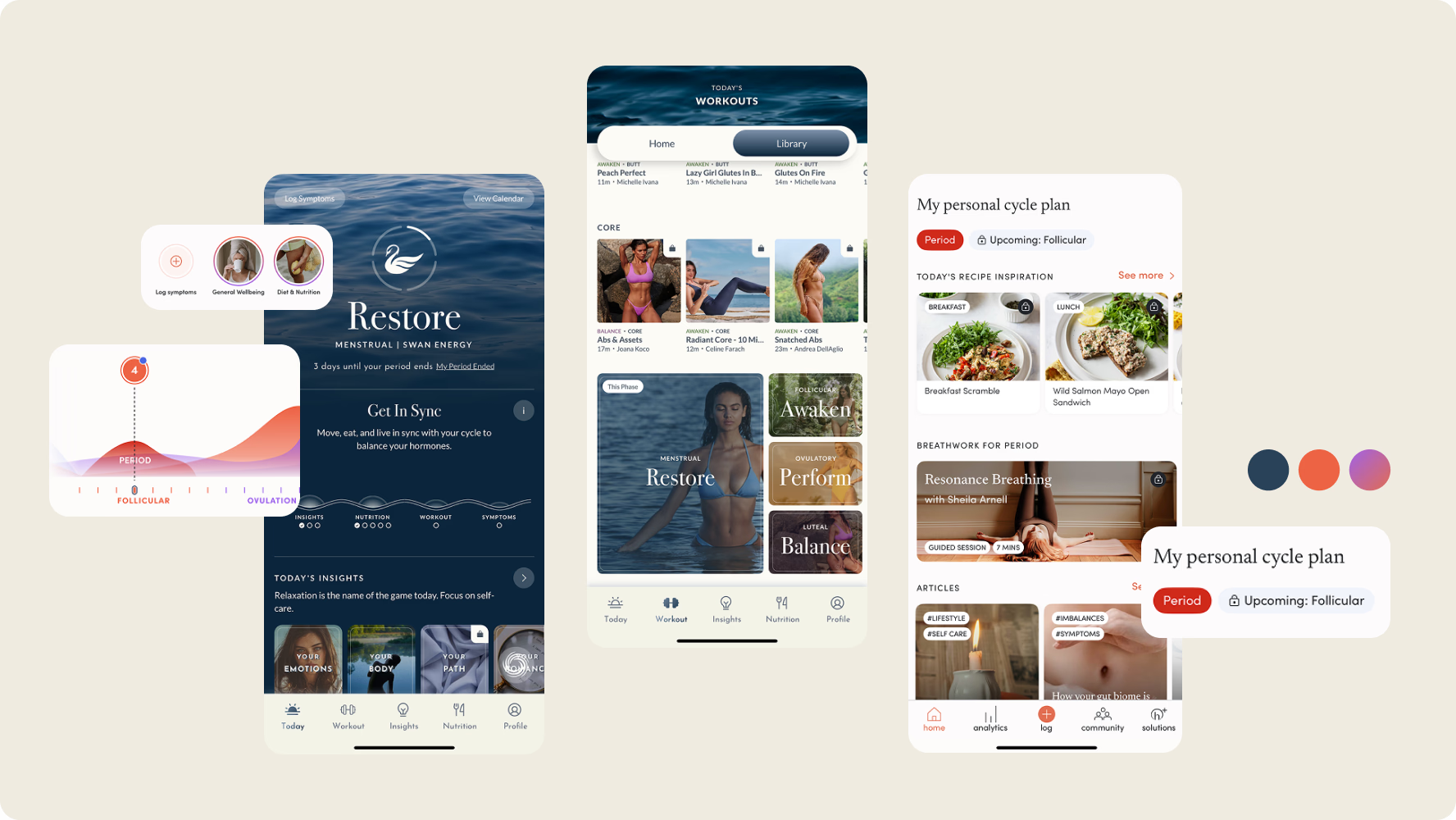
We analyzed competing apps, mapping UX gaps and positioning opportunities in the hormonal health space. Two visual concepts emerged from the moodboard and trial sprint: one warm and photo-led, the other clean and icon-based.
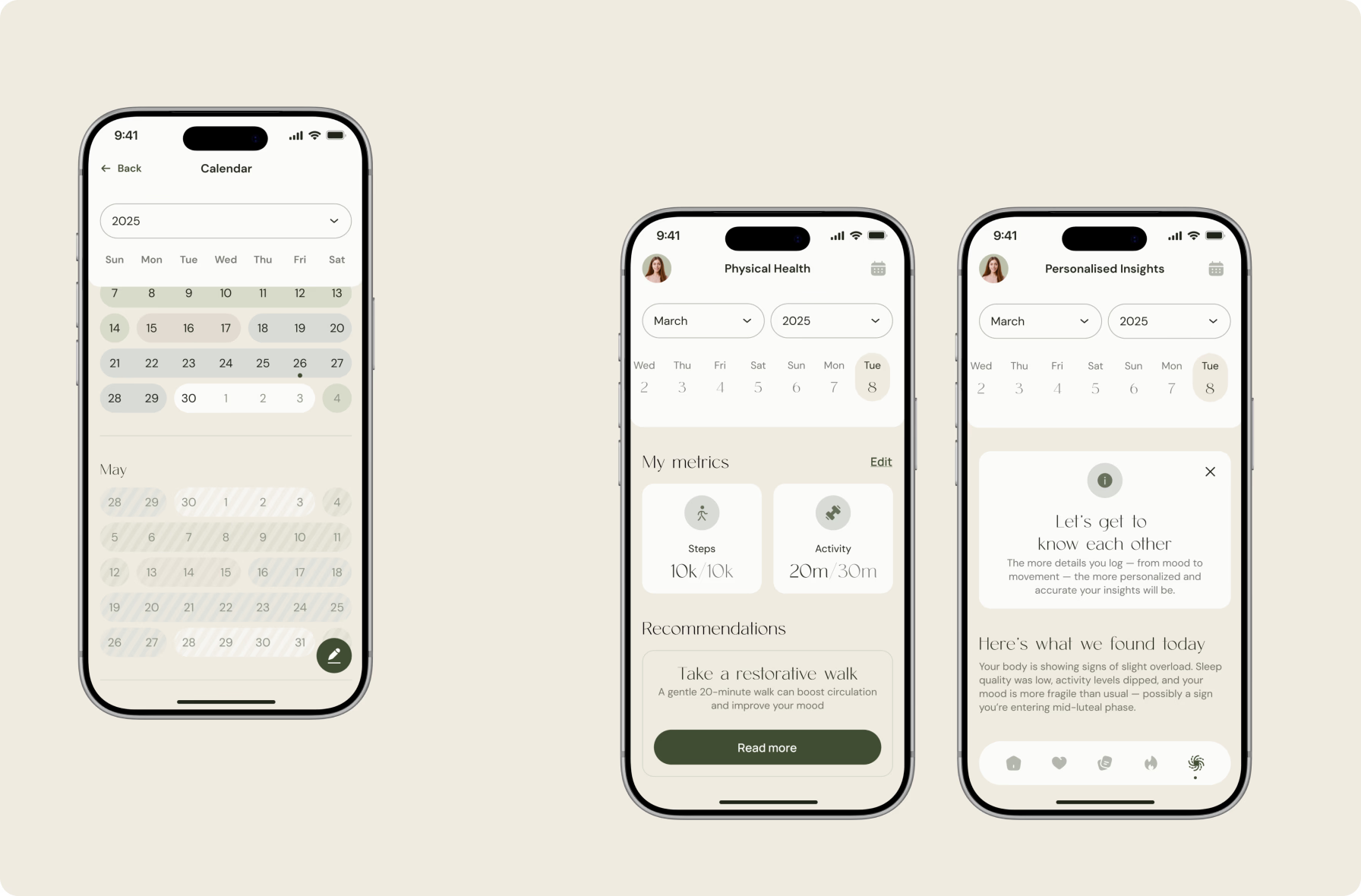
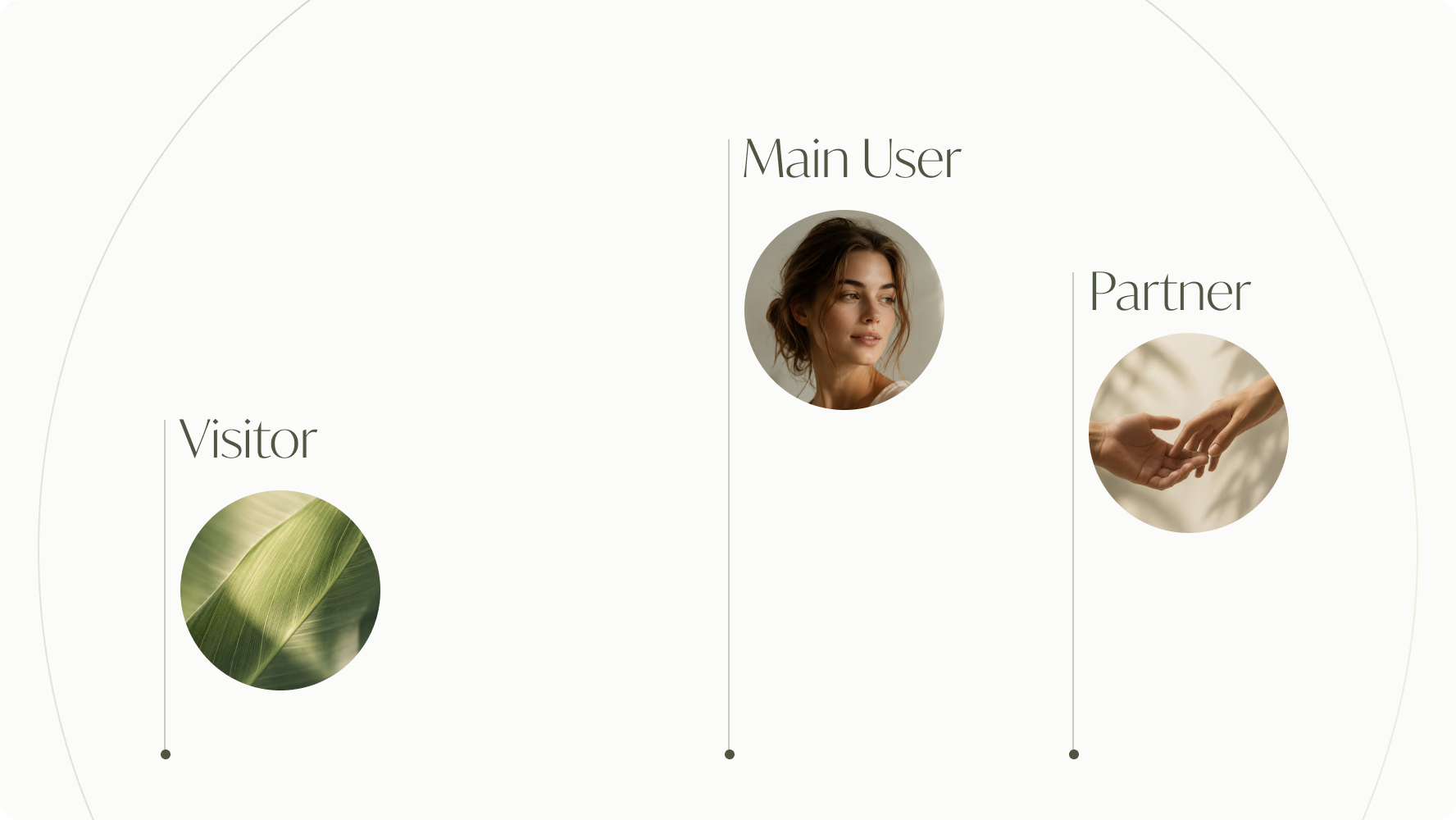
We designed flows for three user roles (main user, partner, visitor), covering onboarding, cycle logging, AI insights, partner management, and subscription states. Every interaction was shaped for minimal daily effort and quick access.
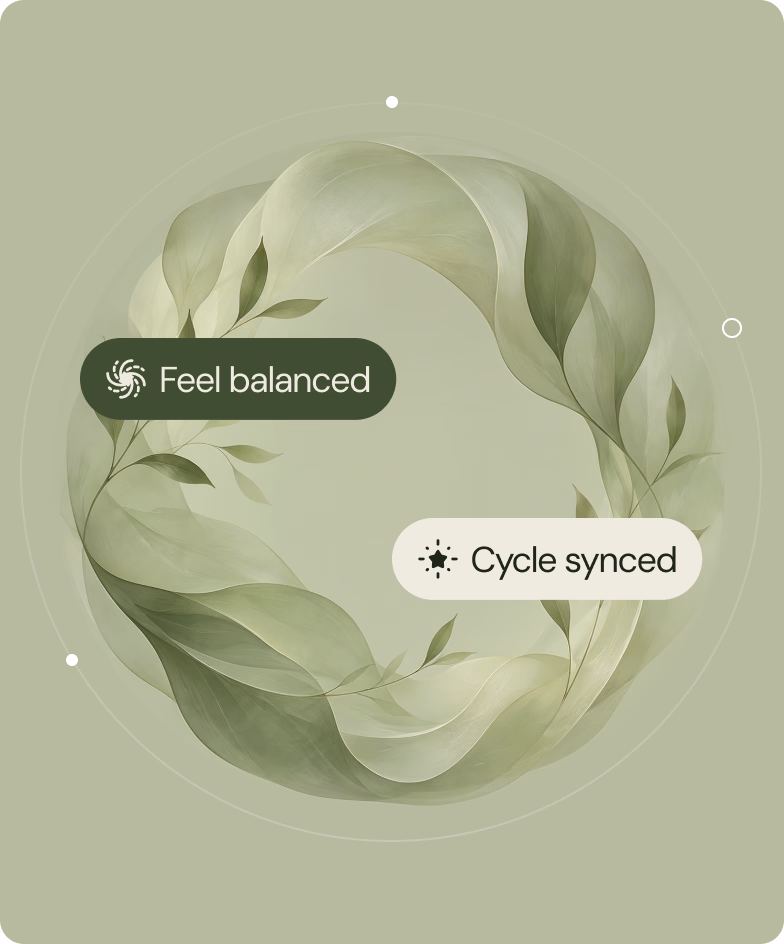
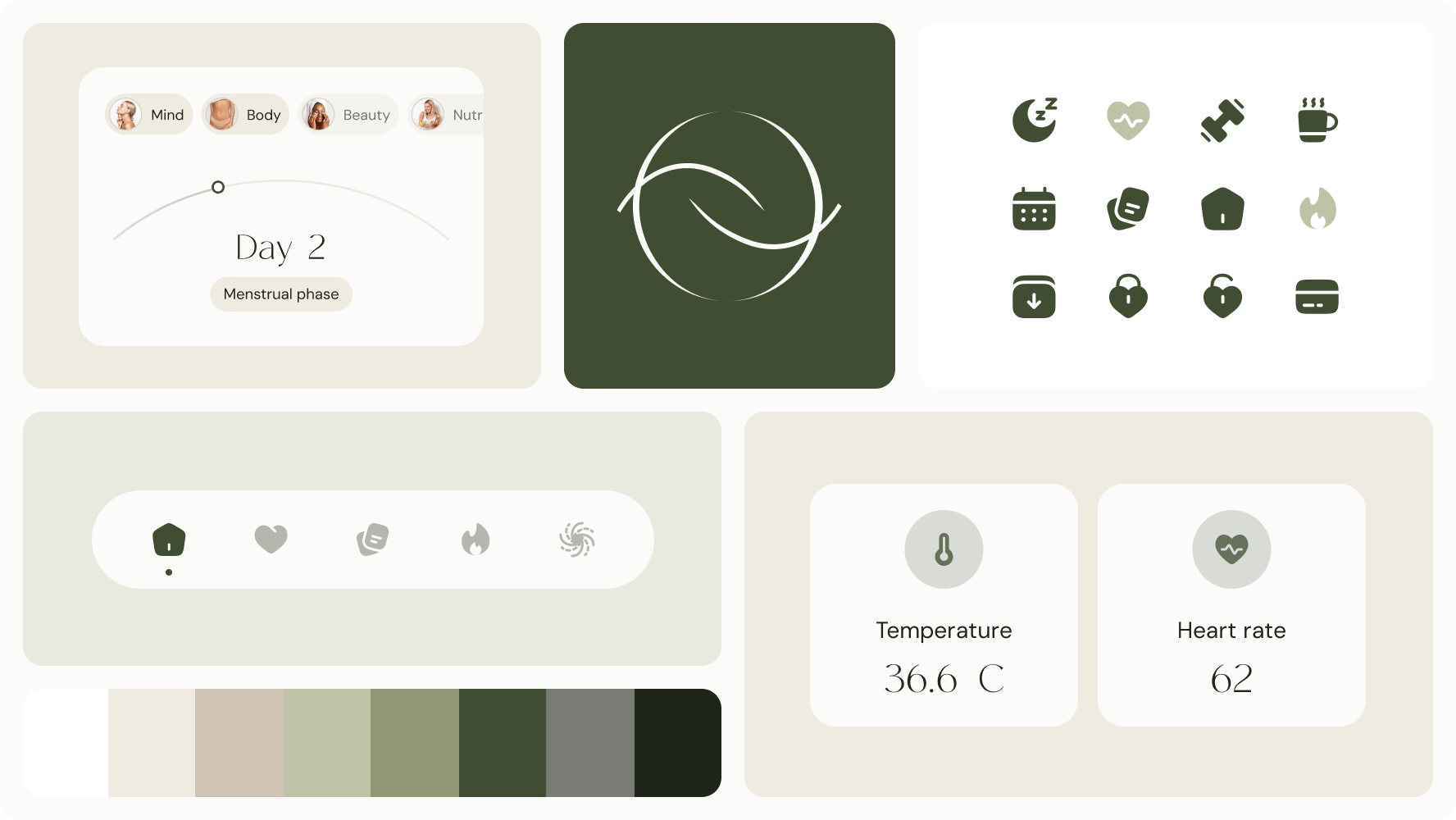
Building on the client’s brand guidelines, we developed a full design system: consistent tokens, components, and patterns across screens. A phase-progress arc on the dashboard echoes the logo form, tying brand identity to the core UI.
We built the app in React Native and Expo, working in sprints across five modules: cycle calendar, daily logging, dashboard, physical health, and mental health. Weekly demos kept the scope aligned as the product grew beyond its original MVP.
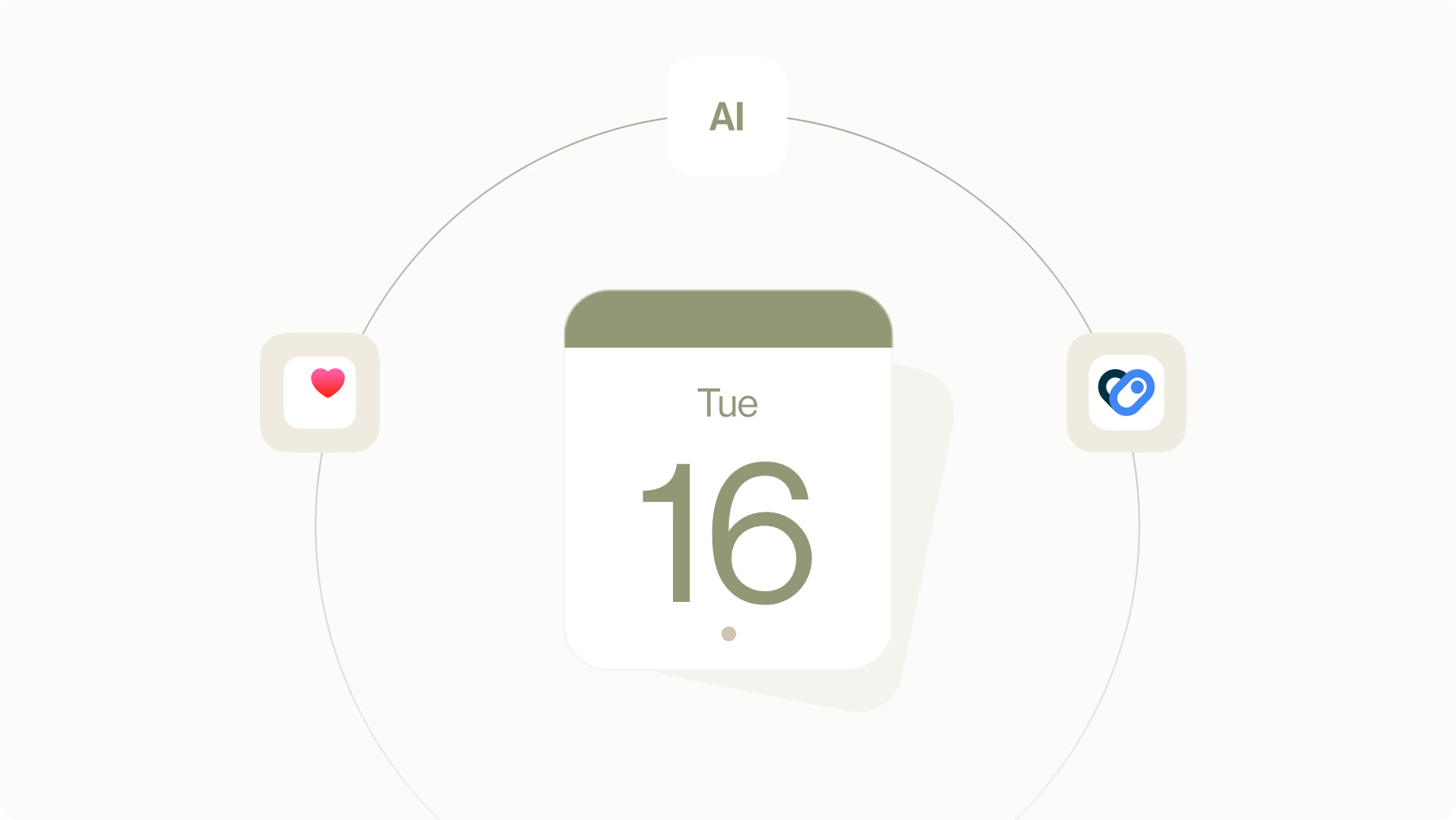
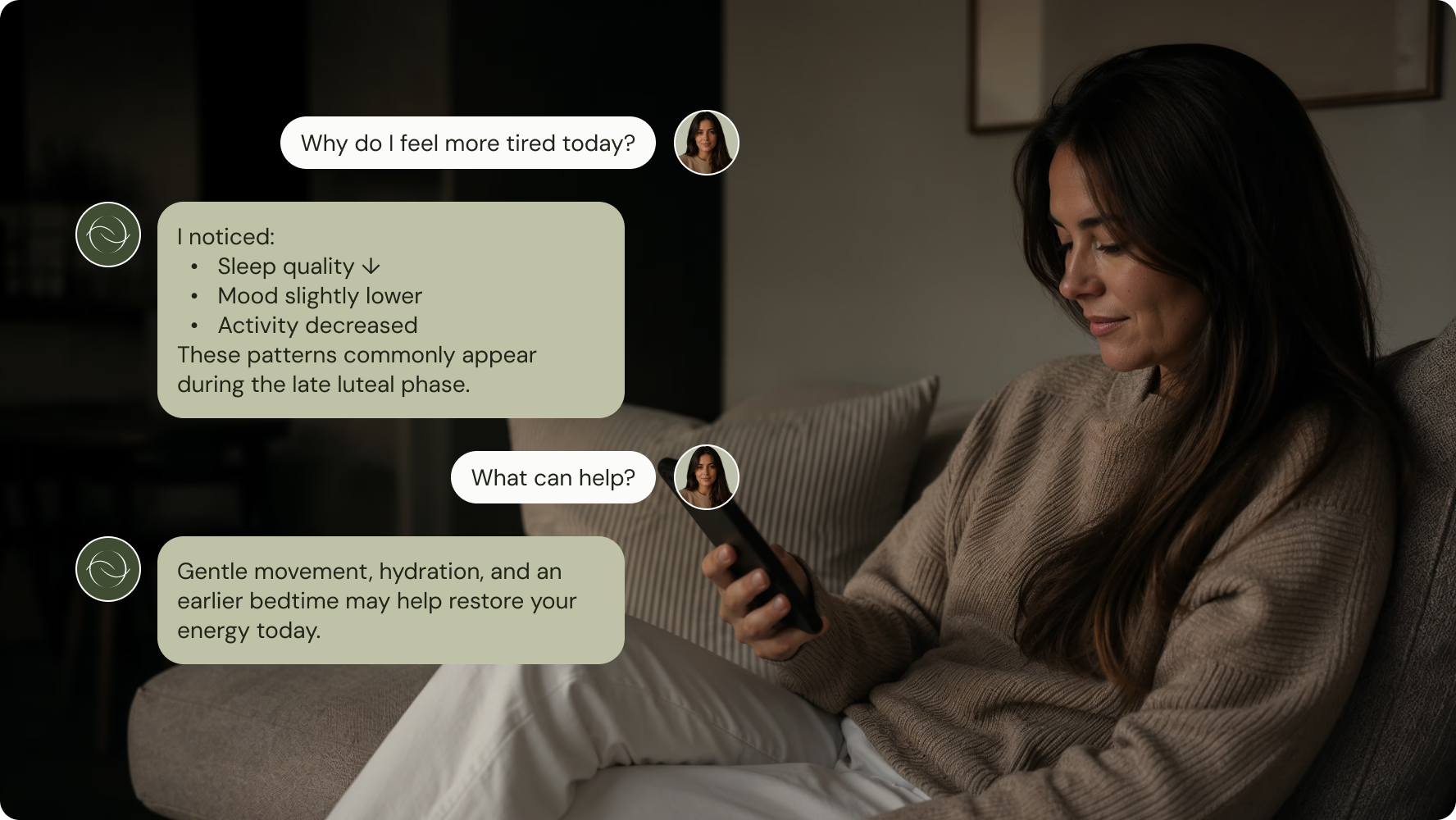
The cycle calendar was the app’s most complex challenge — every edge case was mapped and validated with the client before implementation. We then integrated an LLM for daily insights, adding Apple Health and Google Health Connect sync.
Our team built a custom admin panel using AI-assisted scaffolding for the UI and a Supabase Realtime backend to handle multi-admin editing without conflicts. The client gained direct control over AI content, audio, tags, and user permissions.
We tested across iOS and Android on real devices and in emulators, covering functional, UX/UI, exploratory, offline and integration layers. Edge cases included AI health data, partner sharing across time zones, and Health platform integration.
Submitting builds early during development let us absorb marketplace feedback before the final release. Android compliance for AI health apps required close attention — health data handling and AI functionality reviewed at each submission.