




Fintech UX design starts with trust — every interface decision either building or eroding a user’s confidence before they commit money, share financial data, or complete a regulated action.
Halo Lab designs fintech products with trust as the primary design constraint — KYC and onboarding flows that don’t drop off, dashboards that surface the right financial data at the right time, and compliance-aware interaction patterns that meet regulatory requirements without creating friction.


Your company has grown, but the brand no longer reflects scale or direction.
Your company has grown, but the brand no longer reflects scale or direction.
Your company has grown, but the brand no longer reflects scale or direction.
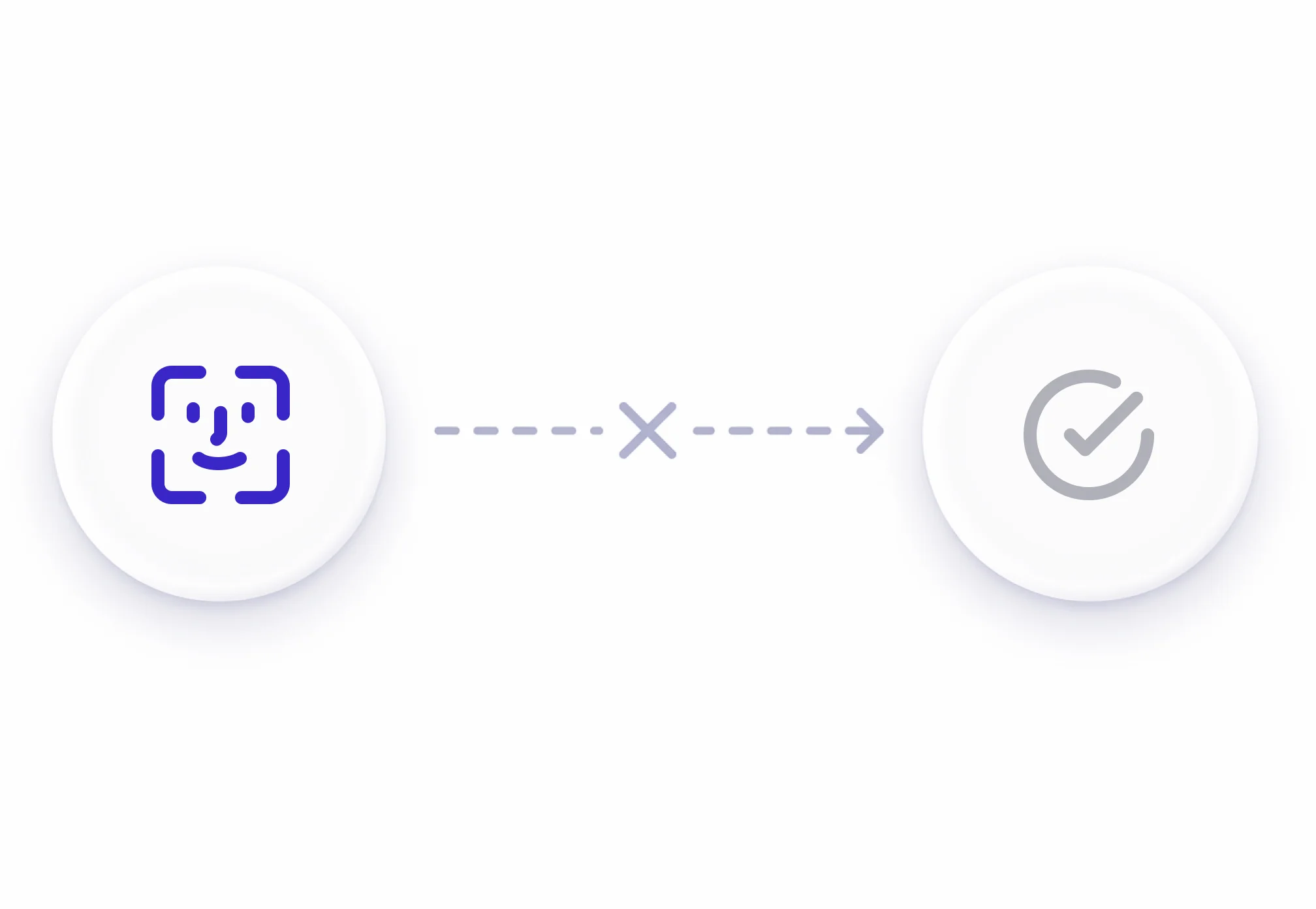
Identity verification designed without UX — users abandon before account is active.
Generic design undermines financial credibility — users hesitate before transacting.

Transaction histories and portfolio views designed without hierarchy — confusing.

“All projects in which we’ve involved Halo Lab have been great successes, but their leadership on our brand refresh is worth highlighting.”

“We’ve had feedback from users, investors, and employees, and everyone has said that Halo Lab did a fantastic job with the branding.”

“We’re proud of their branding services. They not only do what we tell them but also make suggestions to help us improve our offerings.”

What we deliver
Identity verification and account setup flows designed for completion — trust built at every step.
Portfolio, account, and transaction dashboards — data hierarchy designed for clarity at a glance.
Send, receive, and checkout flows — friction removed and trust signals placed at every step.
Security indicators, verification states, and confirmation patterns — confidence built into every screen.
Regulatory disclosures, consent flows, and data permission patterns — compliant without being clunky.
Mobile-first banking and investment interfaces — fast access, biometric auth, and notification design.
Component library and design system — financial UI patterns, tokens, and documentation for your stack.
Annotated Figma files, interaction specs, and compliance notes ready for your engineering team.


How we work

Start with a strategy call where we align on your goals, challenges, and priorities, and set a clear direction for the entire branding process.
3–4 Days
Research & analysis

We map the trust-critical moments in your product — every transaction, verification, or financial commitment where confidence must be earned.
.webp)
We structure KYC, onboarding, core product, and payment flows — compliance requirements and UX constraints mapped before any design begins.
.webp)
We wireframe critical financial flows — KYC, payment, and dashboard — validated before full visual design begins.
.webp)
We design every screen with trust and compliance as the primary constraints — and build the component library alongside each feature.
.webp)
Annotated Figma files, compliance interaction notes, and component documentation — your engineering team builds without ambiguity.
Start with a strategy call where we align on your goals, challenges, and priorities, and set a clear direction for the entire branding process.
3–4 Days
Research & analysis
Industries we serve

UX/UI design for hospitals, clinics, and health systems.

UX/UI design for banks, insurance firms, and financial platforms.

UX/UI design for logistics, transport, and supply chain companies.

UX/UI design for property developers, agents, and management firms.

UX/UI design for schools, universities, and e-learning platforms.

UX/UI design for Web3 startups and blockchain-based products.

UX/UI design for wellness brands, gyms, and fitness studios.

UX/UI design for tech companies, software products, and platforms.

120+ experts and 500+ projects provide insights into solutions that fit the market.

Projects start with research, positioning, and clear goals for data-driven decisions.
No templates or generic patterns — only custom design shaped for your objectives.
We turn complex ideas into clear, scalable designs for SaaS, B2B, and tech companies.

Structured communication and transparent workflows keep you aligned at every step.

Clear pricing and adaptable scopes help you stay on budget and ensure top quality.
“Halo Lab is very organized in planning to achieve the goals within the set deadlines. We feel they were part of our internal team project.”

“Their experts have a very diverse range of skills and always find a solution to exposed issues. The communication process was clear.”

“During the collaboration, Halo Lab prioritized our people, always taking into account our input and ideas and giving all team members a voice.”

“The Halo Lab team unified branding across our patients’ app, showcasing professionalism, convenience, and consistency.”

“Halo recreated our existing portal with a modern and beautiful experience, greatly increasing usability and delight for the end user.”

“Halo Lab is brilliant. We were impressed with their timely delivery, cost-effectiveness, and the people who knew what they were doing!”

“The value we get from Halo Lab and their quality designs sets them apart from others. They are the right mix of price, talent, and style.”

“We gave the Halo Lab team a chance, and we immediately knew they were the ones we wanted to work with.”

“The Halo Lab work pleasantly surprised us, and bringing in their professional design team has been a worthy investment for us.”

“When collaborating with Halo Lab, we felt that communication was straightforward and that the deliverables fit what we expected.”

“Halo Lab has helped us with a rebrand and defined a new name, logo, and color palette. We’ve had a great experience working with them.”


12 years
We’ve built one of the most trusted agencies
150+
Specialists in design, engineering & product management
78%
Returning clients in Europe & North America

KYC and onboarding flow design, financial dashboard design, payment flows, trust signal and compliance UX patterns, mobile banking interfaces, a fintech design system, and an annotated engineering handoff.
Yes. KYC flows are designed as dedicated UX problems — document upload, facial recognition prompts, verification status states, and rejection recovery flows all designed to maximise completion without cutting corners on the required compliance steps.
Regulatory disclosures, consent checkpoints, and data permission patterns are designed into the flow — not bolted on at the end. Compliance and UX are treated as co-constraints, not competing priorities.
Yes. Most fintech products require both — mobile-first for consumer-facing flows (banking, payments, investment) and web-first for B2B and dashboard-heavy products. Both are designed and specified in the same engagement.
Most fintech design engagements take 8 to 16 weeks from discovery to engineering handoff, depending on the number of product flows, compliance requirements, and whether a full design system is in scope.
Yes. Portfolio views, account summaries, transaction histories, and analytics dashboards are designed with financial information hierarchy as the primary constraint — data at a glance, detail on demand.
Yes. A component library with financial UI patterns — transaction states, balance displays, chart components, status badges, and input validation — is a standard deliverable on every fintech design engagement.
Yes. Fintech redesigns are common — we audit the existing product against trust signals, conversion flow friction, and compliance gaps, then redesign with clear improvement goals defined before any visual work begins.
Yes. Full-stack development is available following the design engagement — one team handling design and engineering so the financial UI patterns in Figma map directly to the production codebase.
.webp)