




A design and development agency that has been building brands, websites, and digital products for 13 years. Our 120+ specialists have proven expertise in SaaS, fintech, and healthcare and work with companies at every stage of growth.
Three things, mostly. Strategy, design, and engineering sit in one team, so nothing gets lost between vendors. Every project is custom, with no templates. And clients tend to stay: 78% of our clients in Europe and North America come back for more work.
Our core services are branding, UI/UX and product design, websites, and web and mobile development. We also offer product discovery, MVP builds, design systems, UX audits, CMS, cloud, API, and AI integration, plus dedicated teams for longer engagements.
Our clients range from startups preparing for their first launch to scale-ups entering new markets and established companies whose brand or product no longer reflects where they’re headed.
Anything from a UX audit or a single landing page to a brand, website, and an end-to-end product. Some clients bring us one task; others keep a dedicated team with us for the long term.
Our experience spans healthcare, fintech, education, transportation and logistics, Web3, AI and machine learning, real estate, and SaaS. We’ve built 500+ digital products across several of these sectors, including 100+ health and wellness projects.
We do. Our offices are in Boston and Warsaw, and we work with companies across North America, Europe, the Middle East, and Australia.
Our projects page holds published case studies, each describing the challenge, what we did, and the outcome. For independent feedback, see our 4.9 rating on Clutch, based on 100+ client reviews.
We’re a design and technology agency bringing together product design, software development, and AI expertise. Our designers and researchers cover product strategy, UX/UI design, branding, and visual identity. Meanwhile, our development teams build web and mobile applications, backend systems, and custom software, supported by QA specialists and project managers. We also integrate AI workflows into our processes and develop our own AI products to support teams and improve how they work.
Fill in the contact form or email inquiry@halo-lab.com. We reply within 24 hours and set up an introductory call. Once the scope and timeline are agreed, work can usually begin within 3–7 business days.
Discovery comes first, followed by design, development, and testing, with a review that closes each stage before the next begins. The exact workflow depends on the service. A branding project, for example, moves from workshops to guidelines in five stages.
A UX audit takes about two weeks, a product discovery sprint one to two, a brand identity around eight weeks, and an MVP about five to seven weeks. Larger builds take longer, and we confirm the schedule after our introductory call.
A project manager is your main point of contact and keeps decisions moving. They bring in the designers and engineers on your project whenever a decision needs them.
We review the work together at the end of each stage and agree on any changes before moving forward. This makes revisions easier to manage and avoids costly changes later. To keep things moving, we ask clients to bring their feedback together in one set of comments per review.
We plan for it. Work runs in short sprints, so features can be reprioritized, flows adjusted, or items moved to a later release. If a change affects the budget or timeline, you hear about it before anything happens.
Yes, and it is often the safer route. A website can launch with its key pages first, and a product can start as an MVP before the full build. Our specialists outline milestones and estimates for each phase.
Absolutely. Our specialists can join your tools and rituals as an extension of your team, or deliver documented designs your developers build from. Many clients keep their own designers or engineers and bring us in for specific skills.
We can. This process begins with reviewing what is already there, including code, designs, and documentation, then we agree on what to keep and what to fix.
That depends on what you need. A logo refresh costs far less than a multi-platform product with integrations. For a quick figure, try our pricing calculator. If you need a more detailed quote, we can provide it after an introductory call.
Both. Well-defined work, such as a logo or a landing page, suits a fixed price. Evolving products usually run on time and materials or with a dedicated team billed monthly.
The budget options in our contact form start at $10,000–20,000, a realistic range for a focused first project. Larger engagements grow with the scope.
It helps to know what you’re looking to build, who it’s for, which platforms you have in mind, and what features or integrations you’ll need. Your expected timeline and budget are useful, too. If you already have a brief, designs, or examples of products you like, feel free to share them.
Four drive most of it: the number of platforms, the complexity of the functionality, how many features or pages you need, and how custom the design must be. Integrations and tight deadlines add to it too.
Yes. Tell us the budget up front, and we will suggest what fits: core features first, extras for later phases. This is how MVP scopes are usually set.
Every estimate breaks the work into milestones and deliverables, so you can see what each part costs. You approve a financial plan before work starts, and any change comes with a revised cost for your approval.
Not usually. You pay for fonts, stock assets, plugins, CMS plans, and hosting directly, so the accounts stay in your name. We list them in the estimate so they never come as a surprise.
Treat it as an ongoing line rather than a one-off. After launch, we handle bug fixes, performance improvements, small updates, and further optimization, either on request or with a team that stays on after release.
Not a precise one. Early on, you get a range based on what is known. During a short discovery phase, we clarify assumptions, agree on requirements, and refine the estimate.
Revisions within an agreed stage are part of the plan. Changes that reopen approved work or add new pages and features are estimated separately, and we confirm them with you first.
We don’t have a standard price list, and each estimate depends on your scope, features, platforms, and how much custom design the project needs.
At Halo Lab, billing follows the type of work. Design and development projects are paid per milestone, with each payment tied to a specific deliverable. Branding projects have a fixed cost set upfront, while dedicated teams are billed monthly. We can lead the whole build, add specialists to your team, or deliver a defined scope. After a short discovery call, our specialists will recommend the best fit and send a tailored estimate.
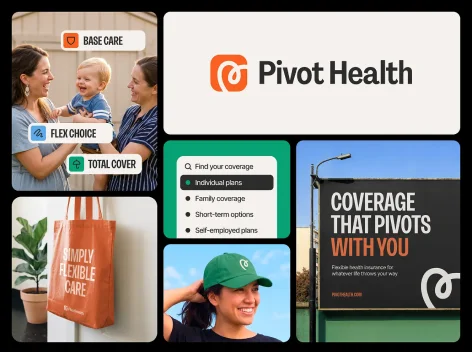
Our branding services cover brand strategy, visual identity, and brand implementation. This includes defining your positioning, audience, and messaging; developing a name, logo, typography, color palette, imagery, and tone of voice; and creating brand guidelines. We can also apply the new identity across your website, product, and sales materials.
A kickoff call and access to the people who make decisions. Anything you already have helps: current logo files, guidelines, presentations, customer research, and a sense of where the business is heading.
Yes, as a standalone project. We can design a new logo or refine your current one. It works best when your positioning is already clear, since the logo has to express it.
Around eight weeks from the first workshop to a launch-ready brand system. Naming or several markets extend that, while a focused refresh can be quicker.
Ask whether your positioning still holds. If it does and only the look feels dated, a refresh is enough. If your audience, offer, or market has changed, you likely need a full rebrand, and discovery will confirm which.
Yes. Every full identity project ends with guidelines. They show how to use the logo, colors, typography, imagery, and tone of voice, with real examples, so your team and partners apply the brand consistently.
Yes. Our branding, web, and product teams work together, and we test the identity on real web pages and app screens before finalizing it. Product screens need extra rules for contrast, states, and components, though.
We show two or three creative directions, each tied back to the strategy. You choose one, we refine it with your comments, and the full identity is built on it.
Of course. We can extend your current identity to new channels, fill gaps in the guidelines, or adapt it for a digital product, keeping what customers already recognize.
The logo in every version and format, color and typography specs, brand guidelines, and editable source files. Depending on the project, you may also get presentation and social media templates, icons, illustrations, and a brand kit.
Our web design services cover strategy, structure, design, build, and launch. We define goals, audiences, and page structure, create wireframes, and design a responsive UI for every screen size. Our team then builds the site, connects it to your content and business tools, tests it, and supports it after launch.
Yes. We work from your existing brand guidelines and assets, including colors, fonts, and tone of voice, and apply them consistently across every page type. If your brand doesn’t yet cover everything a website needs, our team can define a basic visual language or evolve your identity during the design process.
Yes. Our branding and web teams work together, so the new identity is applied directly to your site. We scope the website as its own phase after the identity is approved. This way, the brand is settled before any pages are designed, and the site launches with the same identity as the rest of your brand.
Of course. A redesign starts with an audit of your current site’s UX, content, performance, analytics, and search visibility to decide what to keep and what to fix first. Useful content can be carried over, redirects are tested before launch, and the work can run in stages, so your site stays live during the transition.
Planning is the first step of our process. We align your business goals, audiences, content, and features into a page architecture, then create wireframes for layouts, content hierarchy, and key interactions before visual design starts. You can come to us even without a clear site structure in mind.
We start with a call about your goals, audience, and budget. After that, it helps to share your brand assets and guidelines, any existing content, and the tools you use, such as your CRM or analytics, so our team can plan integrations.
No. If you already have copy, it goes straight into the design. If not, we can clarify your messaging, write or refine the text, and organize content around the questions your visitors ask. Writing runs alongside design, with layouts built around real content rather than placeholder text.
Yes. We design responsive websites that adapt their layouts to desktop, tablet, and mobile screens. One design covers all of these sizes, without a separate mobile version. Before launch, our QA team checks how each page behaves on different screens, along with content, forms, and tracking.
Yes. We are a Pro Partner for Webflow, Prismic, and Sanity and also work with WordPress, Strapi, Contentful, and custom-built systems, adapting the approach to your existing setup. New pages are connected to the CMS, letting your team update text, images, and blog posts without a developer.
Yes. Accessibility is part of how we design websites: layouts follow WCAG standards and are checked in QA before launch. For a deeper review, you can also order an accessibility audit against WCAG 2.2, targeting Level AA by default and covering color contrast, keyboard and focus states, and screen reader support.
Yes. Our in-house design and development teams work together at every stage. We build websites in Webflow or WordPress, or as headless setups on Prismic or Sanity with frameworks like Next.js and React, depending on your content and integration needs.
SEO is part of our planning stage, with a clean page structure, editable metadata, and fast-loading pages. In redesigns, redirects and structured content are also handled to help protect existing rankings. After launch, our team can stay on for SEO and analytics.
Yes. We adapt your existing identity into product foundations, making your colors, typography, and visual style work across interfaces, states, and components. Any changes made along the way are documented, and a shared design system keeps the brand consistent in both design files and code as new features are added.
Yes. You don’t need a full engagement to work with us. An audit, a redesign, or a design system can be taken on its own, and smaller projects can focus on specific features or user flows. We agree on the scope with you first and then focus the work on the problem your product needs to solve.
A UX audit is useful if engagement, conversion, retention, or feature adoption is below expectations; key flows confuse users; or new features add inconsistent patterns. You get a report that ranks findings by impact, with each fix linked to the friction it addresses and the outcome it should improve.
Absolutely. In discovery, we align business goals, audience needs, risks, and success criteria, then narrow the MVP down to the features that matter most. Our team maps core user journeys and tests an interactive prototype with real users, which reduces costly uncertainty before any code is written.
Yes. We build design systems with components, tokens, and guidelines that keep your product consistent as new features and screens are added. It can be part of a full product design project or a separate service, and it comes with documentation your designers and developers can work from on their own.
Yes. Our team starts with wireframes to test the structure, then creates clickable prototypes for real users to validate key flows early. Feedback from these tests helps decide what to build, cut, or postpone, and your engineering team starts work with flows that have already been tested.
Yes. We redesign SaaS platforms, web apps, and mobile products with dated UX, broken flows from new features, or rising churn. The work covers research, design, prototyping, and testing, in close collaboration with your development team. A comprehensive redesign takes about six weeks, depending on scope.
Yes, not every product needs a full redesign. We can target one feature or journey at a time. An audit is a good start: it shows where users get stuck and which fixes to make first, so the work goes where it matters most.
Your developers receive Figma files with reusable components, UI states, responsive layouts, and specifications they need to implement the designs. Interactive prototypes and design system documentation help clarify how the interface should work. We also stay involved during development, reviewing builds and resolving design questions as they come up.
We measure success with post-launch metrics: engagement, retention, task completion rate, user satisfaction, and feature adoption. We can track these after launch, run further usability tests, and collect user feedback to show what changed.
Both, in one process. UX covers research, structure, user flows, and usability, while UI covers the visual language, interactions, and screen design. We handle both, covering discovery, wireframes, prototypes, UI design, and a design system, so the logic behind each screen and its interface are developed together.
Yes. Our design and engineering teams work together through discovery, build, and post-launch support. Websites, web apps, SaaS platforms, and mobile apps are all in scope, with one team responsible for the result.
Tell us what the product should do, who will use it, and what budget range you have in mind. Designs, a codebase, or tools it must connect to also help. In a short discovery phase, we clarify user needs, requirements, constraints, and technical feasibility, then define the scope, timeline, and budget before development begins.
Yes. We can build the frontend from designs prepared by another team. Developers match components to the Figma specs, implement design tokens in code, and follow any motion specs provided for interactions. Architecture and the API contract are agreed before the build starts, and the interface is developed against your approved files.
Our core stack includes React, Next.js, Vue, and React Native on the frontend, Node.js, NestJS, and Python on the backend, PostgreSQL and MongoDB for data, REST and GraphQL APIs, and AWS or GCP for infrastructure. We also build on Webflow, Sanity, and Prismic, and choose the exact stack to fit your requirements.
Yes. We first review the codebase, covering architecture, dependencies, test coverage gaps, and risk areas. Based on the findings, we agree on next steps with your team, add missing tests, and document the system. A full rewrite is considered only when the code can’t be improved safely in parts.
Yes. We begin with a codebase audit and agree on a target architecture with your engineers. Migration then happens module by module, each with automated tests and a rollback path, and the product can stay live along the way. Where needed, the work also covers framework upgrades, database migration, and CI/CD setup.
Yes. We connect websites and applications to CRMs, analytics, payments, authentication, and communication tools, including HubSpot, Salesforce, Google Analytics, Stripe, Auth0, and Twilio. Integration requirements are assessed during planning, and each connection is tested before launch, including error handling.
We write unit, integration, and end-to-end tests while features are being built, and CI runs them on every pull request before code is merged. Ahead of release, QA engineers check the product manually across browsers and devices, run regression and performance checks, and validate everything on staging.
Our engineers follow secure coding practices, encrypt data in transfer, set up role-based access, keep dependencies updated, and test regularly. For products in regulated fields such as healthcare, we design the architecture with requirements like HIPAA in mind.
Before the first production release, we set up CI/CD pipelines, environments, cloud infrastructure, monitoring, and alerting. User flows, performance, responsiveness, security, and integrations are then checked on staging. Once the product is live, our team tracks performance and supports further optimization.
Yes, the code is yours. At handoff, you receive it with architecture documentation, API references, and runbooks, plus a walkthrough of the system. This way, your engineers can maintain and extend the product on their own, without having to reverse-engineer how it works.
After launch, we offer ongoing development retainers covering new features, bug fixes, performance improvements, and platform evolution, so your product stays stable as new releases go out.
Did you mean ?
Try , , or .