




Every legacy modernisation project at Halo Lab starts with an audit — mapping the existing codebase, identifying what can be migrated incrementally, and defining a target architecture before a single line is rewritten.
We modernise legacy systems without stopping product delivery — replacing outdated frameworks, migrating databases, introducing automated testing, and handing your engineering team a codebase they can hire for and maintain.


No test coverage — every release risks breaking something already working.
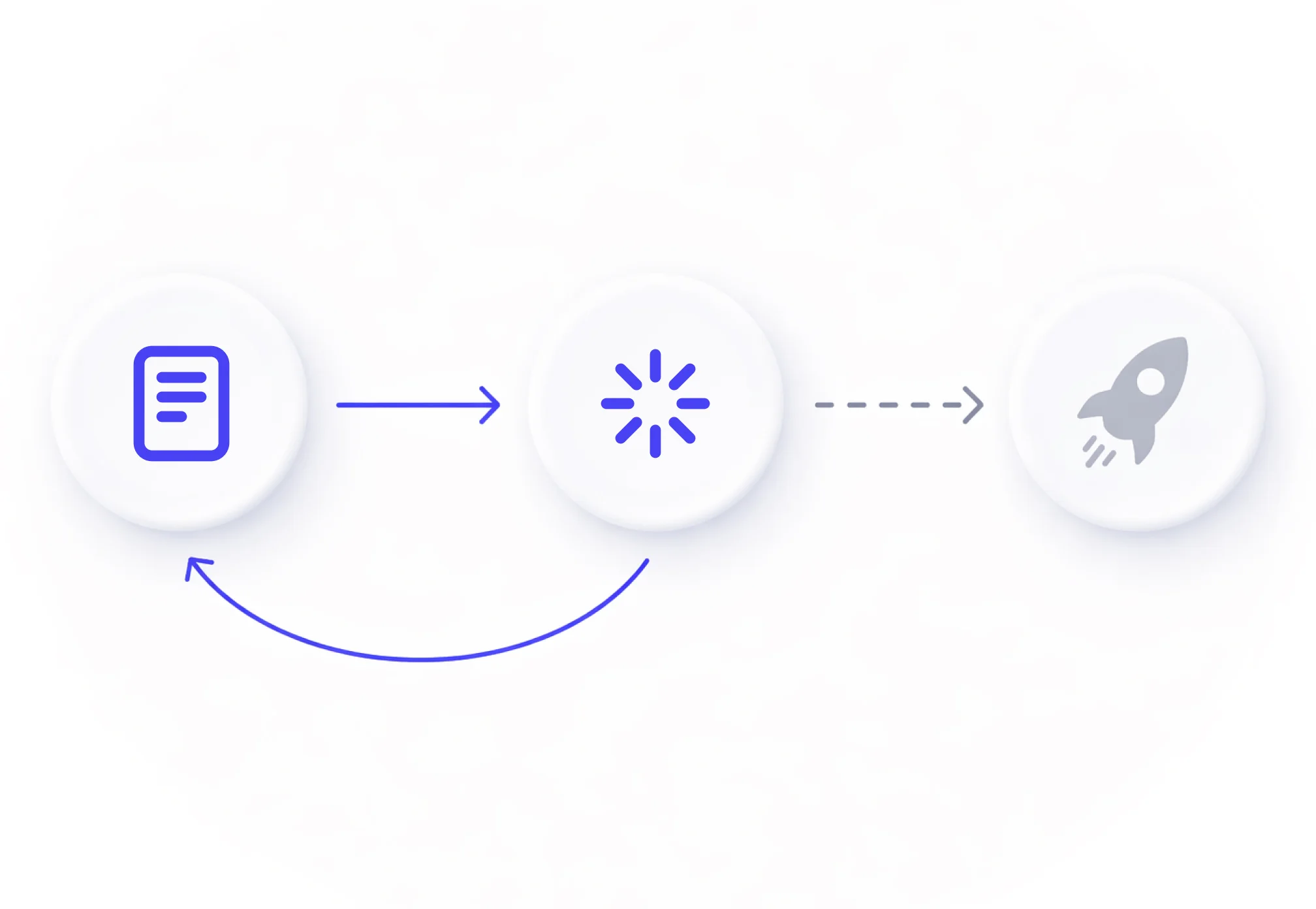
Engineers avoid legacy stacks — every hire takes longer and costs more.
No docs, no tests — new engineers take months to understand the codebase.
What we deliver
Existing system mapped — architecture, dependencies, risk areas, and migration path documented.
Modern target stack defined — framework, data layer, and service structure agreed before migration.
System migrated module by module — product stays live and shippable throughout the migration process.
Outdated frameworks replaced — modern equivalents implemented with existing functionality preserved.
Database schema modernised and data migrated — zero-downtime strategy planned and executed.
Automated test suite introduced — unit, integration, and regression tests covering the migrated code.
Deployment pipeline configured — automated builds, tests, and deployments replace manual processes.
Architecture documentation, runbooks, and structured handoff for your engineering team to own.


How we work


We map the existing system — architecture, dependencies, test coverage gaps, and risk areas — before any modernisation work begins.

We define the target stack, module boundaries, migration sequence, and rollback strategy — agreed with your engineering team before migration starts.

We migrate the system module by module — replacing frameworks, migrating data, and introducing test coverage sprint by sprint without stopping delivery.

Every migrated module is covered with automated tests and validated against the legacy system before it replaces the original in production.

We deliver architecture documentation, runbooks, and a structured handoff — your team owns and extends the modernised codebase from day one.
Industries we serve


Legacy modernisation for clinical platforms — HIPAA-compliant target architecture and zero-downtime migration.

Legacy modernisation for fintech — compliance-aware migration, secure data handling, and audit trail preserved.

Legacy modernisation for fleet and ops — real-time systems migrated without disrupting live operations.
Legacy modernisation for property platforms — outdated CMS and backend replaced without data loss.

Legacy modernisation for EdTech — LMS and content platforms migrated to modern, maintainable stacks.

Legacy modernisation for Web3 — smart contract wrappers and backend services migrated to modern APIs.

Legacy modernisation for health platforms — outdated app backends migrated to scalable modern stacks.
Legacy modernisation for SaaS and enterprise — monoliths decomposed into maintainable service architectures.

120+ experts and 500+ projects provide insights into solutions that fit the market.

Projects start with research, positioning, and clear goals for data-driven decisions.
No templates or generic patterns — only custom design shaped for your objectives.
We turn complex ideas into clear, scalable designs for SaaS, B2B, and tech companies.

Structured communication and transparent workflows keep you aligned at every step.

Clear pricing and adaptable scopes help you stay on budget and ensure top quality.

“Halo Lab is very organized in planning to achieve the goals within the set deadlines. We feel they were part of our internal team project.”

“Their experts have a very diverse range of skills and always find a solution to exposed issues. The communication process was clear.”

“During the collaboration, Halo Lab prioritized our people, always taking into account our input and ideas and giving all team members a voice.”

“The Halo Lab team unified branding across our patients’ app, showcasing professionalism, convenience, and consistency.”

“Halo recreated our existing portal with a modern and beautiful experience, greatly increasing usability and delight for the end user.”

“Halo Lab is brilliant. We were impressed with their timely delivery, cost-effectiveness, and the people who knew what they were doing!”

“The value we get from Halo Lab and their quality designs sets them apart from others. They are the right mix of price, talent, and style.”

“We gave the Halo Lab team a chance, and we immediately knew they were the ones we wanted to work with.”

“The Halo Lab work pleasantly surprised us, and bringing in their professional design team has been a worthy investment for us.”

“When collaborating with Halo Lab, we felt that communication was straightforward and that the deliverables fit what we expected.”

“Halo Lab has helped us with a rebrand and defined a new name, logo, and color palette. We’ve had a great experience working with them.”


Since 2013
We’ve built one of the most trusted agencies
120+
Specialists in design, engineering & product management
78%
Returning clients in Europe & North America









Codebase audit, target architecture definition, incremental migration, framework upgrades, database migration, automated test coverage introduction, CI/CD setup, and engineering handoff.
No. We migrate incrementally — replacing modules one at a time while the product stays live and shippable. A full rewrite is only scoped when the existing system cannot be migrated safely in parts.
Yes. Incremental migration means the existing system continues to run in production while modules are replaced one at a time — with rollback paths defined before each migration step is executed.
Timeline depends on system complexity and the number of modules being migrated. Most projects run over 3 to 9 months in incremental sprints — we scope this in the audit phase.
We migrate from PHP, Ruby on Rails, jQuery monoliths, AngularJS, and older Node.js versions — to modern React, Next.js, Node.js, Python, and PostgreSQL stacks, aligned to your team and hiring needs.
Yes. Automated test coverage is introduced as part of migration — unit, integration, and regression tests written for every migrated module before it replaces the legacy version in production.
Yes. Automated build, test, and deployment pipelines are configured during migration — replacing manual deployments and giving your team a consistent, observable release process before handoff.
Yes. Architecture documentation, API references, and runbooks are delivered as part of the handoff — so your engineering team can maintain and extend the modernised codebase without tribal knowledge.
Yes. Ongoing development retainers are available after modernisation — covering feature development, further migration phases, and platform evolution on the new stack as your product grows.