




An ear-worn AI platform for real-time vital sign monitoring, bringing research-grade health sensing to everyday use
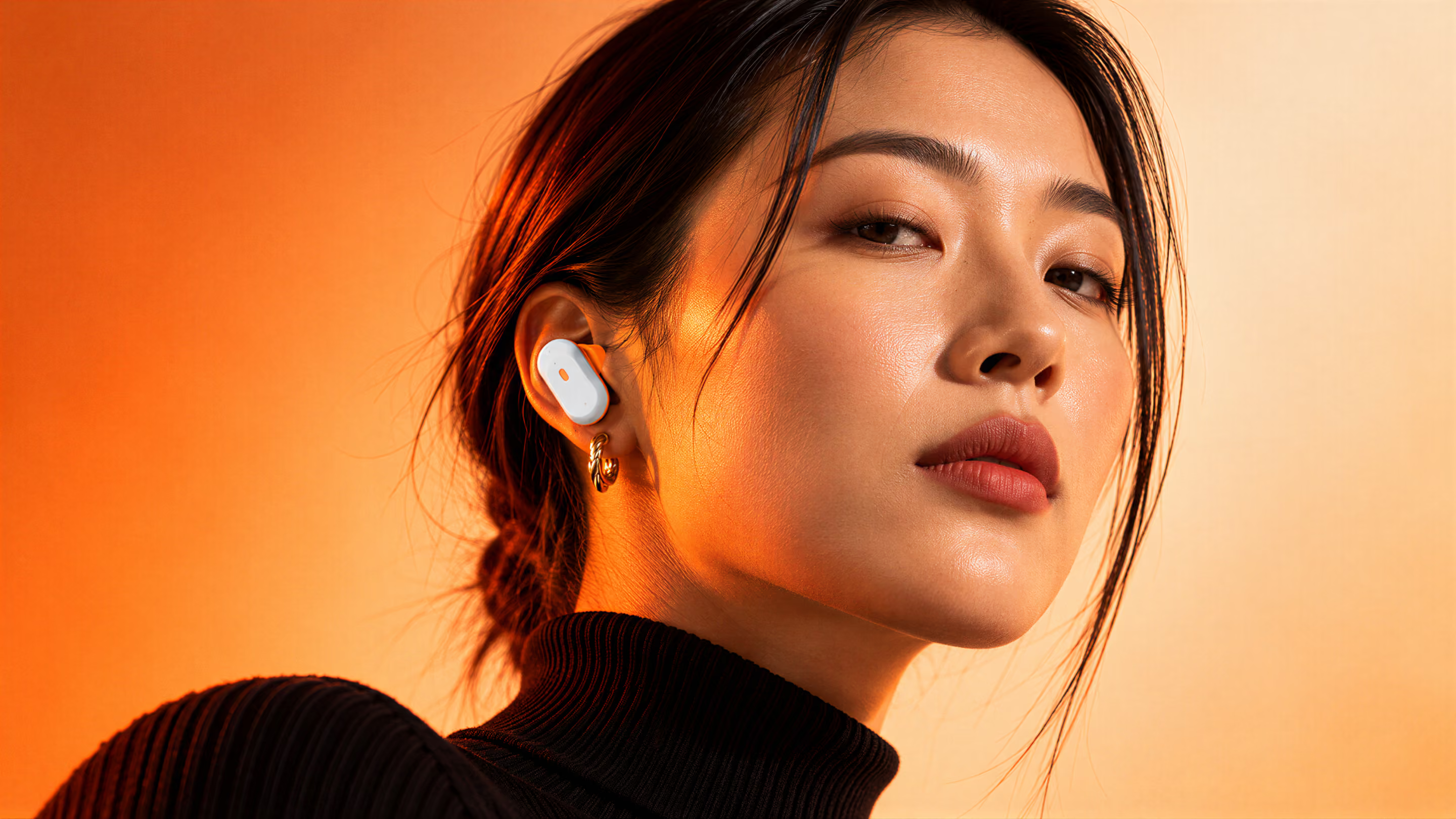
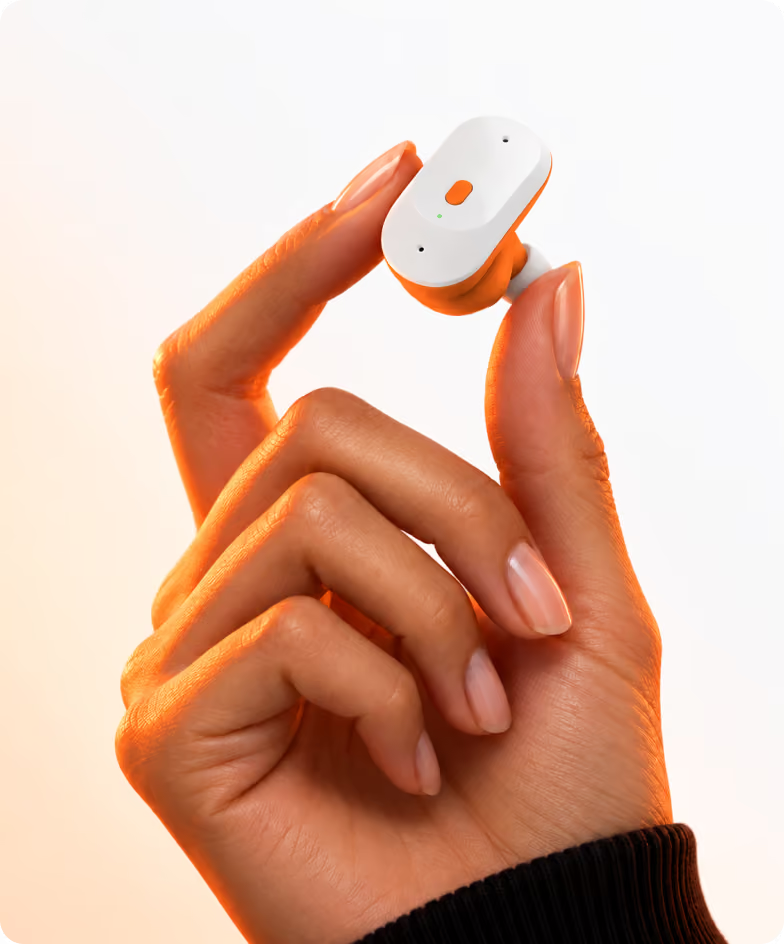
OmniBuds originated as a research initiative at Bell Labs, where the team developed the core technology behind the world’s first ear-worn AI/ML platform for real-time physiological monitoring. The ear is a deliberate choice, as it sits close to major arteries, which allows the earbuds to capture continuous, highly precise data.
The device integrates advanced biosensors with machine learning to capture and analyze vital signs, covering heart rate, respiration, oxygen saturation, temperature, and blood pressure. OmniBuds set out to bring its innovative ear-worn technology to healthcare, wellness, and fitness markets.
The client faced the challenge of establishing product credibility for its breakthrough hardware. Early app prototypes lacked clear flows, firmware changes slowed testing, and there was no digital presence for investors or partners. Our task was to bridge R&D with a clearer digital experience, making the technology easier to understand, test, and present.
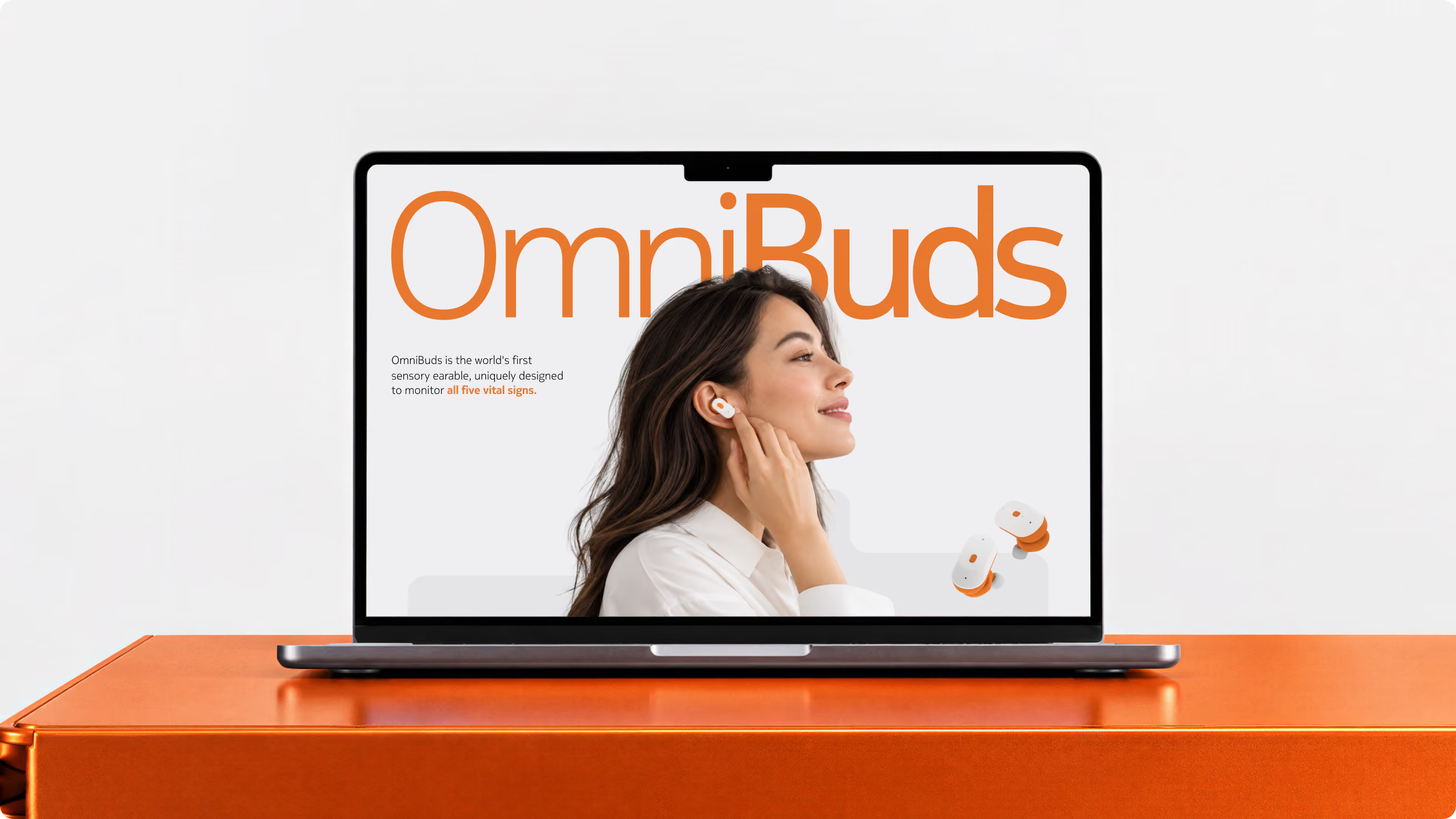
At every phase, we focused on developing a research-driven ear-worn AI/ML concept into a viable product through disciplined design and digital execution, supporting its market positioning with a website tailored to researchers, partners, and investors.
Because health-sensing earbuds were an emerging product category, we prioritized accessibility for everyday users while supporting the technical needs of researchers and hardware testers.
{{dropdowns-1}}
When the design was finalized, we built and tested the app against evolving earbud firmware, ensuring reliable hardware integration and keeping iOS and Android experiences aligned.
{{dropdowns-2}}
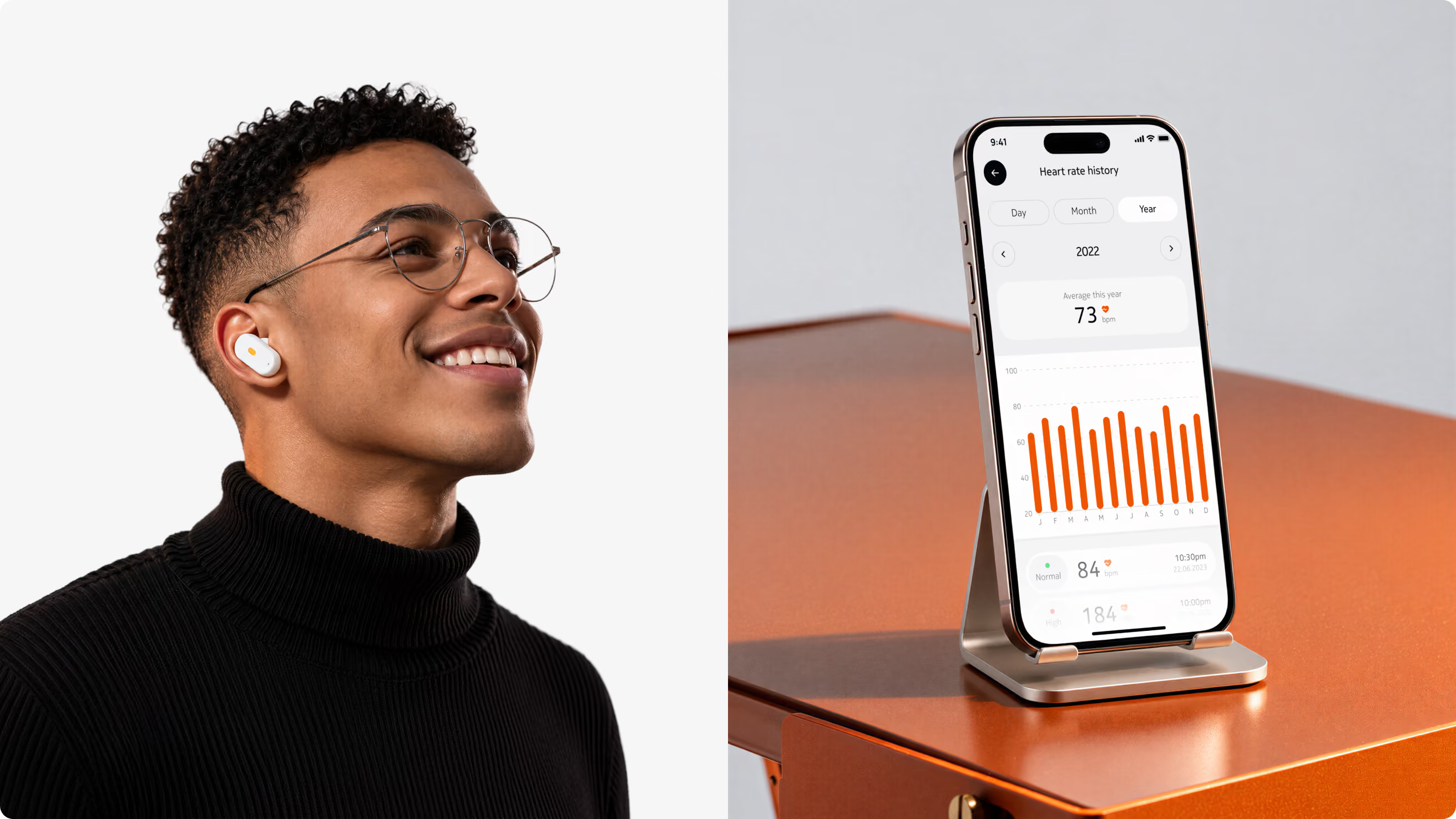
OmniBuds needed a confident narrative that could help researchers, partners, and investors understand the product clearly. We designed the website to explain the science and hardware behind the platform while demonstrating its real-world potential.
{{dropdowns-3}}
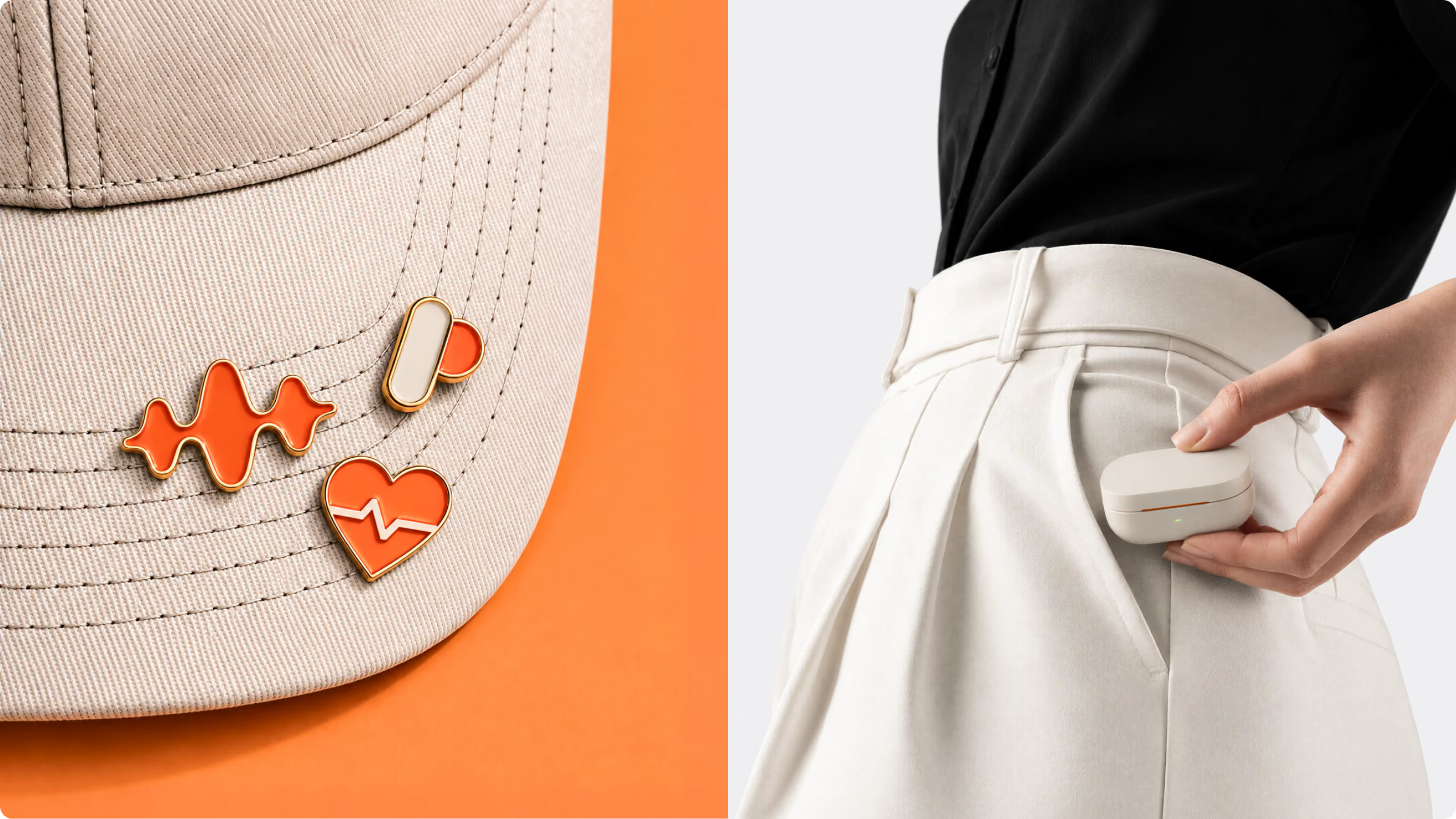
With the design ready, we built the site in Webflow, creating a responsive, animated experience that made complex technology easier to grasp and navigate.
{{dropdowns-4}}
{{numbers}}
{{review}}
Strong results start with open dialogue. At every stage, we work closely with the client’s team, running workshops, gathering feedback, and refining ideas through multiple iterations. If your product needs the same level of care, contact us — and we’ll help turn complexity into an experience people can understand, trust, and use with confidence.
{{approach}}

“Halo Lab turned OmniBuds from a research prototype into a refined, cohesive digital experience. Their precision and creative discipline brought clarity to a complex earable platform.”




We started by analyzing the two kinds of apps OmniBuds drew on: earbud companions and health monitors. The comparison showed that the strongest ones offered guided setup, clear metric displays, and easy access to history, which became OmniBuds’ benchmark. Besides, an audit of the current app revealed a dated interface, unclear icons, and cluttered charts, highlighting the need for a more modern, user-centered design.
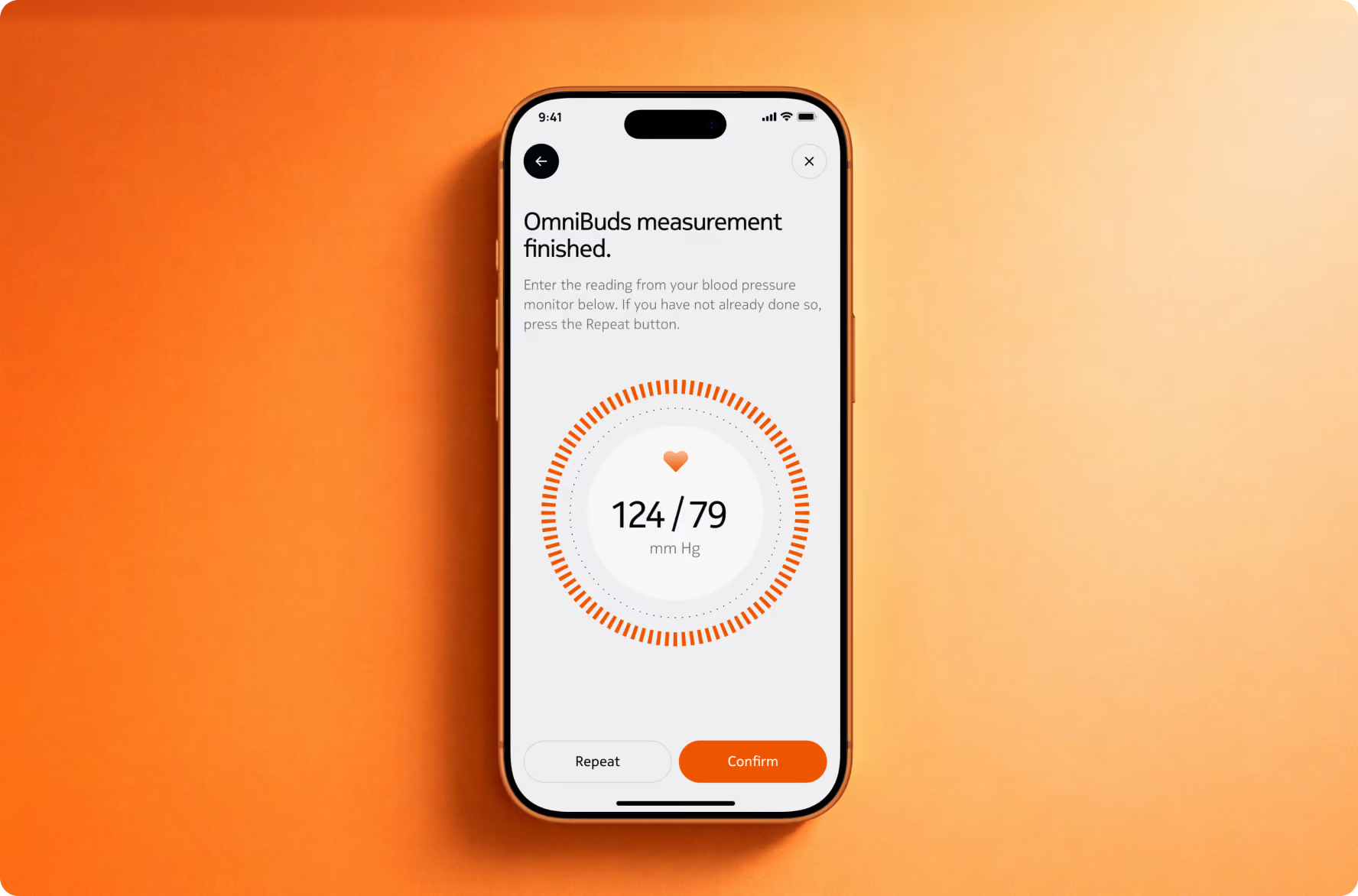
Earbuds that measure the body are an unfamiliar category, so the app had to introduce the hardware before presenting any data. Step-by-step onboarding guided users through connecting and syncing the earbuds, while a history screen let them switch between dates and compare readings over time, giving single measurements a clear, trackable view of health trends.
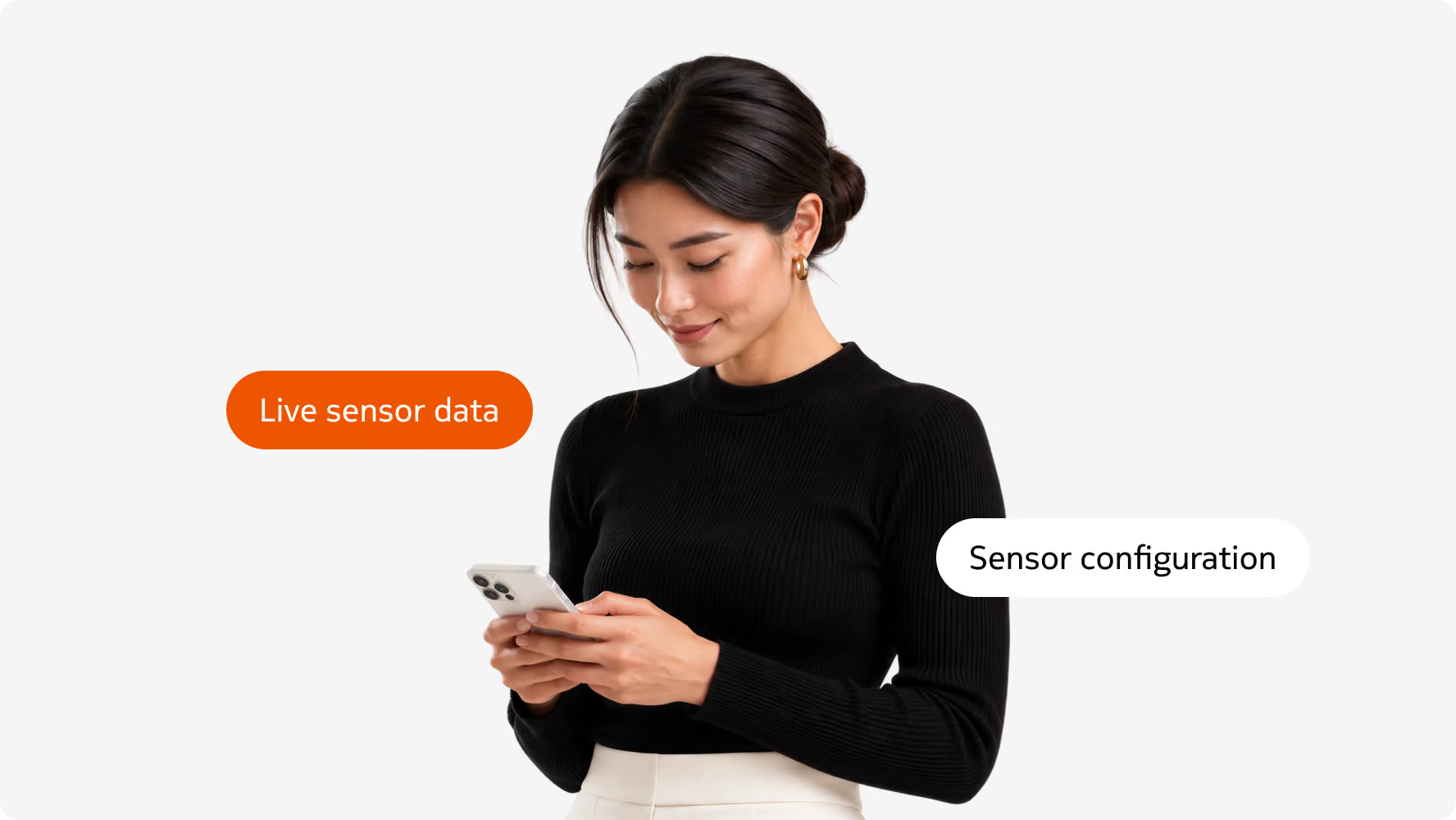
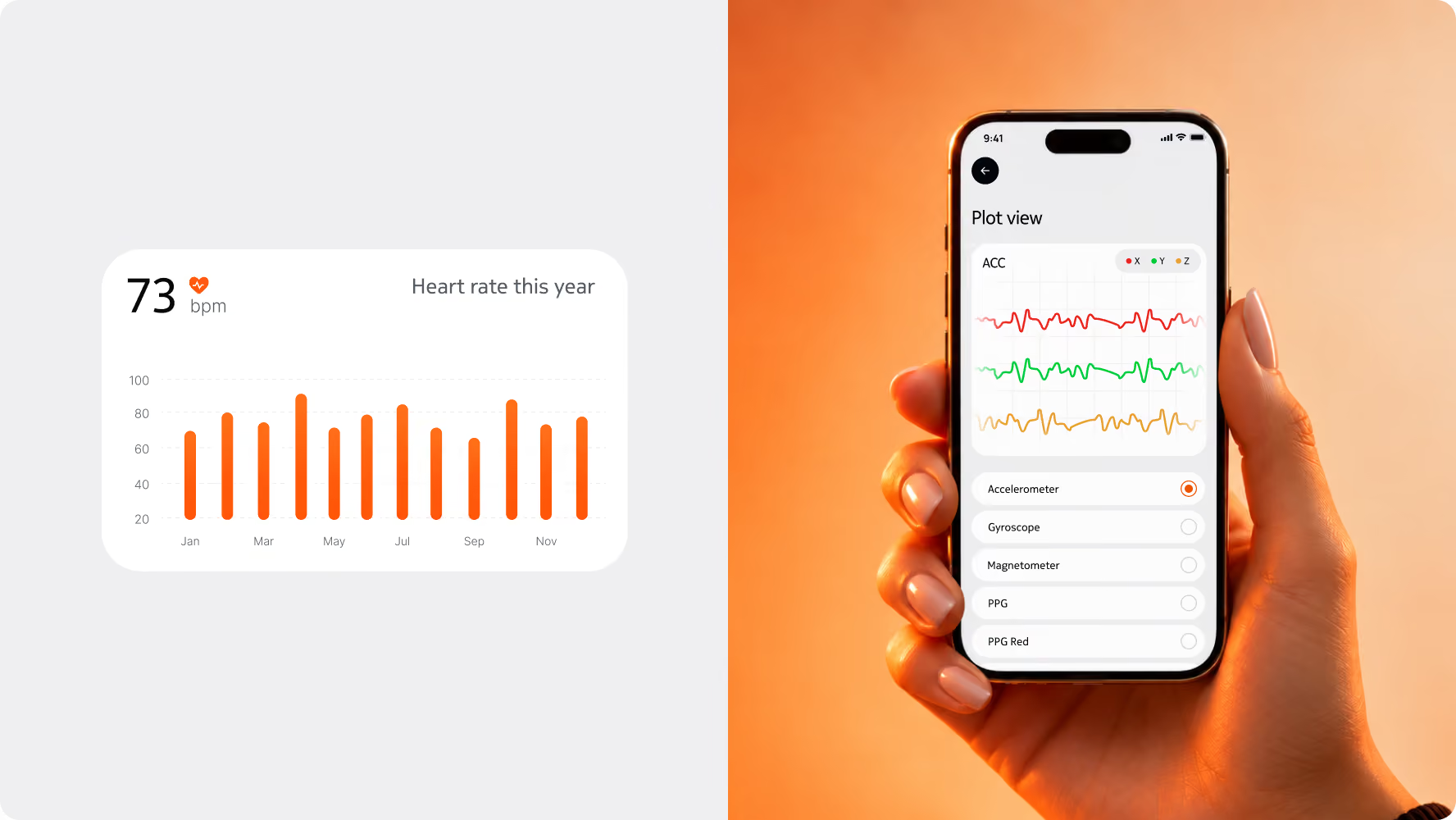
OmniBuds also had a second audience: the team and partners testing the hardware. For them, we designed a developer mode that streamed live sensor data and let them switch individual sensors on or off and adjust their settings. Related controls were grouped together, keeping a technical, data-heavy screen easy to read and use.
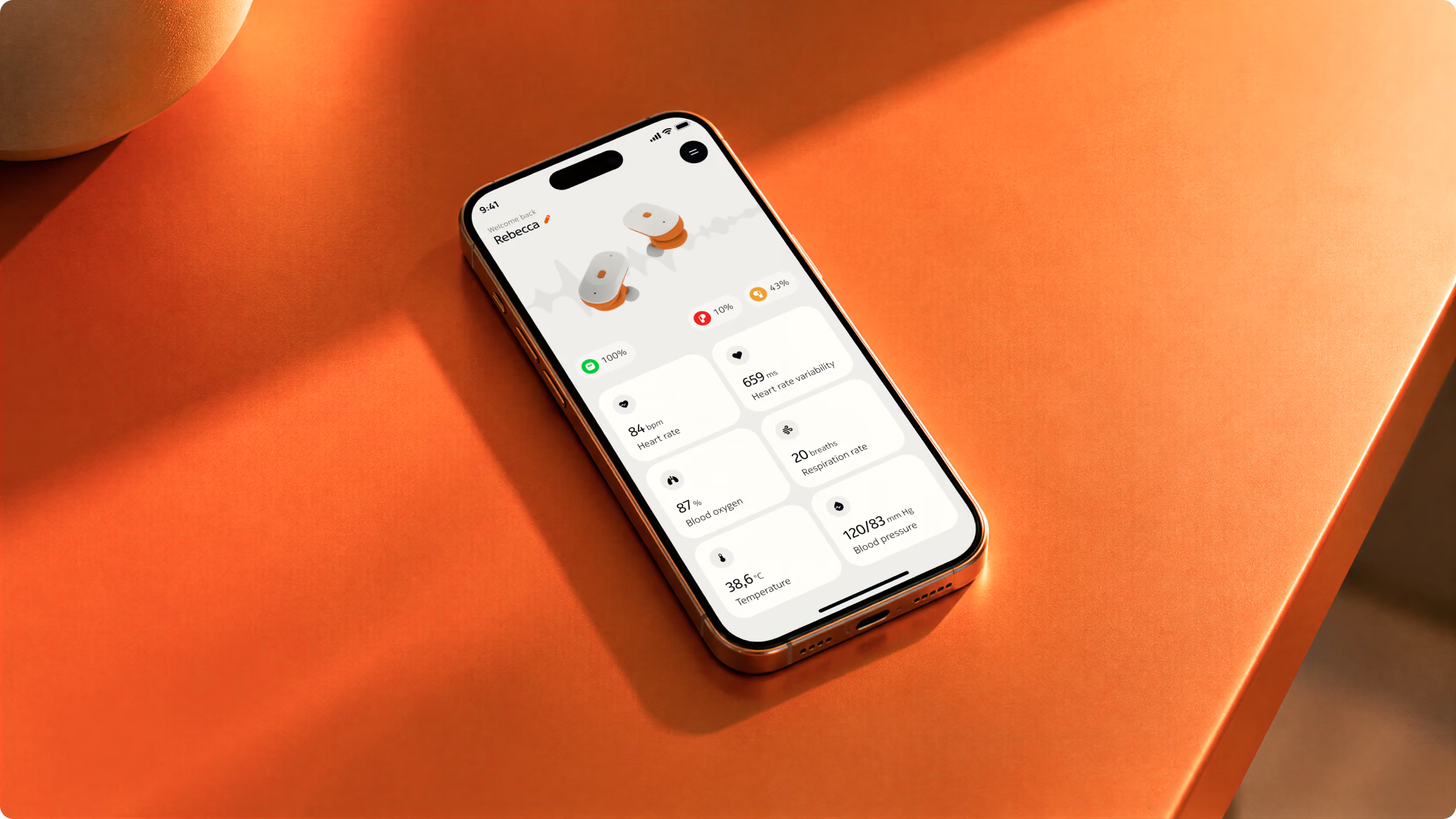
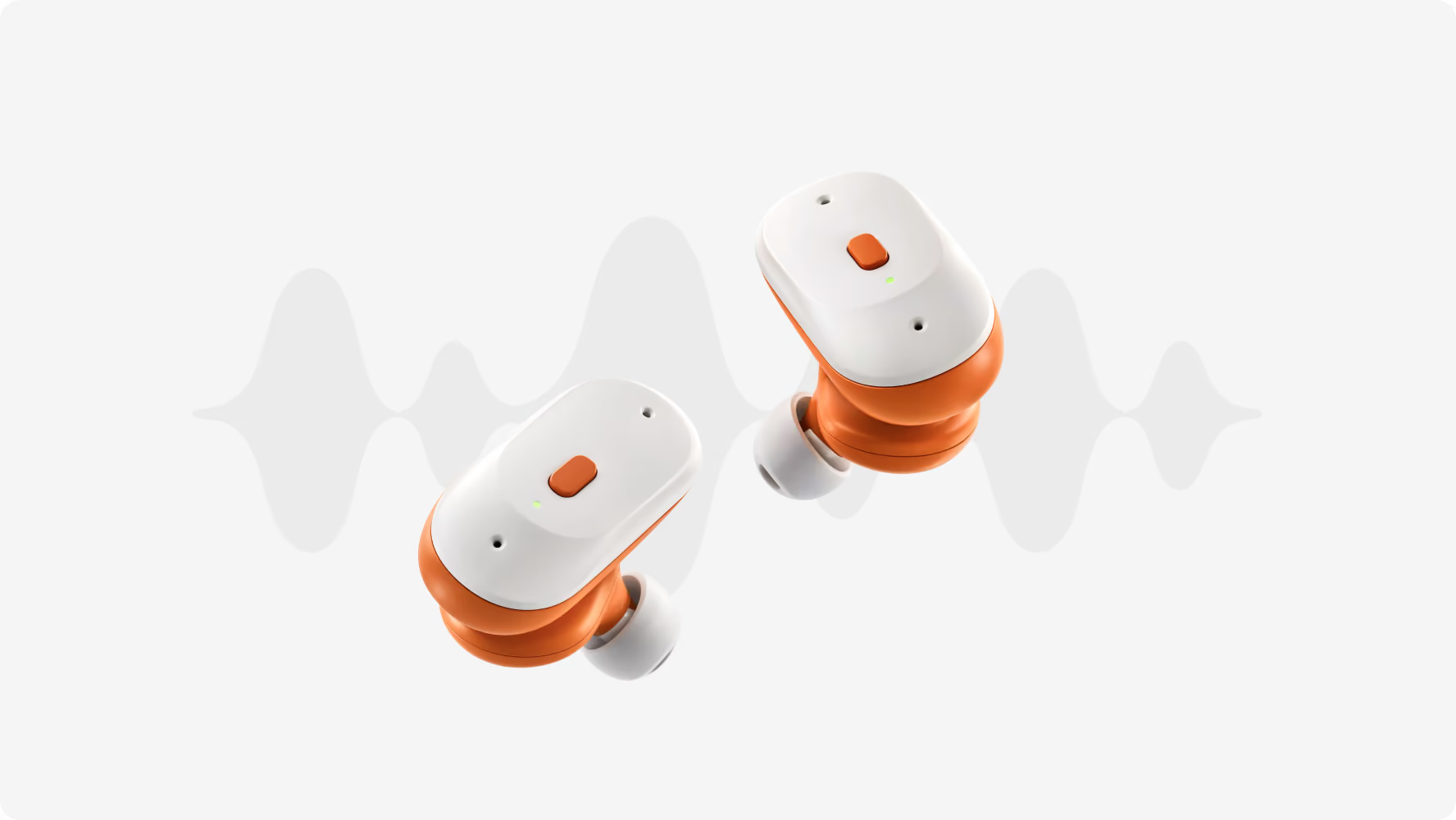
We shaped the interface around a light, neutral base with orange accents, keeping it easy to scan while avoiding an overly clinical feel. Soft peach gradients and rounded elements established a welcoming visual language suited to everyday use, while detailed earbud renders made the technology tangible, reflecting the product’s technological ambition.
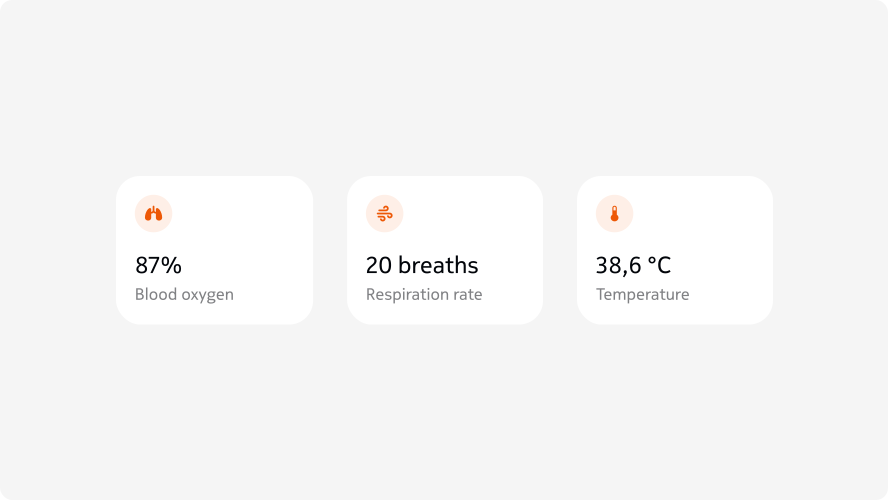
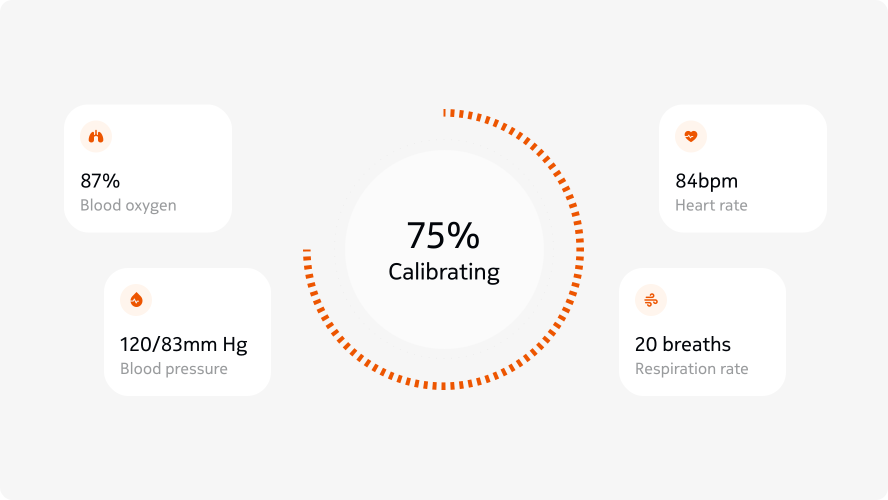
As the dashboard served as the app’s main overview, we tested several layouts before choosing one. The final version opened with a personal greeting and grouped heart rate, oxygen, breathing, temperature, and pressure into compact cards for quick, at-a-glance reading. Blood pressure measurement, the app’s key action, got its own large circular button, so users could start a reading with one tap.
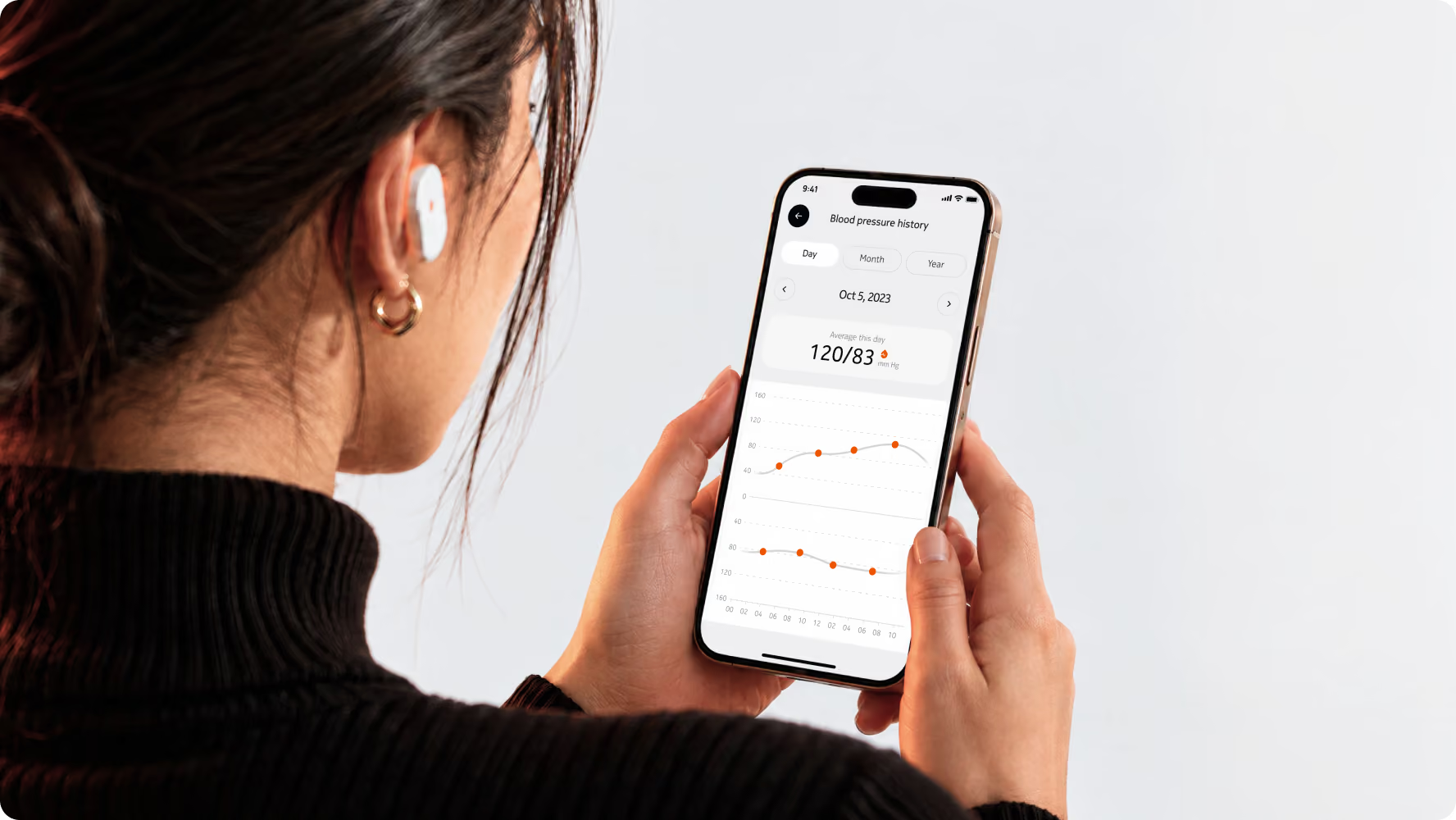
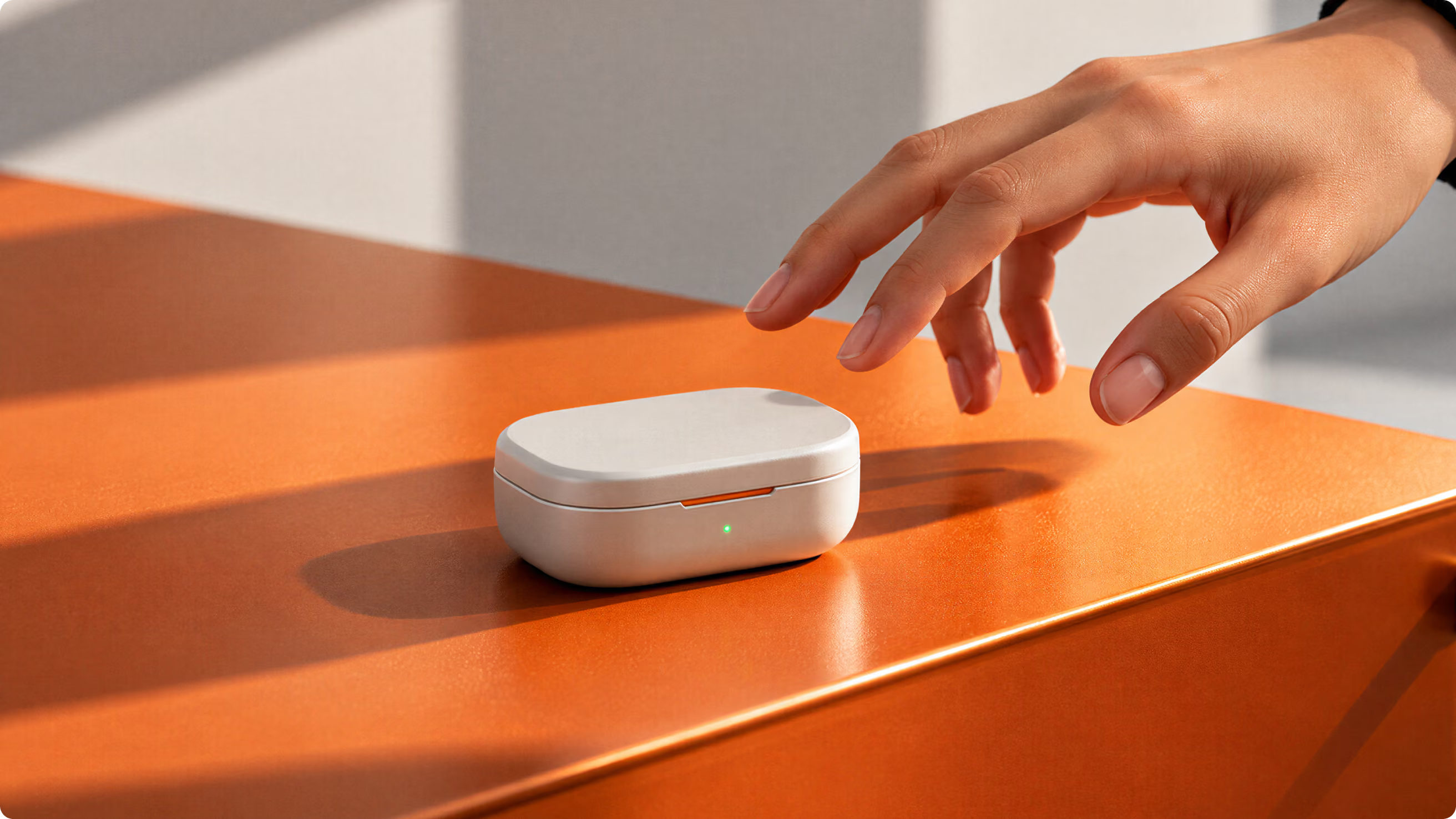
Much of the app experience is spent waiting while the earbuds connect, sync, or measure. We used animation to make those pauses clear and reassuring, with a sound wave on the welcome screen, a charging case that opens during pairing, and a pulsing ring during measurement, so users always know the device is working and when to act.
We built the app in React Native with Expo, so a single codebase ran on both iOS and Android. For a hardware startup, this meant every firmware-related change had to be implemented only once, and both platforms could be tested against the same earbuds, which sped up development and kept the experience consistent across devices.
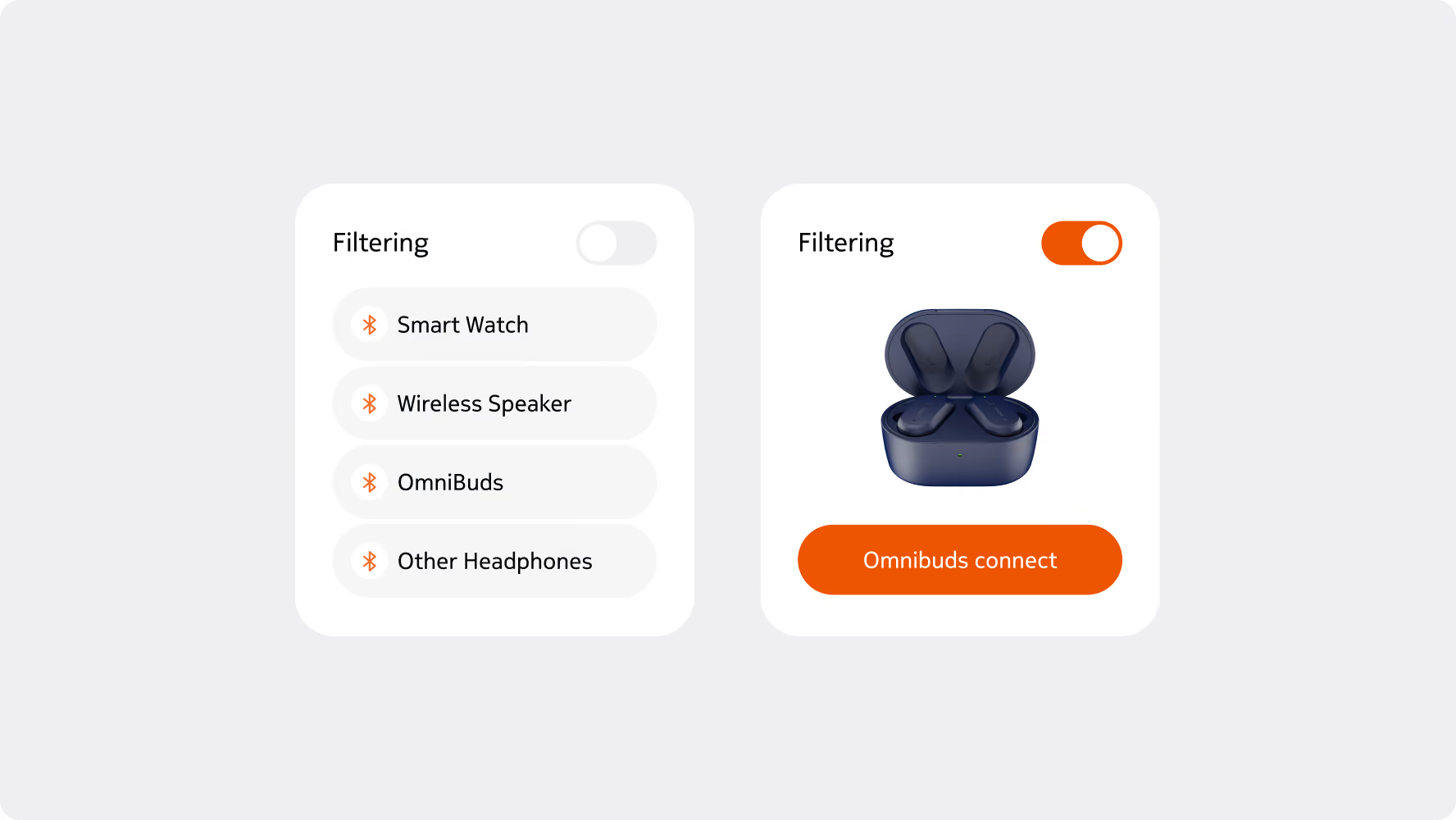
The earbuds connect to the phone over Bluetooth Low Energy, but a Bluetooth scan picks up every nearby device, from headphones to smartwatches. We added filtering so that pairing lists only OmniBuds, giving users one clear choice instead of a confusing list of devices.
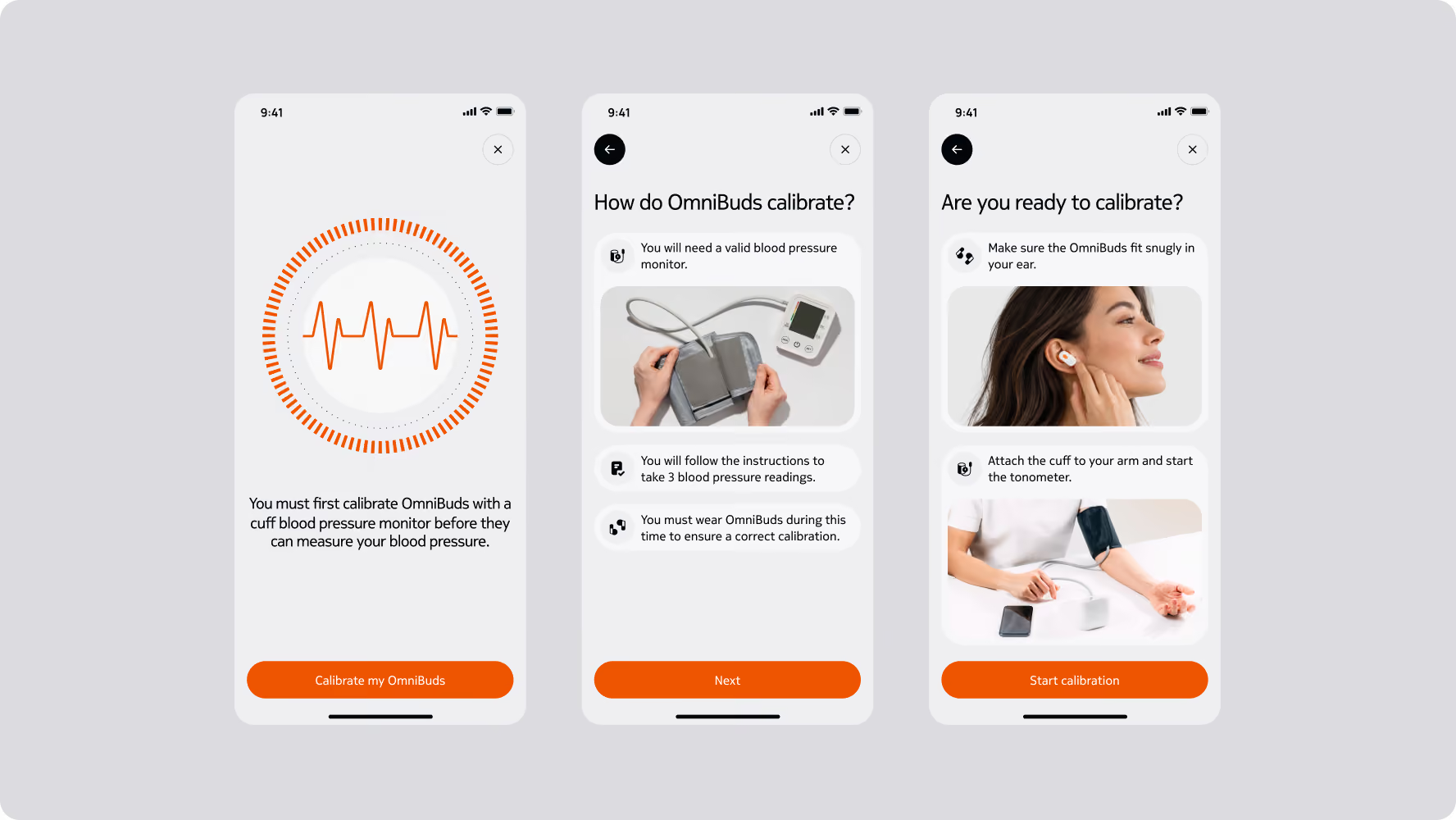
Raw sensor signals only become meaningful once they are processed. Before tracking starts, the app runs a calibration step, then converts the incoming data into live charts on the dashboard and in developer mode. We verified every change on real devices, since sensor behavior shifted with each firmware update.
First, we analyzed competitors’ websites and found they relied on animation for a dynamic feel, step-by-step product storytelling, and photos of real people to build trust and loyalty. This led us to two website concepts: a people-centered one that presents OmniBuds as technology that cares for people, and a philosophy-led one that weaves sound, technology, and health into everyday life.
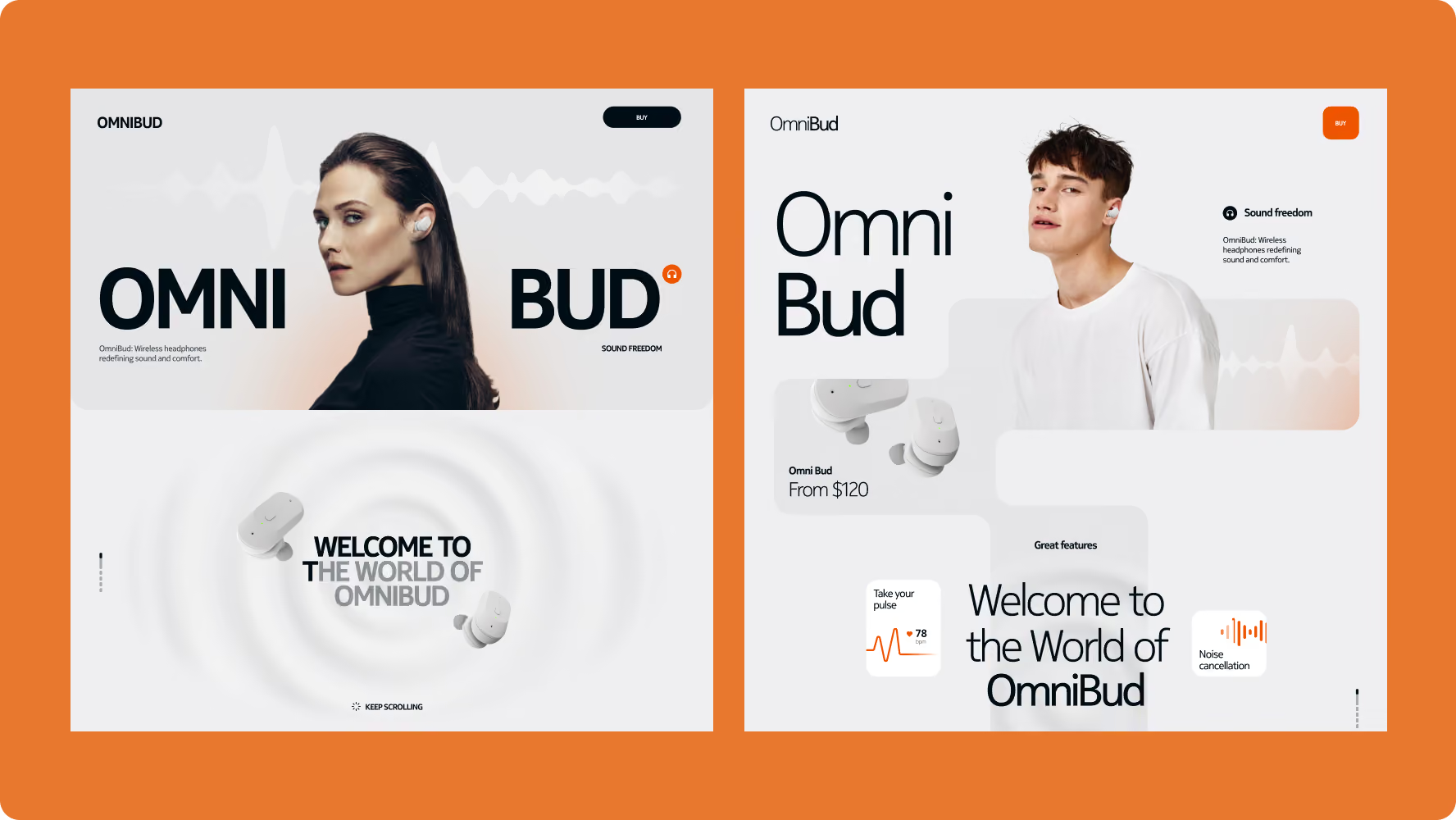
Drawing on the strongest elements of both concepts, we built the page as a path from promise to proof and action, opening with the idea of the world’s first sensory earable and moving into detail on the hardware, health metrics, and everyday actions OmniBuds can recognize. App mockups with short callouts made the product’s value tangible, showing how raw health data became clear insights, and published research served as proof before the page asked visitors to join.
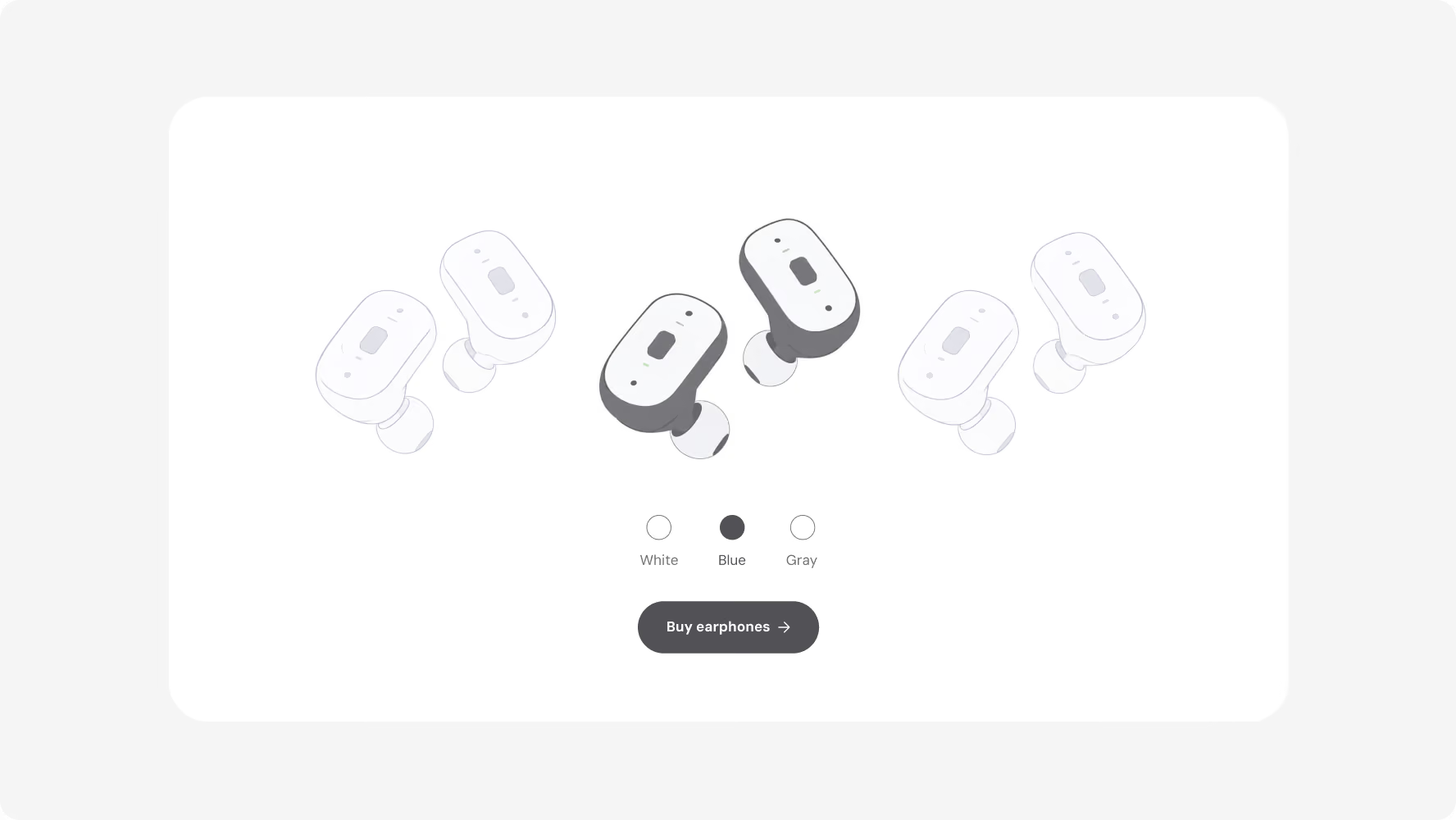
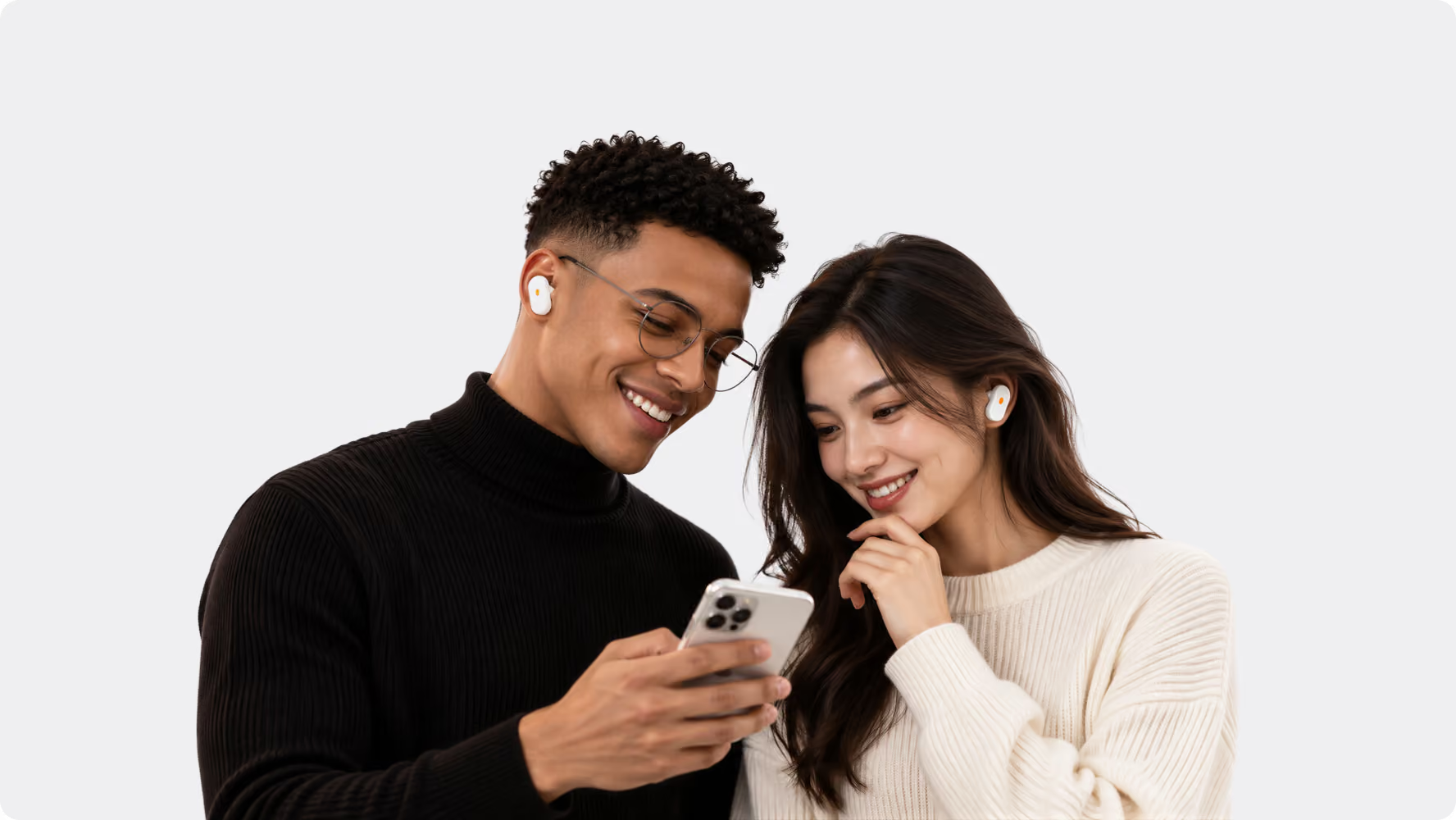
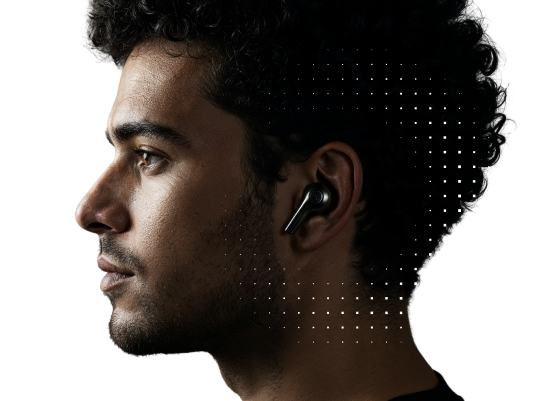
The sensing technology inside OmniBuds is invisible and difficult to imagine, so we gave it a human face and an approachable feel. Soft grey panels linked into one continuous path down the page, while faint ripples behind the earbuds symbolized sound and sensing. Imagery of people of different ages wearing the earbuds in daily life made each feature relatable, showing the real moments when tracking vital signs becomes useful.
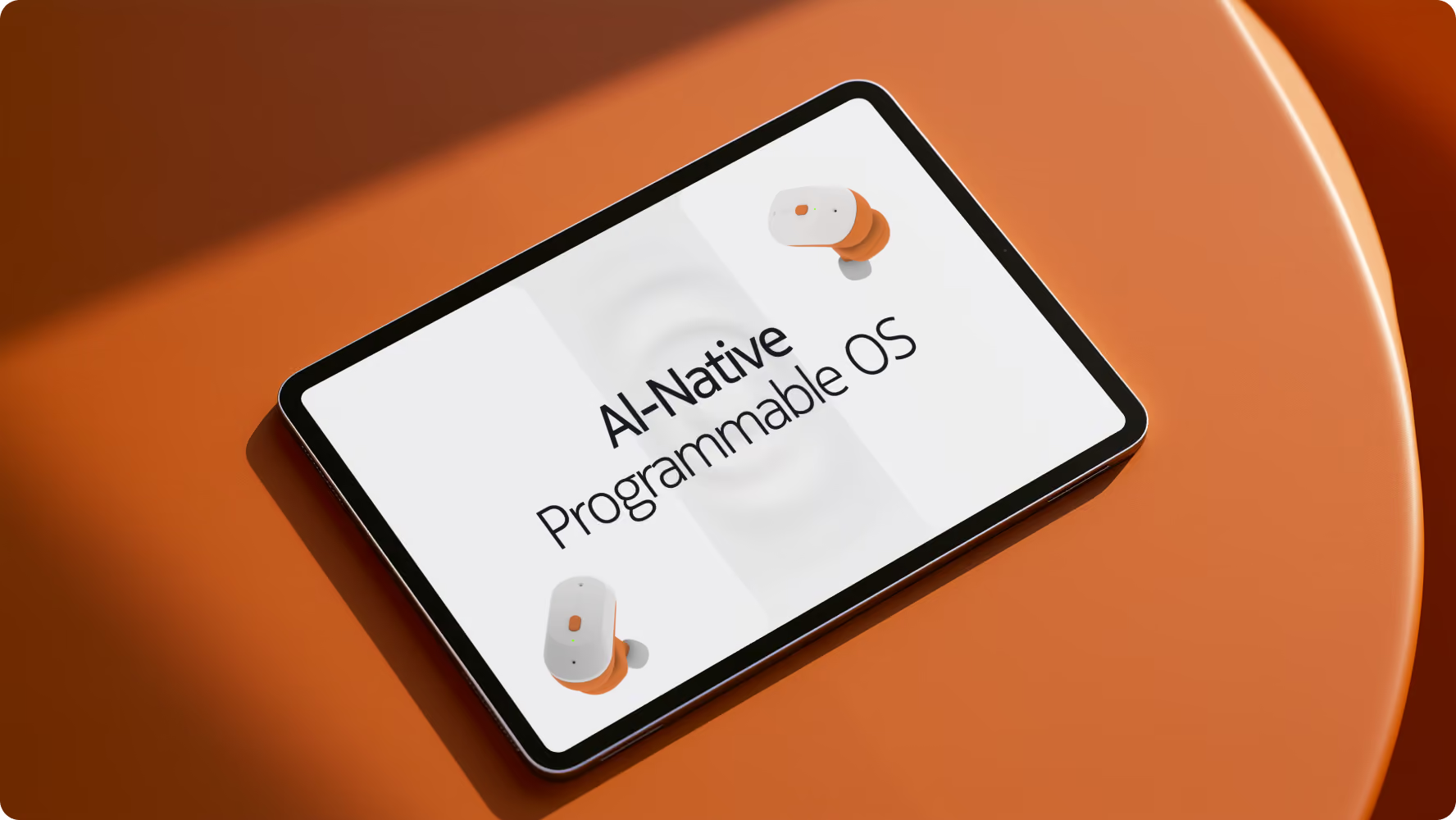
On a content-rich page, motion controls the pace, guiding visitors through one idea at a time instead of presenting everything at once. Animations, such as the earbud’s components revealed one by one or people coming to life as they acted out each feature, made technical claims clear and memorable.
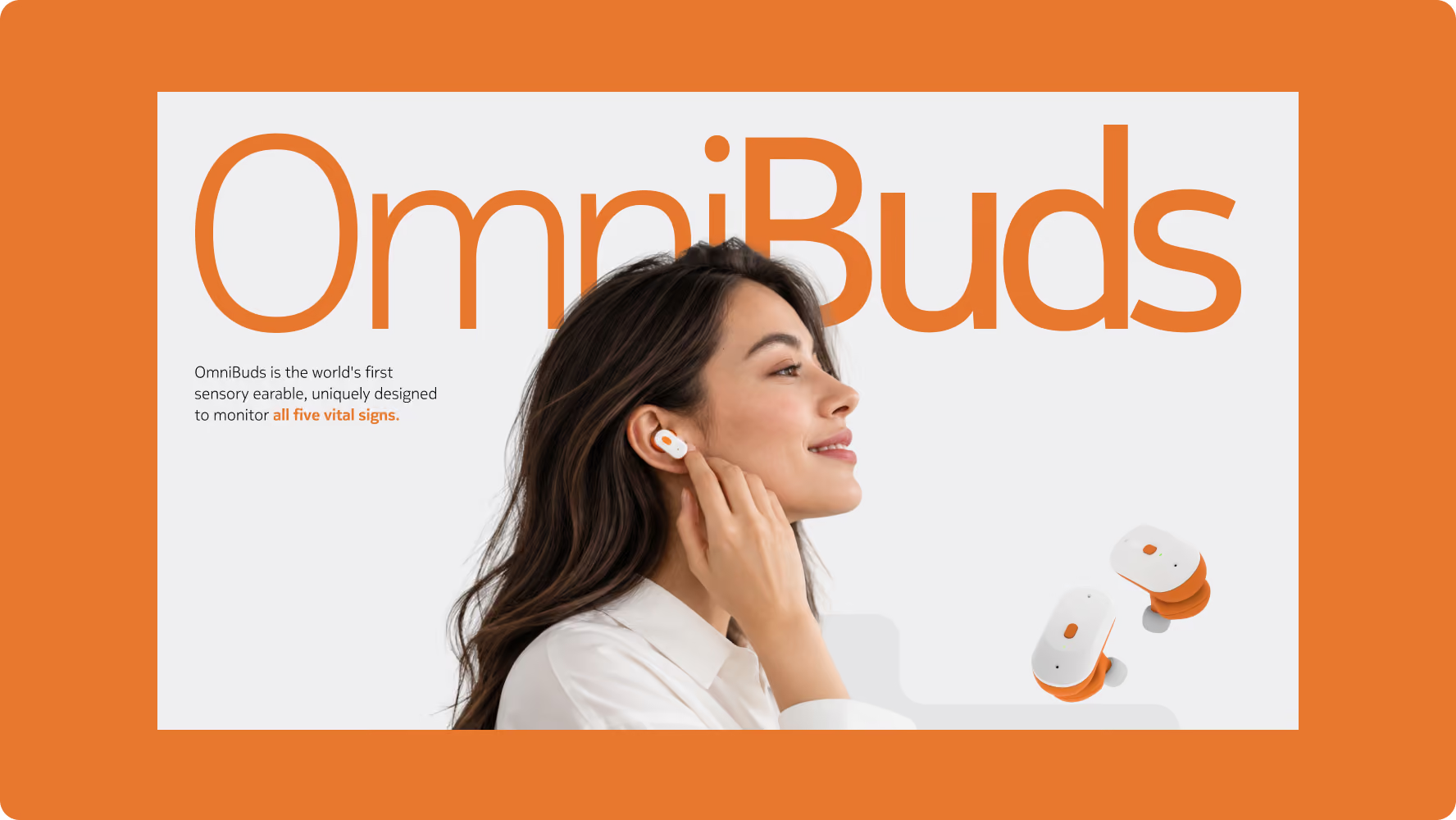
We turned the desktop and mobile designs into responsive pages that adapted smoothly to any screen size. Building in Webflow kept development quick and flexible, which suited a startup that needed a polished, investor-ready presence early in its journey.
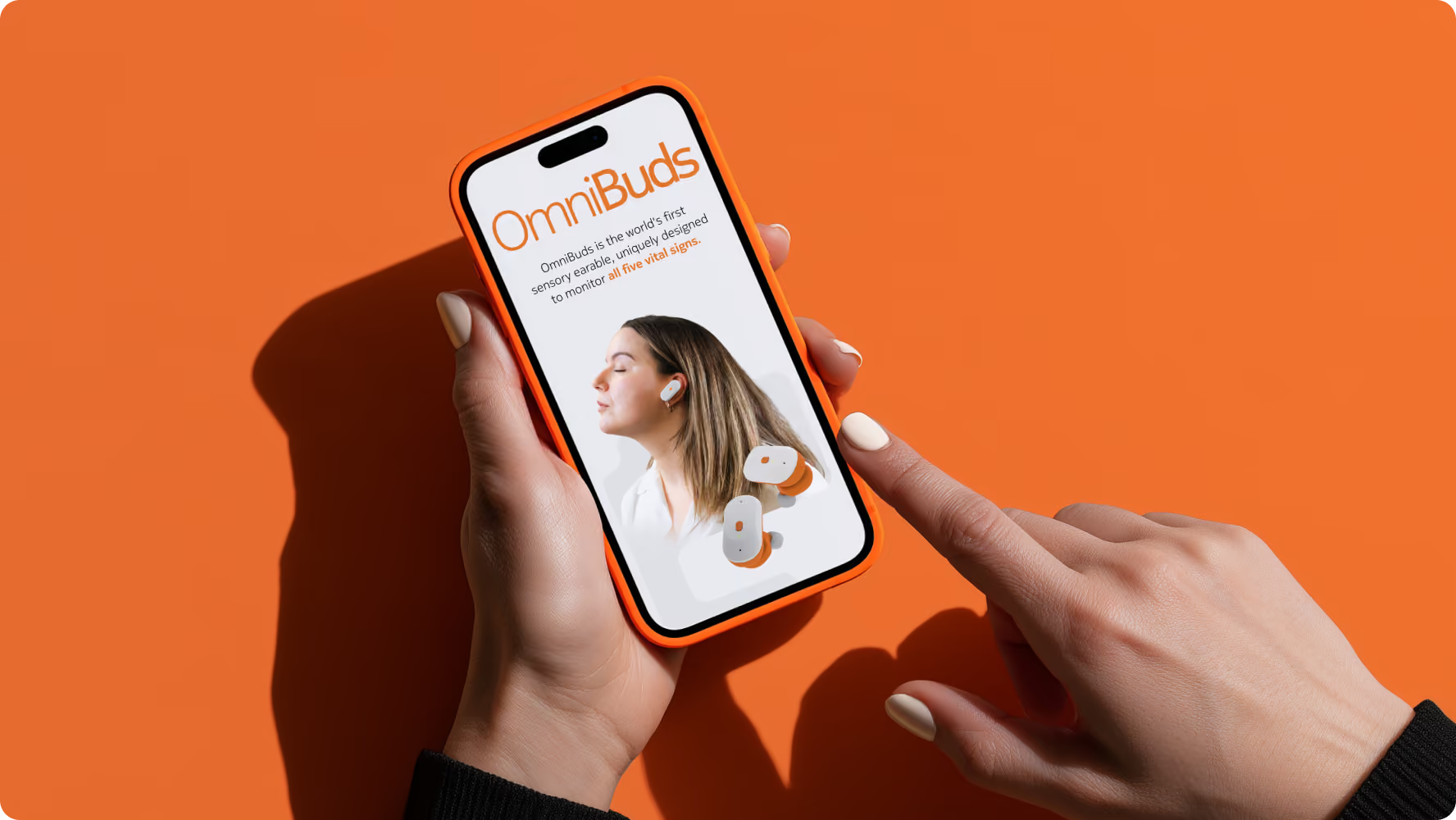
We animated the hardware and motion-sensing visuals with GSAP, so they moved with the story rather than sitting as static images. The motion helped explain how the earbuds interact with the body without relying on long blocks of technical copy.
As part of custom CMS development, we set up a Webflow CMS so the team could add and edit content without a developer and extend the site with new sections as the product grew. A CMS usage guide covering everyday updates completed the handoff, making it easy for team members to learn the system.