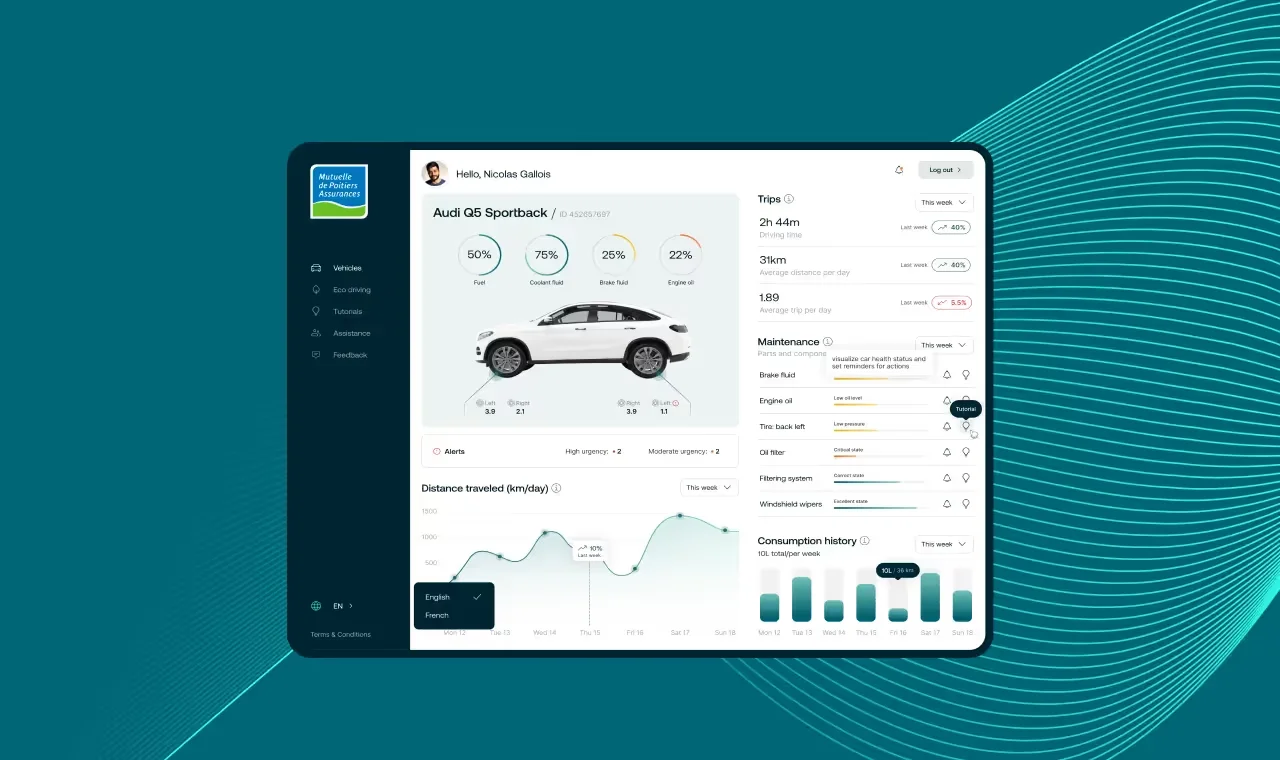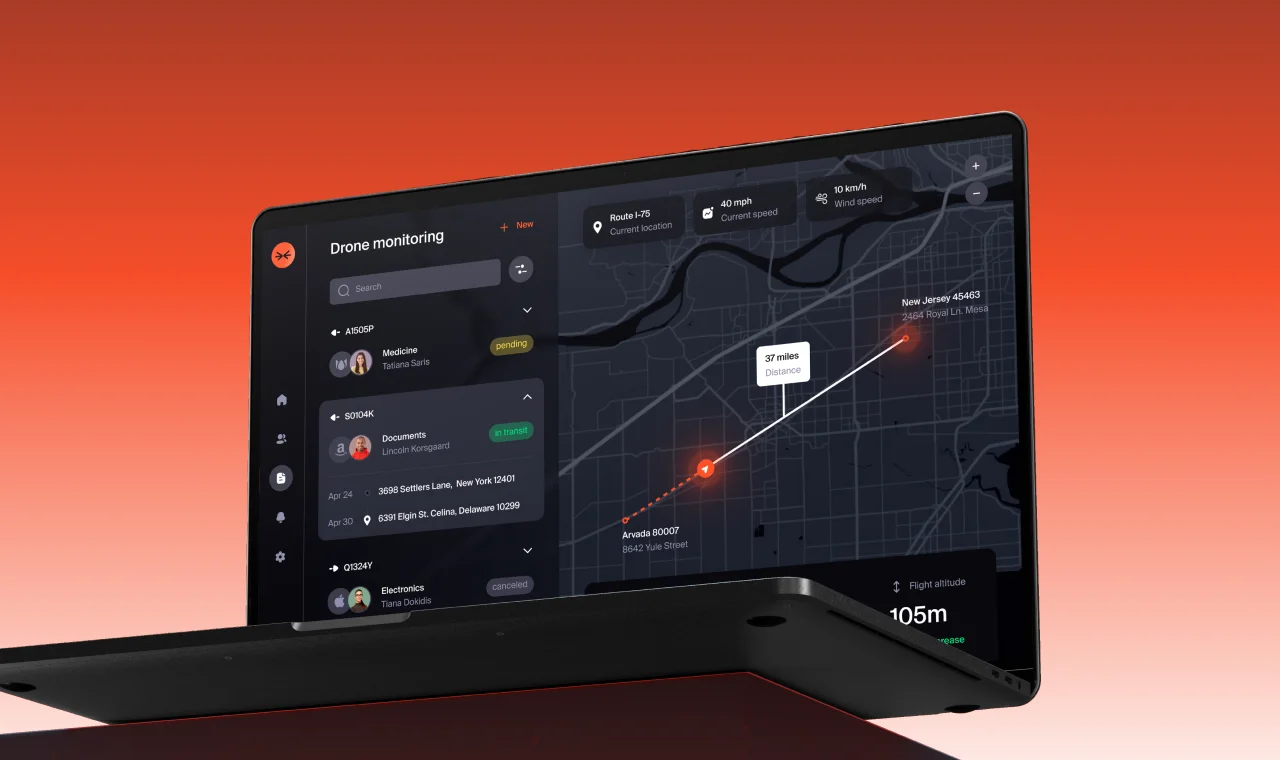





Anything read from a moving vehicle has a glance budget of about two seconds. That single constraint decides type size, contrast, information density, and how much a screen is allowed to say — and it applies to the fleet dashboard as much as the dash.
Halo Lab designs automotive and mobility products to that budget — in-car and companion app interfaces, fleet and telematics dashboards, charging and energy flows, booking and ride experiences, and service tools. Handed over annotated so engineering builds it exactly as drawn.


In-car interfaces ask for reading time the driver simply does not have.
Hundreds of vehicles report at once and the exception never surfaces.
Availability, speed, and price are scattered across three different screens.
What we deliver
Dashboard and infotainment screens designed for a two-second glance at speed.
Remote lock, climate, and status designed for the thirty seconds before leaving home.
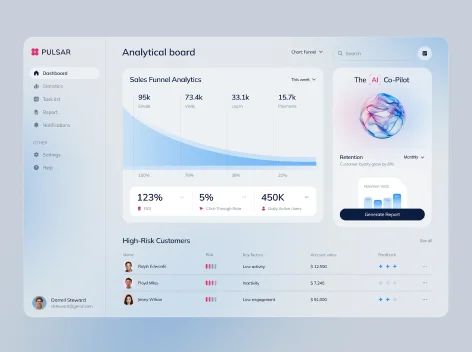
Vehicle health, utilisation, and alerts designed so the exception surfaces first.
Availability, speed, price, and session status brought into one readable screen.
Rental, car share, and ride flows designed for people already standing at the kerb.
Diagnostics, scheduling, and workshop views designed for technicians under time pressure.
Trip, battery, and diagnostic data visualised without turning drivers into analysts.
An automotive component library and annotated Figma handoff — ready for development to begin.


How we work


We map where each screen is read — moving vehicle, kerbside, workshop, fleet office — and how long the reader actually has.
We structure vehicle, trip, and telemetry data so the current state is readable before any detail.
We wireframe the critical flows — in-car, companion, fleet, and charging — and validate them against real glance times.

We design every key screen and state for high-contrast, high-speed reading, building the component library alongside.
Annotated Figma files, interaction specs, and component documentation — your team builds without ambiguity.
Industries we serve


UX/UI design for hospitals, clinics, and health systems.
UX/UI design for banks, insurance firms, and financial platforms.

UX/UI design for logistics, transport, and supply chain companies.

UX/UI design for property developers, agents, and management firms.

UX/UI design for schools, universities, and e-learning platforms.

UX/UI design for Web3 startups and blockchain-based products.

UX/UI design for wellness brands, gyms, and fitness studios.

UX/UI design for tech companies, software products, and platforms.

120+ experts and 500+ projects provide insights into solutions that fit the market.

Projects start with research, positioning, and clear goals for data-driven decisions.
No templates or generic patterns — only custom design shaped for your objectives.
We turn complex ideas into clear, scalable designs for SaaS, B2B, and tech companies.

Structured communication and transparent workflows keep you aligned at every step.

Clear pricing and adaptable scopes help you stay on budget and ensure top quality.

“Halo Lab is very organized in planning to achieve the goals within the set deadlines. We feel they were part of our internal team project.”

“Their experts have a very diverse range of skills and always find a solution to exposed issues. The communication process was clear.”

“During the collaboration, Halo Lab prioritized our people, always taking into account our input and ideas and giving all team members a voice.”

“The Halo Lab team unified branding across our patients’ app, showcasing professionalism, convenience, and consistency.”

“Halo recreated our existing portal with a modern and beautiful experience, greatly increasing usability and delight for the end user.”

“Halo Lab is brilliant. We were impressed with their timely delivery, cost-effectiveness, and the people who knew what they were doing!”

“The value we get from Halo Lab and their quality designs sets them apart from others. They are the right mix of price, talent, and style.”

“We gave the Halo Lab team a chance, and we immediately knew they were the ones we wanted to work with.”

“The Halo Lab work pleasantly surprised us, and bringing in their professional design team has been a worthy investment for us.”

“When collaborating with Halo Lab, we felt that communication was straightforward and that the deliverables fit what we expected.”

“Halo Lab has helped us with a rebrand and defined a new name, logo, and color palette. We’ve had a great experience working with them.”


Since 2013
We’ve built one of the most trusted agencies
120+
Specialists in design, engineering & product management
78%
Returning clients in Europe & North America
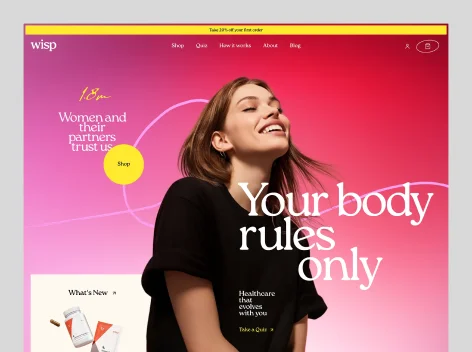
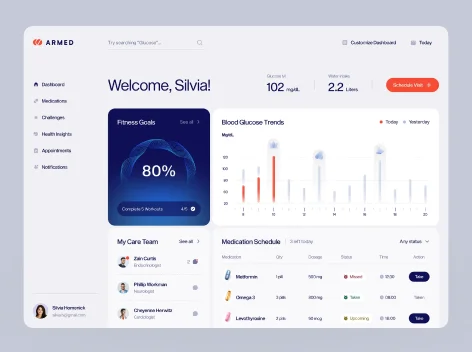
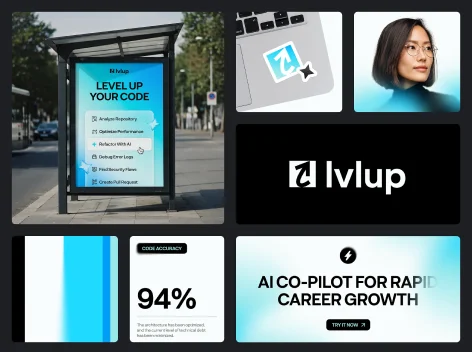
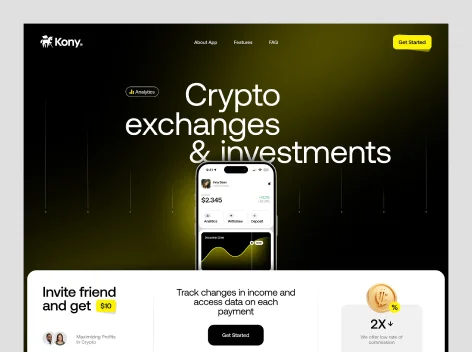
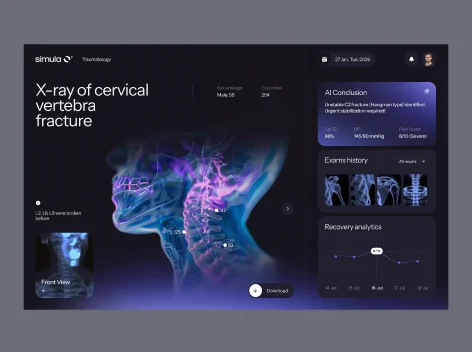
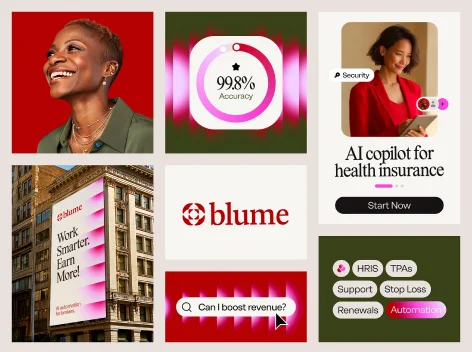
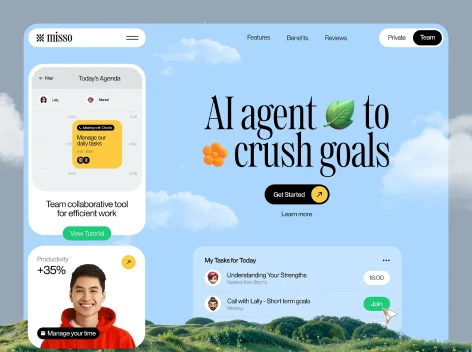
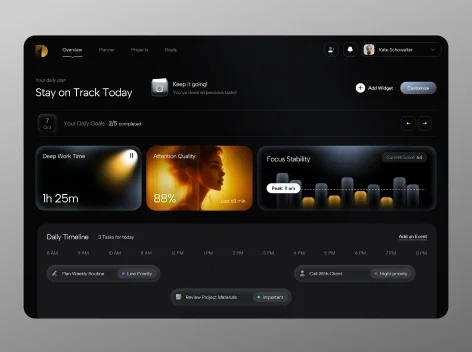

Context and role mapping, in-car and HMI interfaces, companion app experiences, fleet and telematics dashboards, charging and energy flows, booking and ride experiences, service tools, and an engineering handoff.
Yes. Dashboard and infotainment screens are designed to a glance budget — large type, high contrast, minimal depth, and no interaction that needs more than a couple of seconds of attention.
Yes. Vehicle health, utilisation, and alerts are designed so the exception surfaces first, because a fleet manager watching hundreds of vehicles cannot scan every normal reading.
Yes. Availability, charging speed, price, and session status are brought into one screen, since drivers currently piece that together across several apps while standing at a charger.
Yes. Remote lock, climate, charge status, and trip history are designed for short interactions before leaving home, with the most-used action reachable without navigating anywhere.
Most engagements run 6 to 12 weeks from context mapping to engineering handoff, depending on how many surfaces are in scope, hardware constraints, and whether a design system is included.
Yes. Diagnostics, job scheduling, and technician views are designed for people working with tools in hand, so the interface never requires more than one free hand to progress.
Yes. Redesigns are common. We audit the current product against glance time, alert response, and booking completion, then set measurable improvement goals before any visual work begins.
Yes. Web and mobile development is available after the design engagement, so the component architecture in Figma maps directly to the production build with no reinterpretation.